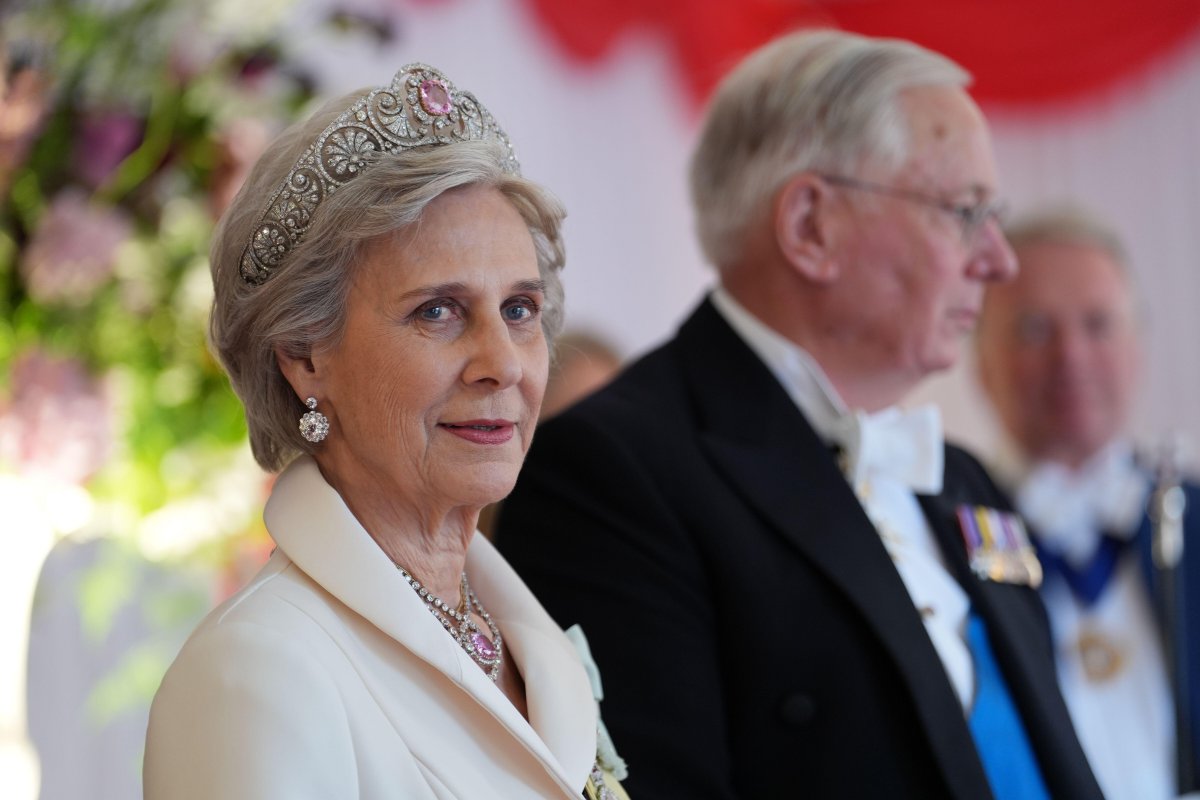
That stalwart of elegant royal jewelry style, the Duchess of Gloucester, celebrated her 80th trip around the sun on Saturday. To join in the fun, I’m dedicating today’s article to her remarkable royal tiara collection, which rivals the entire jewelry reserves of some small monarchies.
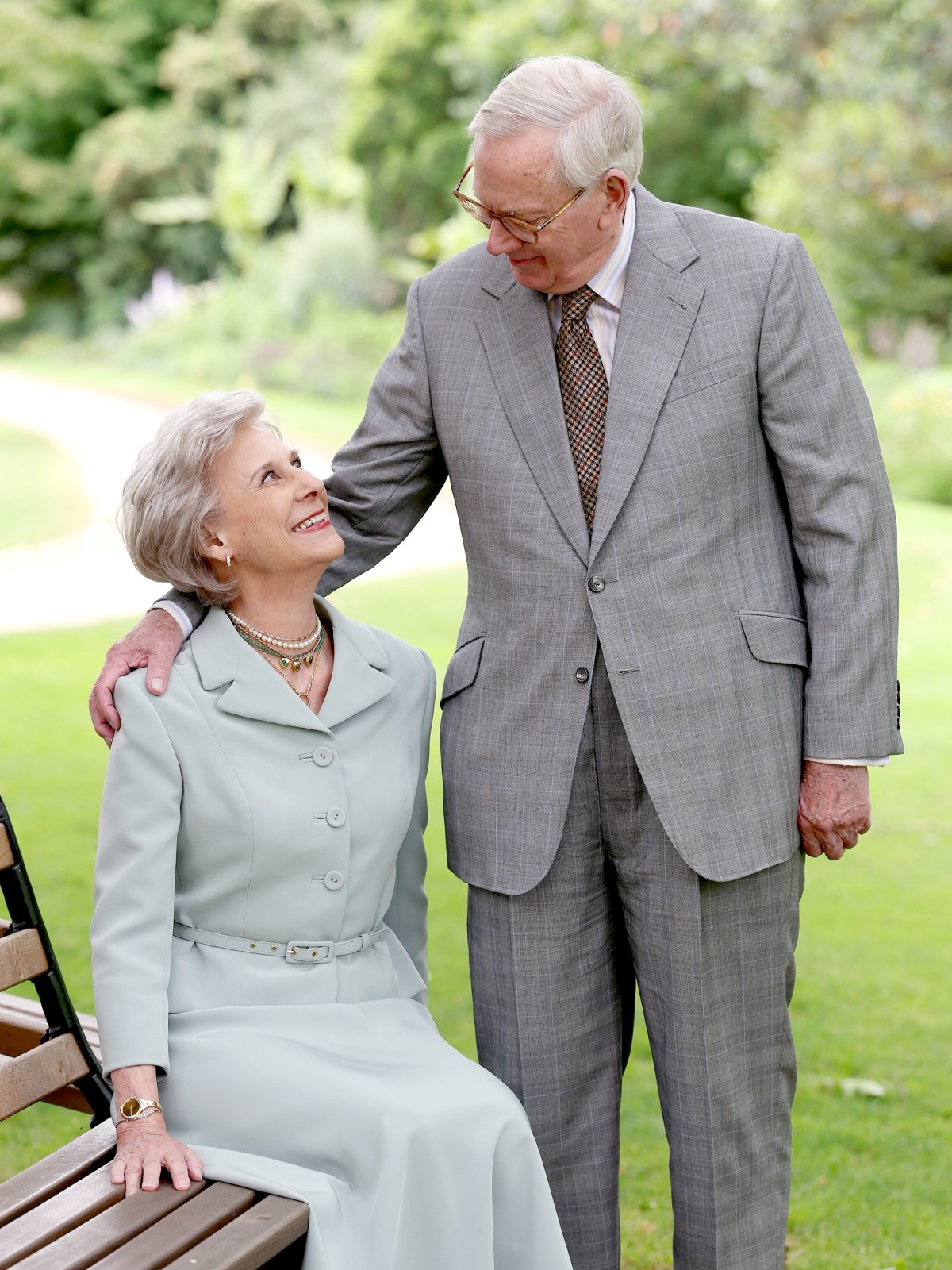
Buckingham Palace shared new official photographs of the Duke and Duchess of Gloucester over the weekend to commemorate the Duchess’s 80th birthday. She was Birgitte van Deurs, a secretary at the Royal Danish Embassy in London, before her marriage to Prince Richard of Gloucester in 1972.
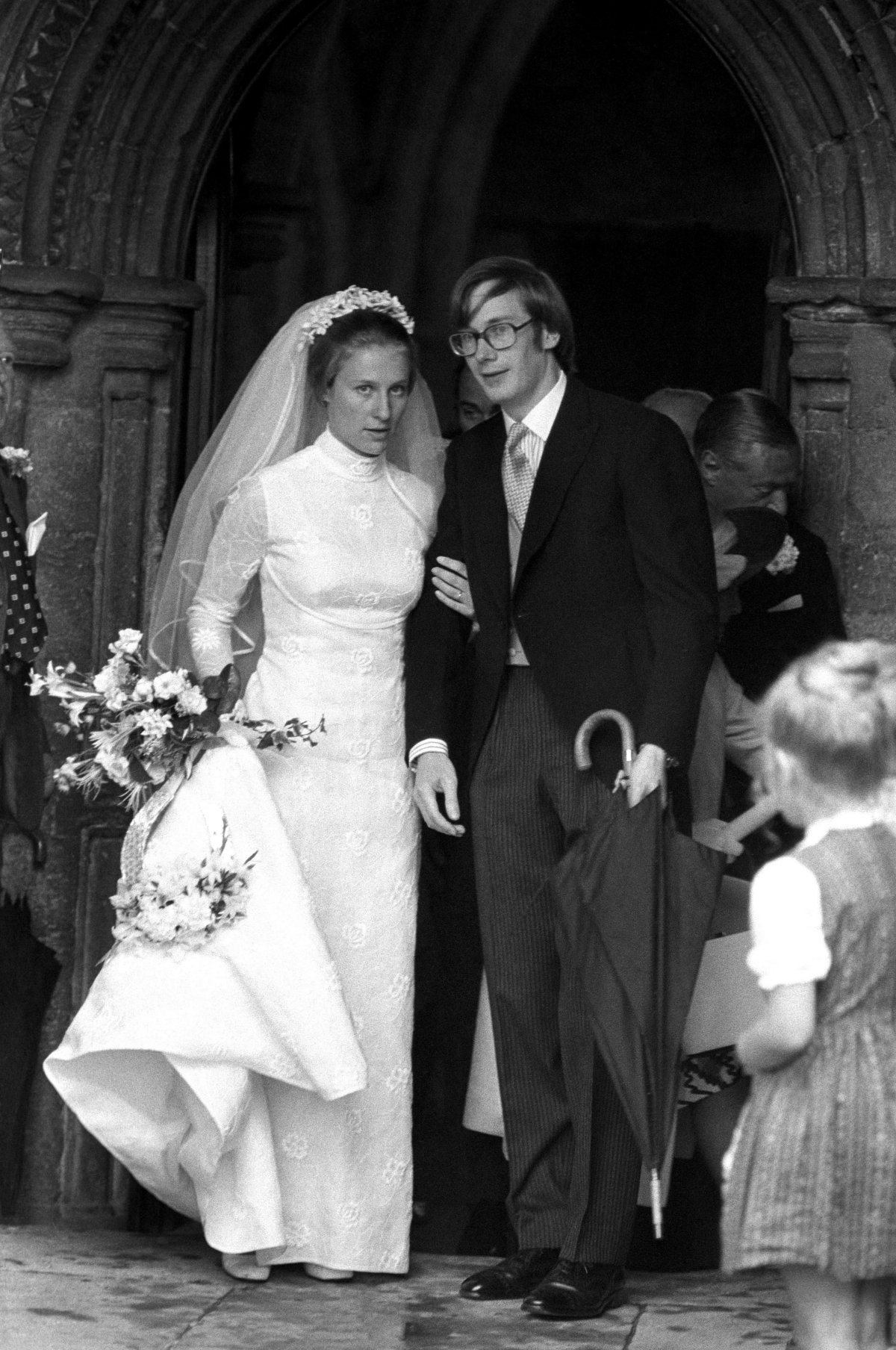
When Richard and Birgitte married in a small ceremony near the family’s country home, Barnwell Manor, in the summer of 1972, they were not planning on becoming working members of the royal family. Richard’s elder brother, Prince William, was heir to their father’s royal dukedom, and Richard was working as an architect in London.
But six weeks after their wedding, William was killed in an air accident in Staffordshire. Two years later, when his father died, Richard and Birgitte became Duke and Duchess of Gloucester, and they have undertaken duties on behalf of his cousins, Queen Elizabeth II and King Charles III, ever since.
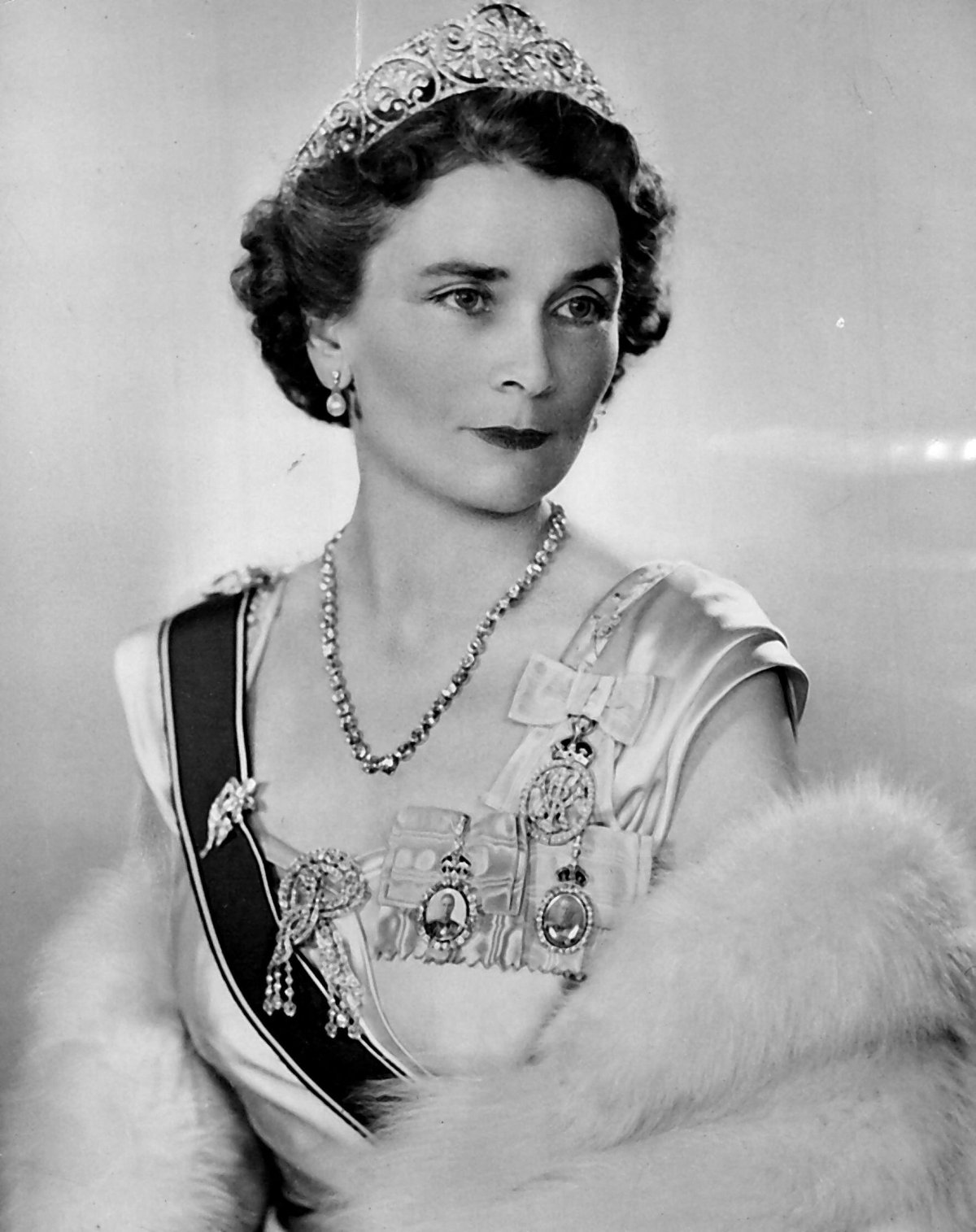
The young Duchess’s jewelry collection was enriched largely by the generosity of her mother-in-law, Princess Alice. Though she herself remained a working member of the family until the remarkable age of 98, Alice made much of her extensive jewelry collection available to Birgitte in the years after she was widowed. The tiaras, necklaces, earrings, bracelets, and brooches had been assembled by Alice over the decades, with many pieces coming from her mother-in-law, Queen Mary.
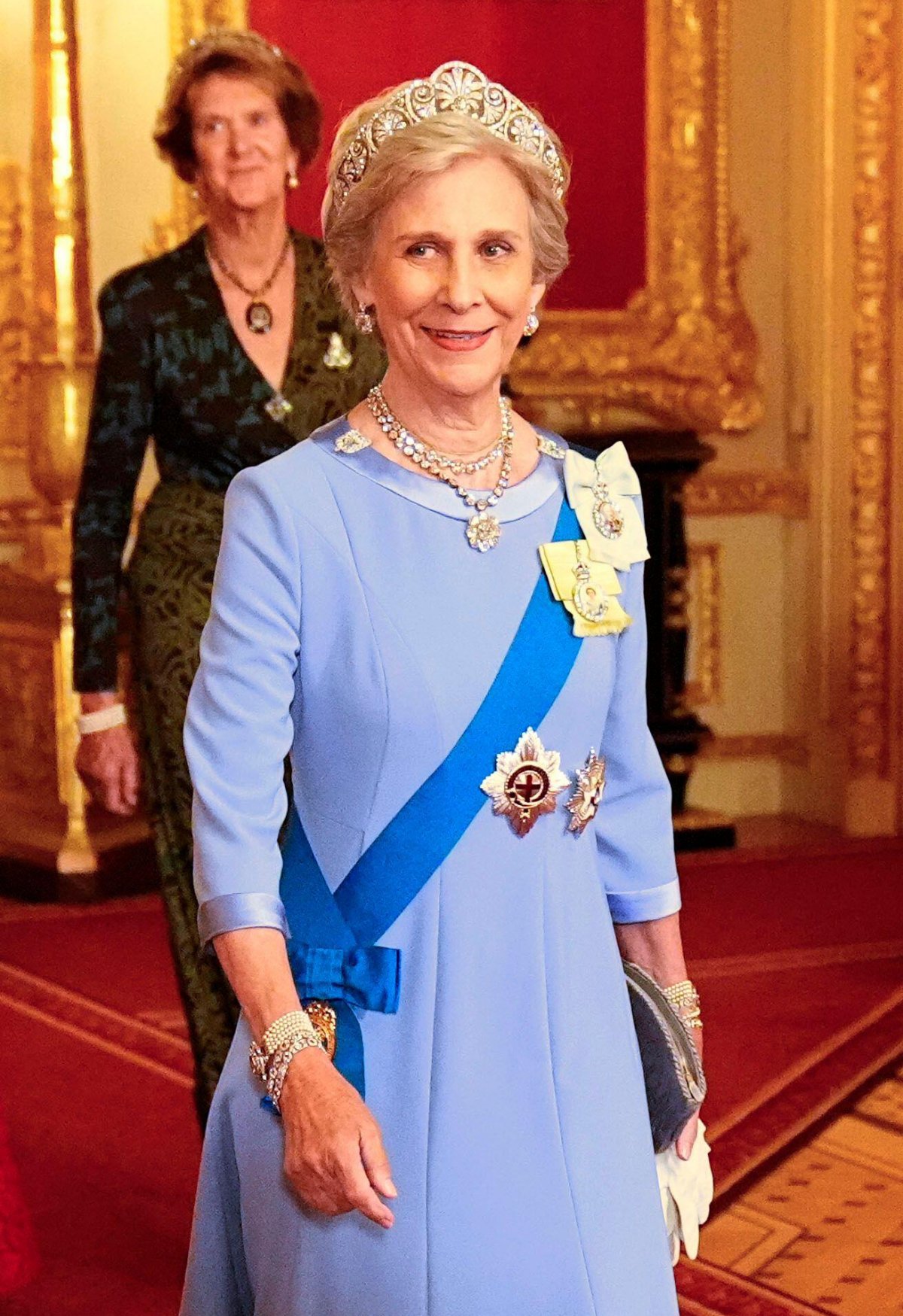
Perhaps the most versatile tiara handed over by Alice to Birgitte was Queen Mary’s Honeysuckle Tiara. Mary commissioned the diamond jewel from Garrard in 1914. From the start, it was made to match with numerous different coordinating jewels, with the centerpiece of the tiara able to be swapped out for elements set with different gemstones.
Queen Mary originally wore the tiara with the Cullinan V Diamond, a sapphire and diamond cluster, and a cluster set with a pink gemstone, described variously as a kunzite or a pink topaz. In 1935, when Mary handed the tiara over to Princess Alice, she retained the Cullinan and sapphire centerpieces and provided her with the pink gemstone cluster and a new diamond honeysuckle element. Birgitte wears the honeysuckle centerpiece in the picture above, taken at Windsor Castle last September.
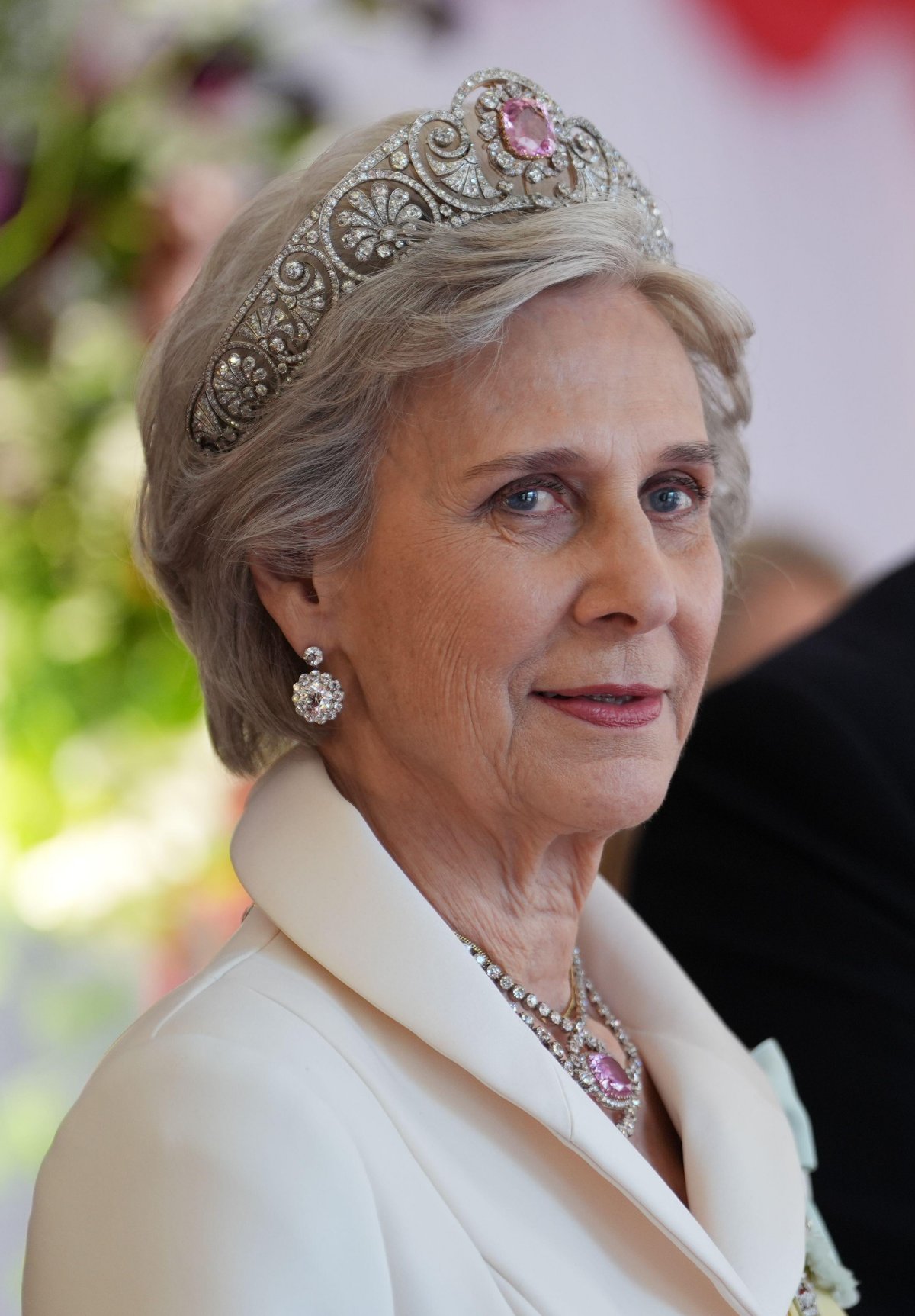
Birgitte also likes to wear the pink gemstone setting of the tiara, as she did during a banquet honoring the President of France at the Guildhall last July. She often pairs the tiara with diamond and pink topaz jewelry inherited from Queen Mary via Princess Alice.

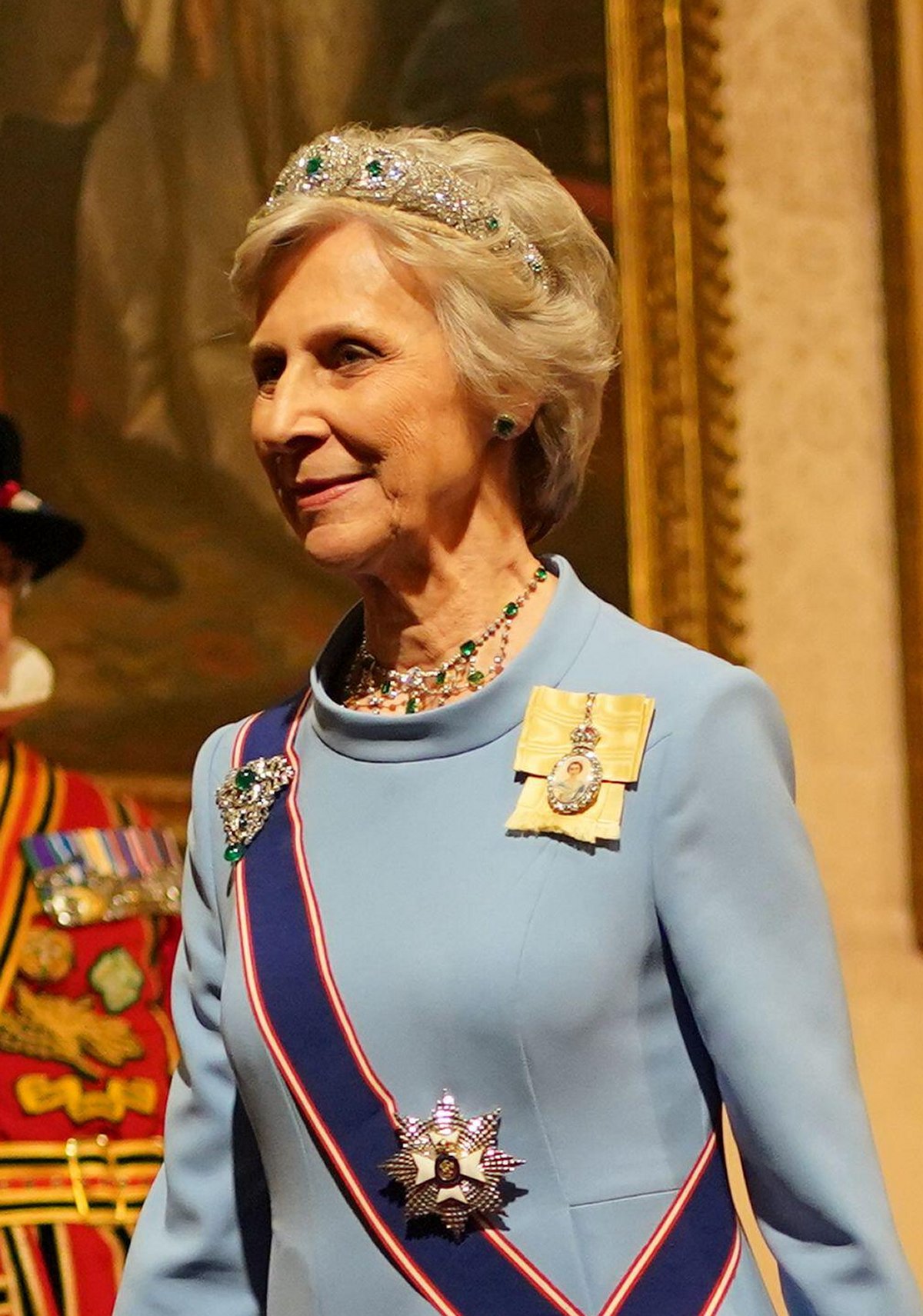
Birgitte sometimes wears the tiara with a third centerpiece option: a diamond and cabochon emerald cluster. The Gloucesters have a large amount of emerald jewelry, so this option is a valuable one for matching with pieces from that collection.
In this photograph, taken during the President of South Africa’s visit to London in 2022, she wears the tiara with several emeralds from Princess Alice’s wedding gift haul, including emerald and pearl necklaces that belonged to Queen Alexandra.
Indeed, the Gloucesters also have a second emerald tiara option: a diamond and emerald bandeau, part of the wedding present given to Princess Alice by her husband, Prince Henry, in 1935. Birgitte wears it here for the South Korean state banquet at Buckingham Palace in November 2023.
The tiara is also versatile, with the emerald sections able to be swapped out for all-diamond pieces. Birgitte sometimes wears two sections of the tiara as diamond and emerald clip brooches. You’ll spot them in the previous photograph, taken at the Guildhall during the South African state visit in the autumn of 2022.
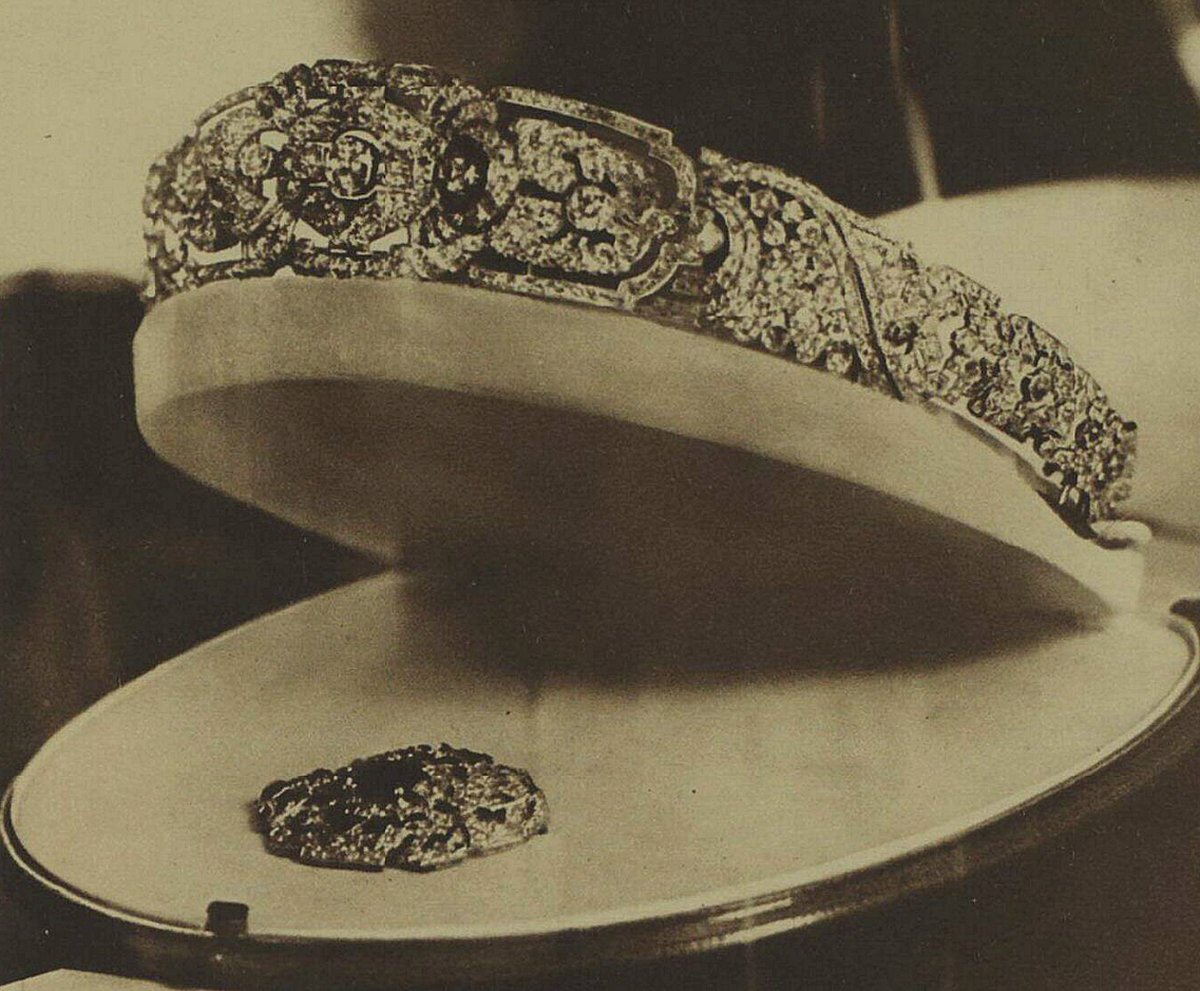
Here’s a photograph of the all-diamond version of the bandeau tiara, taken when Princess Alice’s wedding presents were displayed to the public in November 1935. Birgitte seems to prefer the emerald setting of the bandeau, while Alice was much more frequently photographed in the diamond version of the tiara.
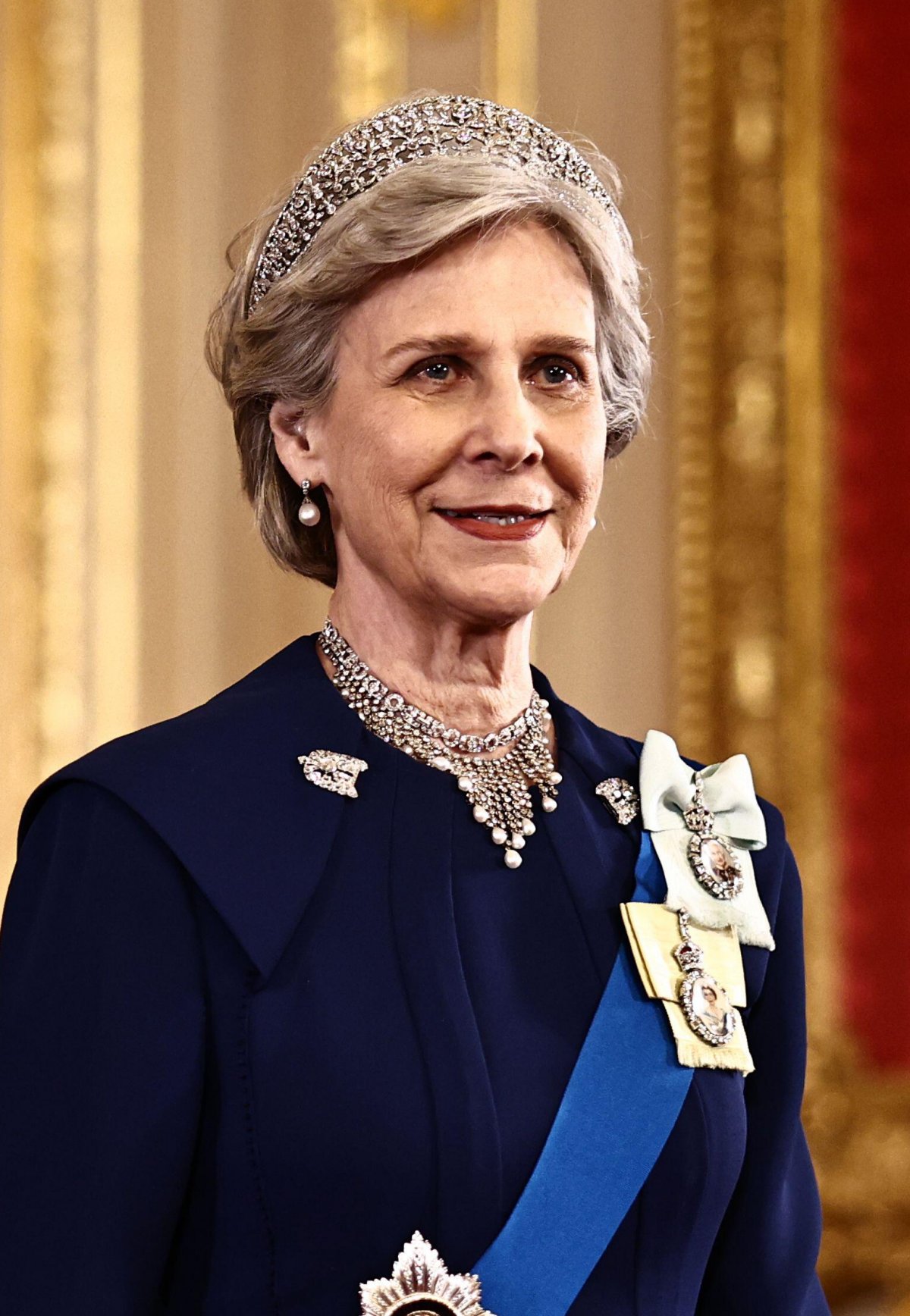
Birgitte might prefer the emerald version of the bandeau because she has other diamond tiaras at her disposal. The grandest of these is a lacy botanical diamond kokoshnik given to Queen Mary as a wedding present by Lord and Lady Iveagh in 1893.
The tiara is one of the few that Mary didn’t alter during her lifetime, and this photograph, taken during the Nigerian state banquet at Windsor Castle in March, shows that its beauty continues to impress more than a century after its creation. Birgitte also wore other diamond and pearl jewelry, including the diamond clips that can be worn as part of the aforementioned bandeau tiara.
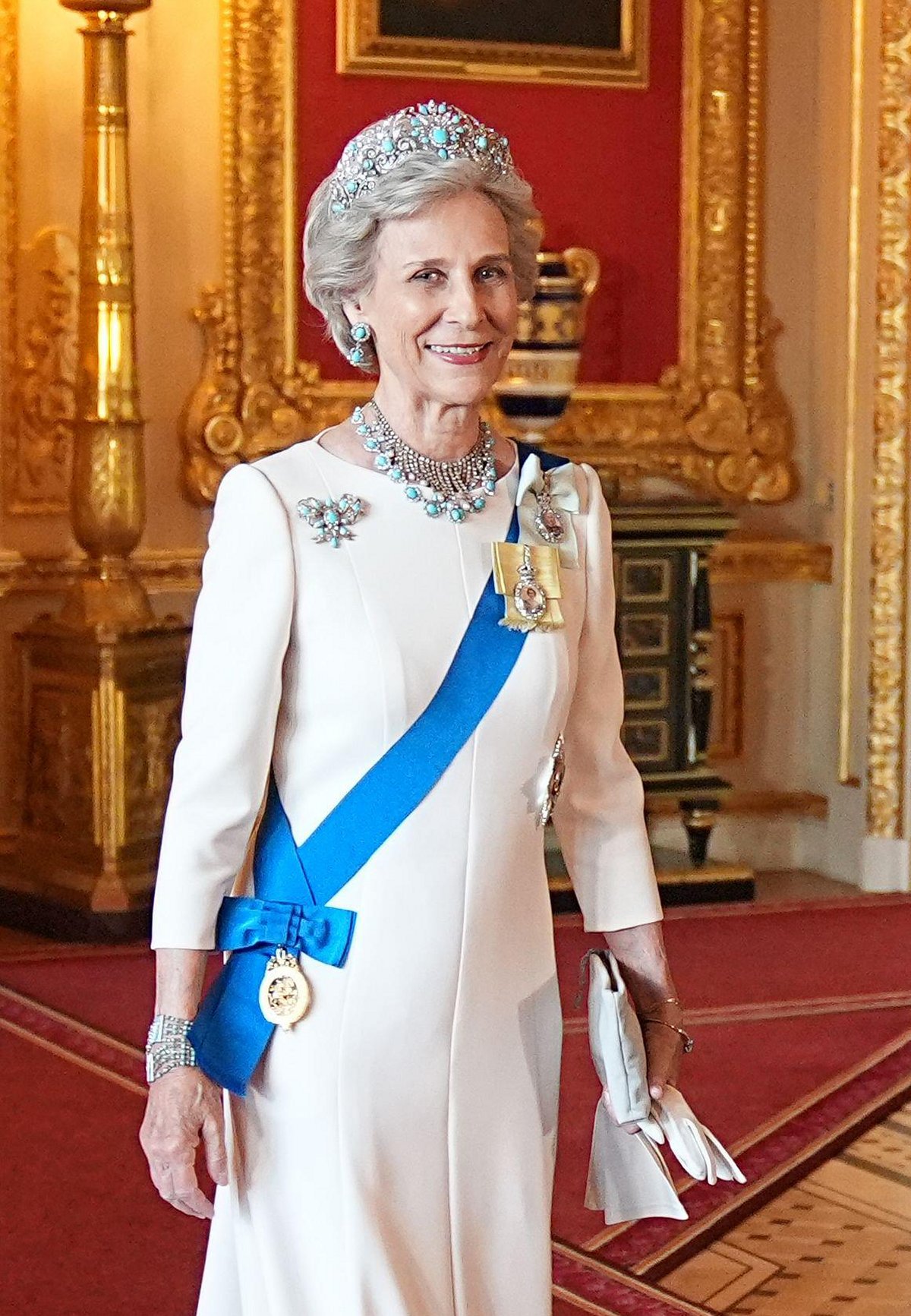
There are more colorful tiaras in Birgitte’s jewelry collection, too. This spectacular tiara of diamonds and turquoises is another piece that originated with Queen Mary’s family. The tiara was made for her mother, the Duchess of Teck, who gave it to Mary as a wedding present in 1893.
By that time, the set had evolved to become a complete parure, and all of the pieces from the suite are now with the Gloucesters. In this photograph, taken during the French state banquet at Windsor Castle last July, Birgitte wears the tiara, earrings, necklace, and bracelets from the set, as well as one of the parure’s brooches.
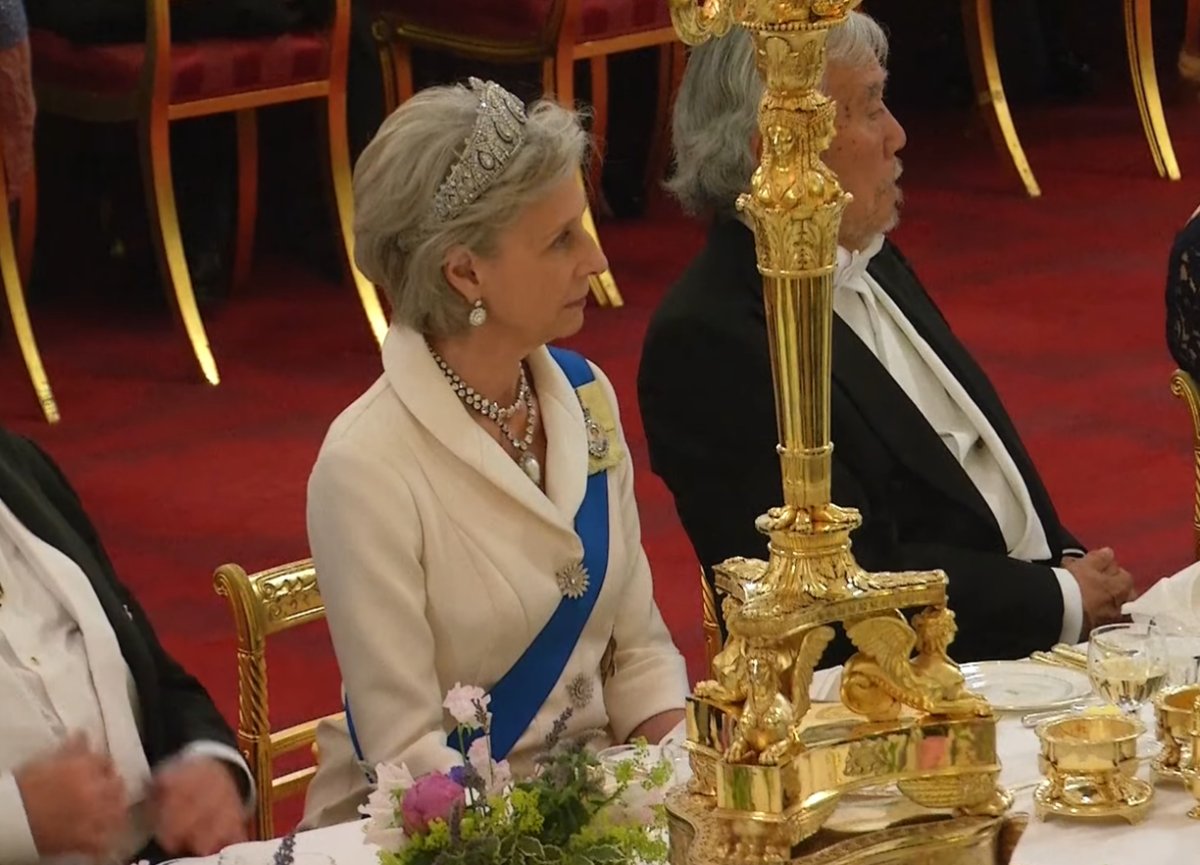
And last for today—but certainly not least—is the largest tiara in the Gloucester collection: the Cartier Indian Tiara. Originally made by Cartier in 1923 for the American-born Countess of Granard, the jewel was later purchased by Princess Marie Louise, who wore it to the coronations of 1937 and 1953. Three years after she wore it to see Elizabeth II crowned, Marie Louise died and left the tiara to her godson, the present Duke of Gloucester.
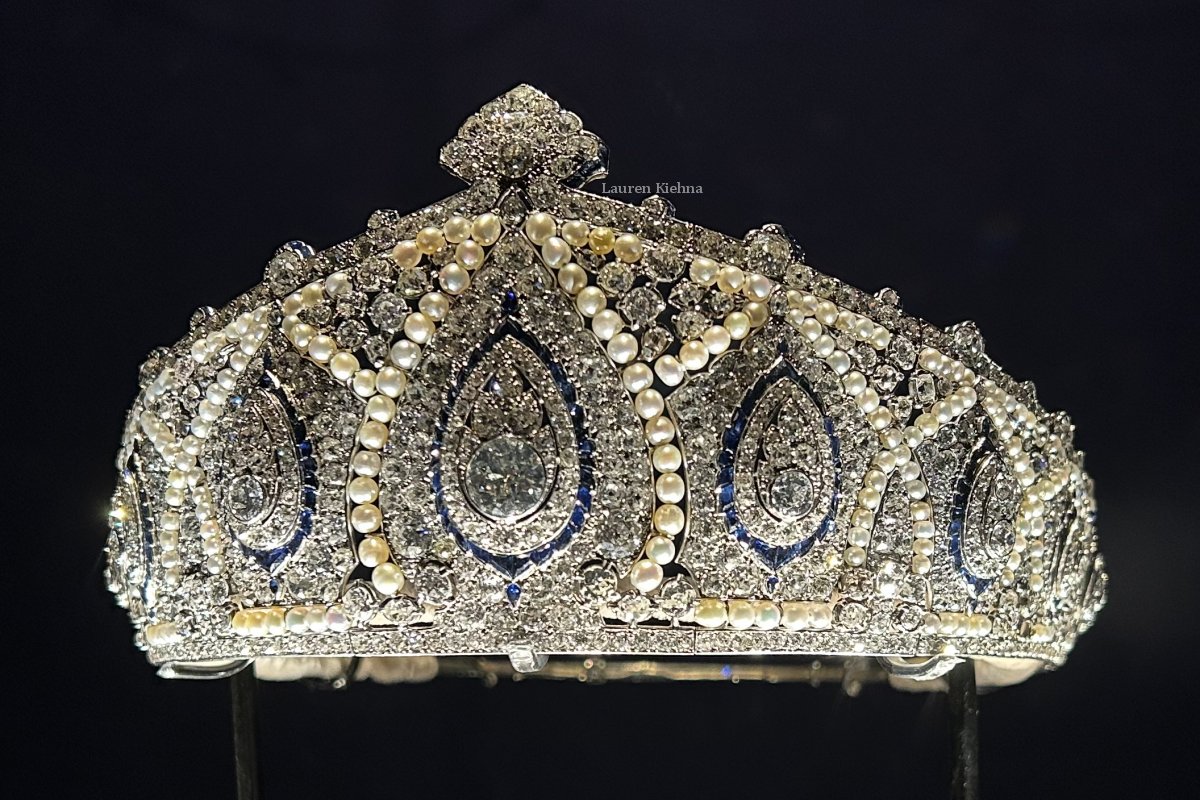
Birgitte, admirably, still wears the large tiara for gala events and state functions, but the Gloucesters have also loaned it to various Cartier exhibitions. I saw it during the recent Cartier show at the V&A, where its placard noted that it is now part of the Royal Collection, suggesting that the Gloucesters have placed it in the hands of that institution to preserve it for posterity.
Leave a Reply
You must be logged in to post a comment.