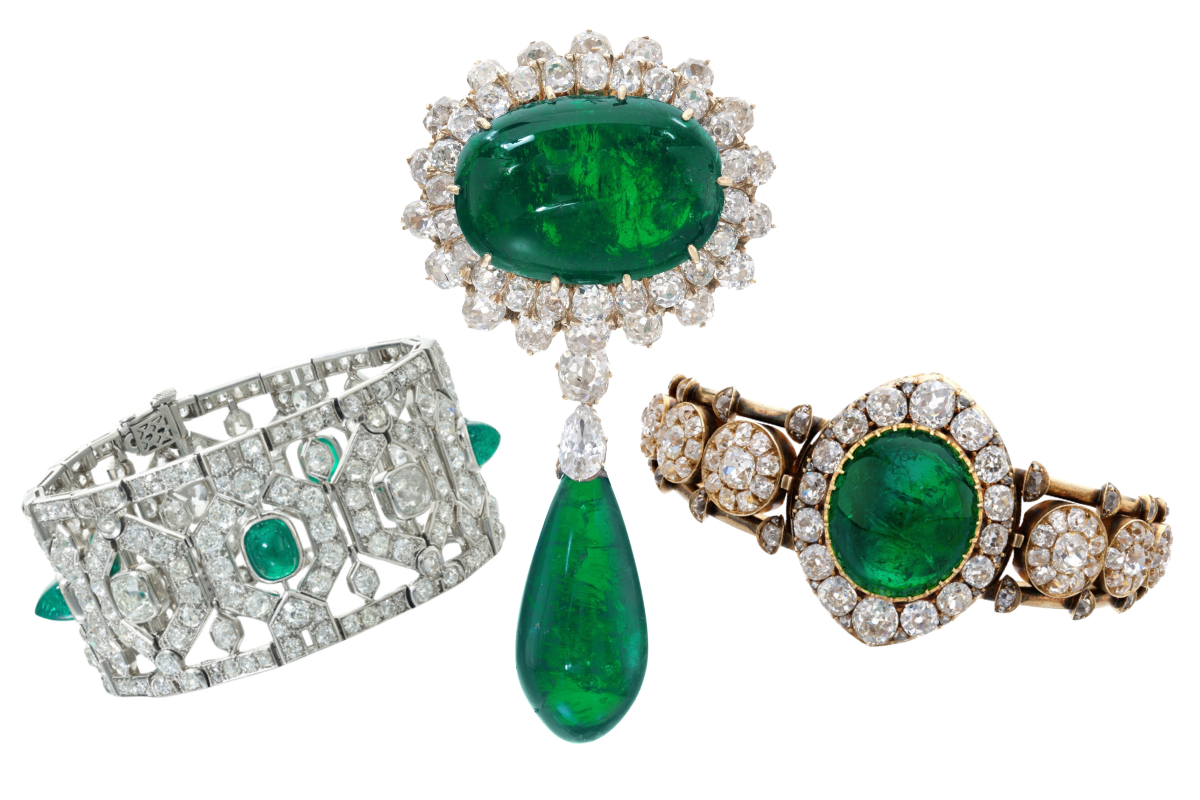
The upcoming Royal & Noble Jewels sale at Sotheby’s in Geneva is the gift that keeps on giving. We’ve discussed a fantastic meander tiara, an electric opal necklace, and a cache of Swedish royal jewels that are fall featured in the auction catalogue. Today, we’ve got a closer look at a trio of emerald pieces that will also be offered in the sale, each of which has connections to a European queen.
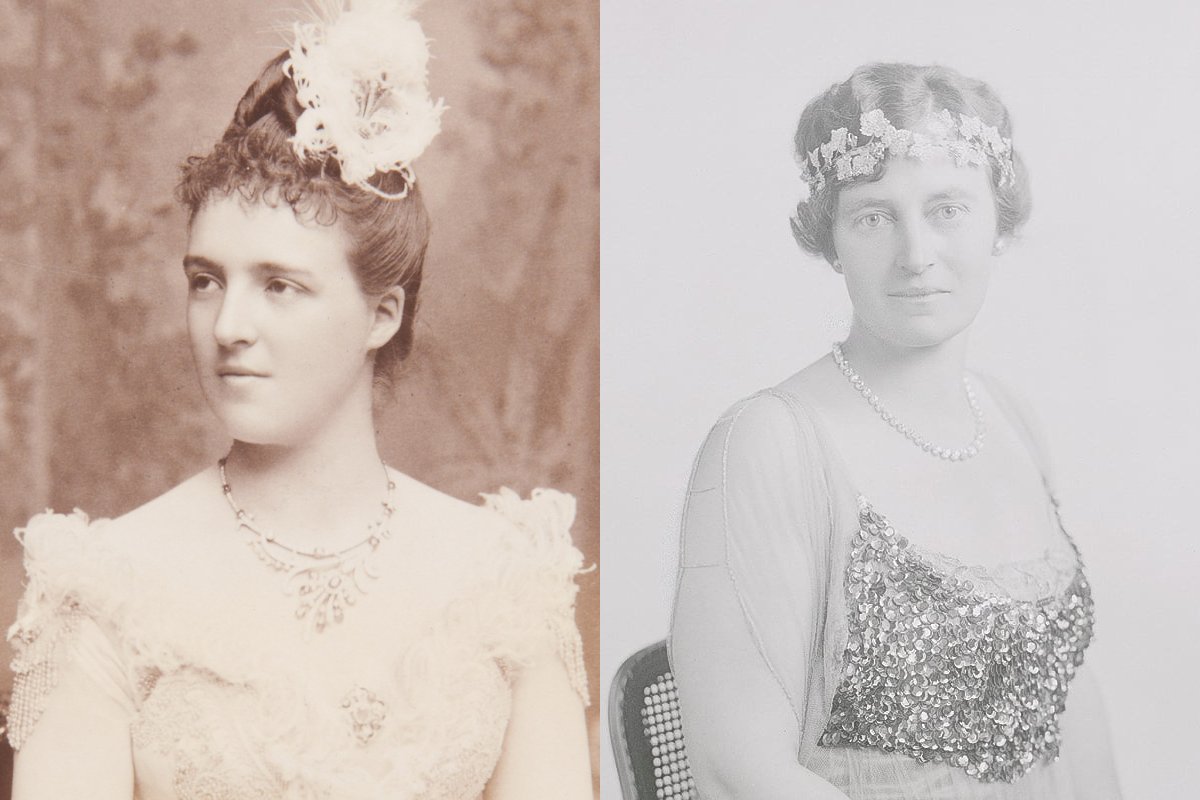
The three lots of emerald jewels—an Art Deco diamond and emerald bracelet, an emerald and diamond brooch, and a nineteenth-century emerald and diamond bangle—come from the collections of a pair of royal cousins. Amélie of Orléans, owner of the brooch and bangle, was Queen of Portugal from 1889 until 1908, while the owner of the bracelet, Alexandrine of Mecklenburg-Schwerin, was Queen of Denmark from 1912 until 1947.
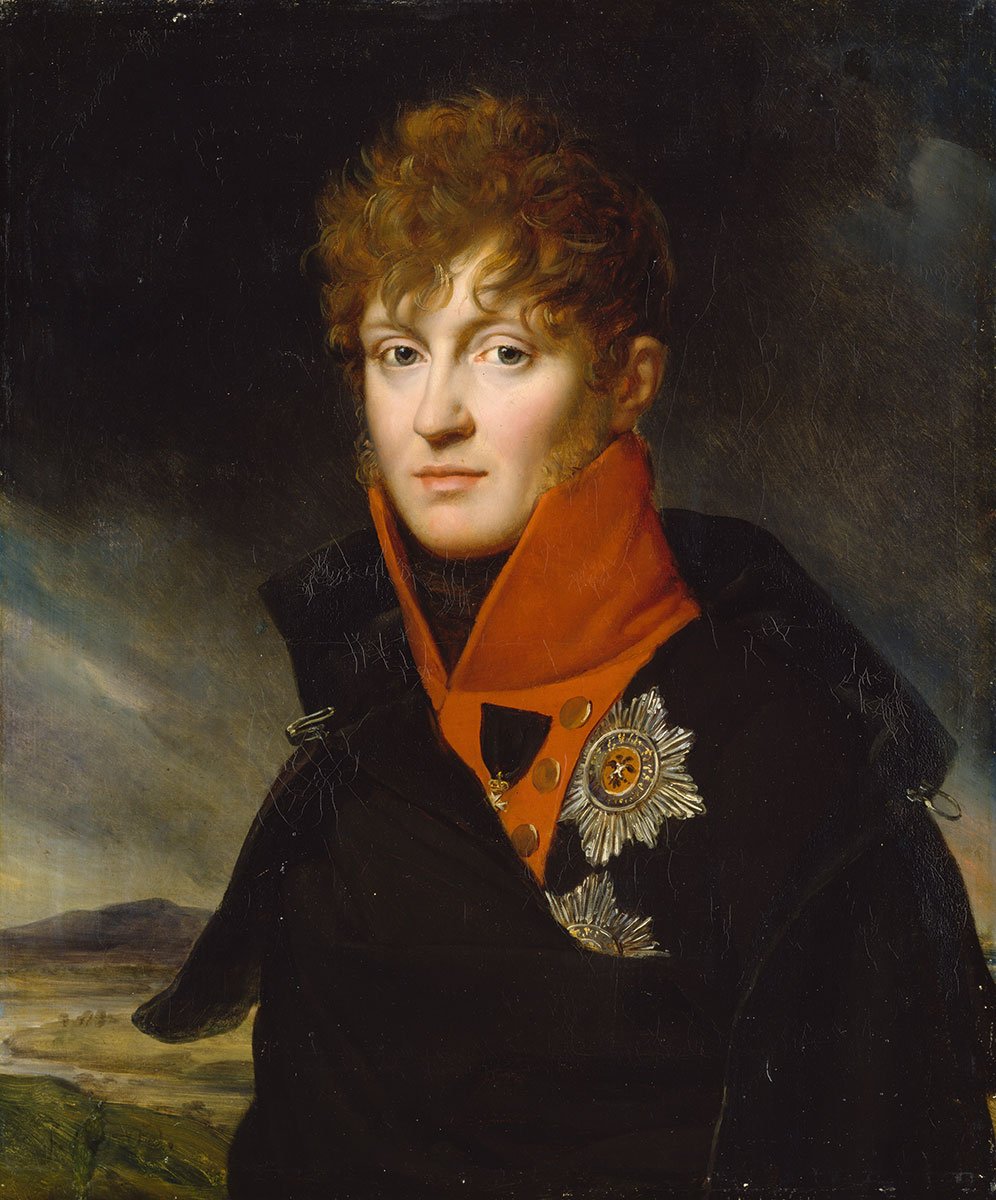
The two queens were third cousins once removed, both descendants of Hereditary Grand Duke Friedrich Louis of Mecklenburg-Schwerin (1778-1819). Friedrich Louis was married three times. Queen Alexandrine was his great-great-granddaughter through his first marriage to Grand Duchess Elena Pavlovna of Russia. Queen Amélie was his great-granddaughter through his second marriage to Princess Caroline Louise of Saxe-Weimar-Eisenach.
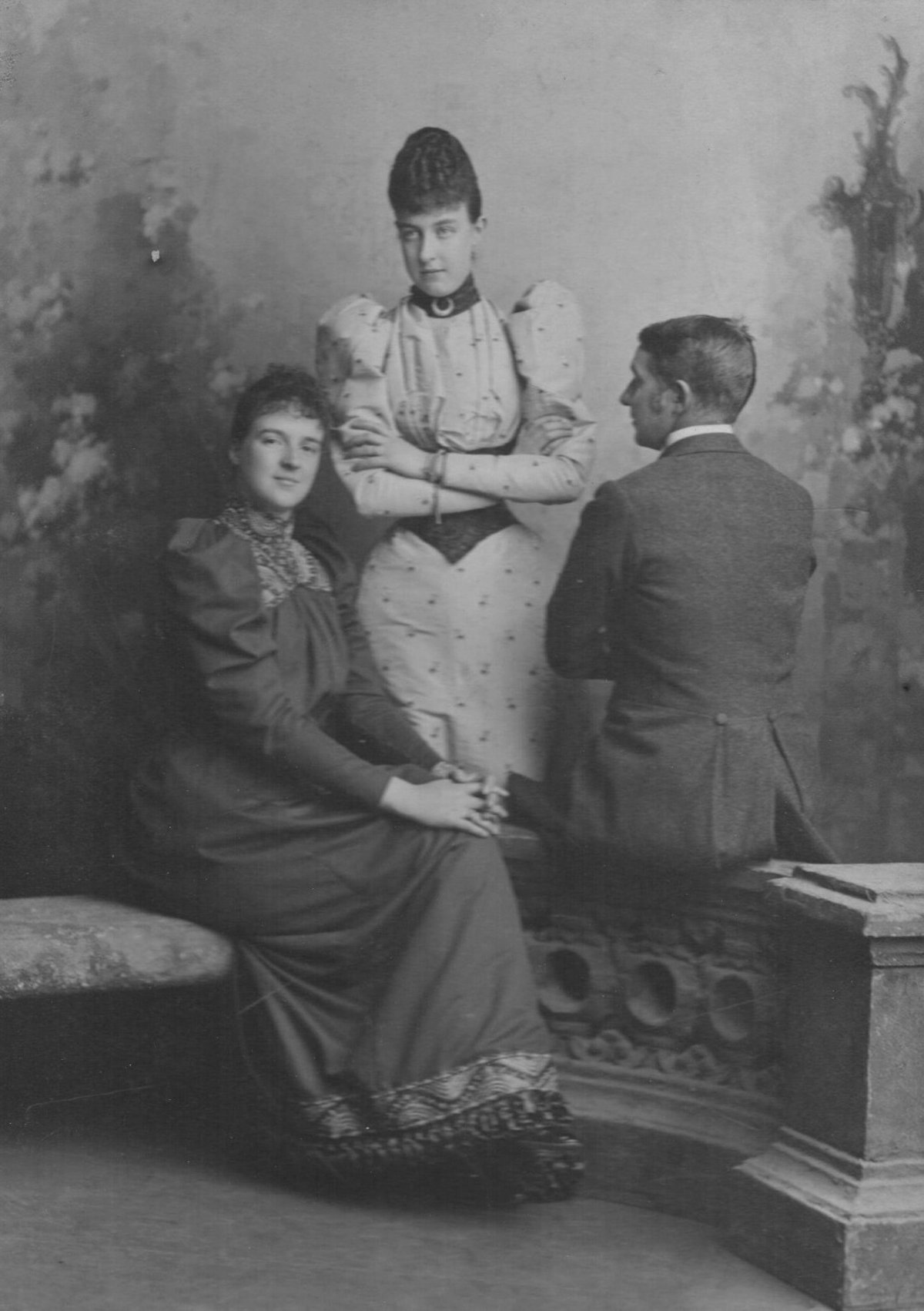
Amélie, who had a celebrated collection of emeralds, was also a great-granddaughter of King Louis Phillipe I of the French. She was born in 1865, when the Orléans family was residing in exile in England. Amélie was the eldest of the seven children born to the Count and Countess of Paris. She was particularly close to the next two in line: her brother, Philippe (later Duke of Orléans), and her sister, Hélène (later Duchess of Aosta), who carried on a famous romance with the Duke of Clarence before his engagement to Mary of Teck.
Amélie’s siblings all married well, but her wedding to the Crown Prince of Portugal in 1886 was a particular triumph for the family. Carlos and Amélie had two sons: Luis Felipe, born in 1888, and Manuel, who was born just weeks after his parents became King and Queen of Portugal in 1889. Carlos reigned until 1908, when an assassination in Lisbon killed both him and Luis Felipe. King Manuel, who took the throne after the deaths of his father and brother, reigned for just two years before the monarchy was abolished entirely.
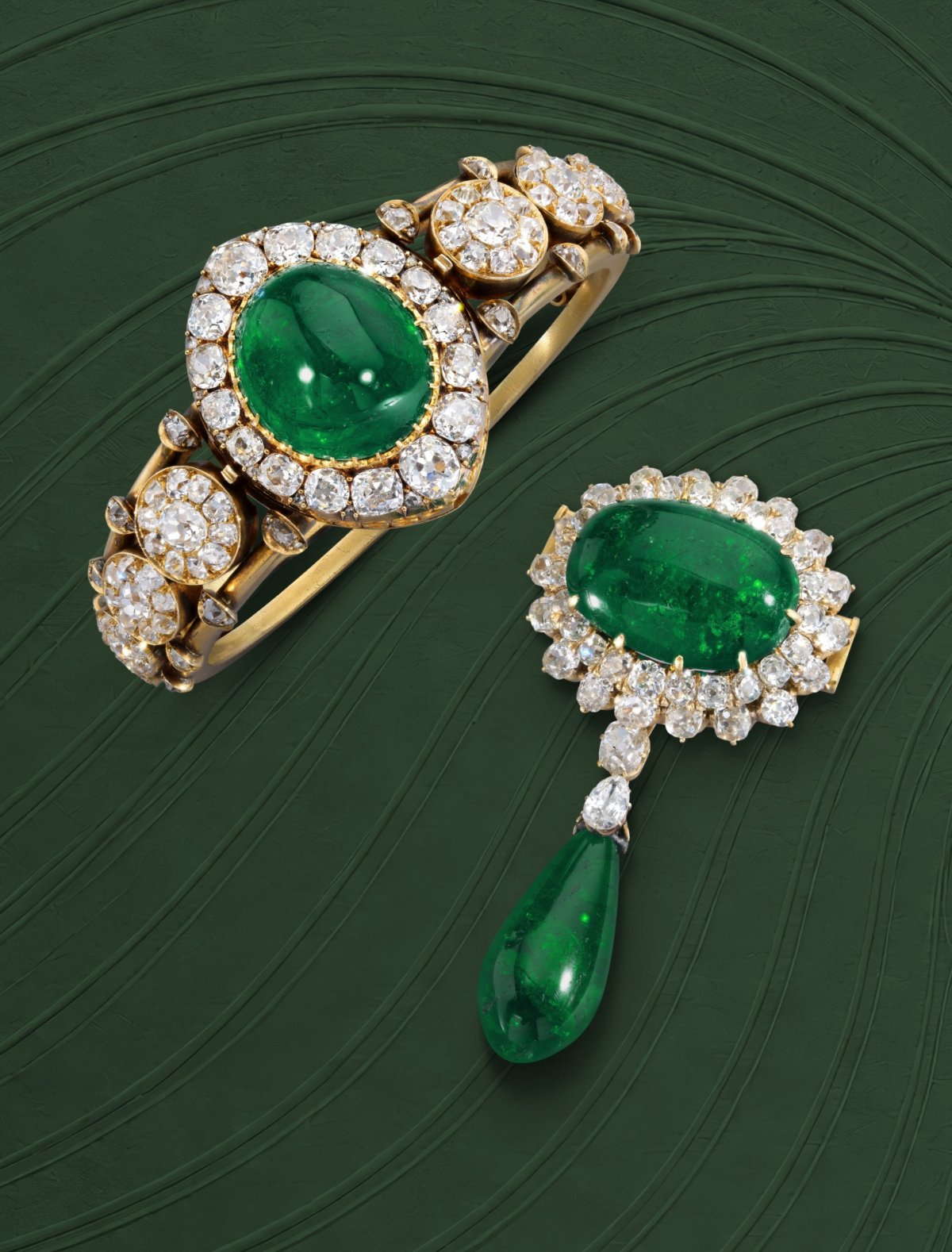
During her decades as Portugal’s queen consort, Amélie became a popular figure within the royal family. She acquired an impressive array of jewelry to help bolster her image, including a celebrated collection of emerald and diamond pieces. Among these were the brooch and bangle which are now being sold at Sotheby’s. She brought much of her jewelry with her into exile in France, where she remained until her own passing in 1951.
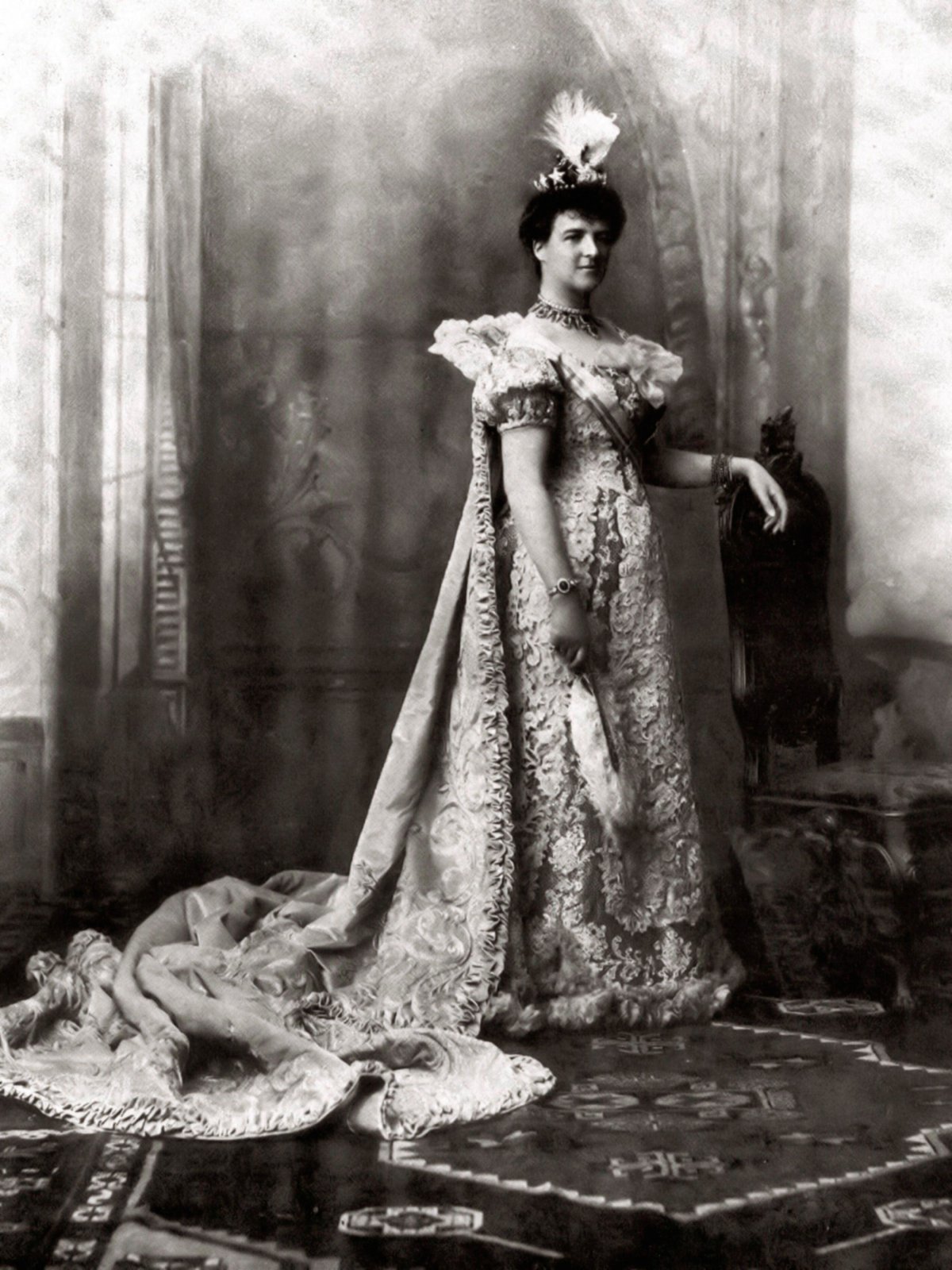
This formal portrait shows Amélie in court dress. Her tiara, a diadem of diamond stars, was a legacy from her mother-in-law, Queen Maria Pia. She also wears a magnificent emerald and diamond necklace that is thought to have been dismantled after her death, with its individual elements reconfigured and sold. You’ll also spot a diamond and emerald bracelet on her right wrist. It’s the bangle that will be sold next week in Switzerland.
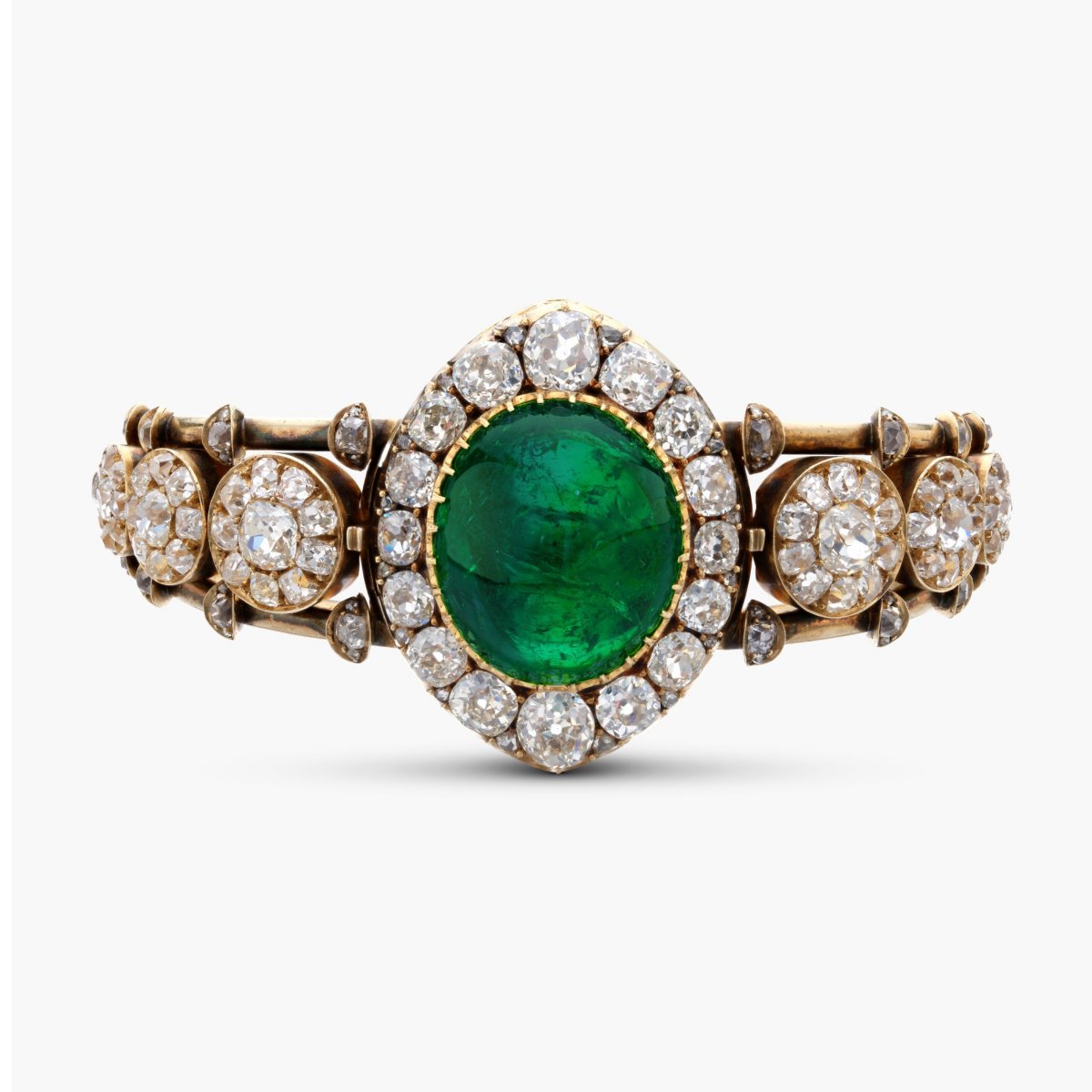
The lot notes from Sotheby’s call the jewel a “superb antique emerald and diamond bangle.” They date the piece to the 1880s and describe it as having a “detachable centre featuring a cabochon emerald weighing 27.38 carats within an old mine-cut diamond border accented by rose-cut diamonds.”
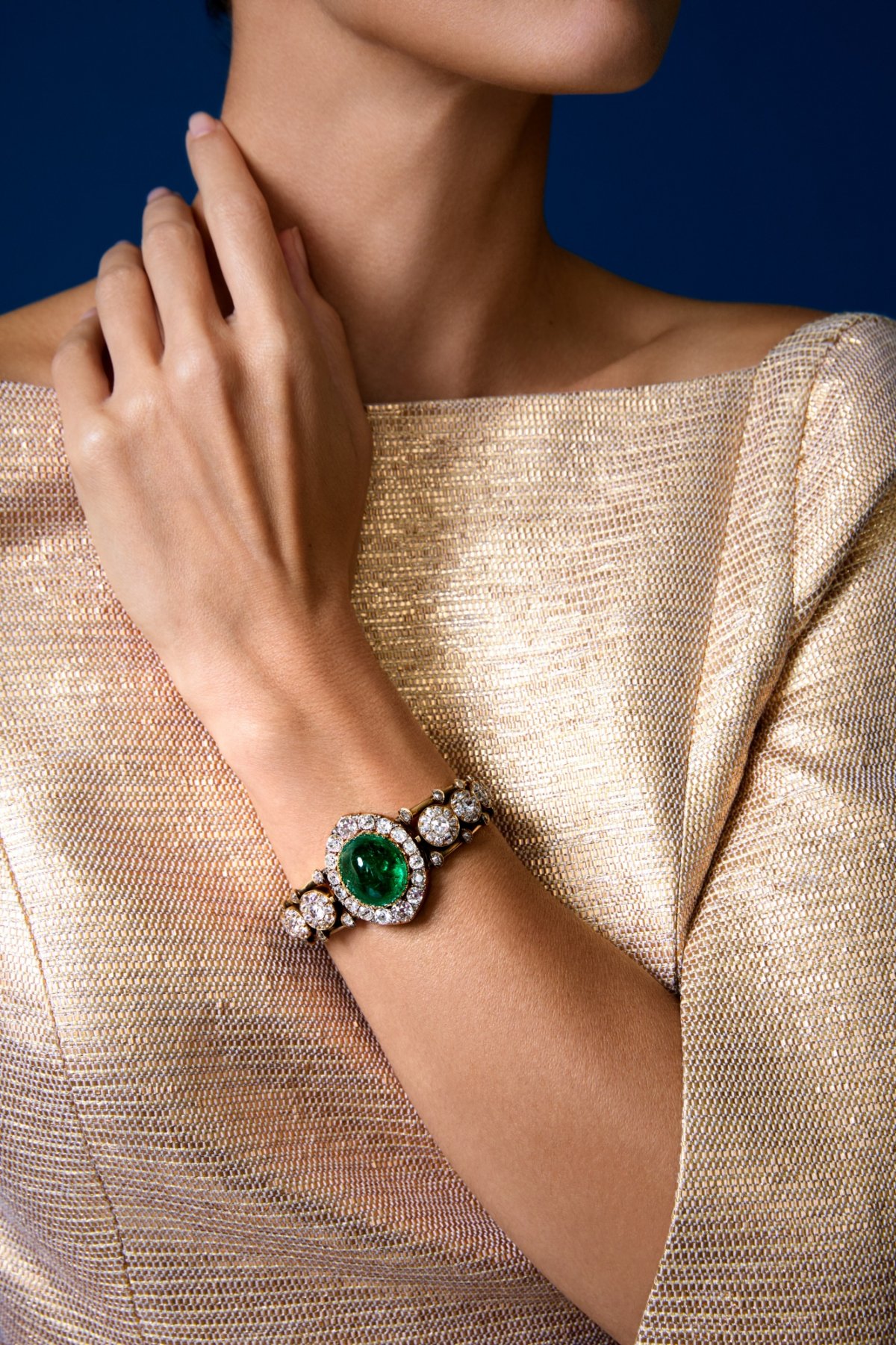
The catalogue also outlines the bracelet’s path from Portugal to Geneva. Amélie left the bracelet to her niece, Princess Esperanza, who was married to a Brazilian-Portuguese prince. Their daughter, Princess Maria da Gloria of Orléans-Braganza, was the jewel’s next owner. Maria da Gloria was married to her first husband, Crown Prince Alexander of Yugoslavia, when she sold the bracelet at Sotheby’s in 1981. It was subsequently owned by Gabriele Murdock, a notable philanthropist and supporter of the arts who died in 1985.
Next week’s auction marks the third time that Sotheby’s has handled the sale of the emerald and diamond bangle. This time around, it’s expected to bring between 70,000-100,000 Swiss francs (or around $86,000-122,000 USD).
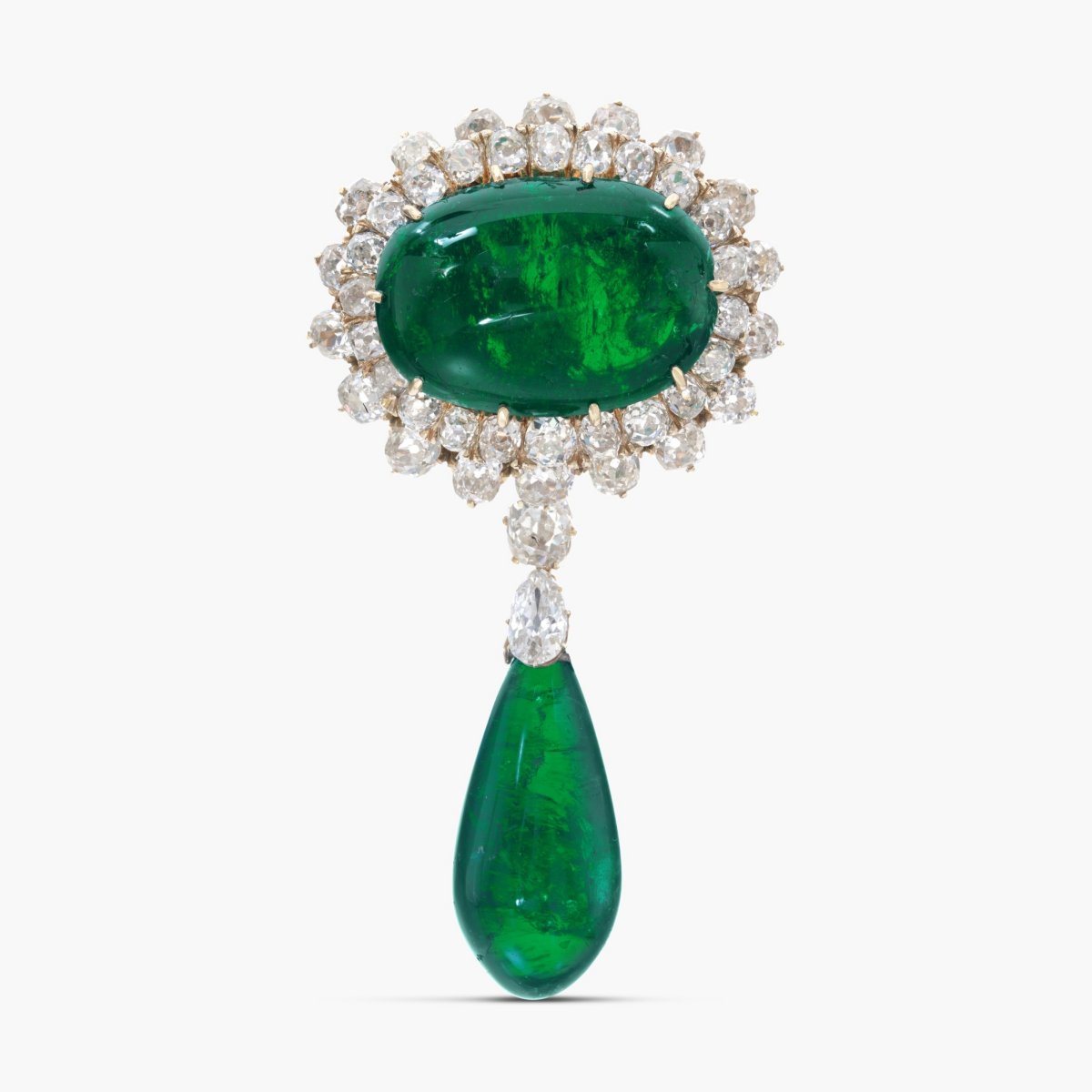
The second piece from Amélie’s collection, this nineteenth-century brooch set with Colombian emeralds, followed the same chain of inheritance from Lisbon to the upcoming sale in Switzerland. The lot notes for the jewel explain that the brooch features “a cabochon emerald within a double border of old mine-cut diamonds, suspending a detachable emerald drop surmounted by a pear-shaped diamond.”
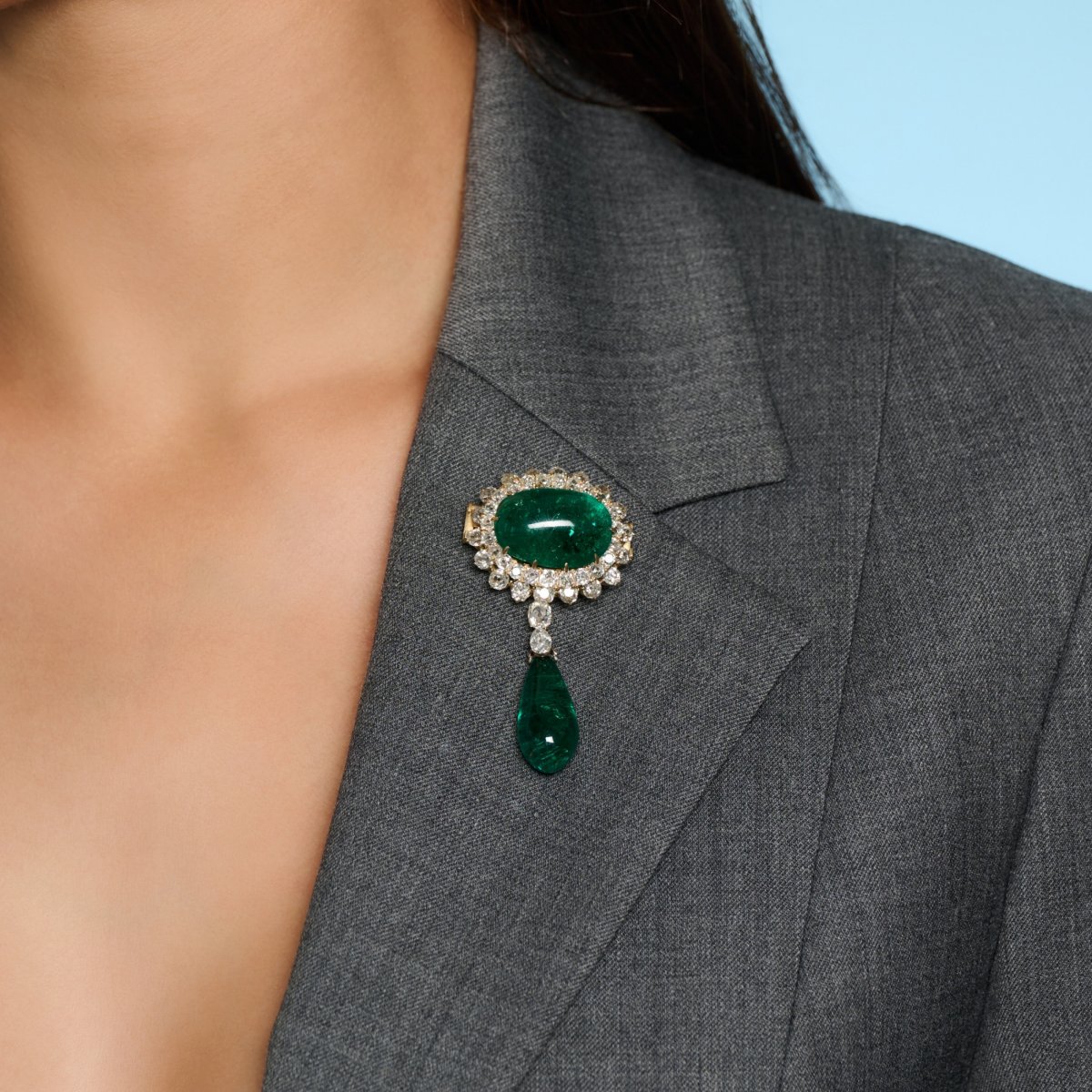
Alterations to the piece have been made over the years, including a remodel during Gabriele Murdock’s tenure as its owner. Sotheby’s explains that she “had the brooch altered to become an interchangeable clasp to be worn from a cultured pearl necklace.” They’re expecting a similar result from the brooch and the bangle. The brooch has an identical auction estimate: 70,000-100,000 Swiss francs (or around $86,000-122,000 USD).
The third emerald piece that I’ll highlight today comes from the collection of Amélie’s distant cousin, Queen Alexandrine of Denmark. Born in Germany on Christmas Eve in 1879, Alexandrine was the eldest daughter of Grand Duke Friedrich Franz II of Mecklenburg-Schwerin and his Romanov wife, Grand Duchess Anastasia Mikhailovna of Russia. Because of her father’s precarious health, Alexandrine spent much of her childhood in warmer climates, including a notable period of residence in Cannes, where her father sadly died in 1897.
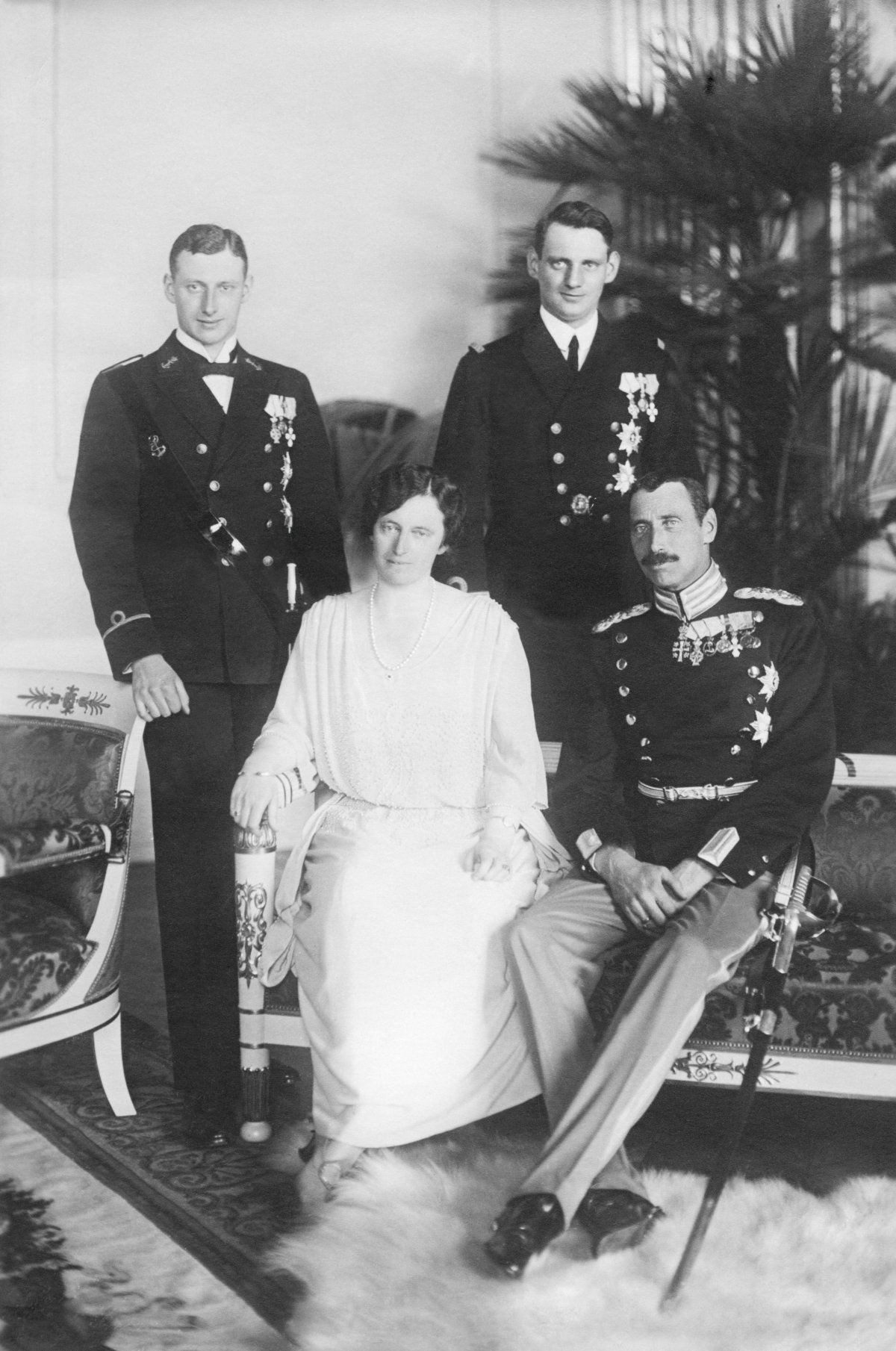
The death of Alexandrine’s father took place shortly after her engagement to Prince Christian of Denmark had been announced. He was the eldest son of the Crown Prince and Crown Princess of Denmark. The couple married in a quiet ceremony in France in 1898. They had two sons, Frederik and Knud, and in 1912 they became King Christian X and Queen Alexandrine.
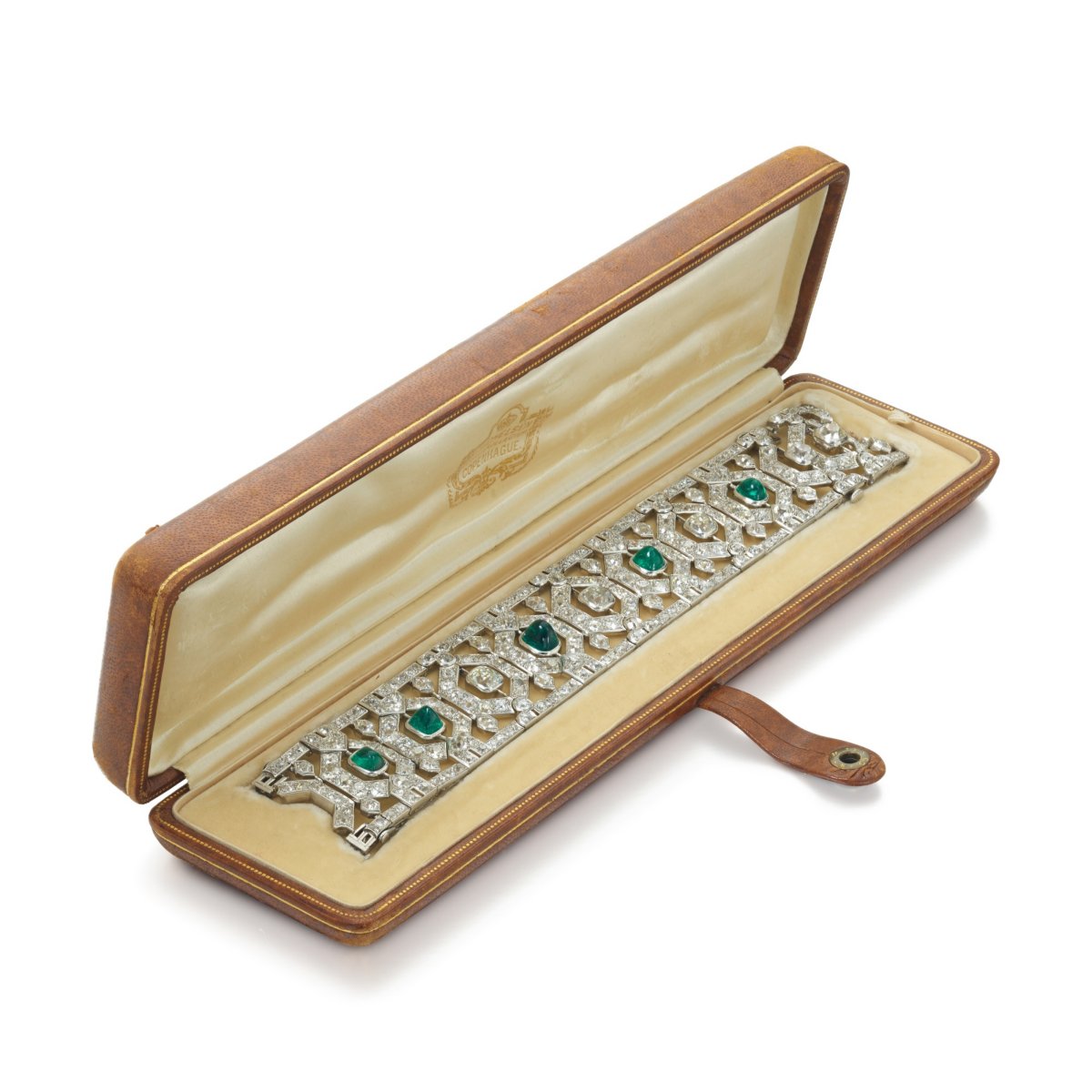
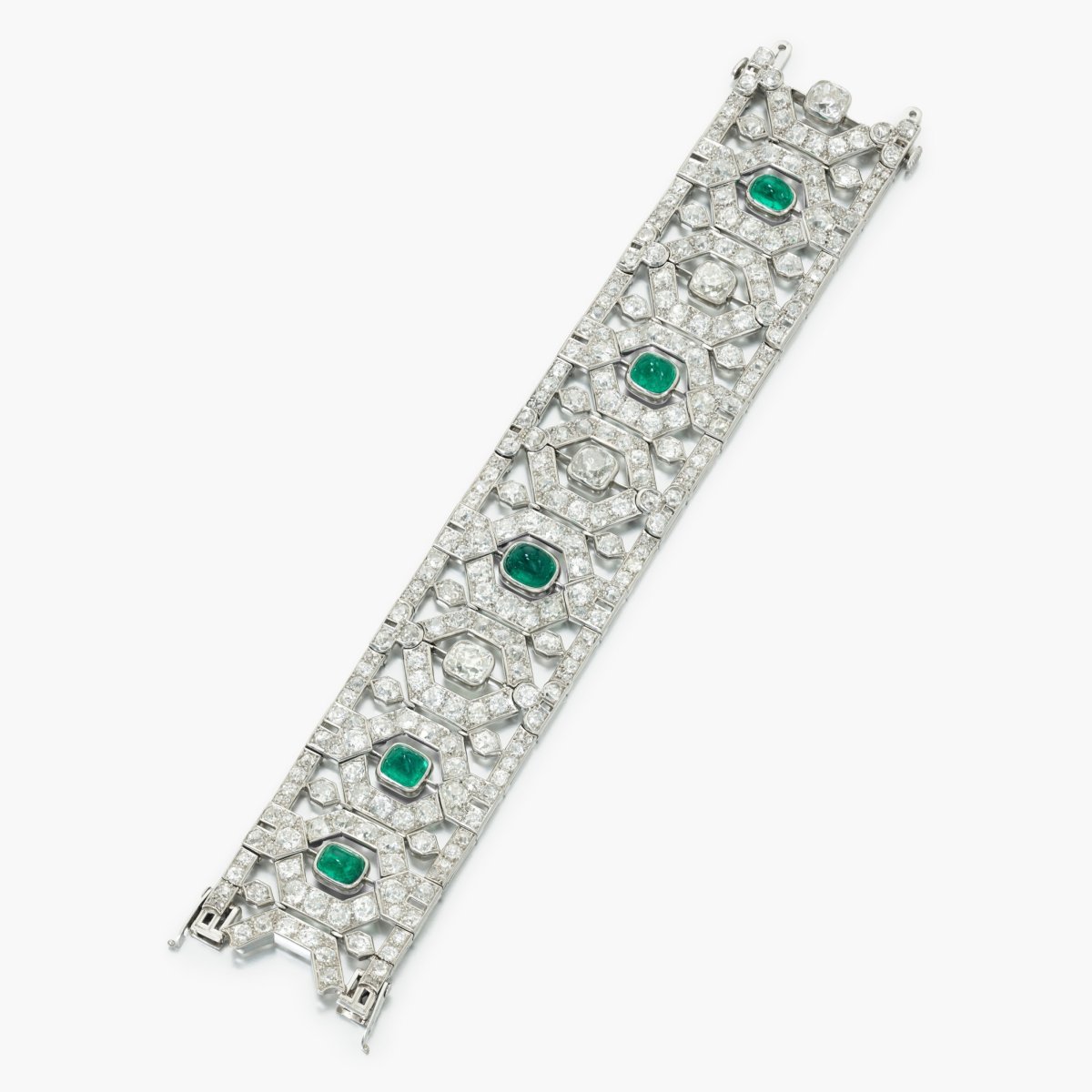
Alexandrine was not a notable collector or enjoyer of jewelry, but she did amass a small collection of important pieces, including the Art Deco-style bracelet of emeralds and diamonds that will be sold next week in Switzerland. Sotheby’s describes the gems in the bracelet as “sugarloaf cabochon emeralds and old mine-cut diamonds.” The lot notes clarify that the jewel was “a relatively late and uncharacteristically lavish addition to her jewellery collection,” adding, “It was most likely a gift from her husband on the occasion of their silver wedding anniversary in 1923 or a present for her fiftieth birthday in 1929.”
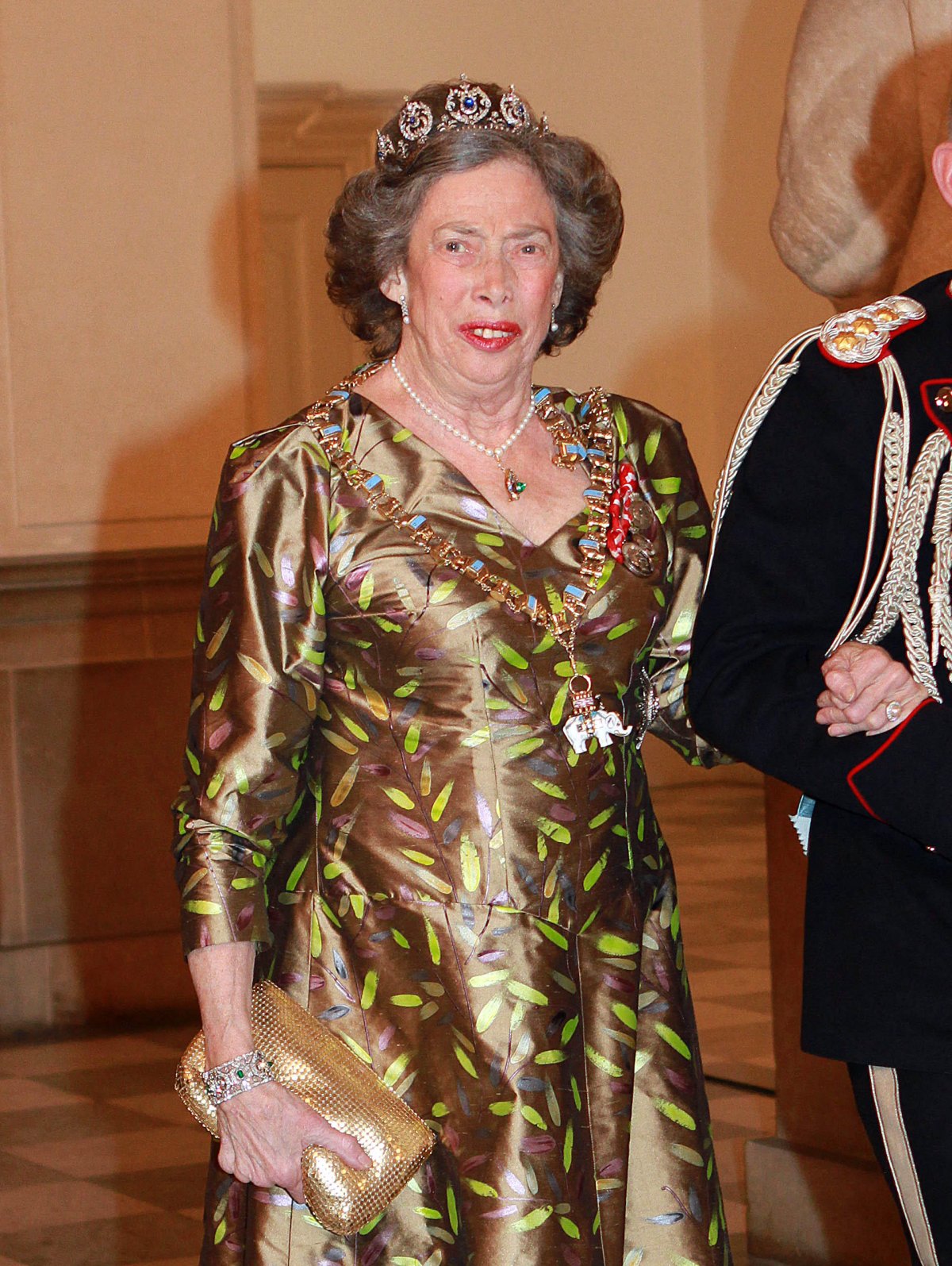
Alexandrine left the bracelet to her second son, Hereditary Prince Knud, and his wife, Princess Caroline-Mathilde. In turn, they left the jewel to their only daughter, Princess Elisabeth. She wore the bracelet throughout her long life, including this appearance in 2012 during the celebrations of the Ruby Jubilee of her cousin, Queen Margrethe II.
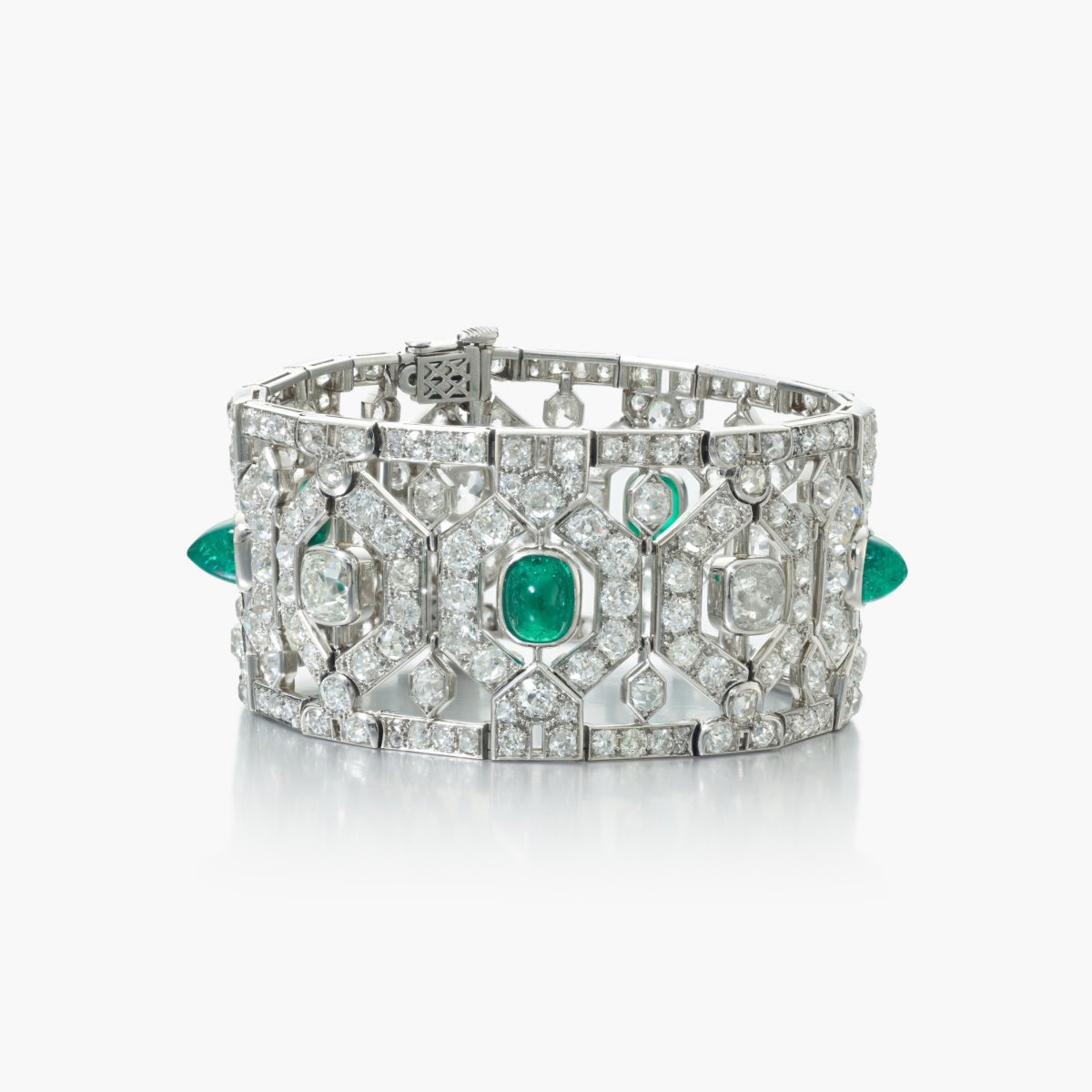
After her death in 2018, the bracelet was sold by Elisabeth’s family in an auction at Bruun Rasmussen in Denmark in 2022. (I covered the sale here.) The result that time around was a hammer price of 700,000 DKK ($106,000 USD), about double its auction estimate. The experts at Sotheby’s are expecting a more modest result this time: 50,000-80,000 Swiss francs, or around $61,000-98,000 USD.
The Danish royals have notably reacquired another of Elisabeth’s most important jewels: Queen Alexandrine’s sapphire and diamond tiara. Could they be hovering around this auction lot as well?
Leave a Reply
You must be logged in to post a comment.