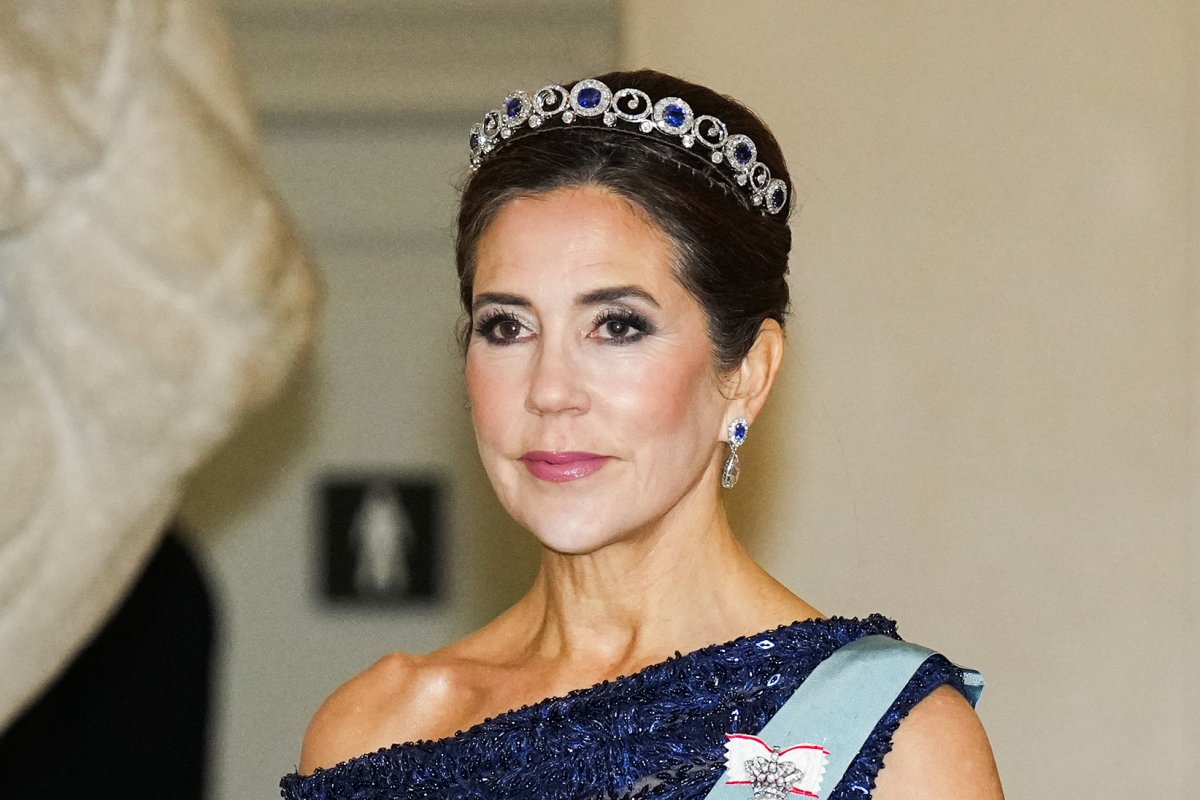
We’ve got a sapphire surprise out of Denmark: Queen Mary has helped to redesign Queen Alexandrine’s sapphire and diamond tiara! She made her debut in the new setting on Monday in Copenhagen.
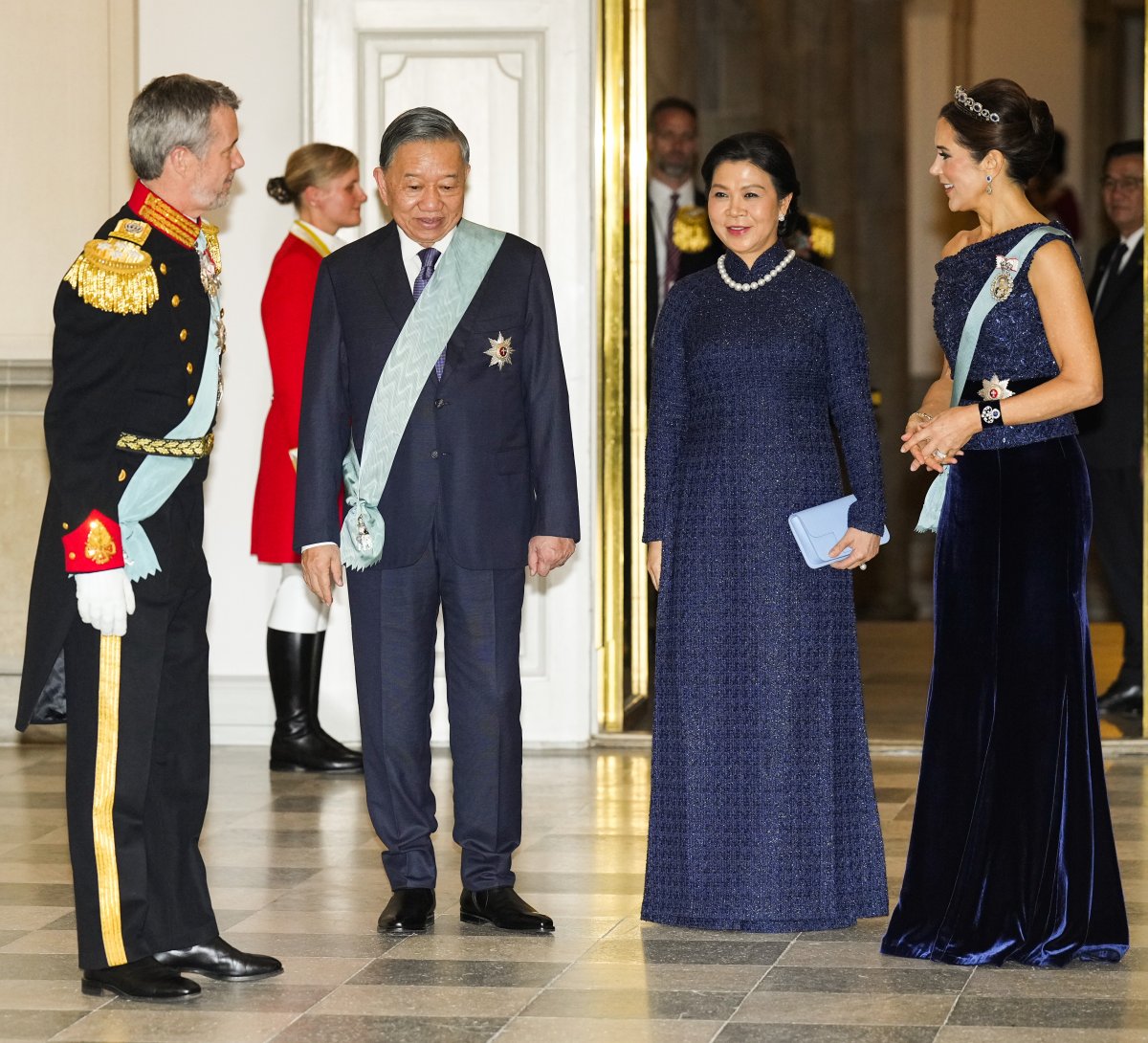
On Monday evening, the first day of the Vietnamese state visit to Denmark concluded with a glittering state banquet at Christiansborg Palace in Copenhagen. King Frederik X and Queen Mary hosted the dinner for President Tô Lâm and his wife, Ngô Thị Phương Ly. Frederik, Mary, and President Lâm all wore the insignia of Denmark’s Order of the Elephant for the occasion.
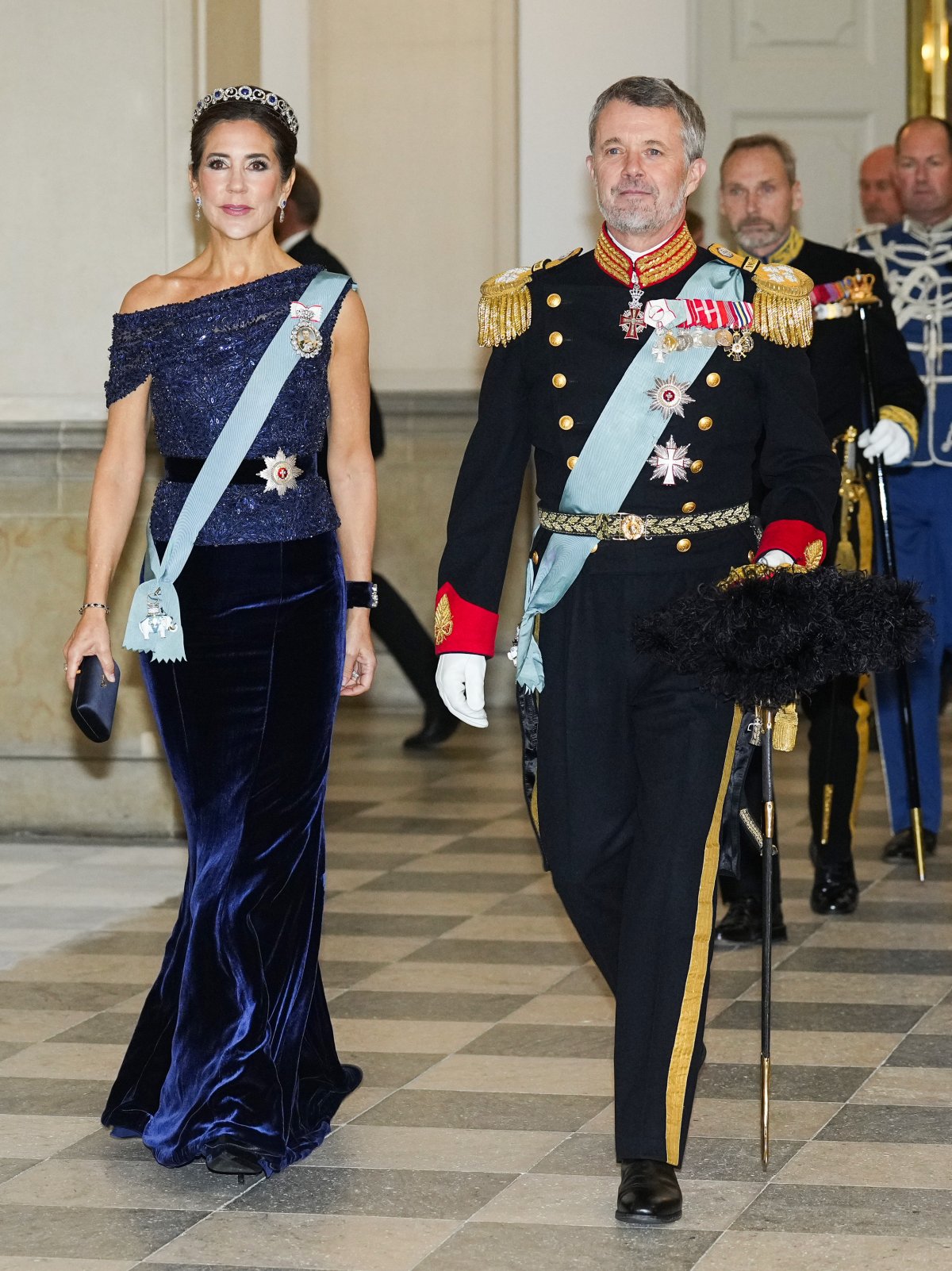
King Frederik wore full gala uniform and decorations for the banquet, and Queen Mary opted for a favorite evolving gala ensemble from her closet. The midnight blue gown is really part of a mix-and-match set from the designer Jesper Høvring, which features a beaded top with an off-the-shoulder neckline. Mary has worn the top in the past with a matching skirt, but this time around she opted to pair it with a blue velvet skirt.
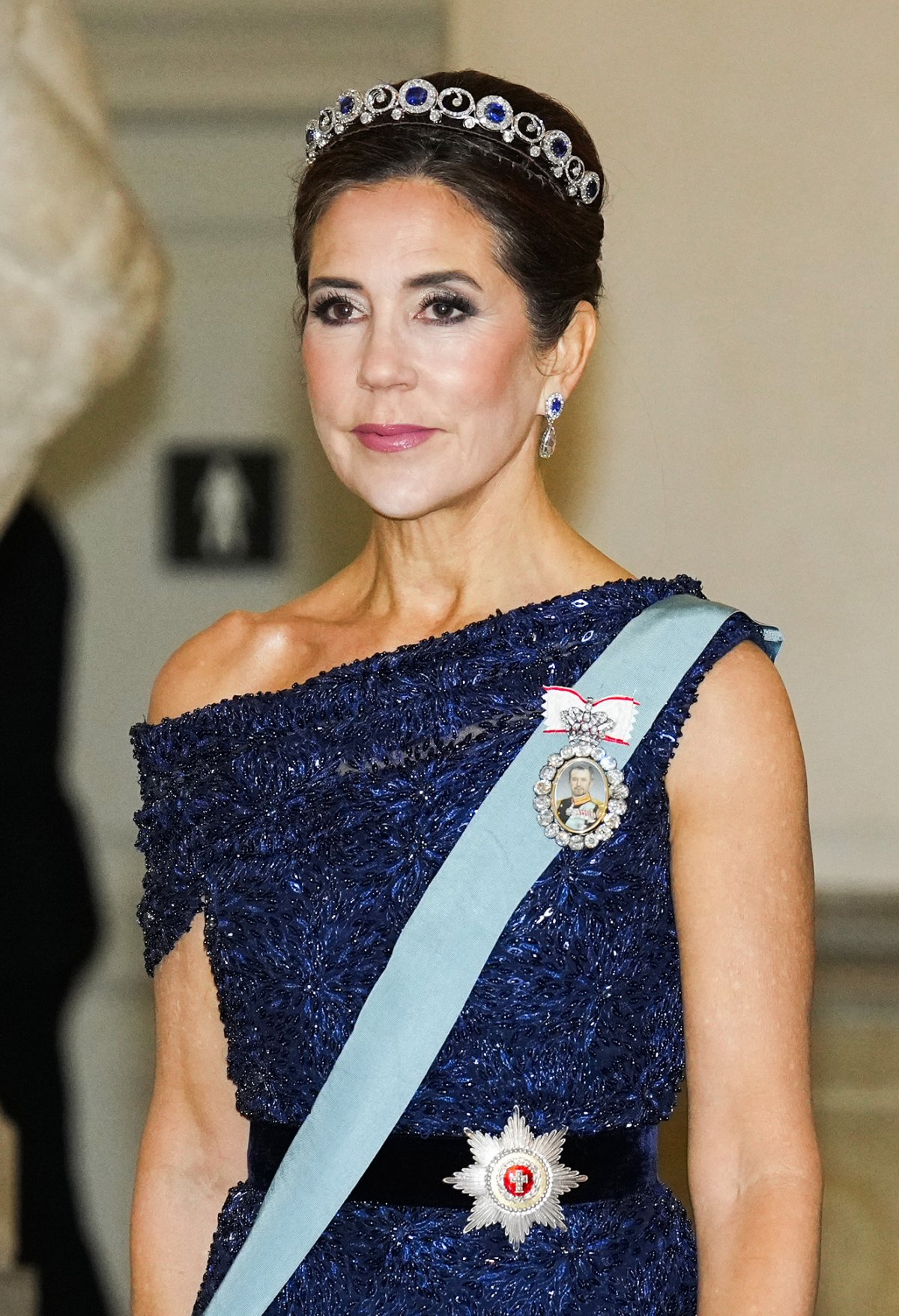
The choice of a dark blue gown was meant to match with the most important part of Mary’s outfit: a new-to-her tiara. This bandeau of diamonds and sapphires originally belonged to King Frederik’s great-grandmother, Queen Alexandrine. The jewel was originally given to Alexandrine as a wedding present when she married the future King Christian X in 1898. It’s generally said that the gift came from some very important relatives: her Russian imperial cousins, Emperor Nicholas II and Empress Alexandra Feodorovna.
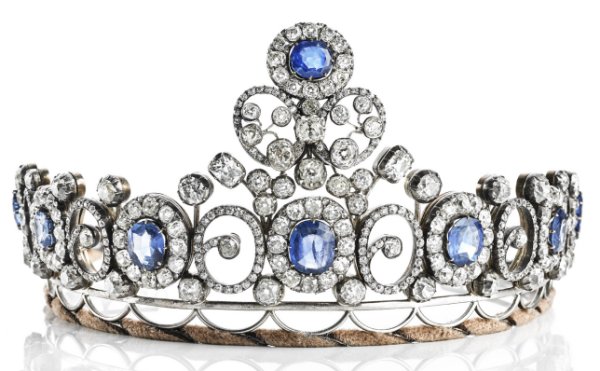
The setting of the tiara evolved over time. It was always a convertible bandeau style tiara, with that diamond cluster and scroll element placed in the center of the piece. After Queen Alexandrine gave the tiara to her daughter-in-law, Princess Caroline-Mathilde, in 1933, alterations were made. In the 1960s, the center element was placed on top of the rest of the bandeau, giving the piece a more traditional tiara shape.
The piece stayed with Caroline-Mathilde and her descendants until 2018. Three of her granddaughters auctioned the tiara at Bruun Rasmussen that year. The tiara sold for two million kroner, or about $290,000. The new buyer made the tiara available to be displayed at the Amalienborg Museum in 2020.
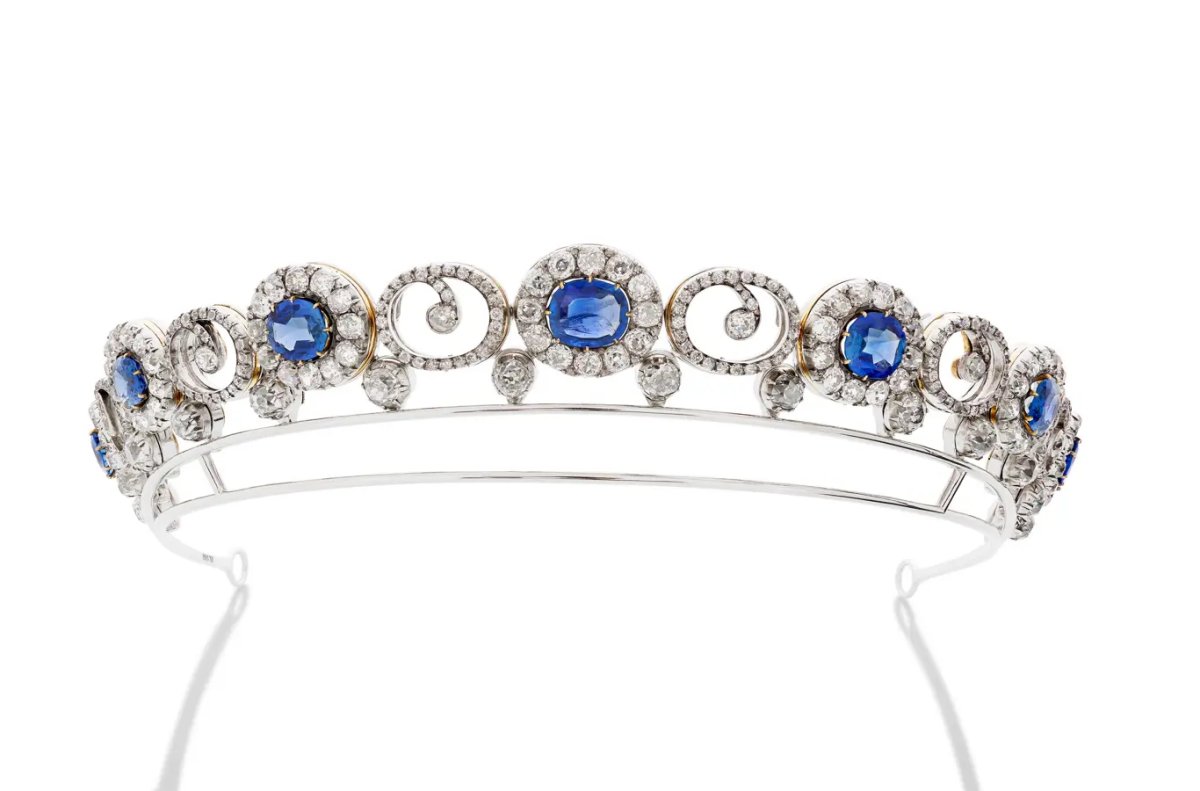
After six years in a private collection, the jewel was reunited with the Danish royals. The official website of the Danish royal court shares, “The Royal Collection acquired the piece of jewellery from a private owner in 2024.” Since then, work has gone on behind the scenes to adapt the tiara again, continuing the long history of reimagination that the piece has gone through over the past century. As you can see above, the top piece of the tiara has been removed, and the cluster and scroll elements have been turned to sit in a more horizontal position.
The Danish court explains, “Together with jewellery designers Diana Holstein and Hanan Emquies, the Queen, in close collaboration with the Royal Collection, has helped to give the piece of jewellery a new, fully reversible design. A design that respects the piece’s history and special tradition and makes it usable today. The piece can now be worn as a tiara, necklace or brooch, continuing the historical tradition of royal jewellery being adapted to the needs and tastes of new generations.”
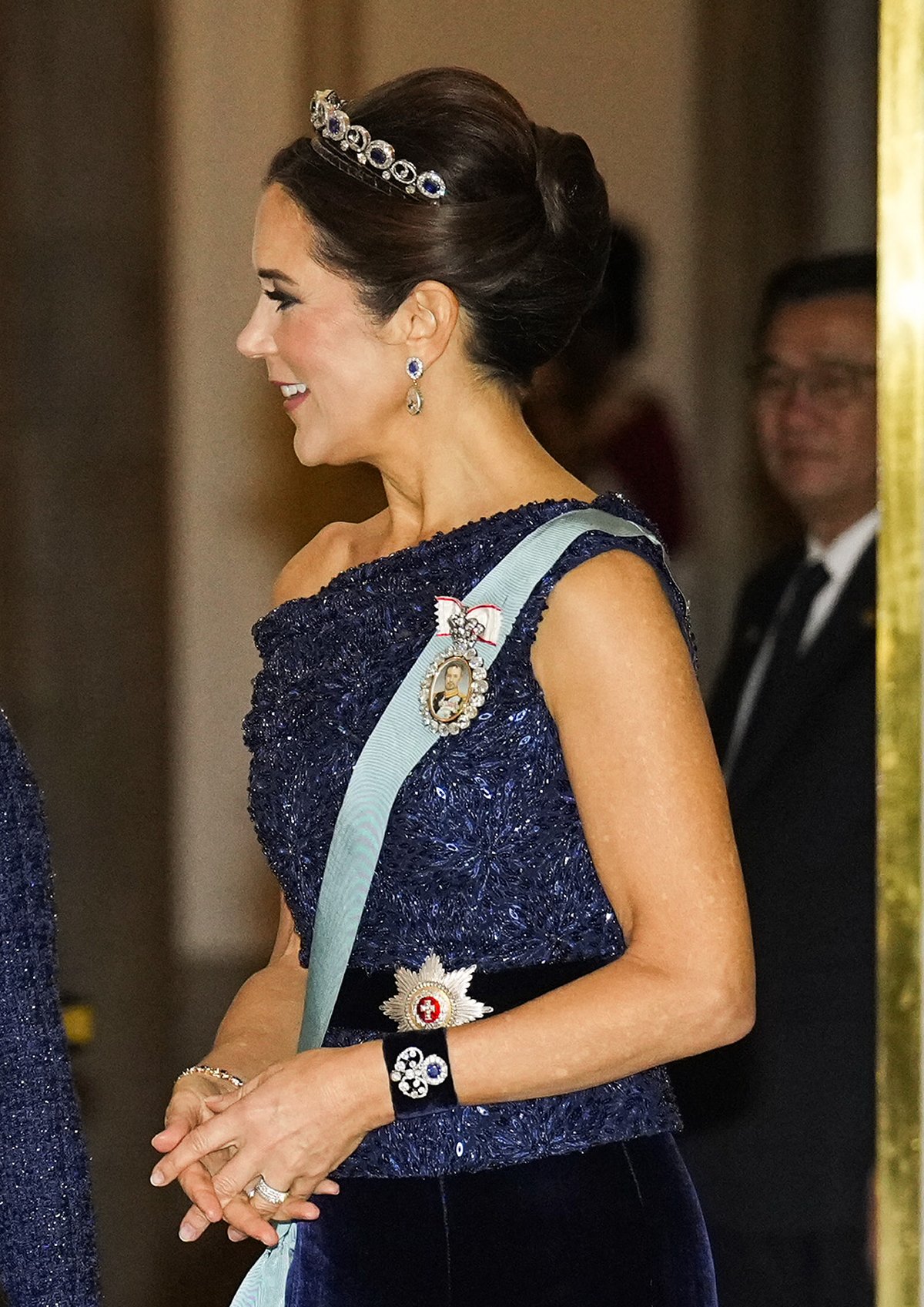
The top section of the tiara certainly hasn’t vanished. Queen Mary also wore that section of the tiara on Monday, pinning it to a band of blue velvet that matched her skirt. (To my mind, this isn’t the most successful way to showcase this historic jewelry piece. It looks a little like a wrist sweatband to me.)
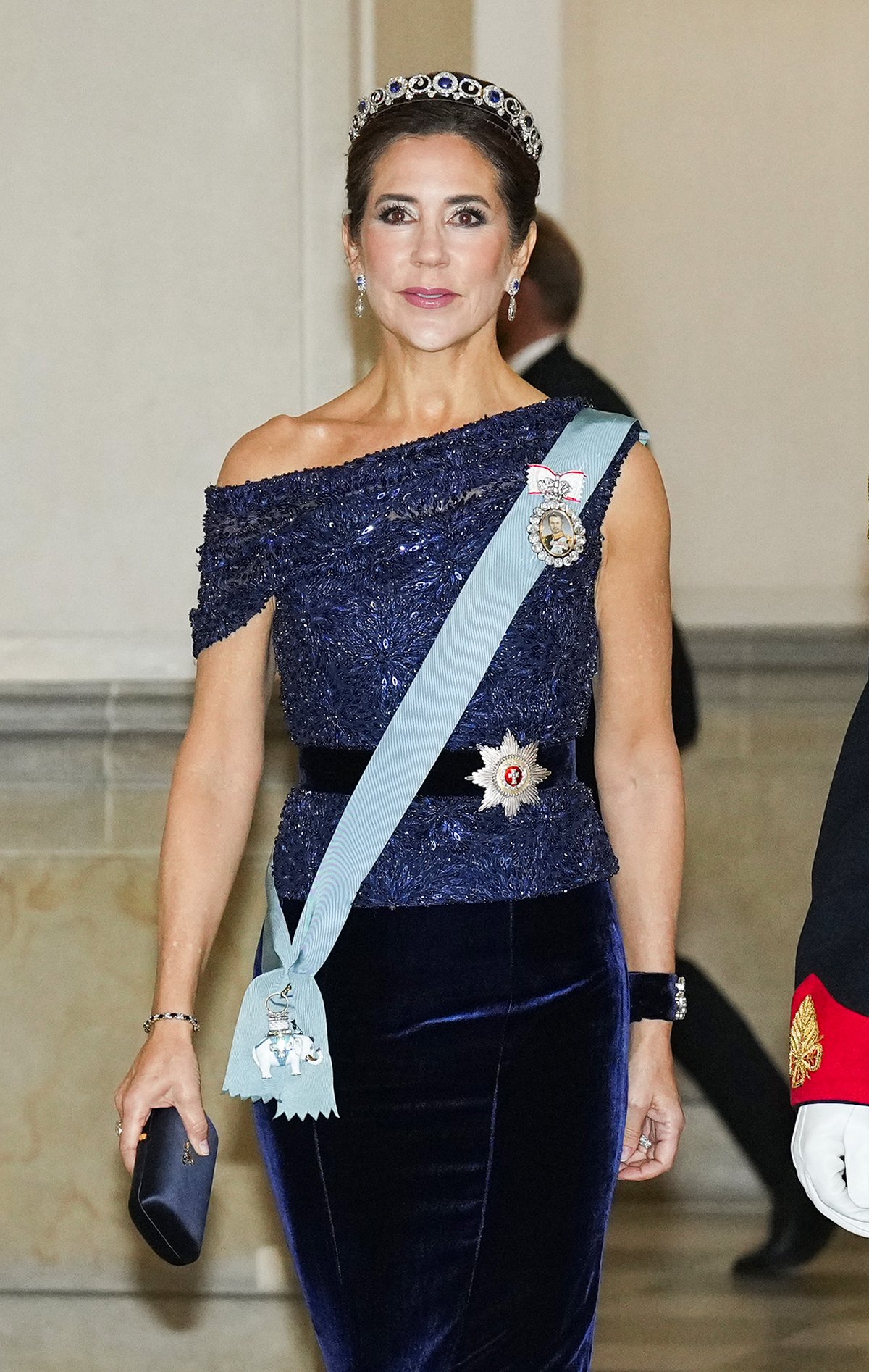
Mary also wore a lovely pair of earrings featuring diamond and sapphire cluster studs and diamond drops. (I think these are the drops from the heirloom diamond earrings that belonged to Princess Anne of Orange.) She finished off the look with another sapphire and diamond bracelet on her right wrist.
Overall, this is too exciting—yet another jewelry transformation by our modern-day Queen Mary. What do you all think about the new version of the tiara.
Leave a Reply
You must be logged in to post a comment.