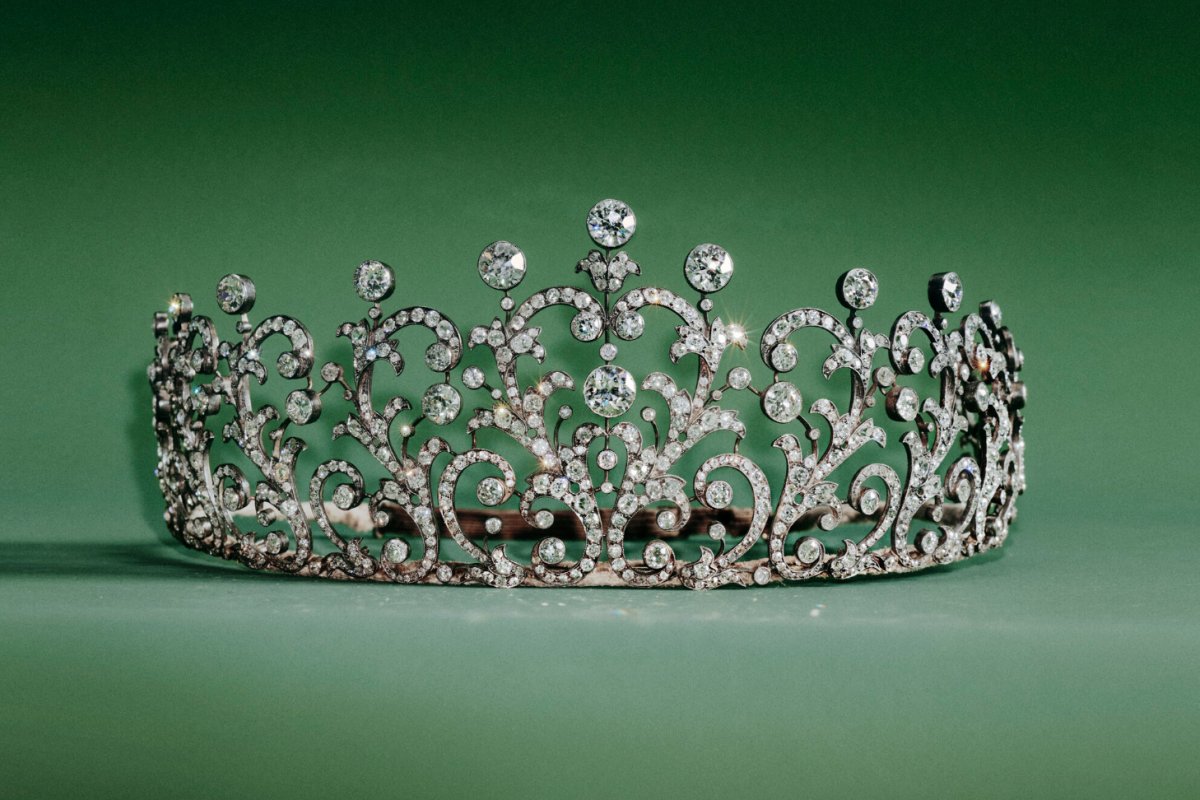
Last week at Christie’s in London, a spectacular example of nineteenth-century tiara craftsmanship was auctioned off to the highest bidder. Today I’ve got a closer look at the jewel, plus some wild speculation about who should have purchased it.
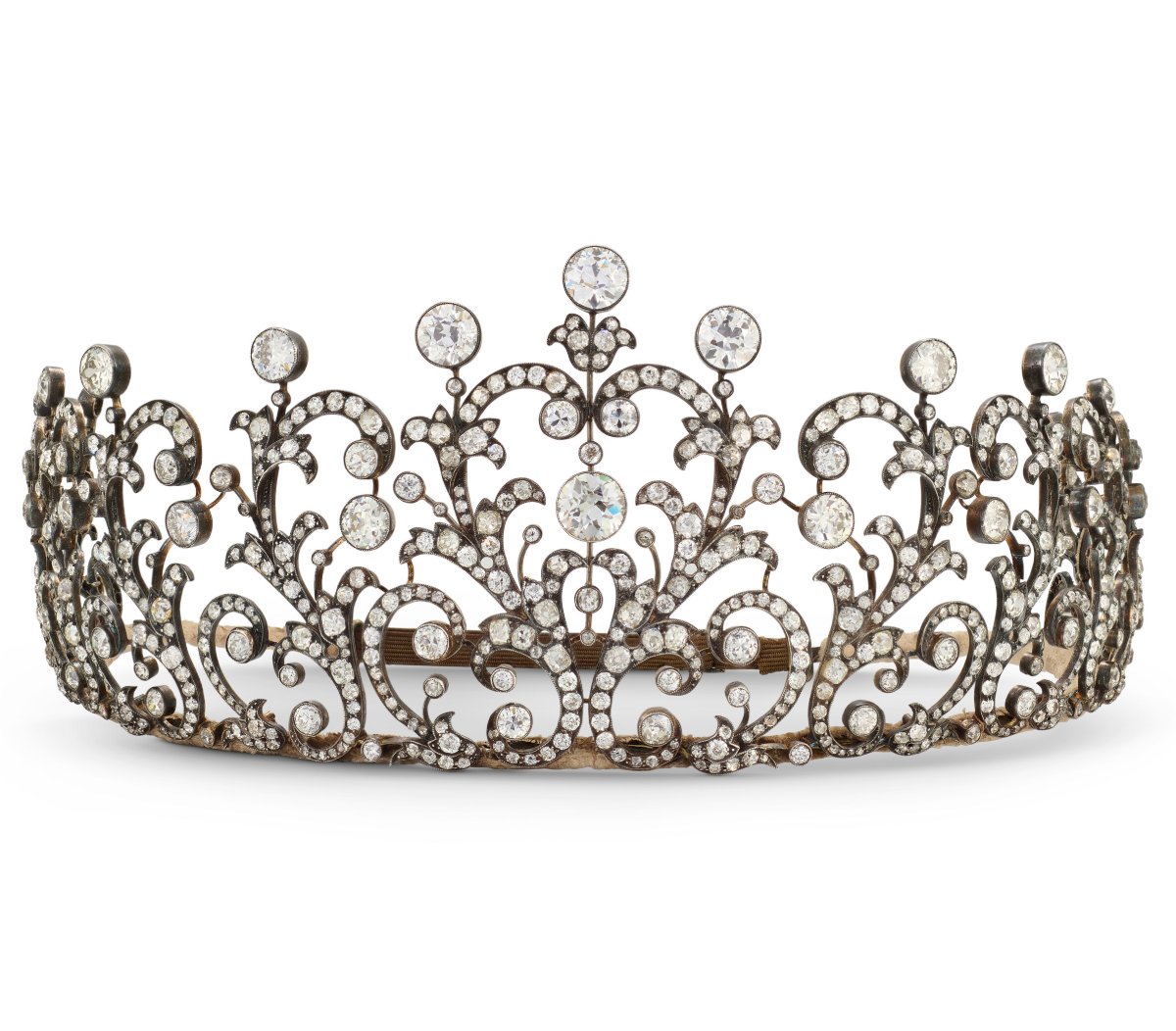
Christie’s in London offered a rather spectacular array of jewelry pieces in their recent online auction, which closed to bidders on Tuesday. Among the lots was this grand nineteenth-century diamond tiara. The jewel was described by the auction house as a tiara with “a series of graduating scroll motifs, old circular-, cushion- and rose-cut diamonds, silver and gold, circa 1890.”
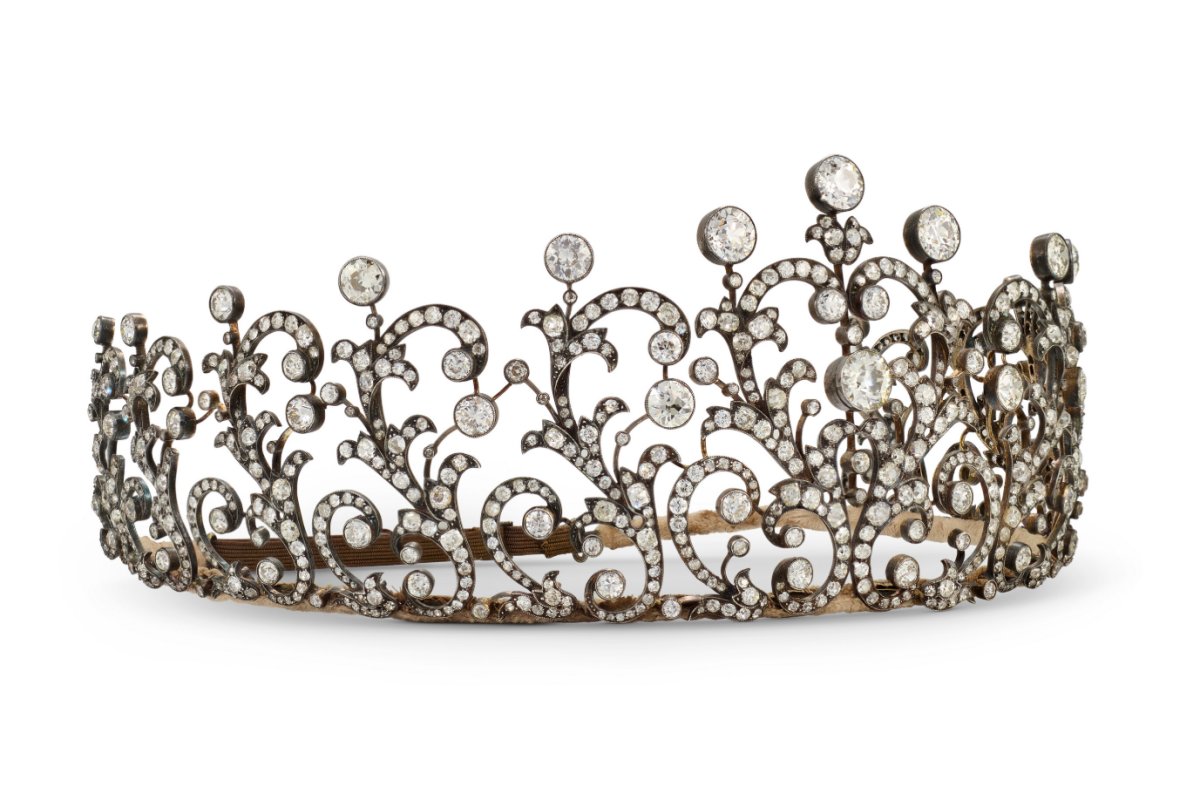
Little was offered in the way of provenance information for the tiara, save that it was made at the end of the nineteenth century and previously owned by an unnamed “nobleman.” The auction estimate for the piece was set at between £80,000-£120,000 (or around $105,000-$158,000 USD). When the hammer fell, the price was snugly within that estimate: £114,300 (or about $150,000 USD).
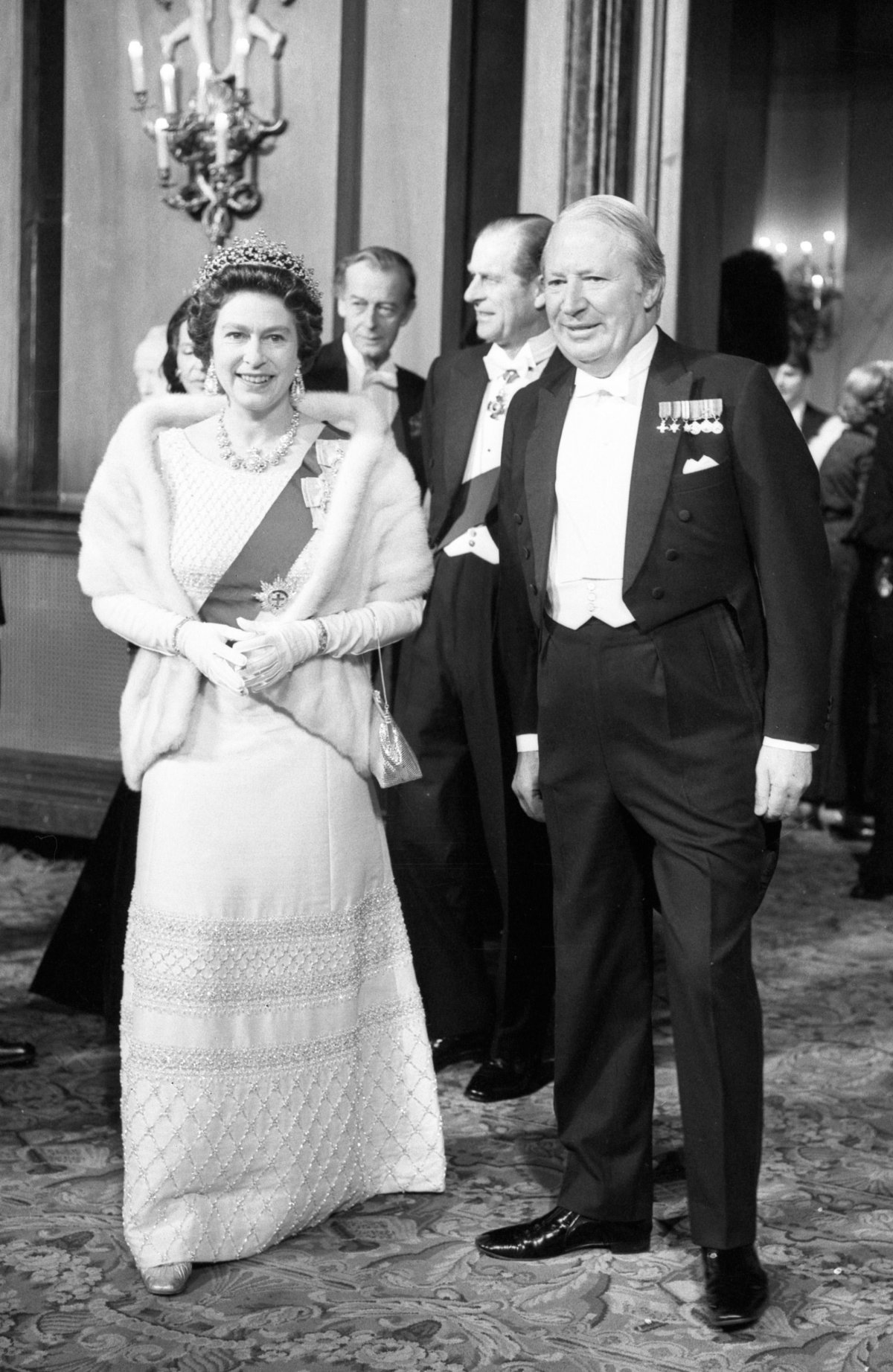
The shape and size of the tiara calls to mind another notable aristocratic jewel: a diamond tiara that belonged to the Plunket family. By the 1970s, it was in the collection of Lord Plunket, who served as an equerry to Queen Elizabeth II. In 1973, the Plunket Tiara was called into royal service when, on the way to a gala at the Royal Opera House in London, the frame of the Queen’s tiara broke.
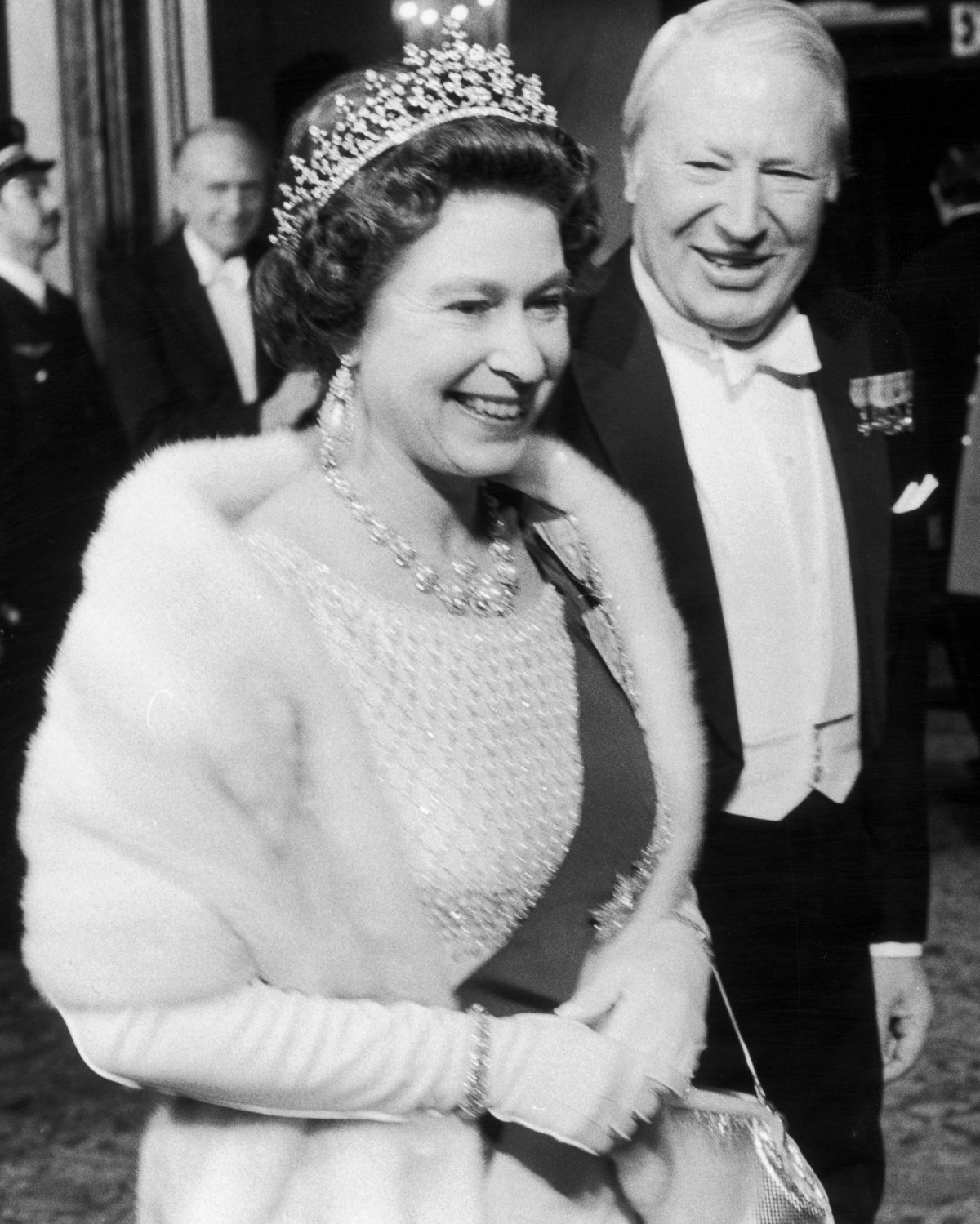
Lord Plunket lived nearby, and the diamond tiara was retrieved so that the Queen could wear it instead of the broken tiara. (Many of us believe that the Vladimir was the tiara that failed that night.) This was the first and only time that the late Queen wore a tiara without royal connections for a gala event during her long reign. After the event, the tiara headed back into the Plunket family collection and, to the best of my knowledge, hasn’t been seen since.
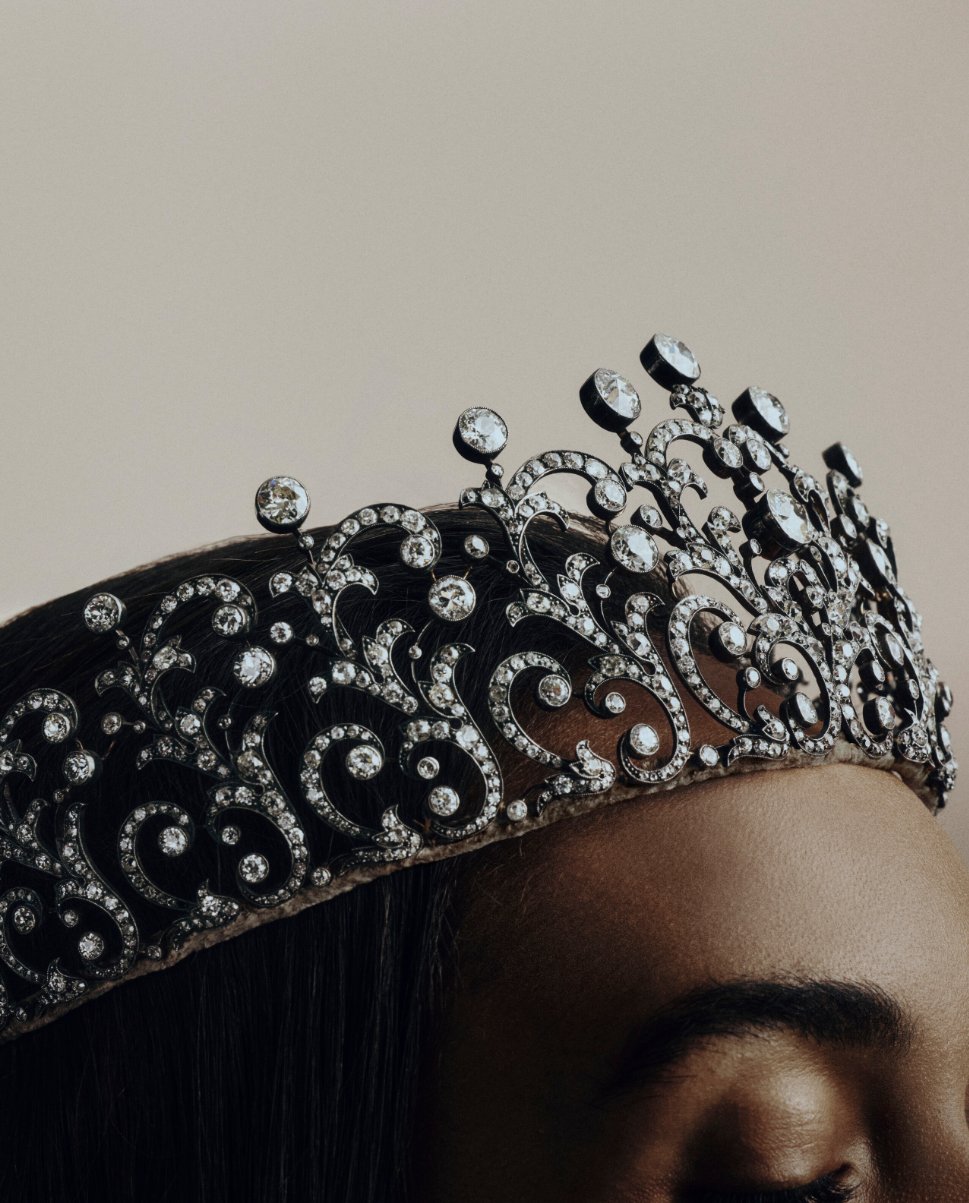
The tiara sold this week isn’t the Plunket Tiara, but it is a lovely close cousin. So, who might have bought the Christie’s example? The British royal family certainly doesn’t need another tiara, but I’m hopeful, as always, that perhaps a member of another royal family might have been the winning bidders at the Christie’s auction.
The Queen of Denmark loves to buy jewels at auction, but her Edwardian Tiara might be too similar for her to be tempted by this one. The Belgian royals also love auction jewels, and they recently bought a nineteenth-century diamond tiara for the Duchess of Brabant—maybe Queen Mathilde might like this one for her own collection? Which royal family do you think should have splashed out for this nineteenth-century gem?
Leave a Reply
You must be logged in to post a comment.