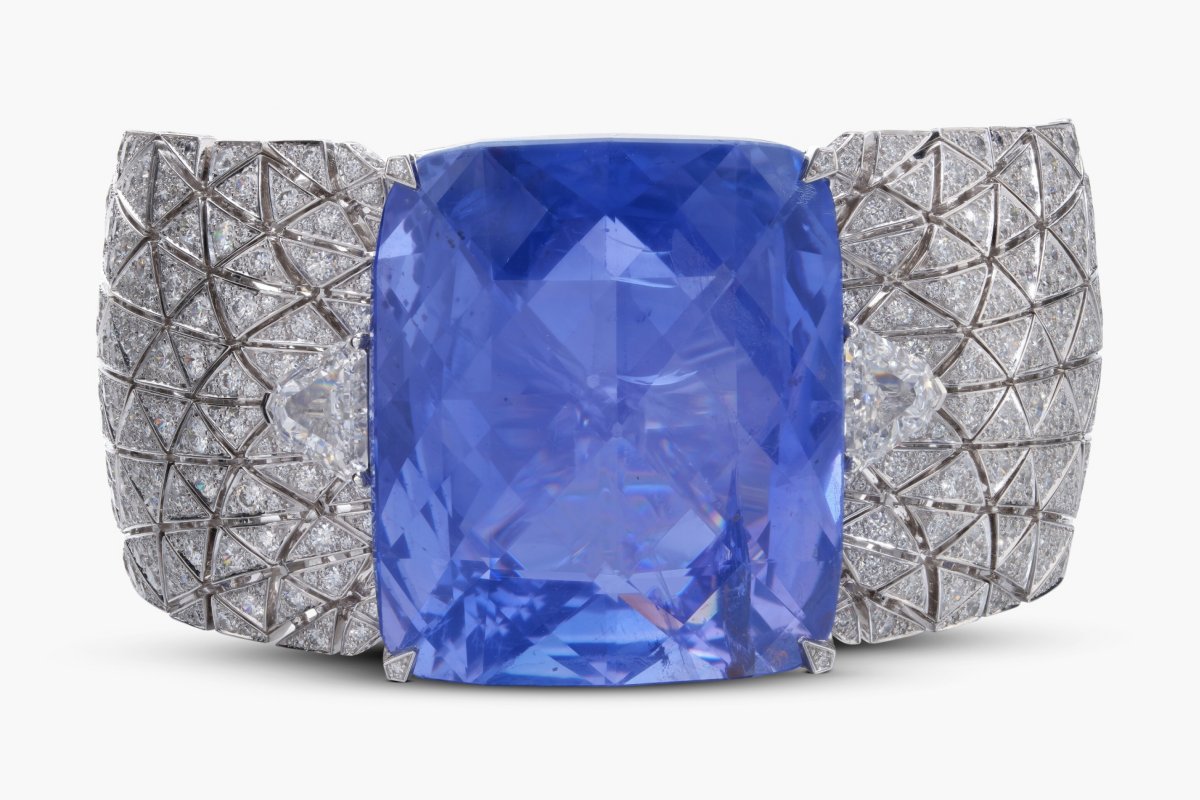
It only seems fitting to wrap up a week in which we’ve marveled at some major jewels coming to auction with a true showstopper: an enormous sapphire that was worn by Empress Marie Feodorovna, the penultimate Romanov tsarina. Soon, the stone will be sold to the highest bidder by Sotheby’s.
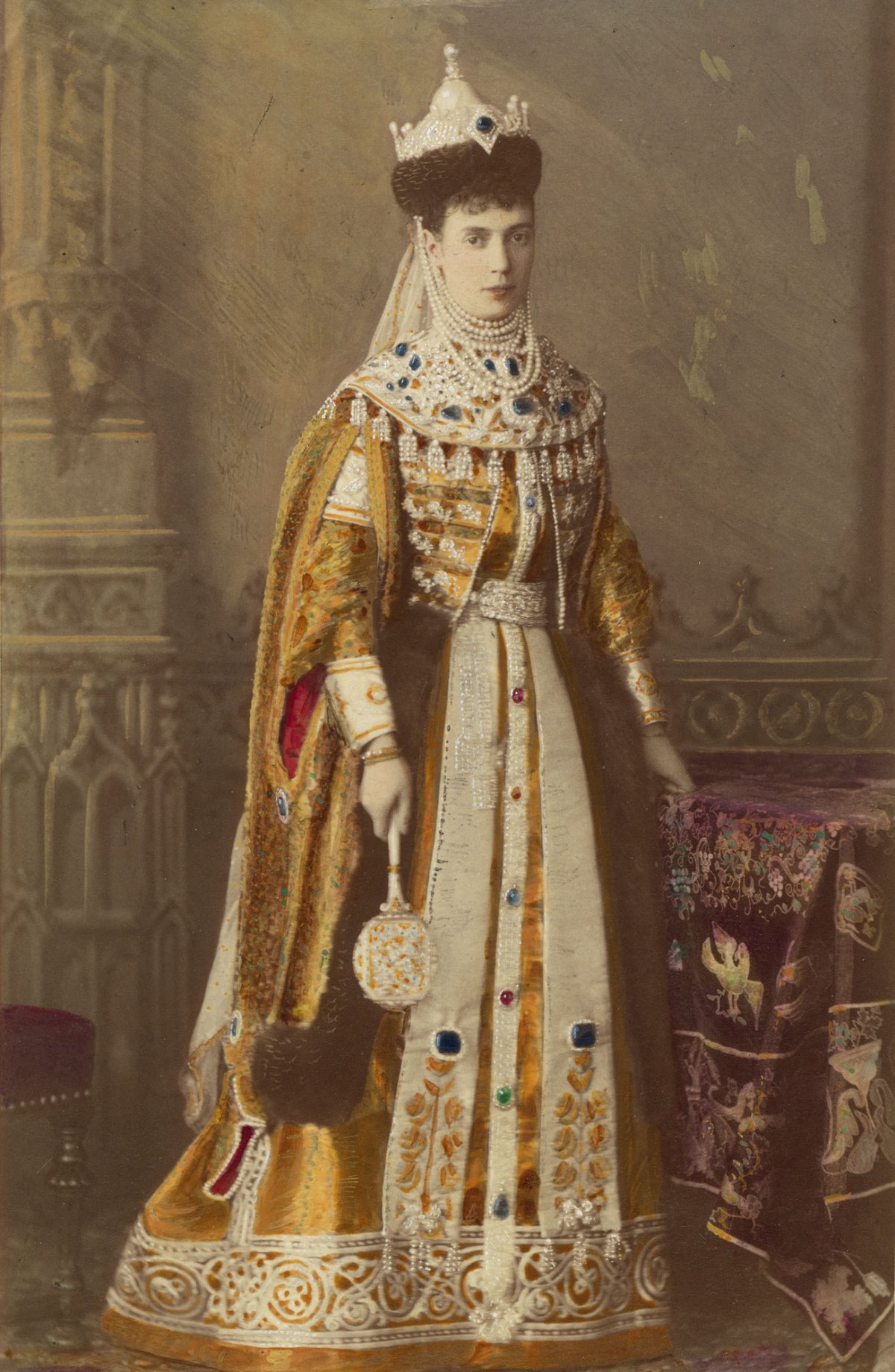
To borrow a phrase from Sophia Petrillo—”Picture it: St. Petersburg, 1883.” At one of the city’s grandest royal residences, the Vladimir Palace, guests arrived for a splendid masquerade ball on January 25. Grand Duke Vladimir Alexandrovich, the brother of Emperor Alexander III, and his wife, Grand Duchess Maria Pavlovna, had set an elaborate dress code for the occasion. Attendees were required to wear costumes that evoked the seventeenth-century Romanov court in Moscow, from the days before Peter the Great’s modernization projects westernized the dynasty.
Grand Duke Vladimir’s sister-in-law, Empress Marie Feodorovna, arrived at the ball in full imperial splendor, wearing a costume encrusted with jewels. This hand-colored photograph of the Empress at the ball, now part of Britain’s Royal Collection, was made by the noted portrait photographer Charles Bergamasco. There are lots of gems to survey here, but for our purposes, let your eye fall to the lower third of the picture. Pinned to the Empress’s skirt, just above a pair of embroidered gold flower details, are two enormous sapphires, each set in diamond clusters.
(A note: you’ll sometimes see this photograph of Marie Feodorovna incorrectly identified as an image taken at the Winter Palace ball in February 1903. That ball, the last great costume party thrown by the Romanovs, had a similar seventeenth-century theme. But the Dowager Empress was not present for the 1903 celebration. Unfortunately, Sotheby’s has repeated the error in their recent auction catalogue.)
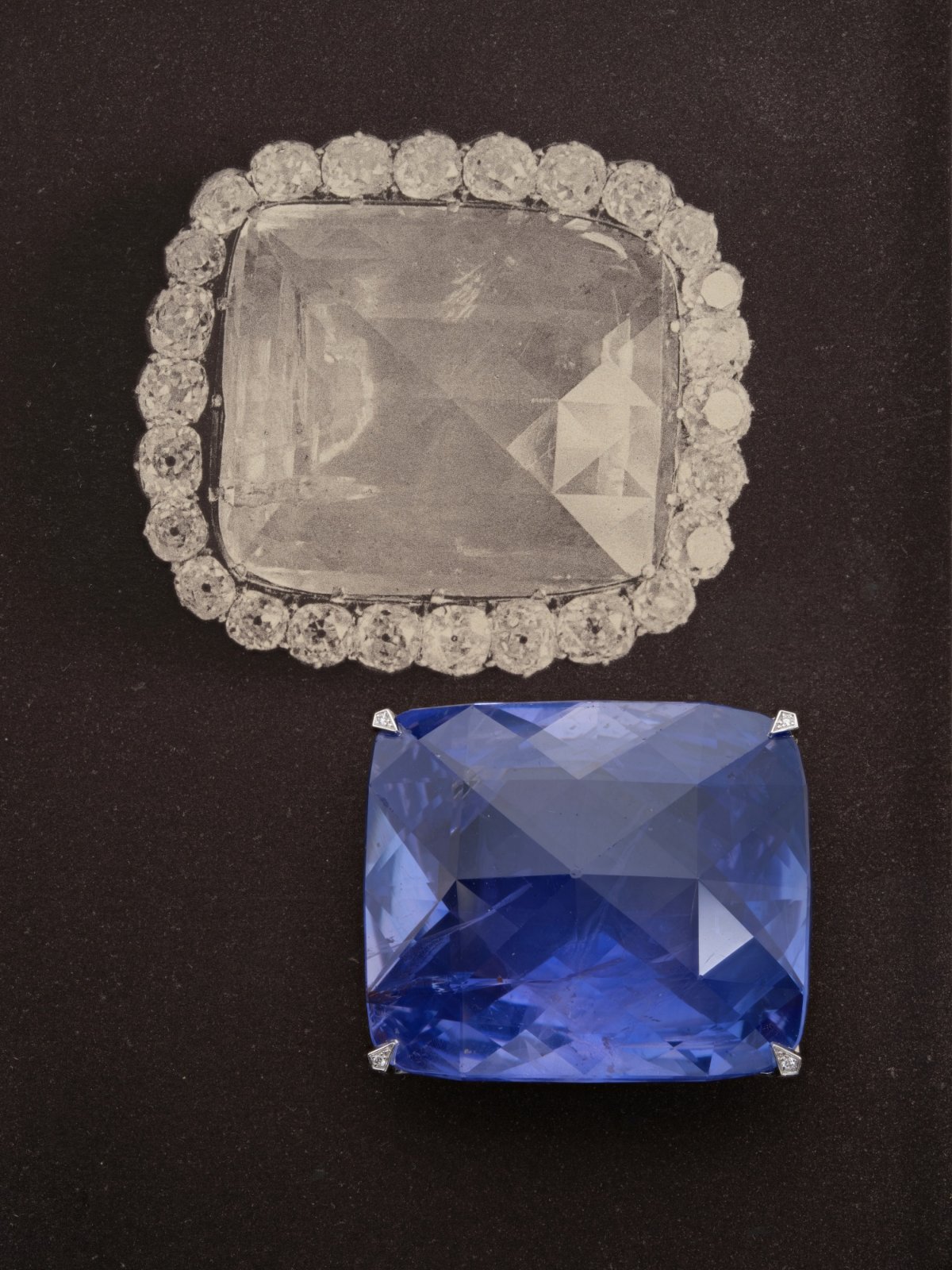
One of the sapphires worn by Marie Feodorovna on her skirt for the 1883 ball is the same gem that will soon be sold at Sotheby’s. The 197.80-carat sapphire no longer resides in its original diamond cluster, but it is unmistakably the same shape and size as the gem photographed in the catalogue of Romanov jewels produced by the Soviets after the revolution. Above, the sapphire is placed beside the life-size photograph of the stone shown in the Fersman catalogue.
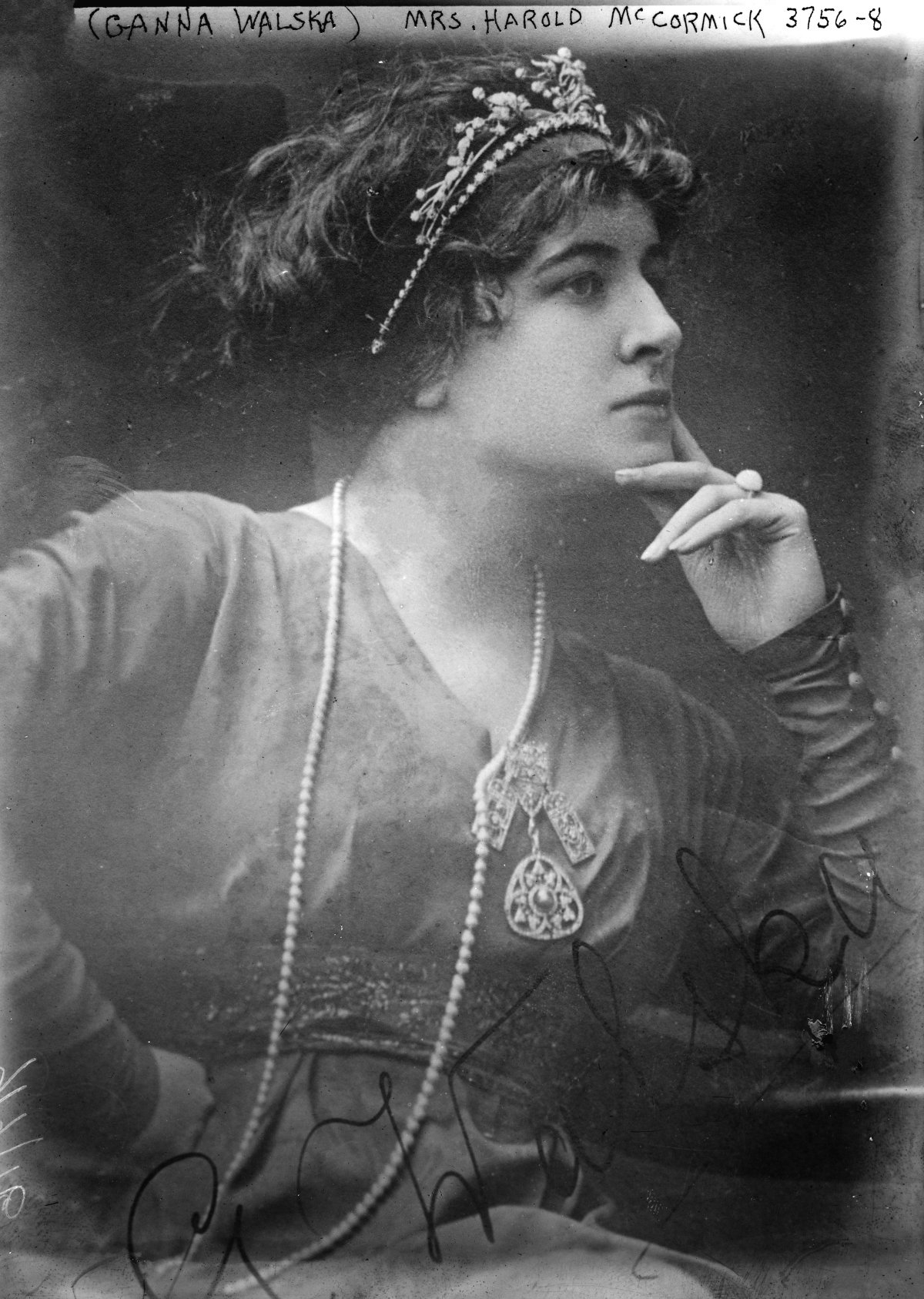
Marie Feodorovna survived the fall of the Romanovs, and she managed to get some of her jewelry out of Russia when she fled. But the sapphire stayed behind. It was one of the gems that the Soviets disposed of in the years after they took power. By 1927, it was housed at Cartier. There, it caught the eye of a fascinating buyer: the opera singer Ganna Walska.
Walska, who doggedly pursued a career singing on the stage for decades, made her way to America during World War I. By the time she encountered the Romanov Sapphire, she was married to her fourth husband, the fabulously wealthy Harold Fowler McCormick. She purchased the sapphire five years into their marriage and soon had the gem set in a new Mughal-inspired sautoir necklace.
The sautoir outlasted the Walska-McCormick union—and Walska’s subsequent fifth and sixth marriages, too. The sapphire was still in her collection in 1971 when she decided to sell most of her jewelry in a major auction at Parke-Bernet in New York. “Ganna says she’s selling because now the jewels just lie around in a vault,” the Daily News reported, “and somebody out to enjoy them.”
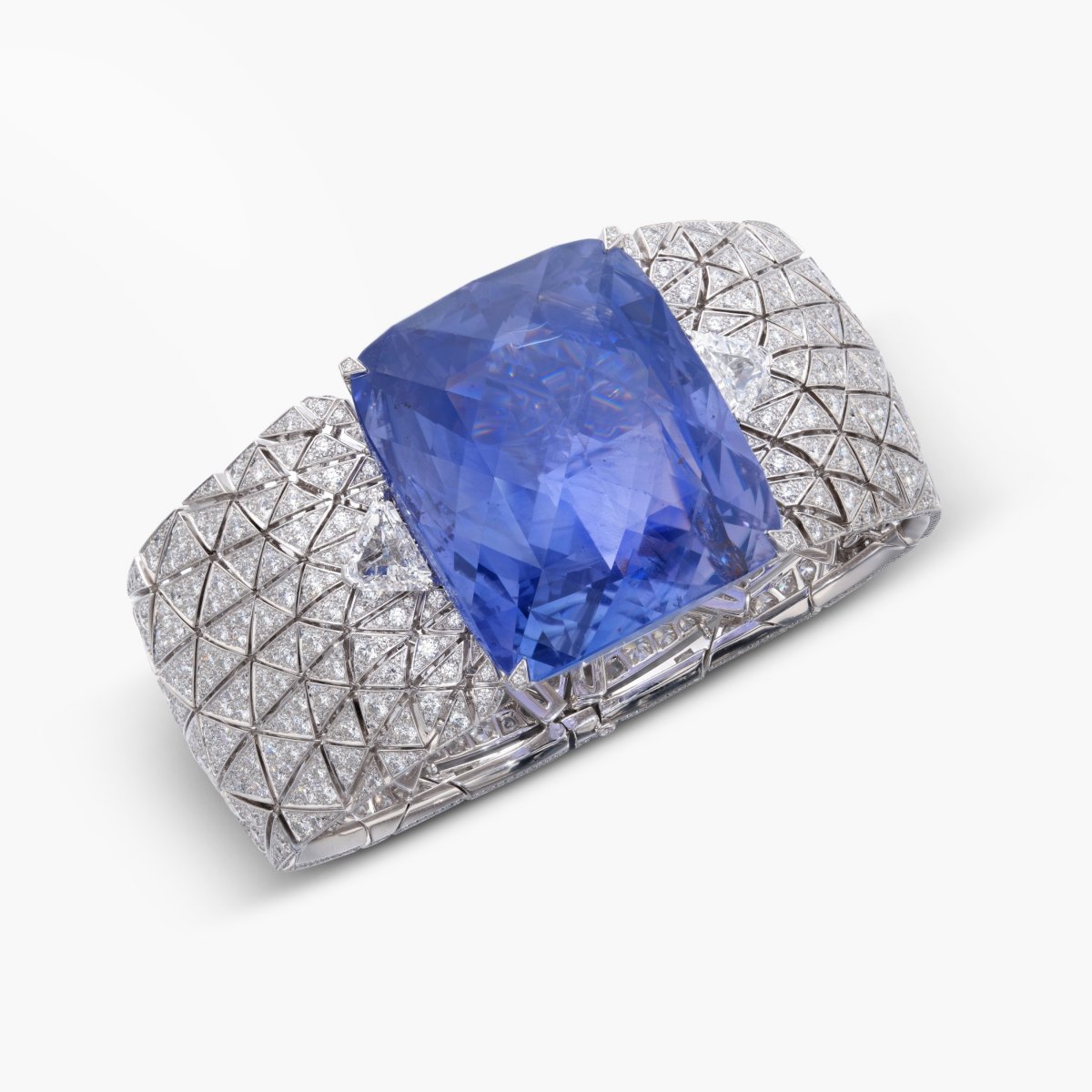
After the 1971 sale, the sapphire surfaced again in 1992, when it was sold by Sotheby’s in Geneva. That time, it was set as the centerpiece of a torsade necklace made of emerald and sapphire beads. But that wasn’t the last stop for the sapphire design-wise either. In 2015, the private owner of the gem brought it back to Cartier. Almost a hundred years after they first sold the stone, the firm crafted a new, modern bracelet setting for the sapphire. Sotheby’s describes the bracelet as having “a design echoing the art deco style in vogue when Cartier first mounted the sapphire for Ganna Walska.”
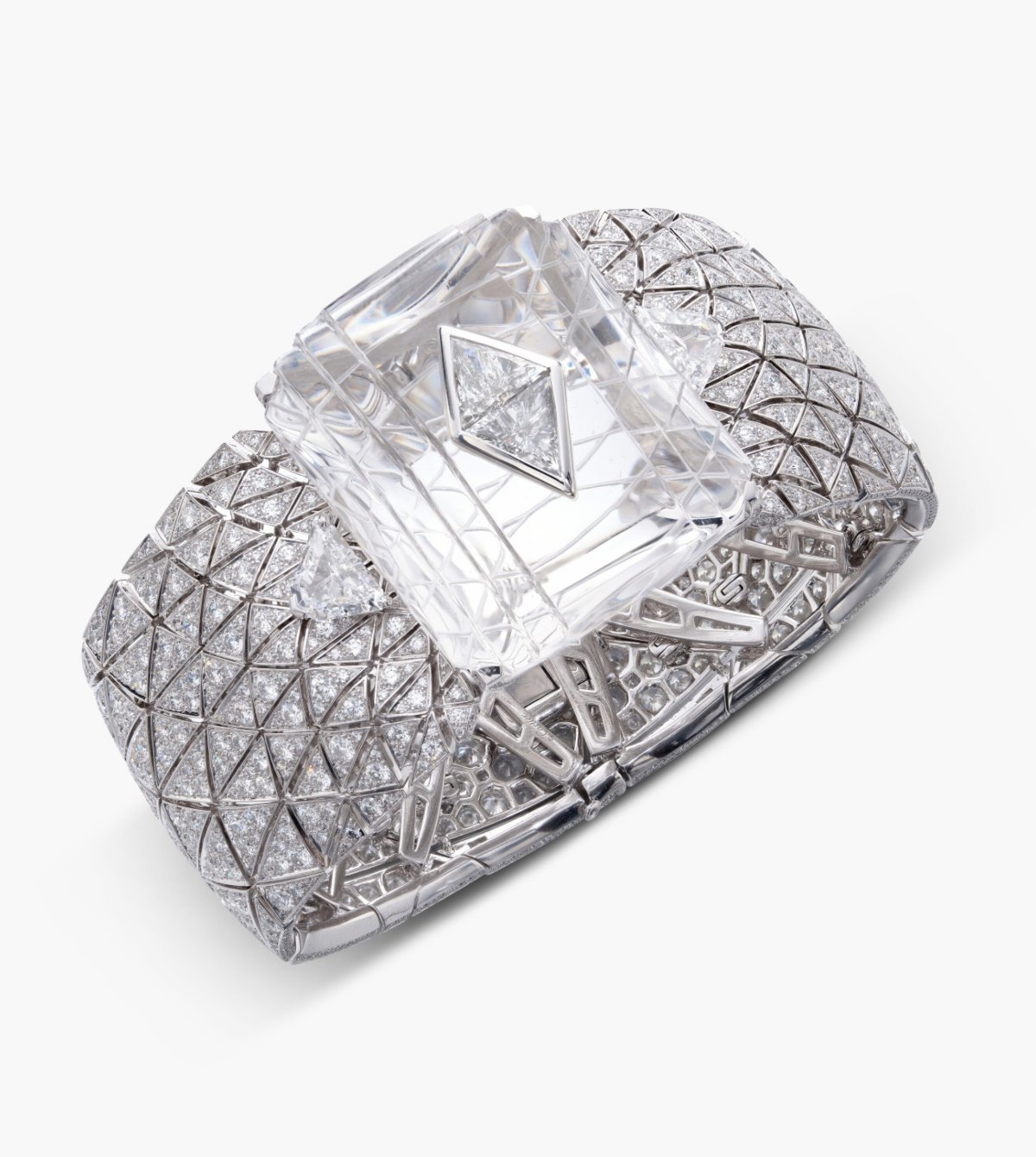
Interestingly, the bracelet can also accommodate a different centerpiece. The Romanov Sapphire can be removed and replaced by this “interchangeable engraved rock crystal centre embellished with triangular diamonds,” per Sotheby’s.
Sotheby’s is betting big on the sapphire. The estimate for the piece, which will be sold in Geneva on Wednesday, is set at 850,000-1,700,000 Swiss francs, or about $1,000,000-2,100,000 USD. And fair enough: an almost 200-carat Romanov sapphire probably should be worth a million bucks, right?
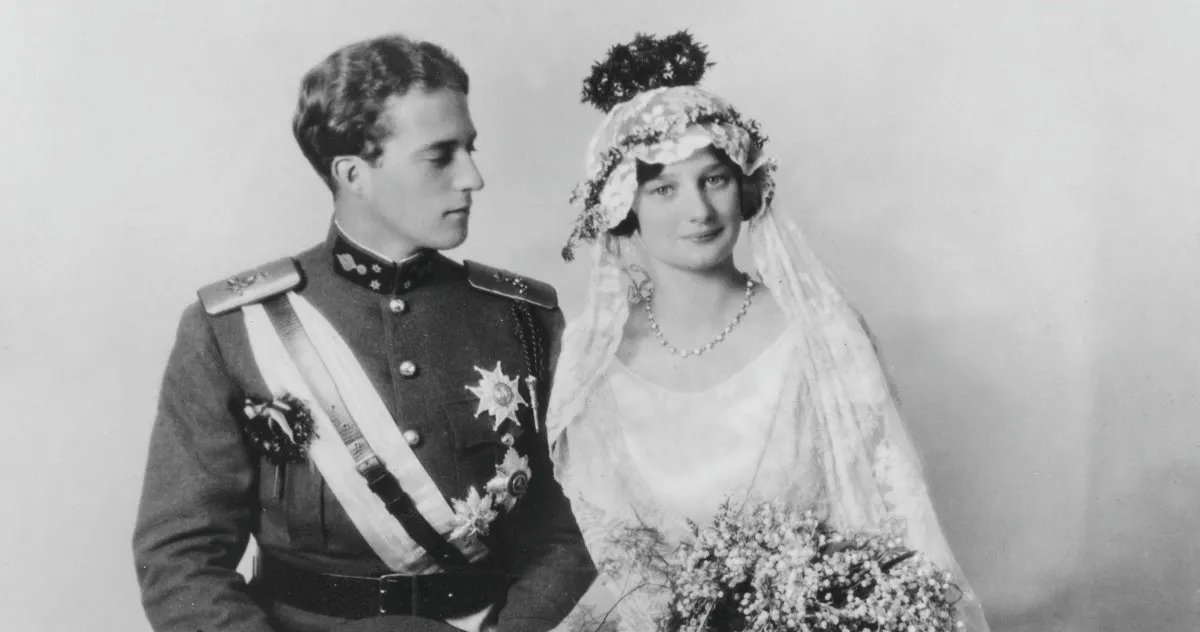
It’s going to be a busy weekend, so be sure you’re stopping by both here at The Court Jeweller and over at Hidden Gems on Substack to catch all of the glittering fun. We’re celebrating the hundredth anniversary of the wedding of King Leopold III and Queen Astrid of Belgium on Saturday at Hidden Gems, with a full deep-dive into the couple’s 1926 civil wedding in Stockholm for paid subscribers. And here at TCJ, I’m planning to cover the Festival of Remembrance on Saturday and the jewels worn on the balcony on Remembrance Sunday the following day. Cross your fingers for some important brooches!
Leave a Reply
You must be logged in to post a comment.