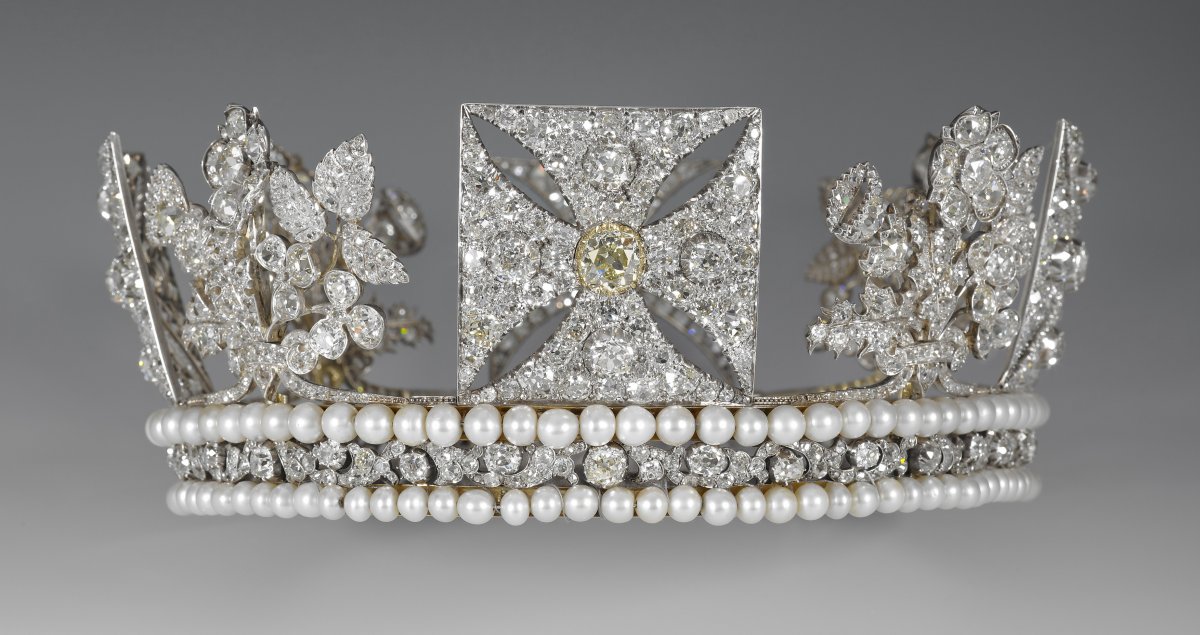
The interest in exhibitions containing important pieces of jewelry has been high in Europe in recent years, and the Royal Collection Trust announced yesterday that they’re mounting an entire display of royal jewelry next summer at the King’s Gallery, Buckingham Palace.
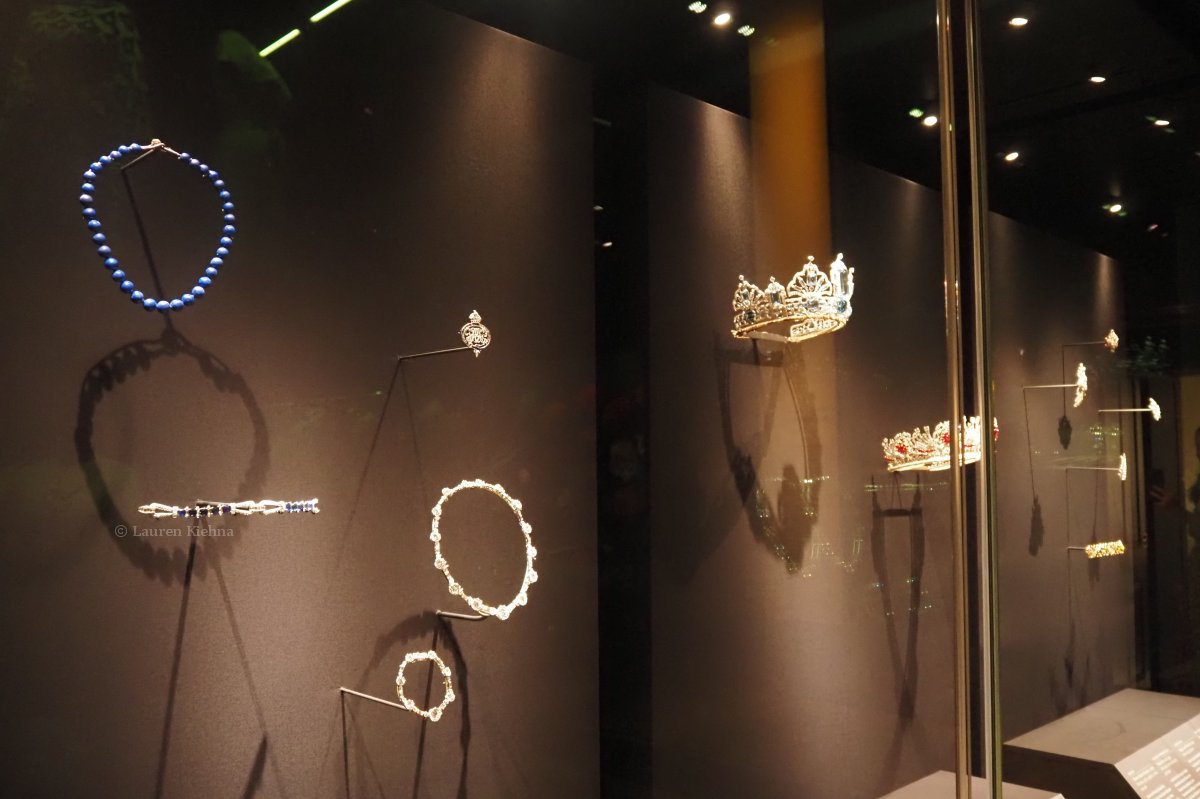
Right now, visitors to the King’s Gallery can enjoy a selection of royal jewels linked to the late Queen Elizabeth II as part of the major exhibition dedicated to her fashion and style. Next summer, the entire gallery space will be filled with jewelry pieces. The Royal Collection Trust announced the upcoming exhibition in a press release on Thursday:
The first exhibition ever to explore 500 years of British royal jewellery will open at The King’s Gallery, Buckingham Palace in June 2027. Royal Jewellery: From Coronations to Keepsakes will bring together more than 300 pieces of jewellery from the 16th century to the present day, around two thirds on display for the first time.
Jewellery worn by monarchs from Henry VIII and Charles II to Queen Victoria and Queen Elizabeth II will be shown alongside paintings, designs and documents from the Royal Collection and Royal Archives, revealing powerful stories of politics, diplomacy, identity, faith, grief and love across five centuries.
Caroline de Guitaut and Kathryn Jones, co-curators of the exhibition, said, “This unprecedented exhibition will bring together some of the most important and spectacular royal jewels in British history, many never exhibited publicly before. Each jewel carries with it a human story: of love and loss, power and politics, family and faith. Together, they have borne witness to the defining moments of royal lives and offer a deeply personal insight into the individuals and relationships that have shaped the monarchy across generations.”
From the work of early royal goldsmiths to designs by some of the world’s most celebrated jewellery houses – including Garrard & Co, Cartier, Boucheron and Fabergé – the exhibition will explore the evolution of royal jewellery and its continuing role in shaping the image of monarchy today.
While the Crown Jewels will not feature in the exhibition and will remain on show at the Tower of London, visitors will see magnificent jewels created for coronations and major royal occasions.
The press materials also included a selection of pictures showcasing various jewels that will be displayed, as well as information about each of them. As my friend Patricia Treble noted over on Substack, this press release alone has confirmed provenance details for two pieces of jewelry. Can you imagine what the exhibition itself will reveal? Below, enjoy a closer look at what they’ve shared so far.
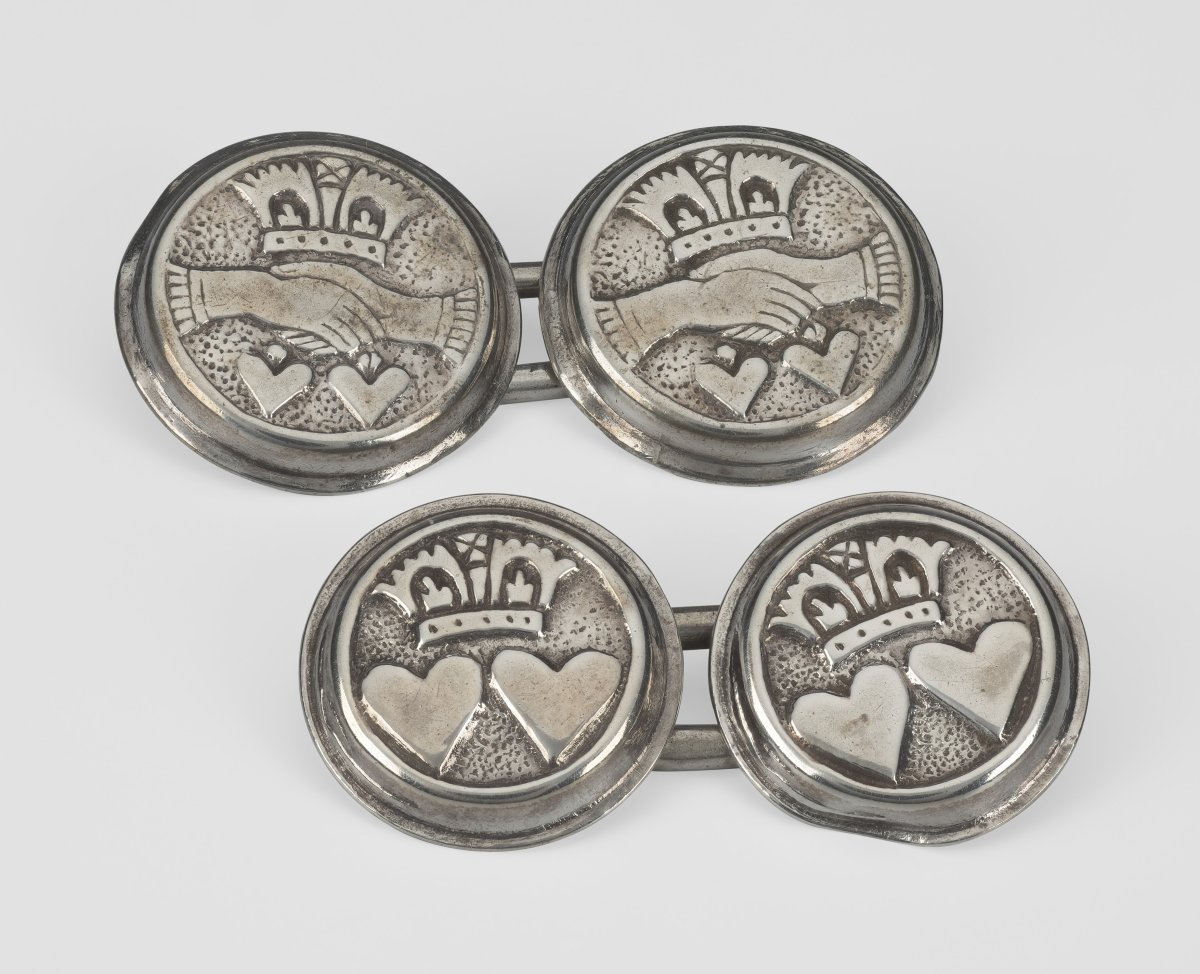
These cufflinks, which feature crowned hearts and joined hands, date to the seventeenth century. The RCT states that they’re “said to have been worn by King Charles I on the scaffold” when he was executed in London in 1649.
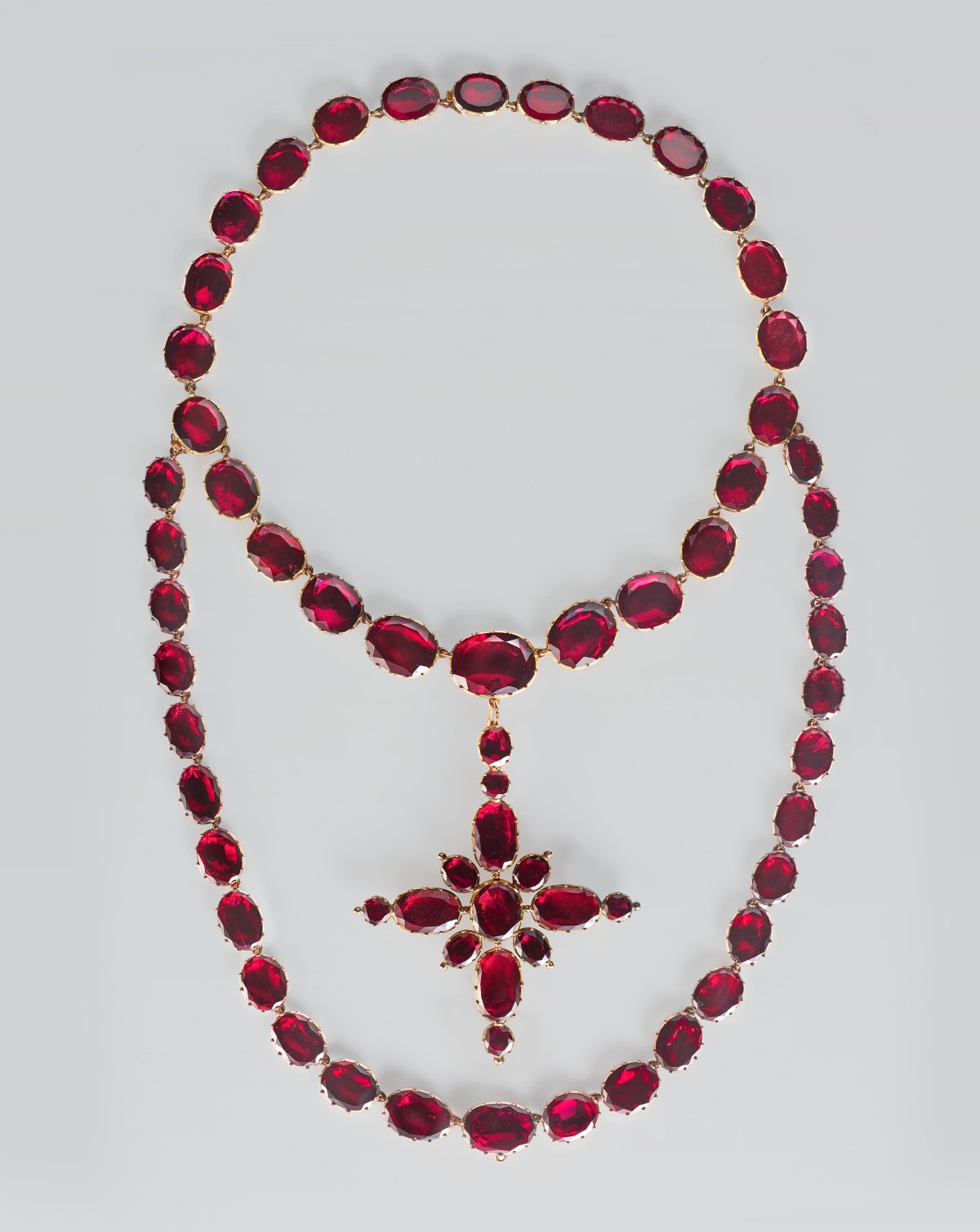
This eighteenth-century suite of jewelry from Queen Charlotte’s collection is set with dark red garnets. The press materials note, “At the heart of the exhibition will be a display exploring jewellery associated with every queen and consort from Queen Charlotte to Queen Elizabeth II, tracing changing fashions from Georgian splendour and Victorian sentimentality to sleek Art Deco styles and bold mid-century designs. Among the items on show for the first time will be Queen Charlotte’s set of garnet jewels, newly connected to the Queen through recent research.”
Also showcased will be jewels associated with coronations. The coronation regalia itself will remain at the Tower of London, but jewels like the Diamond Diadem, commissioned by King George IV for his 1821, will be displayed at the King’s Gallery.
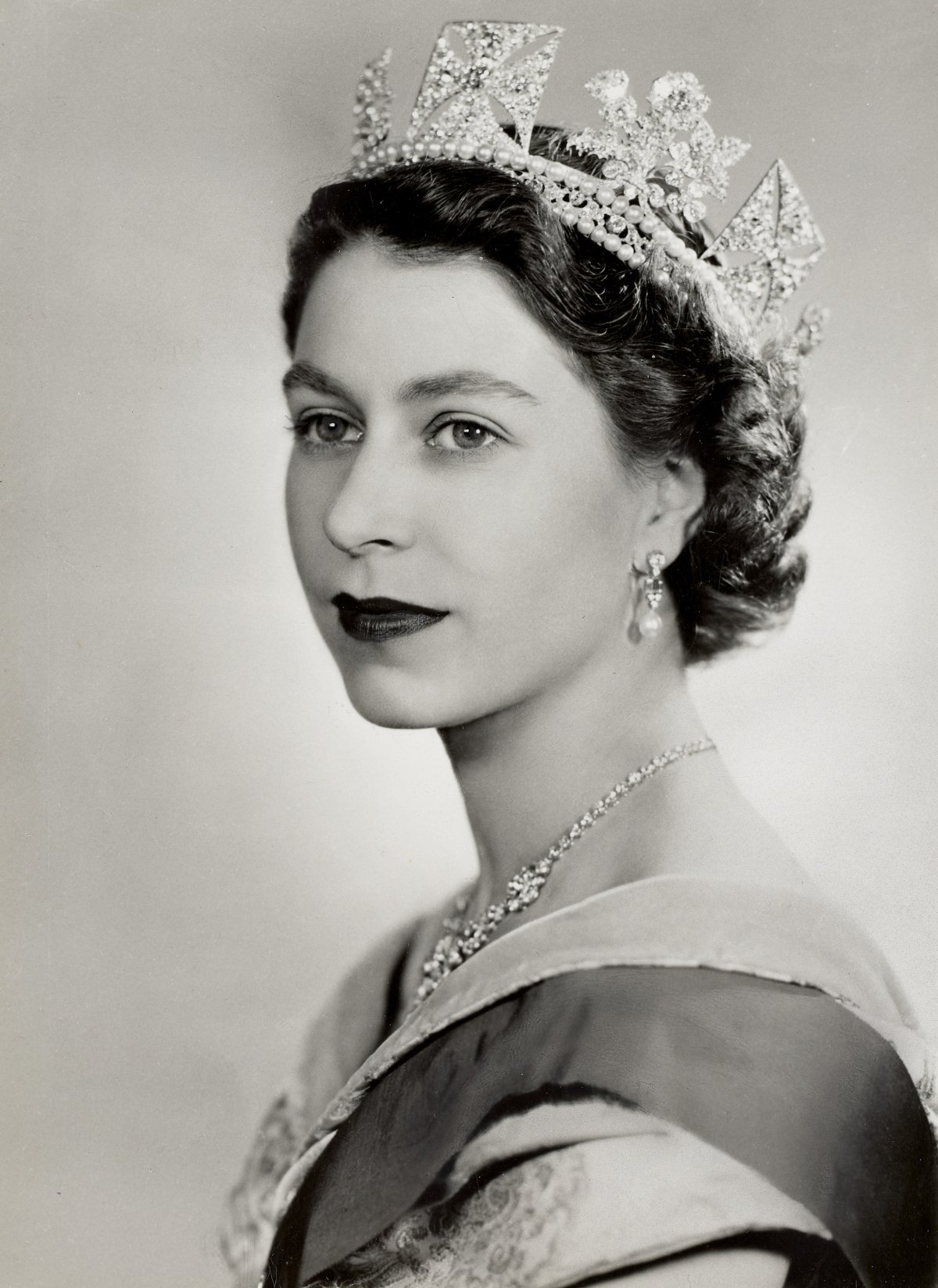
Though the Diadem was made for a man, it has been worn exclusively by women over the past two centuries. Above, Queen Elizabeth II wears it in a famous portrait photograph taken by Dorothy Wilding in 1952.
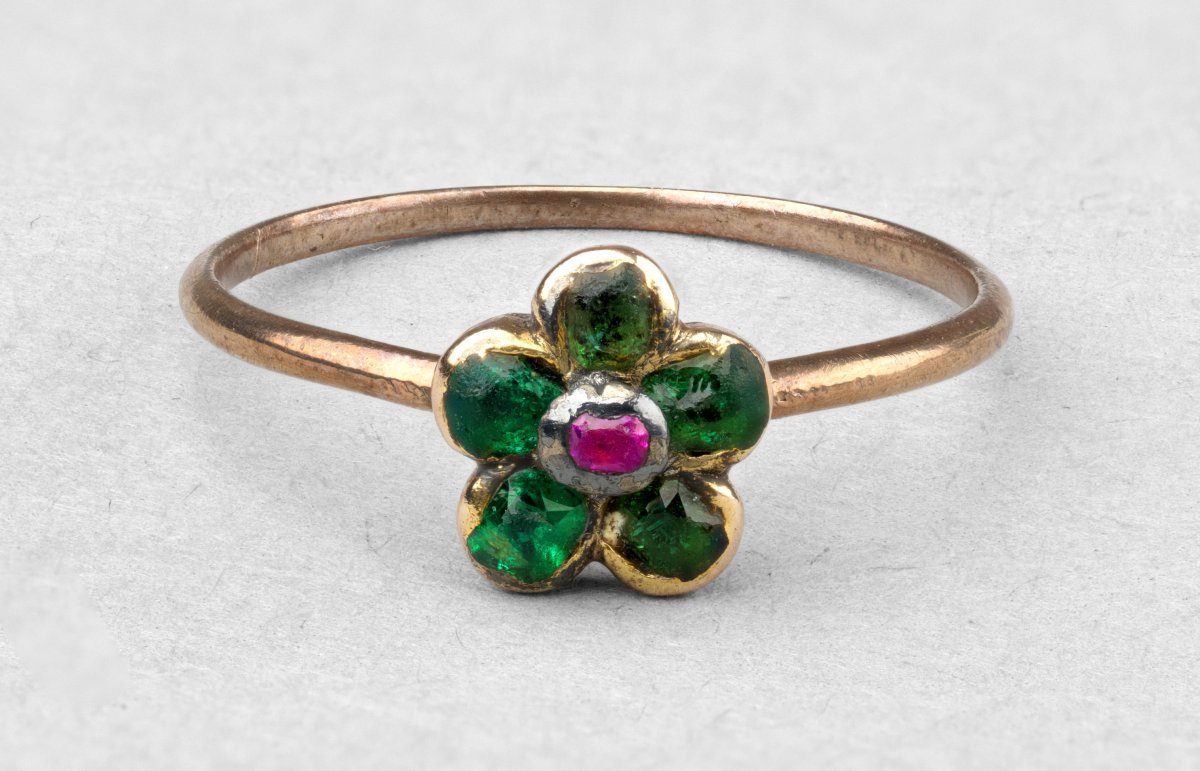
More personal jewelry pieces will also be displayed. This petite ring, made in the early 1820s, is said to be the first ring owned by Queen Victoria.
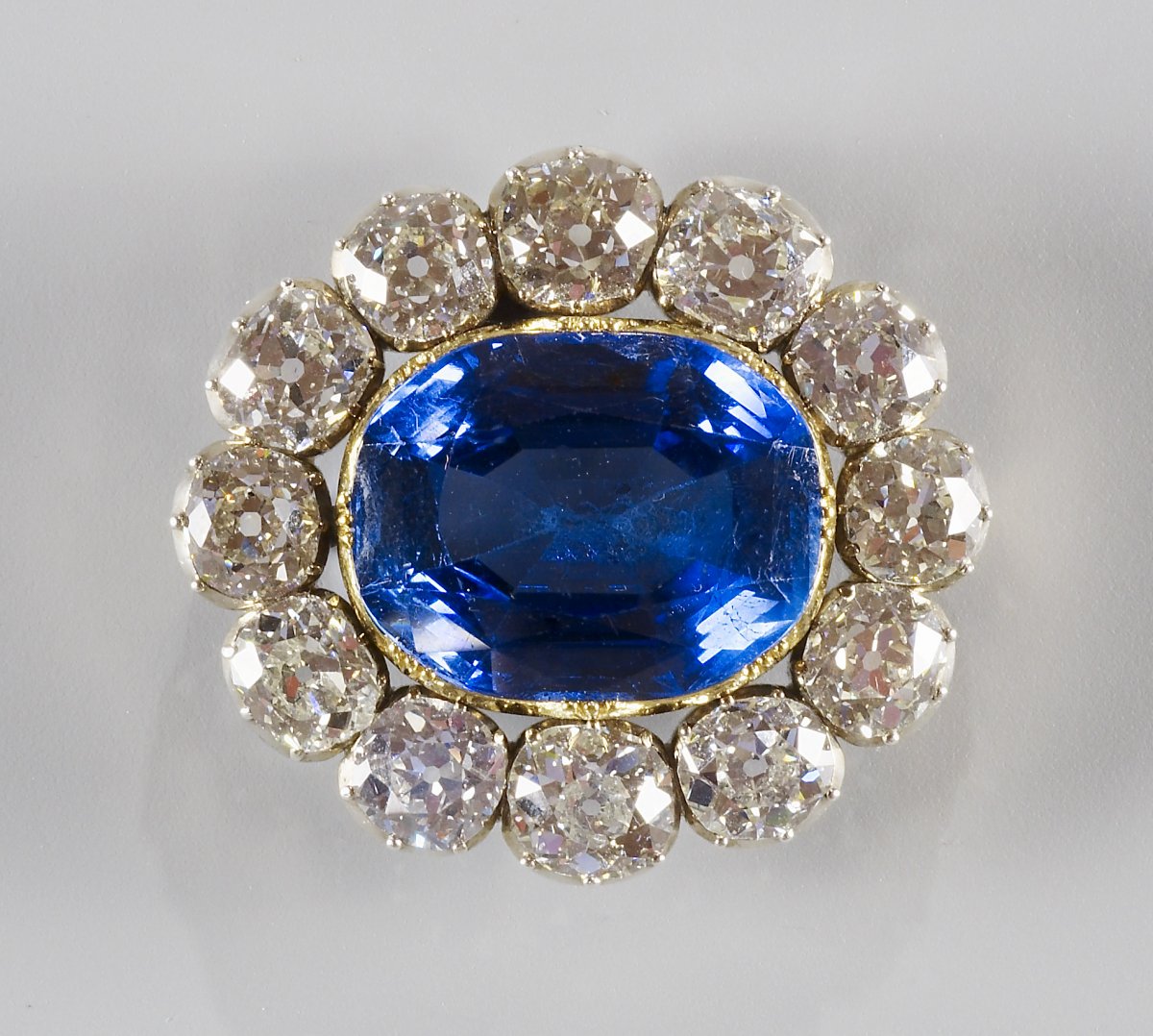
Plenty of more extravagant jewelry from Victoria’s era will also be featured, including the iconic diamond and sapphire brooch given to her by Prince Albert on the night before their wedding in 1840.
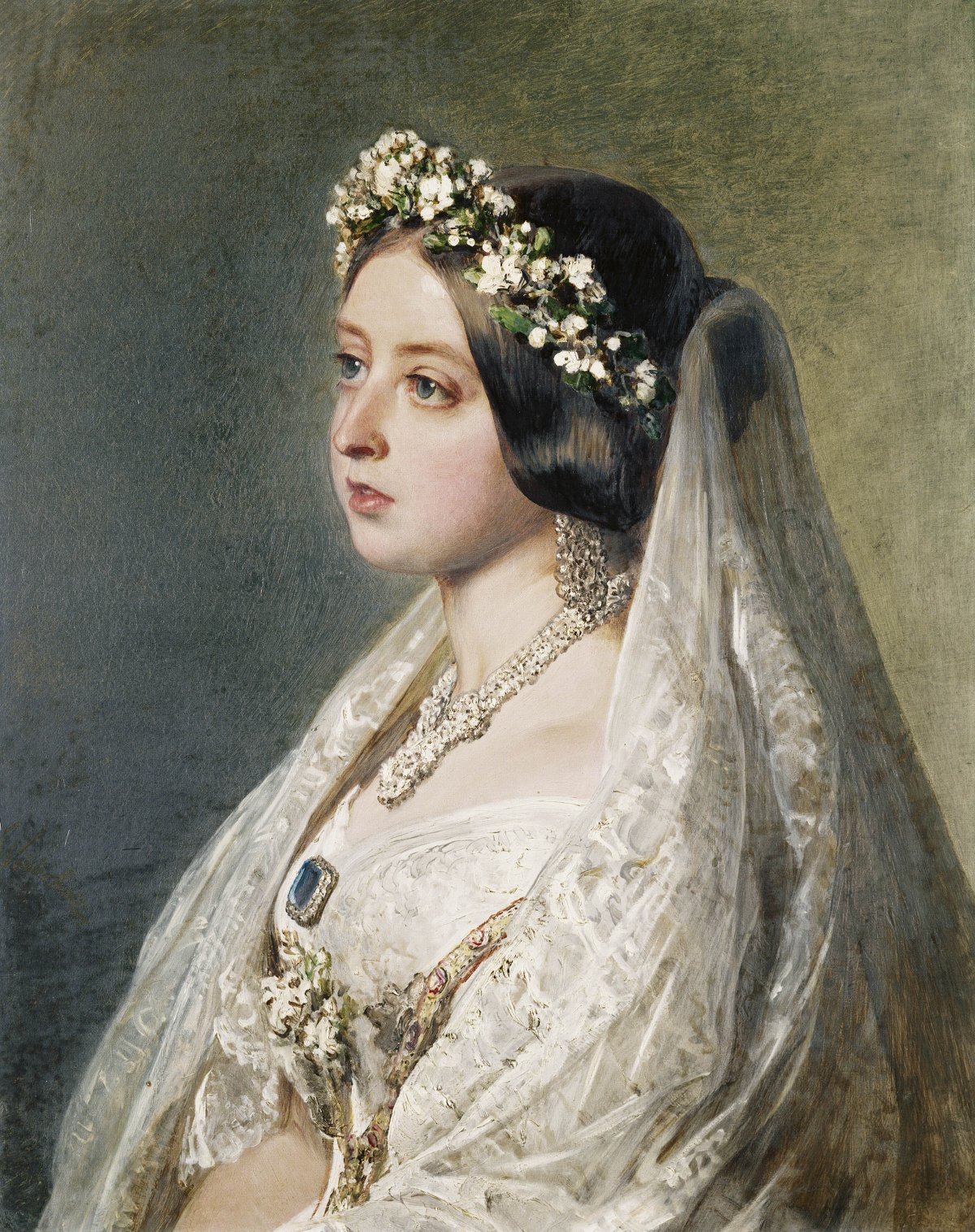
Victoria loved the brooch so much that she wore it on her wedding dress. She recreated the scene seven years later for an 1847 portrait sitting with Winterhalter, the results of which are shown above.
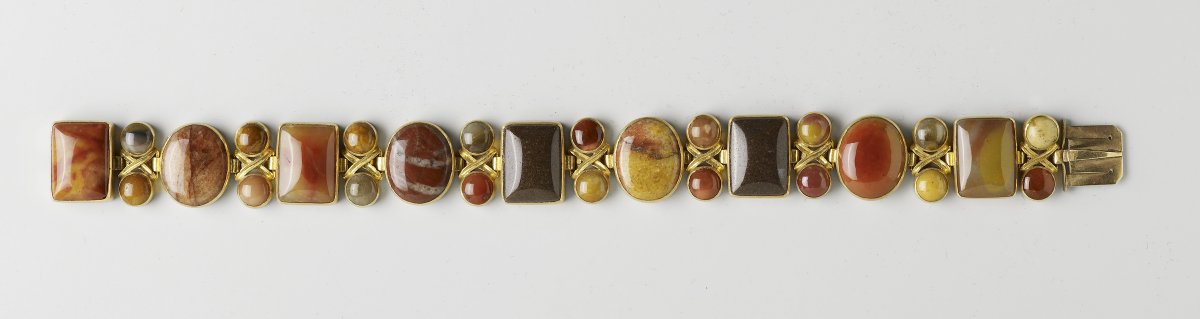
Victoria was particularly sentimental about jewelry. This bracelet, which dates to 1841, is set with polished pebbles that she and Prince Albert collected on their first journey alone together after their wedding.
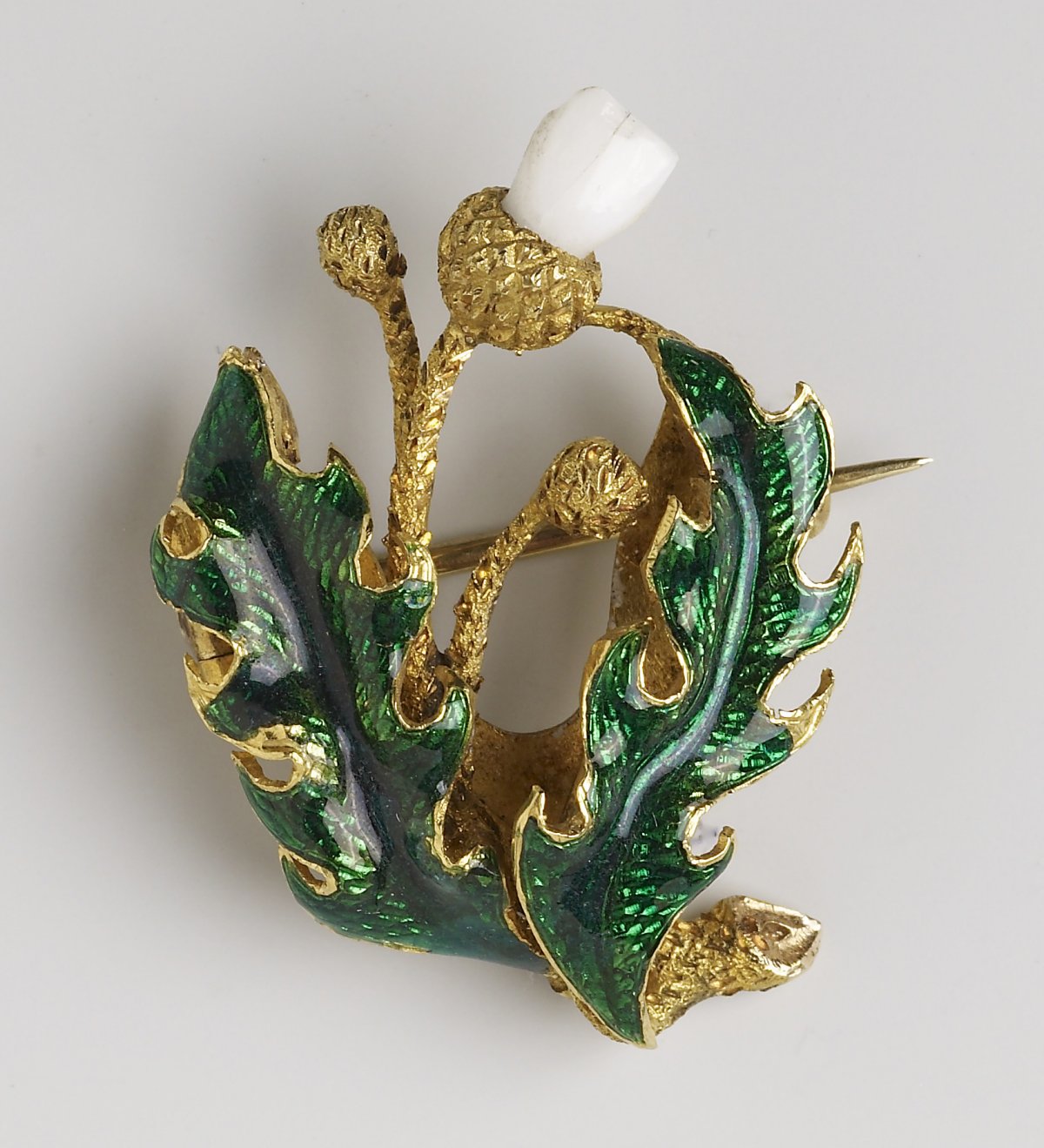
And this brooch is so typical of the Victorian era: a thistle brooch that contains the first baby tooth lost by their eldest daughter, Princess Vicky. The brooch features an inscription noting that Albert pulled the tooth himself (!).
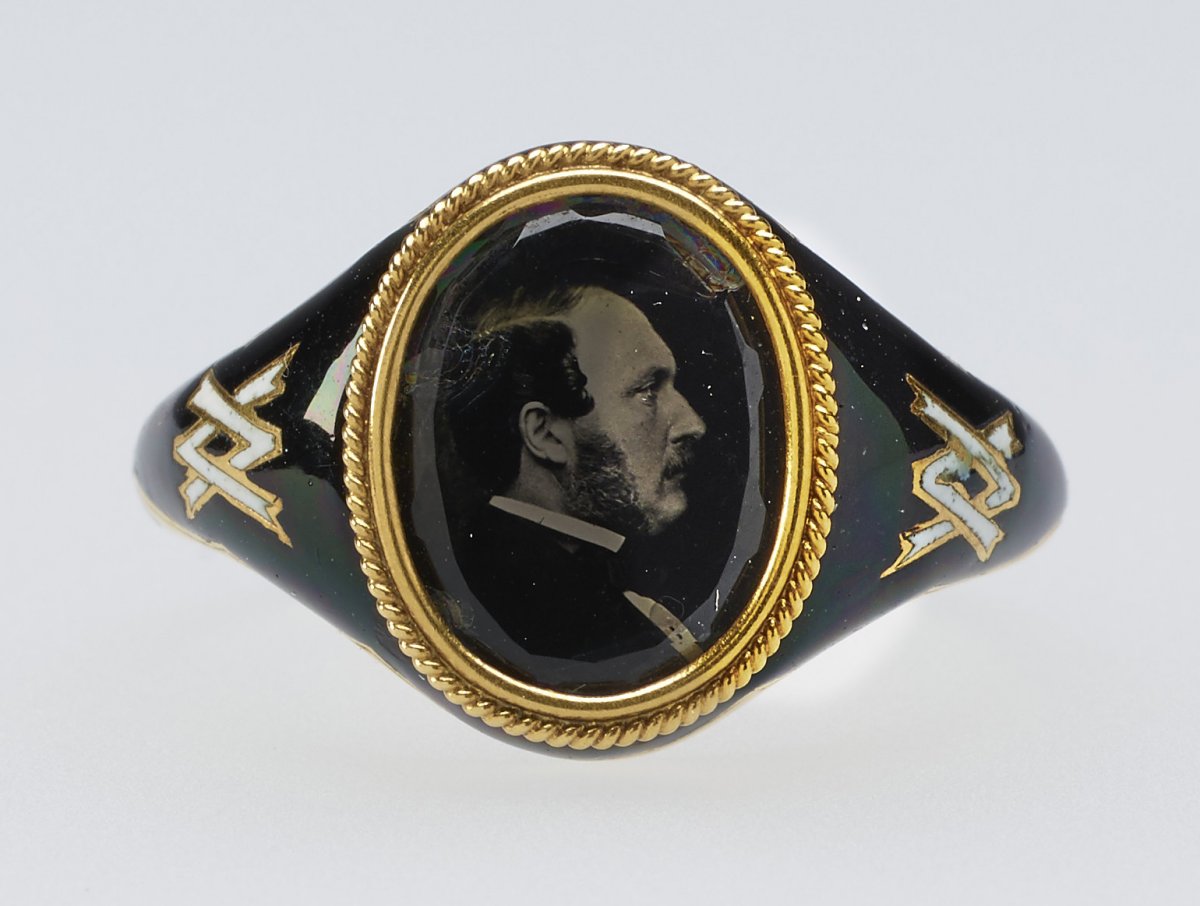
And, of course, no exhibition dedicated to British royal jewelry would be complete without a relic of the Victorian mourning era. This mourning ring, which features a picture of Prince Albert and the couple’s shared cypher, was made shortly after his death in 1861.
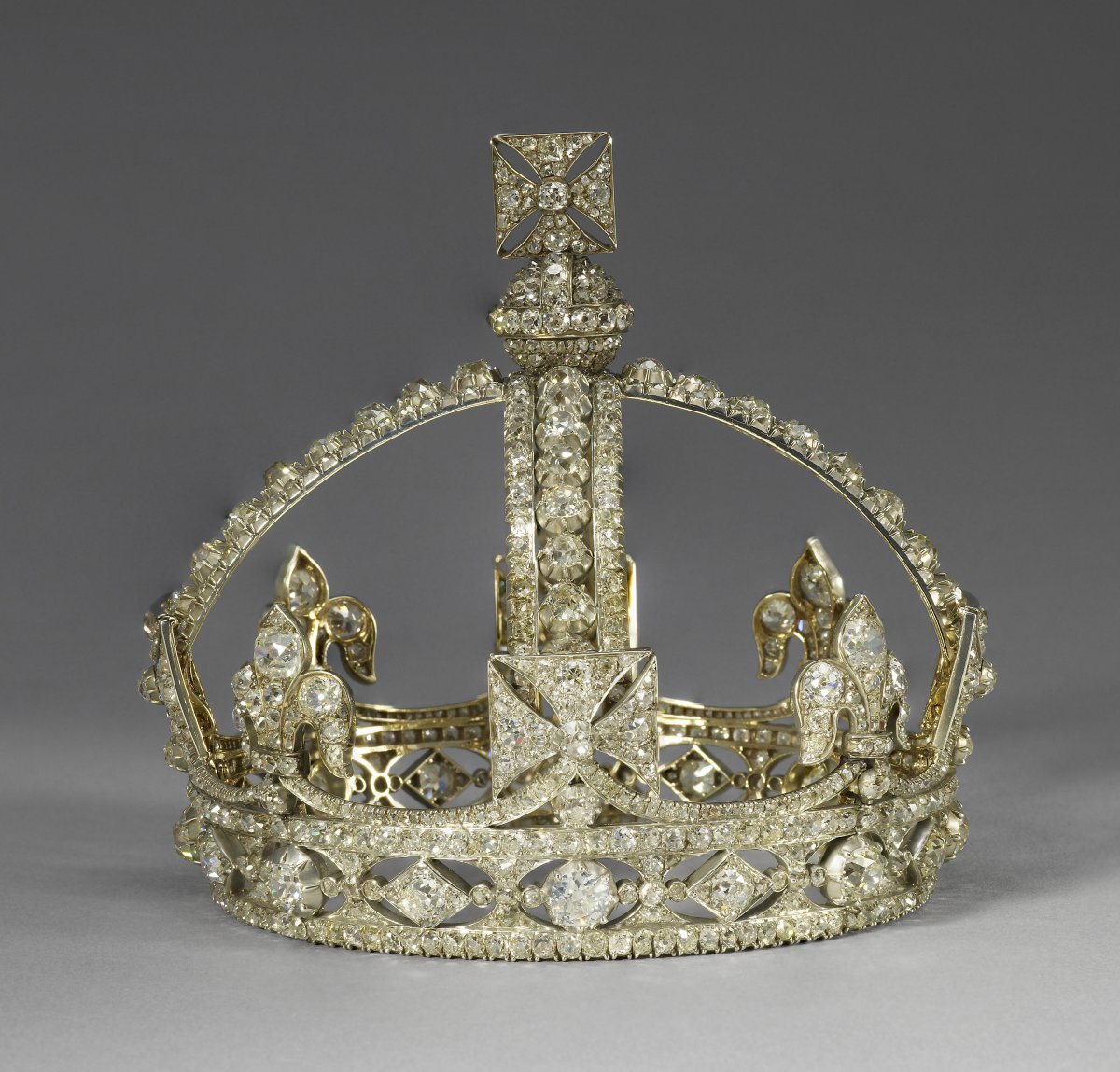
Victoria’s reign lasted for decades after Albert’s death. That period is represented by her small diamond crown, which was made in 1870. The RCT notes that the crown was “so closely associated with the monarch that it was placed on her coffin during her lying in state” in 1901.
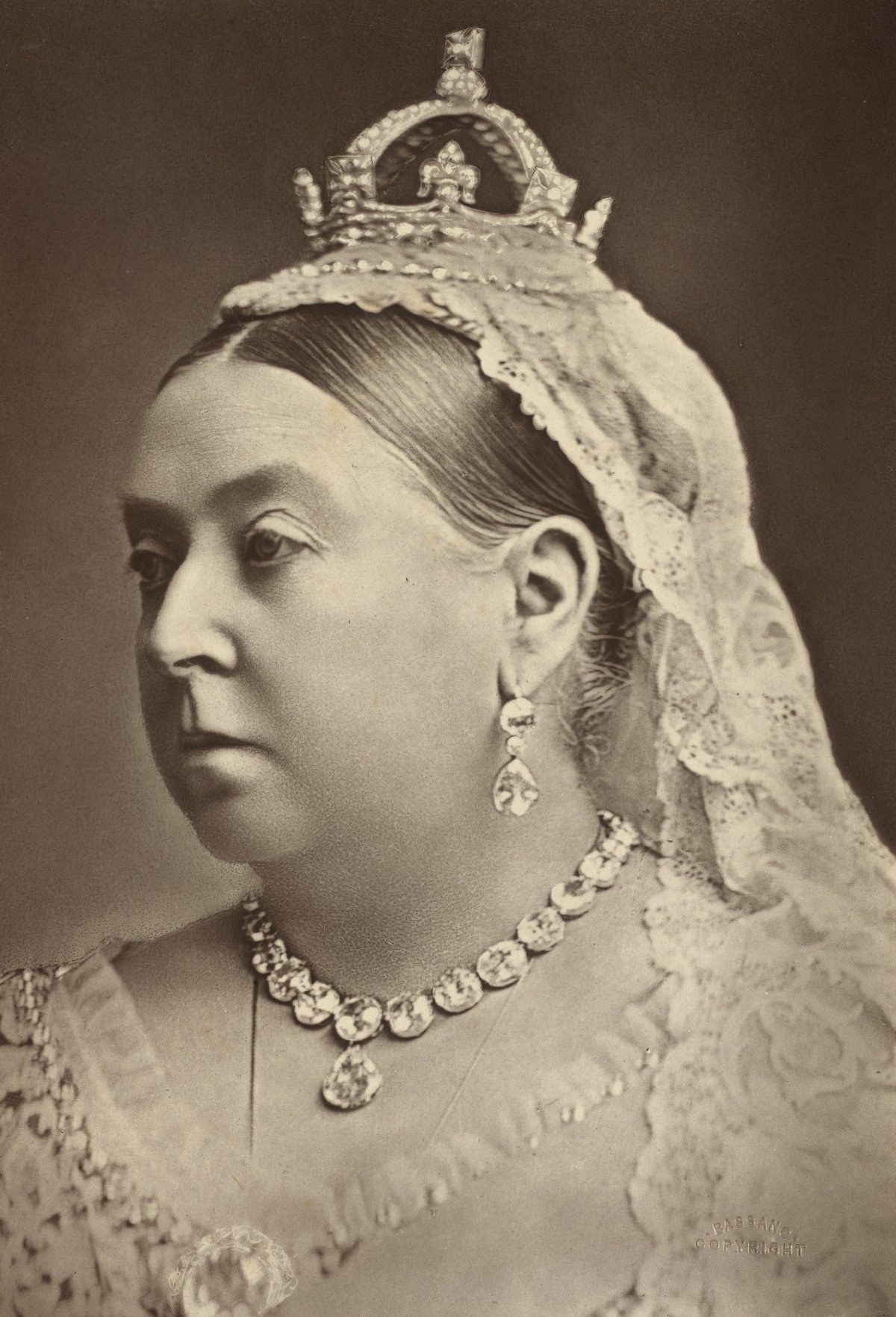
Victoria wore the crown for a famous series of photographic portraits taken by Alexander Bassano in 1882, including the image shown above.
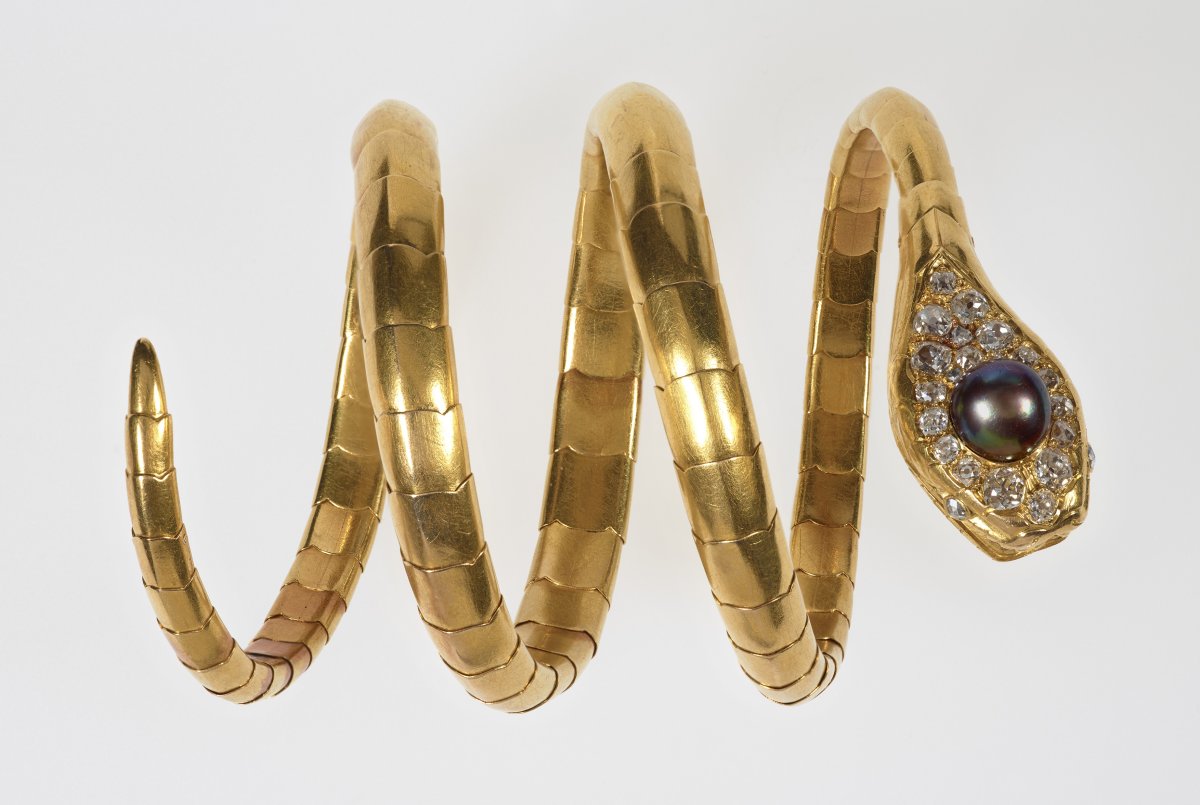
Later, the small crown was worn often by Queen Alexandra. Her personal collection will also be represented in the exhibition, with pieces like her 1870s-era articulated serpent bracelet on display.
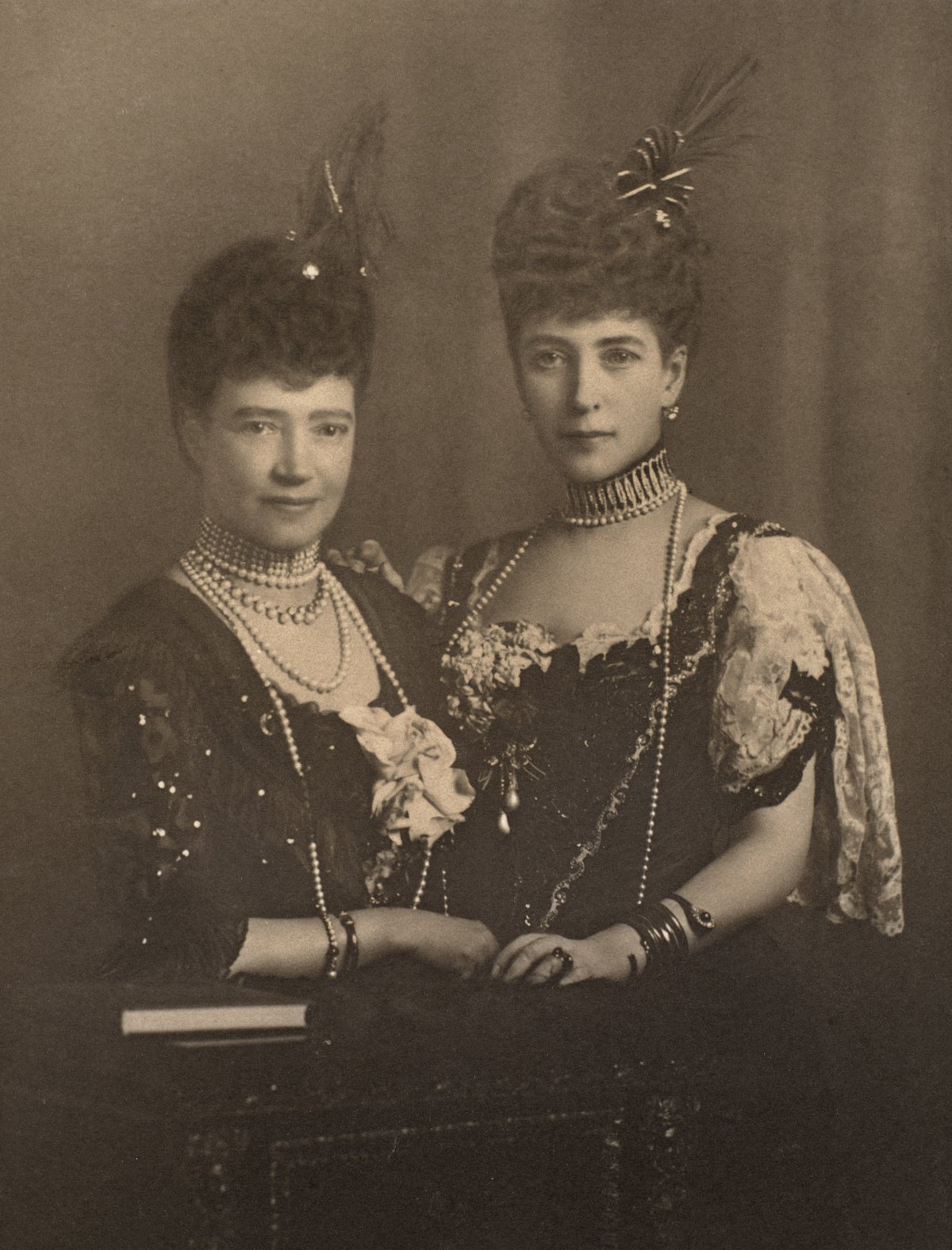
She’s wearing the bracelet on her left wrist in this photograph, taken with her sister, Dagmar, at the Downey studios in 1908.
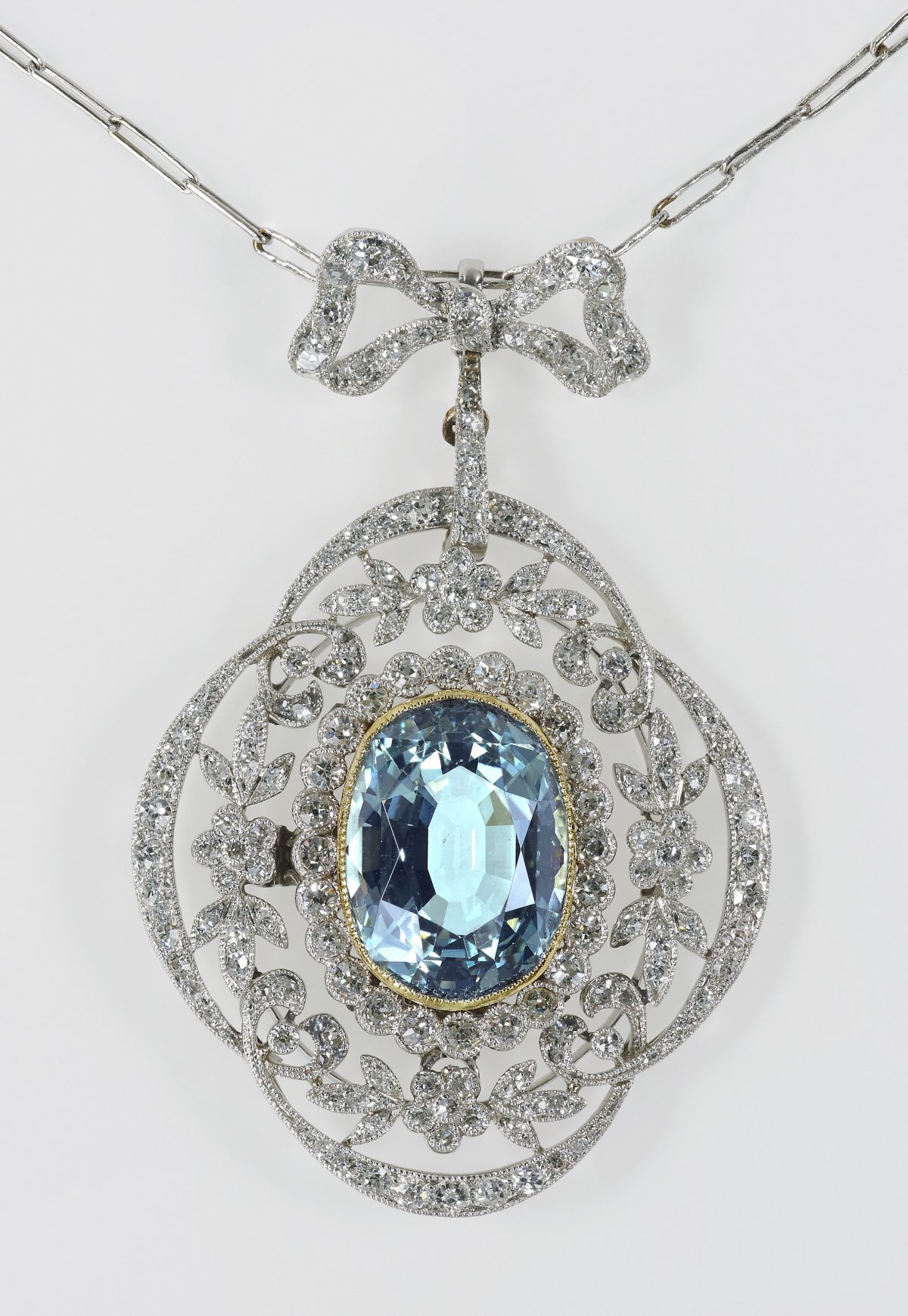
The press materials have settled questions about a pair of “newer” royal jewels. This diamond and aquamarine pendant, which can also be worn as a brooch, comes from Fabergé. The jewel, which dates to 1909, was acquired by Queen Mary and later given to her granddaughter, Queen Elizabeth II.

The late Queen Elizabeth II memorably wore the jewel as a brooch at the Commonwealth Heads of Government Meeting in Malta in November 2015. It’s lovely to finally have a confirmed provenance for the piece!
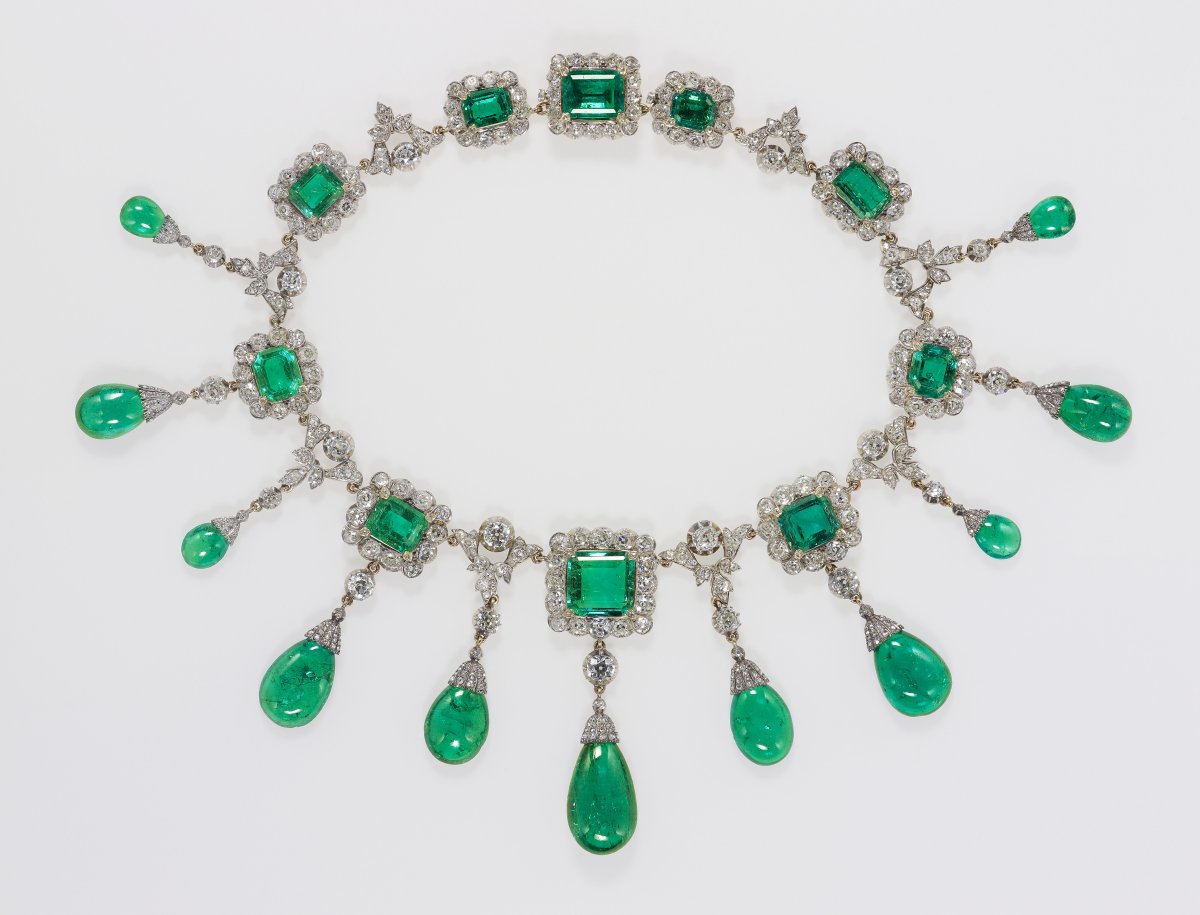
The press release also confirms my long-held suspicions about another royal jewel. This diamond and emerald necklace, worn by Queen Elizabeth II in 2019 and Queen Camilla in 2025, is indeed the second emerald necklace from the Greville Bequest.

The necklace was bequeathed to Queen Elizabeth the Queen Mother by Dame Margaret Greville in 1942. It lay unseen in the vaults for years, until Queen Elizabeth II wore it for the Diplomatic Reception in 2019. Queen Camilla wore it without its pendants during the German state visit last December.
Royal Jewellery: From Coronations to Keepsakes will open at the King’s Gallery on June 25, 2027, and will remain open until March 19, 2028. Tickets will be available to purchase on October 28 for Royal Collection Trust e-newsletter subscribers and on November 3 for the general public. Delightfully, the announcement also reveals that a companion book will be also be produced. The RCT calls the book “the first comprehensive study of the British royal jewellery collection ever published.” Just stunning, stunning news all around.
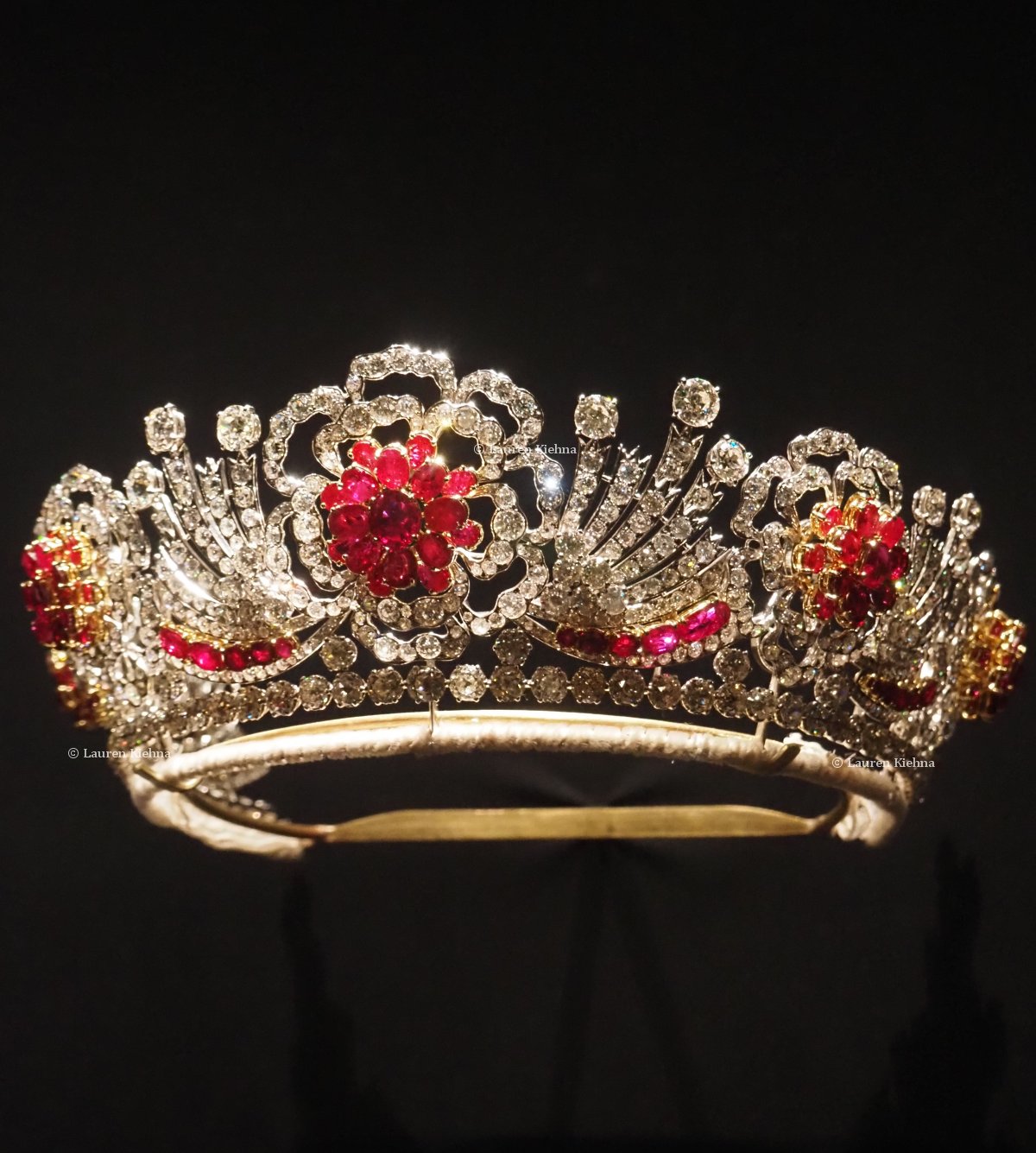
This weekend, as part of my year-long Hidden Gems series on Queen Elizabeth II’s tiaras, I’ll be delving into the interesting history of a jewel currently on display at the King’s Gallery: the Burmese Ruby Tiara. And on Sunday, my free weekly digest newsletter will hit subscribers’ inboxes bright and early. Be sure you’re signed up so you don’t miss it!
Leave a Reply
You must be logged in to post a comment.