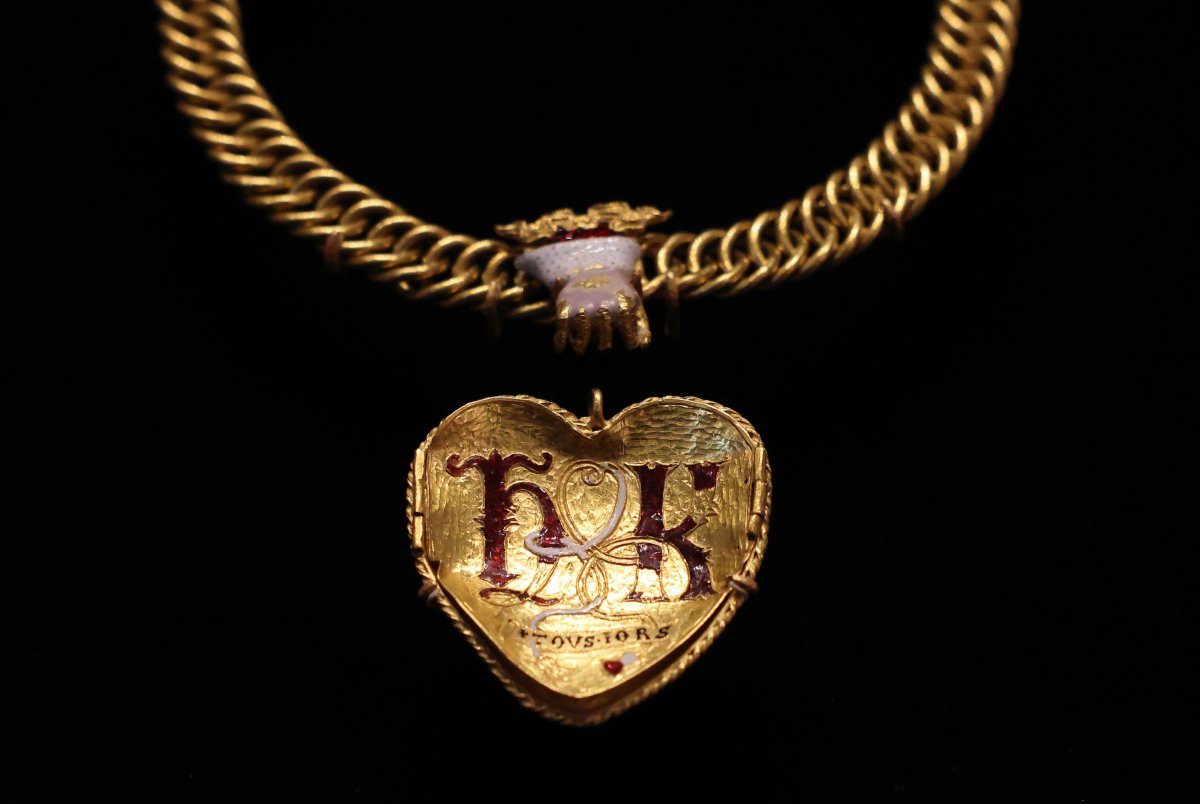
Last week we learned very good news from the British Museum: a rare Tudor jewel linked to King Henry VIII and his first wife, Katherine of Aragon, will remain on British soil for good.
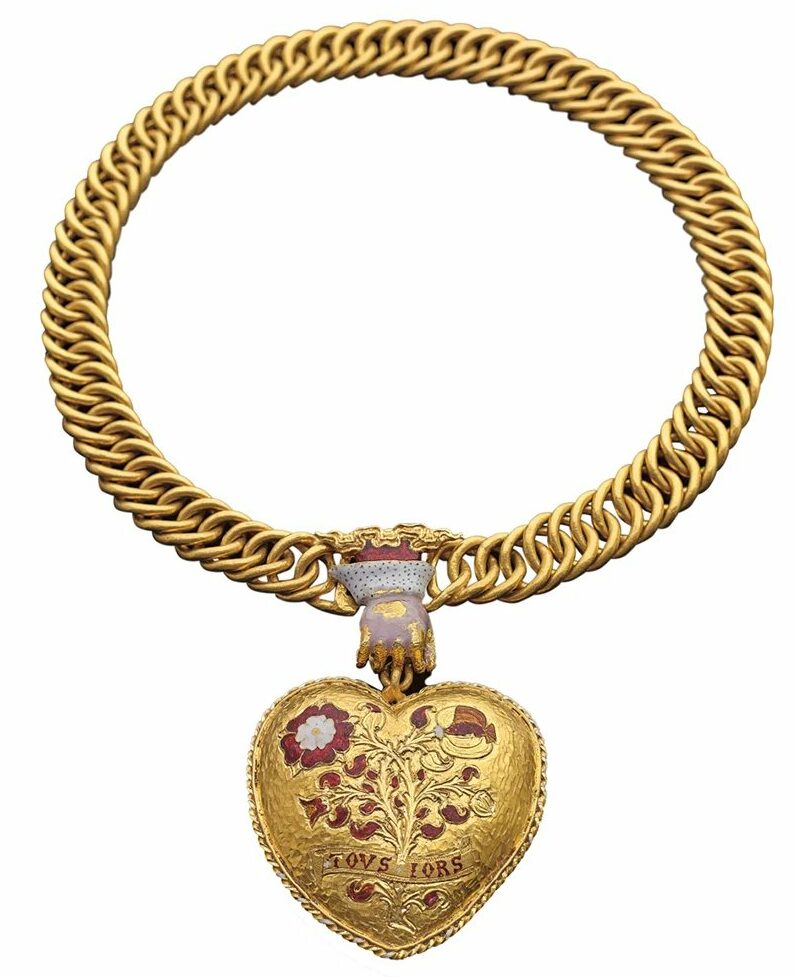
The jewel, a gold necklace with a heart-shaped pendant, first showed up in the news in 2019. That December, Charlie Clarke, a café owner from Birmingham, was using a metal detector to search for artifacts in north Warwickshire. There, on the site of a dried-up pond, he found a yellow gold pendant attached to a chain necklace. The find, which he described as “once in a lifetime – no, once in 30 lifetimes” made him shriek “like a little schoolgirl, to be honest. My voice went pretty high-pitched.”
Realizing that he had found something truly spectacular, Clarke registered the necklace with the Finds Liaison Officer, Teresa Gilmore, who brought it to the Birmingham Museum and Art Gallery. Soon, they got in touch with the British Museum. Rachel King, the museum’s curator of Renaissance Europe, has described the necklace as one of the most important Renaissance objects found in Britain in a quarter century.
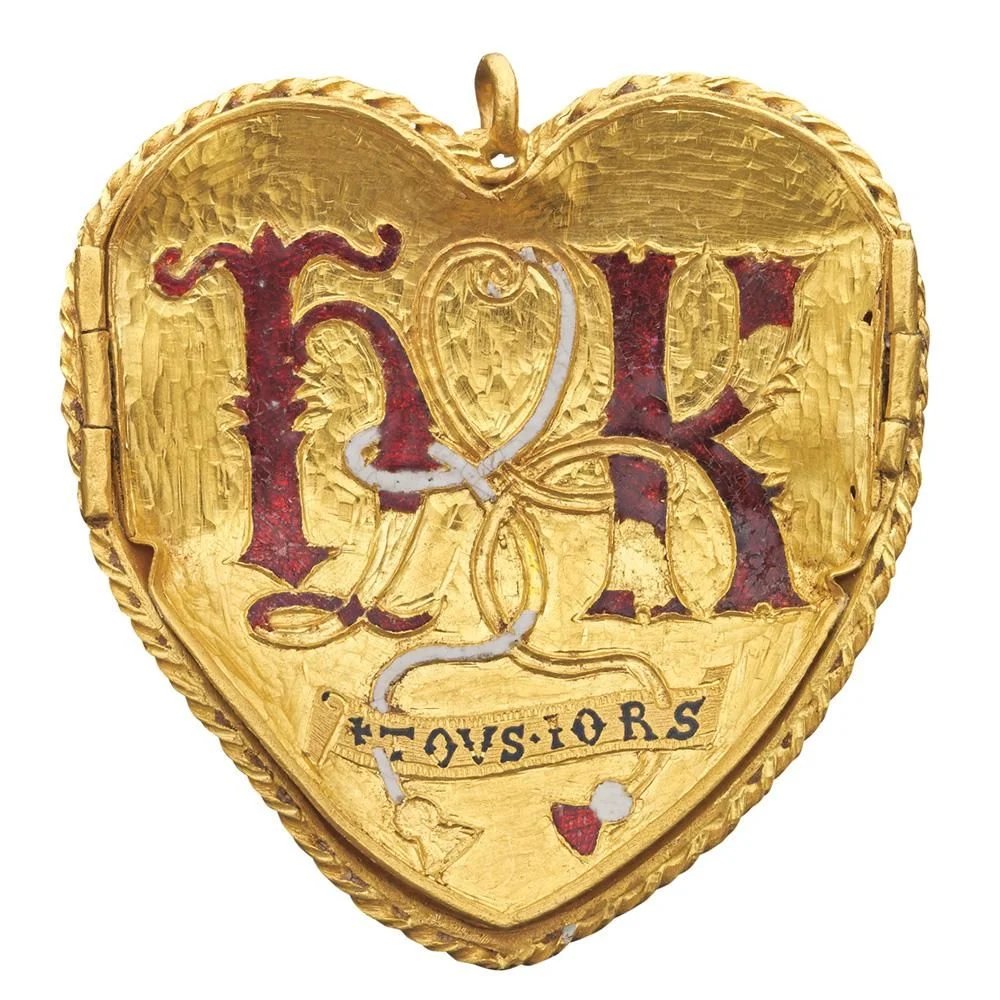
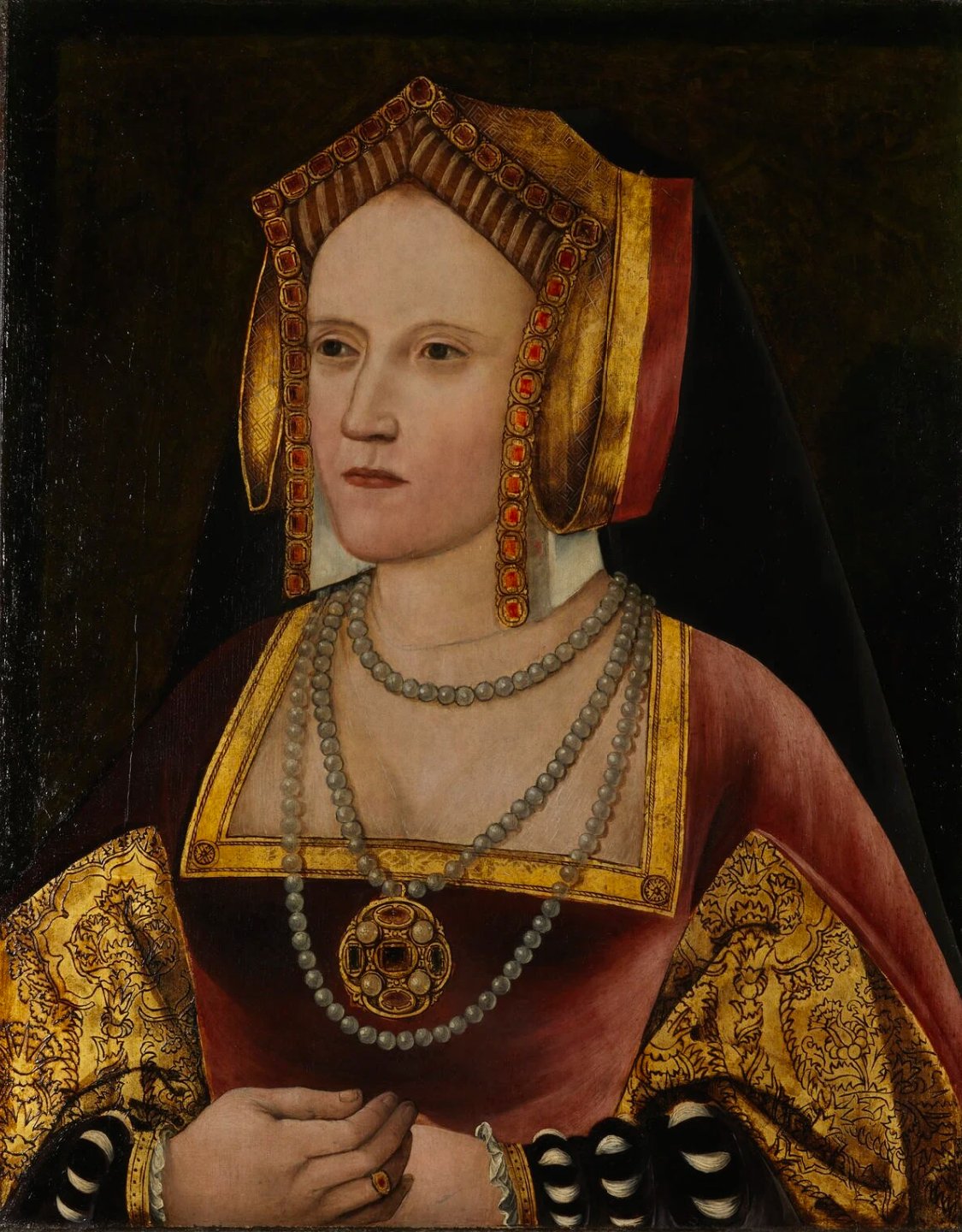
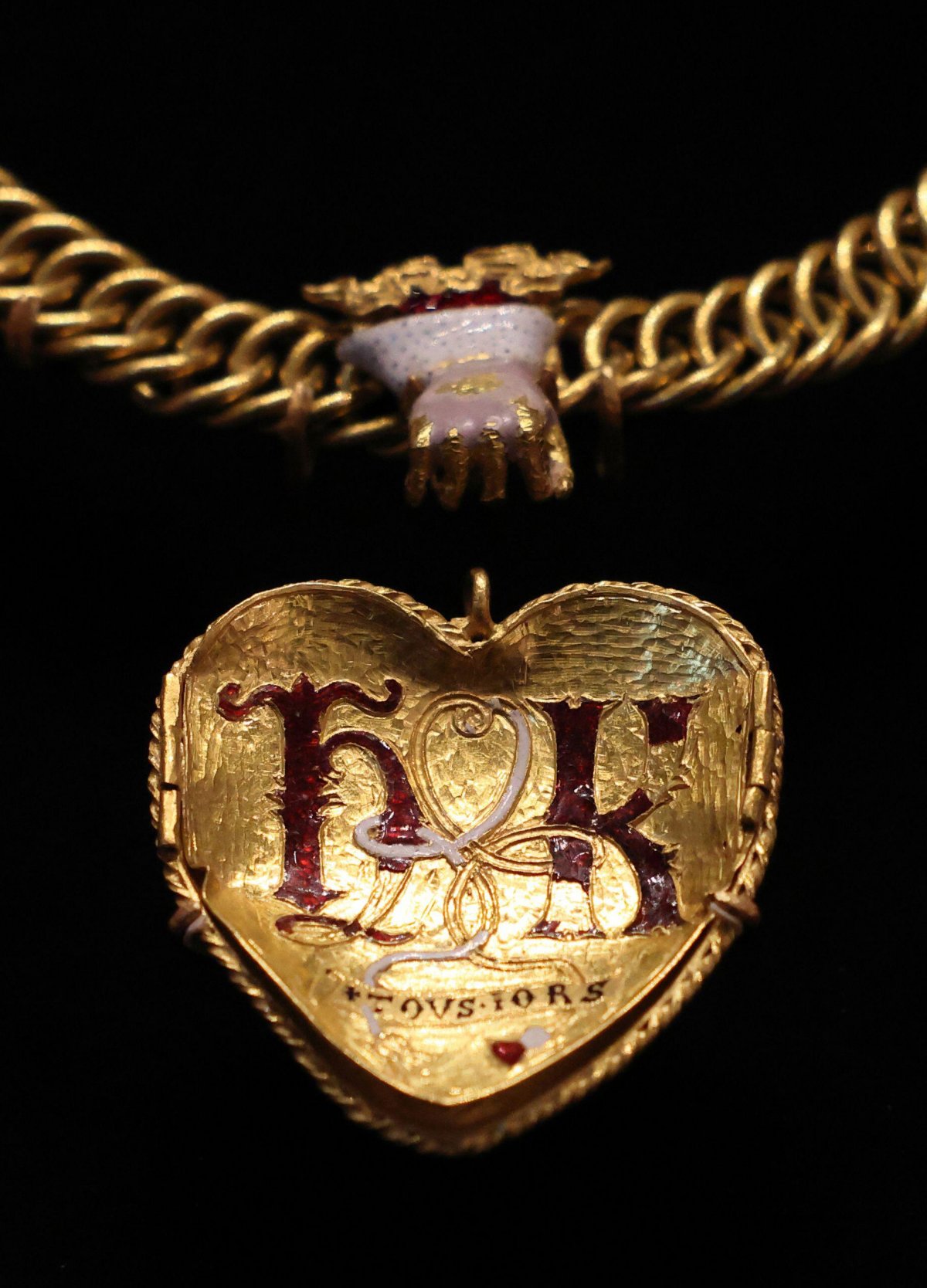
Experts with the museum used the necklace’s materials to verify that it is a genuine piece from the Renaissance period. Next, they turned to the decorations of the piece, which include the intials H and K, the word tousiours, and entwined Tudor rose and pomegranate branches.
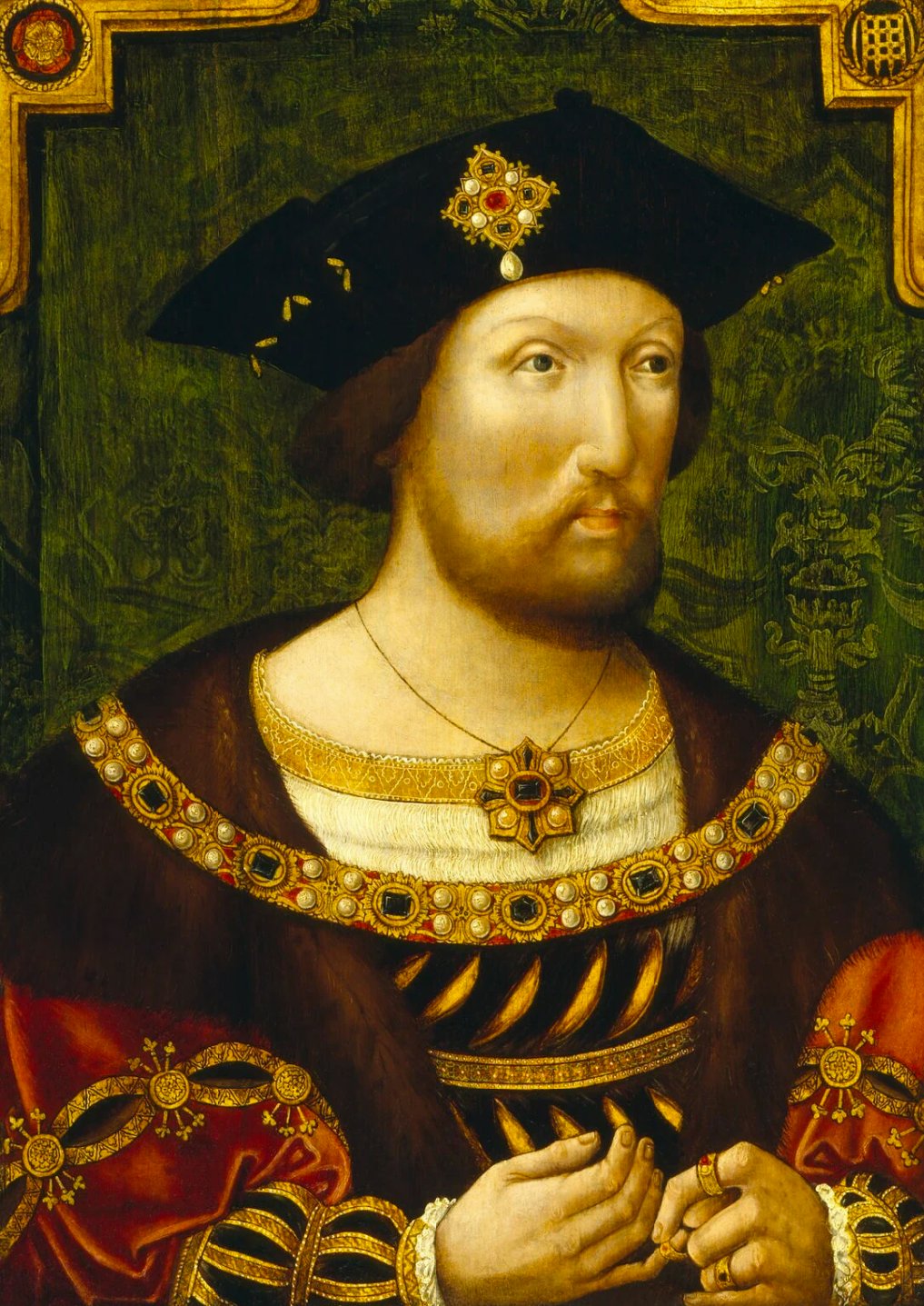
The initials and the heraldic flowers have directed experts toward one conclusion: the pendant is somehow linked to King Henry VIII and his first wife, the Spanish-born Katherine of Aragon. The British Museum’s write-up on the jewel explains, “Combined rose and pomegranate motifs were worn by loyal subjects on badges to show their allegiance to Henry VIII and Katherine during their marriage. Across the bottom of this design is a banner with red-enamelled text reading ‘TOVS IORS’, possibly a pun on the French word toujours (‘always’), with spacing that makes it sound like ‘tous (all) yours’ when read aloud.”
The museum’s description continues, “The back has the red-enamelled Lombardic letters ‘H’ and ‘K’ (Henry and Katherine), and the same motto in black enamel. Above the hand-shaped clasp, a cloud shape gives the appearance of a hand coming down from the heavens. This was a common 16th-century emblem representing the divine hand of God, and which occasionally also symbolised romantic love when combined with a heart.”
Linking the pendant to a known Tudor royal jewel has proved difficult so far. There’s no match for the piece in any existing images or inventories from the time. “Nonetheless,” King told the Guardian in 2023, “its quality is such that it was certainly either commissioned by or somehow related to a member of the higher nobility or a high-ranking courtier.”
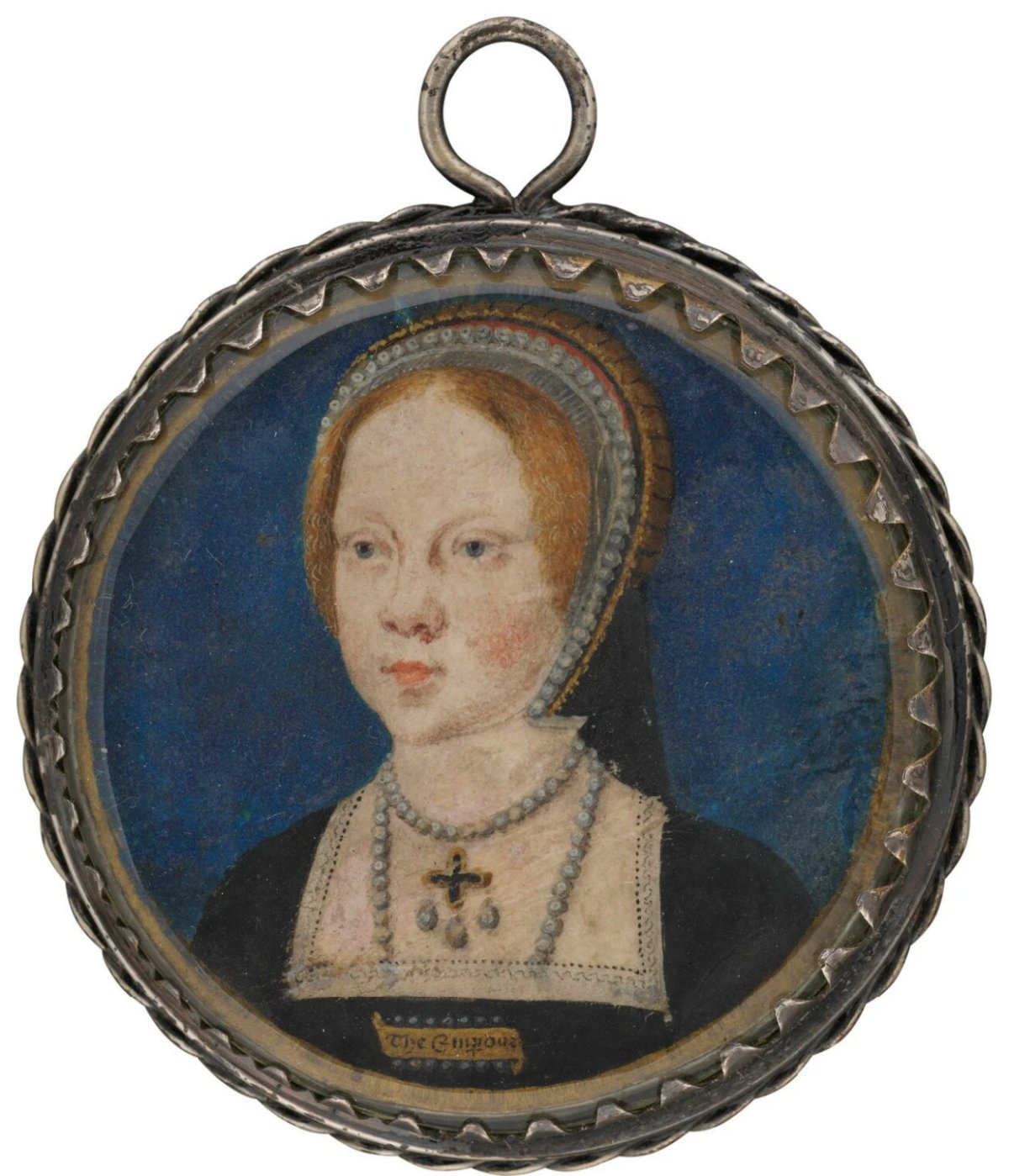
Various hypotheses about the reason for the pendant’s commission have been shared. Some have suggested it might have been a prize for the winner of a tournament competition. British Museum researchers have also recently posited that it may have been made in conjunction with the betrothal of Henry and Katherine’s two-year-old daughter, Princess Mary, to the infant Dauphin of France in 1518. (They never made it to the altar.)
To keep the pendant in Britain, the British Museum launched the Tudor Heart Appeal. Last week, they announced that £3.5 million had been raised, which will enable the museum to keep the heart on permanent public display. Various philanthropic organizations, including the American Friends of the British Museum, offered significant gifts to the appeal, but £380,000 of the final sum came from small donations offered by 45,000 individuals. The Tudor Heart is on display now in Room 2 at the British Museum, part of the “collecting the world” exhibit. Members of the public can visit the museum and see the Tudor Heart for free.
Half of the money raised, £1.75m, will go to Charlie Clarke, and the owner of the field where the pendant was found will receive the other half of the total sum. Clarke has said that he will use his part of the money to pay for a quality education for his son. In 2023, Clarke told the Guardian that he still couldn’t quite believe what he’d found. “People say it’s like winning the lottery; it’s not,” he said. “People actually win the lottery. When was the last time a crown jewel was unearthed?”
Leave a Reply
You must be logged in to post a comment.