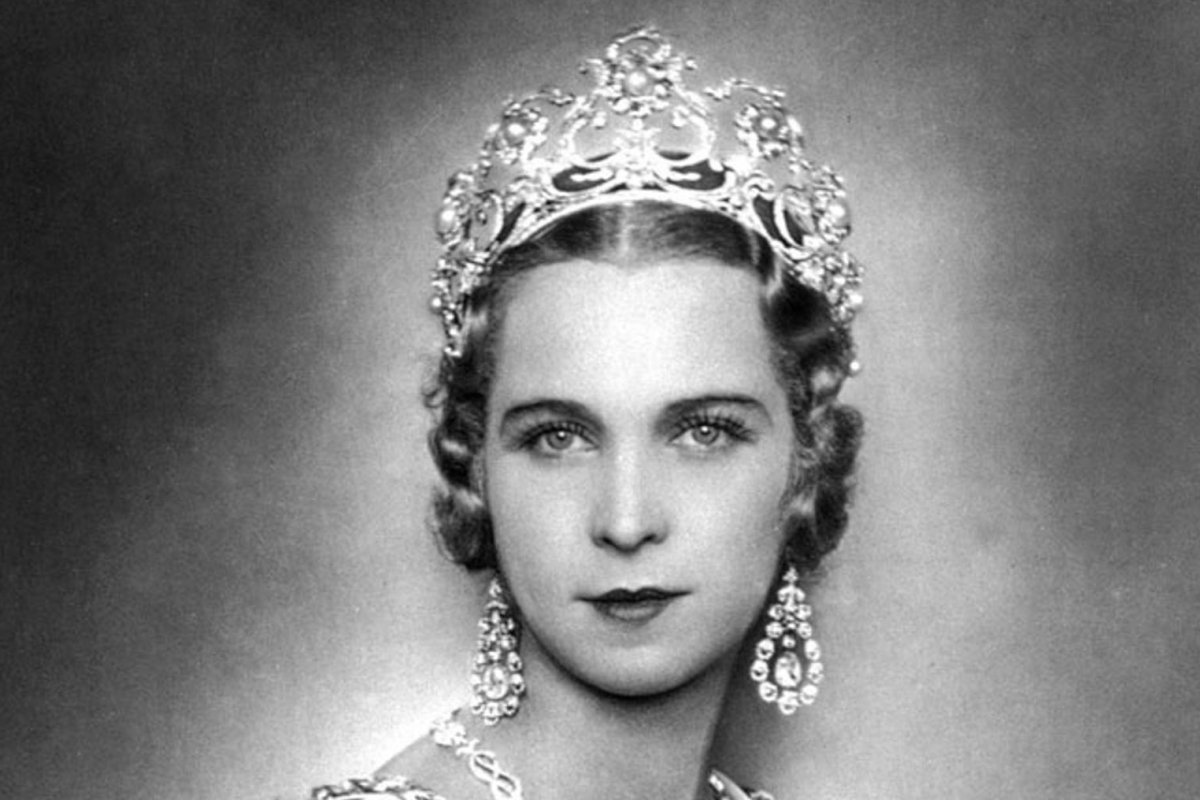
This week, the Belgian royals hosted the Italian president for a state visit in Brussels. King Philippe himself has strong ties to Italy—his mother is Italian—but two generations ago, the daughter of another Belgian king married a future Italian monarch. Today, here’s a look back at that royal wedding, and the grand tiara that Princess Marie-José wore for the ceremony in Rome.
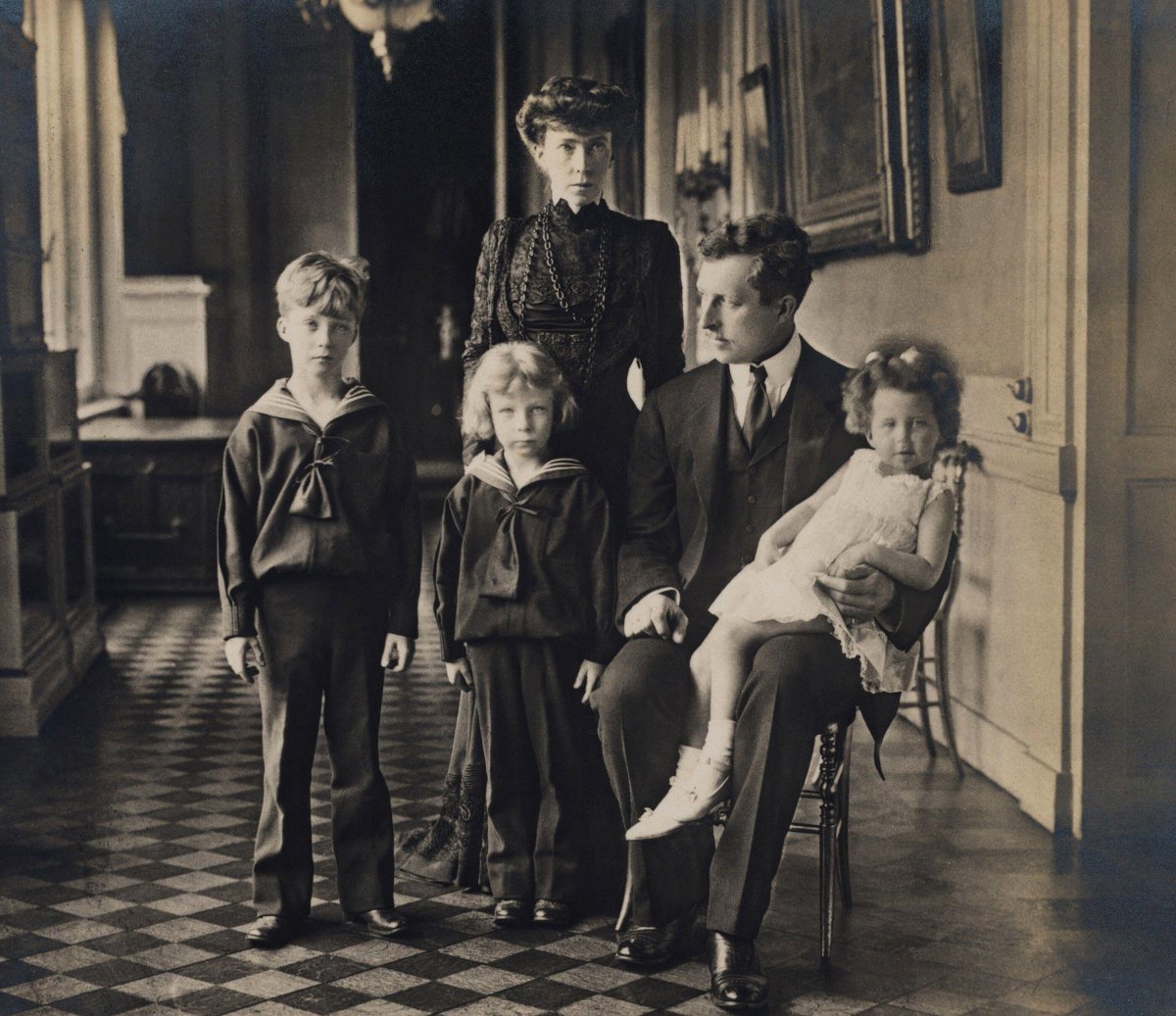
Princess Marie-José of Belgium was born in Ostend in 1906. She was the third child and only daughter of Prince Albert of Belgium, the nephew and heir of the dastardly King Leopold II of Belgium, and his German-born wife, Duchess Elisabeth in Bavaria, who was the niece and namesake of Empress Elisabeth of Austria.
The family is pictured above in a portrait taken just before Albert inherited the throne, becoming King Albert I, in 1909. Princess Marie-José, with her immediately recognizable curly hair, sits on her father’s lap, while her two older brothers, Prince Leopold (the future King Leopold III) and Prince Charles (later Count of Flanders) stand in front of their mother.
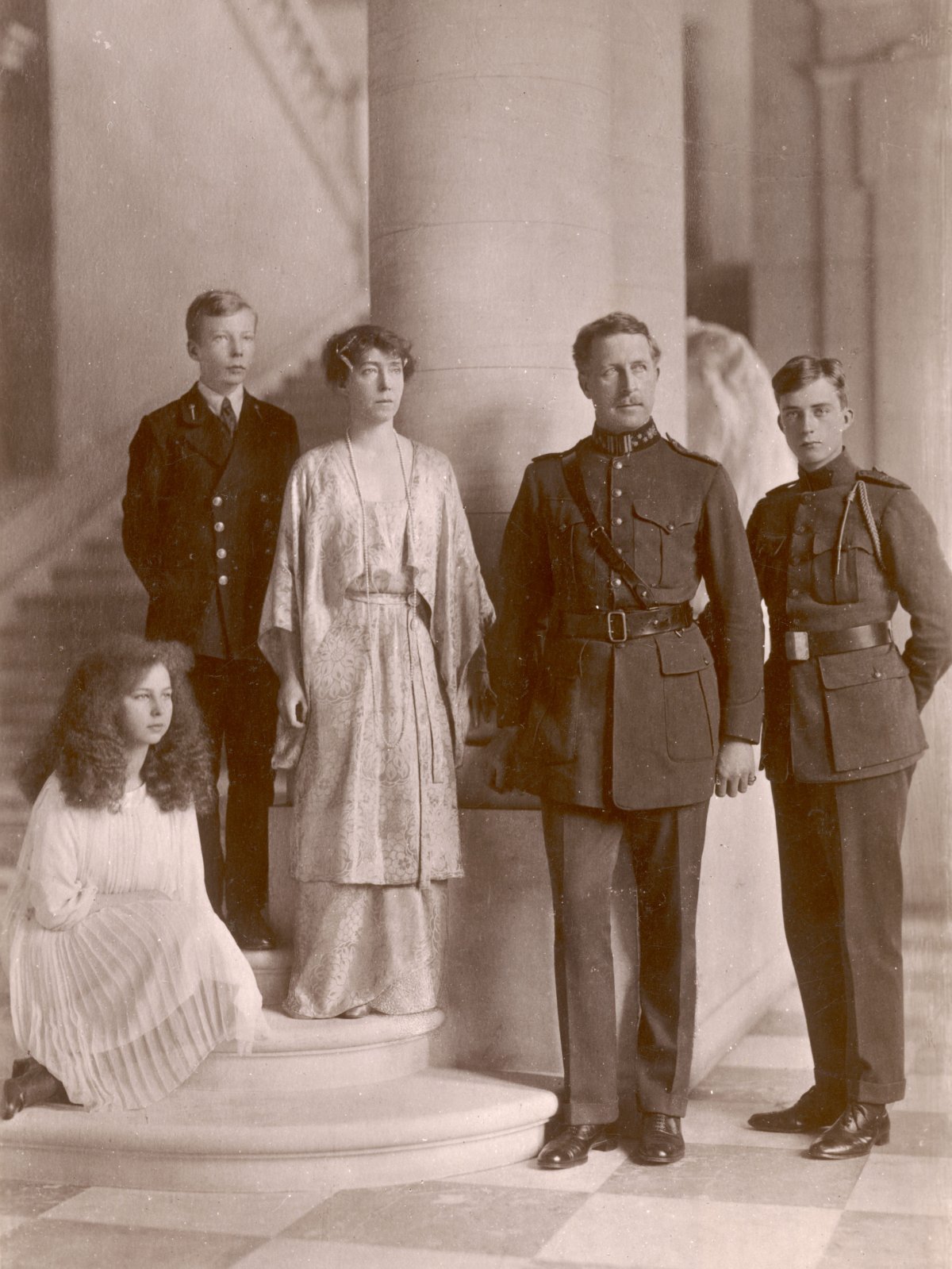
Just five years after Marie-José’s father became king, Europe was plunged into war. This pensive family portrait, taken during the war years, shows the King and his sons in uniform. Belgium was invaded by the Germans in 1914 and occupied until the end of the war, and much of the intense fighting during the conflict took place on Belgian soil.
The teenage Marie-José was sent abroad for much of the war, continuing her education first in Britain and then in Italy. There, while studying in Florence, she met the Prince of Piedmont. Umberto, who was two years her senior, was the son and heir of King Vittorio Emanuele III of Italy. For years after the end of the war, an impending engagement between the Italian crown prince and the Belgian princess was rumored.
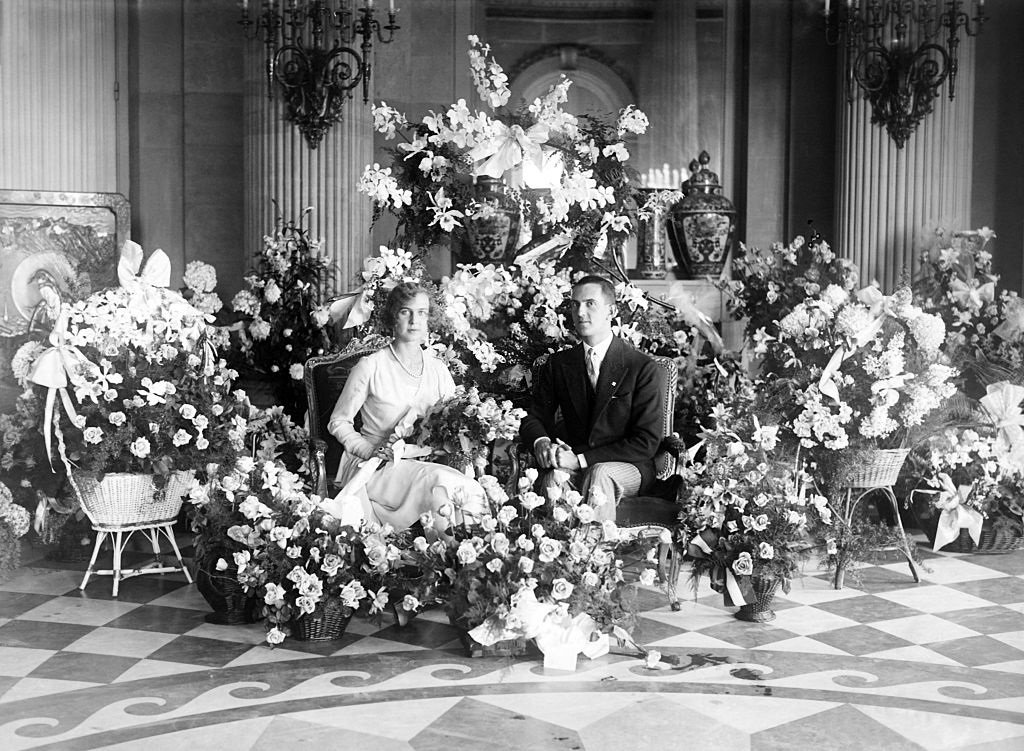
Press reports delighted in the prospect of a love match between the young royals. After all, Marie-José’s parents had a genuine romantic attachment, and so did her brother and sister-in-law, Prince Leopold and the Swedish-born Princess Astrid. The truth was starker: the marriage between Umberto and Marie-José was largely brokered by their two families for their mutual political benefit.
After years of hedging answers from courtiers, the couple’s betrothal was officially announced in Brussels on October 24, 1929, which was also King Albert and Queen Elisabeth’s wedding anniversary. But the day quickly turned from joy to terror. While laying a wreath at the Tomb of the Unknown Soldier in the Belgian capital city, Umberto narrowly escaped an assassination attempt. A single shot was fired in his direction by an Italian student, who later told authorities that he wanted to protest the royal engagement.
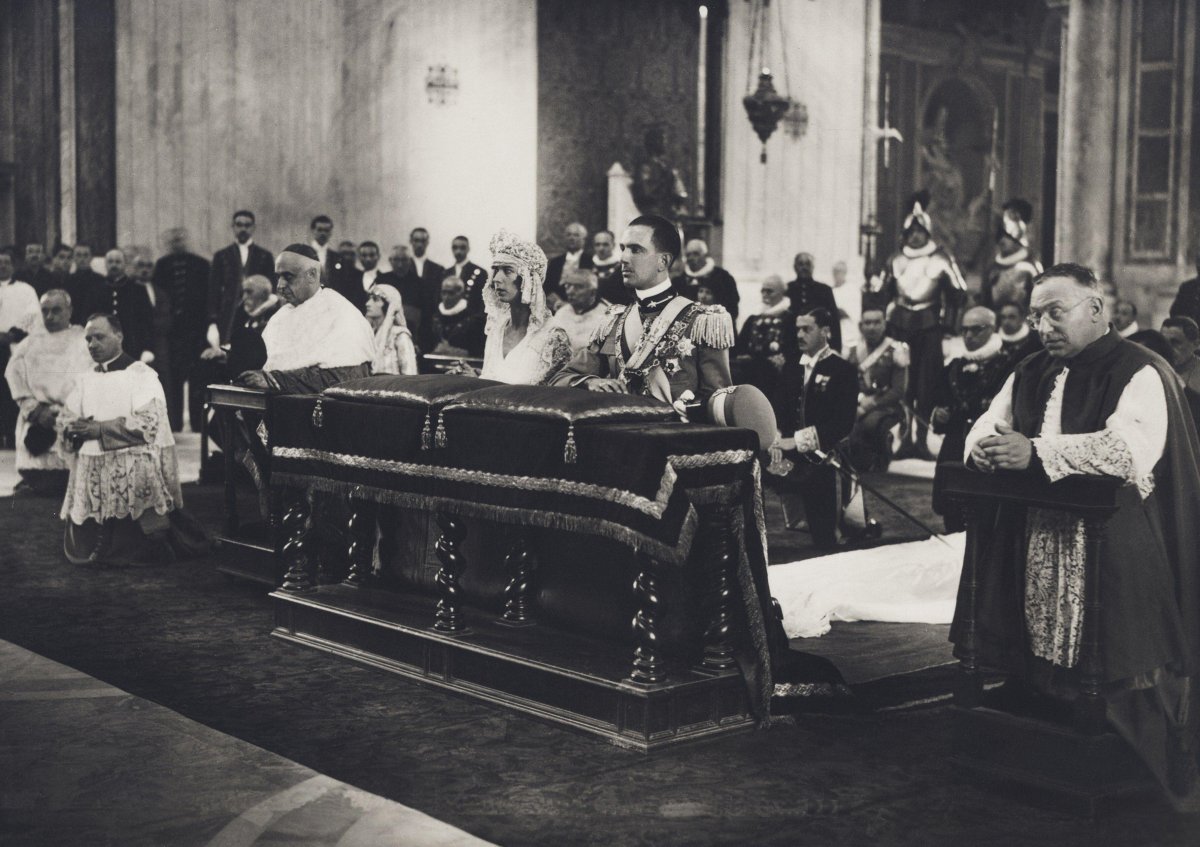
Plans for the royal wedding continued, though security was tightened at each step of the celebrations, as threats from anarchist groups continued to mount. The wedding date was fixed for January 8, 1930, with several receptions taking place in the days before and after the ceremony. The crown prince and the princess were married in the Cappella Paolina, a grand seventeenth-century chapel inside the Quirinal Palace in Rome. The ceremony was performed by Cardinal Pietro Maffi in the presence of scores of royals, including the King and Queen of Italy, the King and Queen of Belgium, the King of Bulgaria, the Grand Duchess of Luxembourg, the Prince of Monaco, the former King of Portugal and his mother, Queen Amalia, and the former King and Queen of Afghanistan. The Duke of York, later King George VI, was there representing his father, King George V.
After they were officially married, the new Prince and Princess of Piedmont headed across town to the Vatican, where they had a private audience with Pope Pius XI. Newspapers reported, “The throngs of people who lined the route of the Prince and his bride the entire way were so great in number and their demonstrations so enthusiastic that the suite reached the Vatican twenty-five minutes after the time fixed for the Papal audience.”
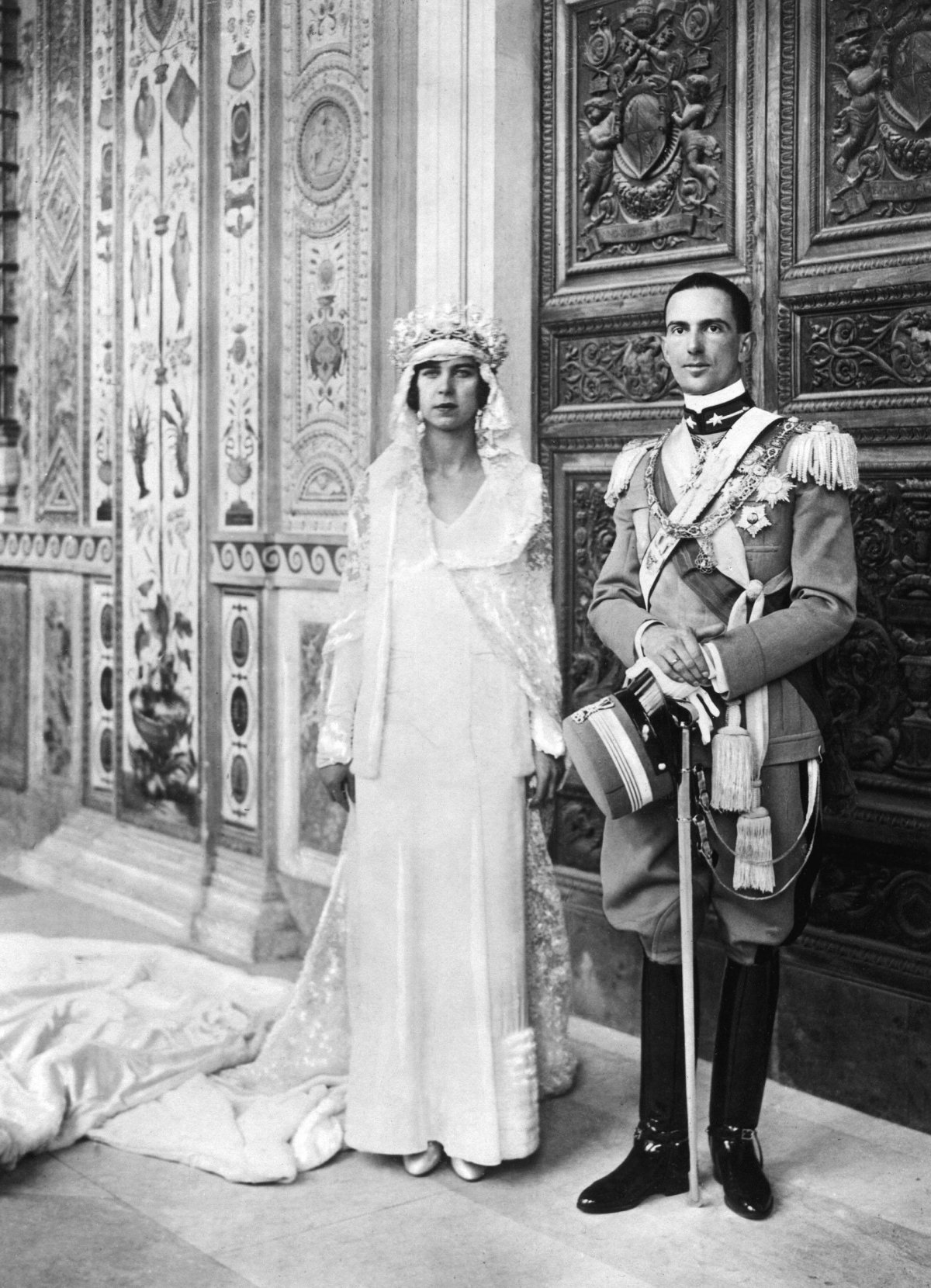
Like so many royal grooms, Umberto wore full dress uniform for his wedding ceremony, complete with numerous decorations. Marie-José’s ensemble incorporated several trends popular in the late 1920s and early 1930s. Press descriptions of the gown noted that it was made “of white silk and velvet of ankle length, with a long foamy train. Over the dress was a white velvet mantle, trimmed with ermine, which was seven yards long.” The gown, at the insistence of the princess, was made in fashionable Milan.
The gorgeous veil that the princess wore with her bridal ensemble was one of her wedding gifts: Flemish lace presented to her by the Belgian provinces. The lace was arranged over her head like a cap, with folds cascading down on either side of her face. It was secured by a massive diamond and pearl tiara, which was stepping out of the shadows for the first time in four years.
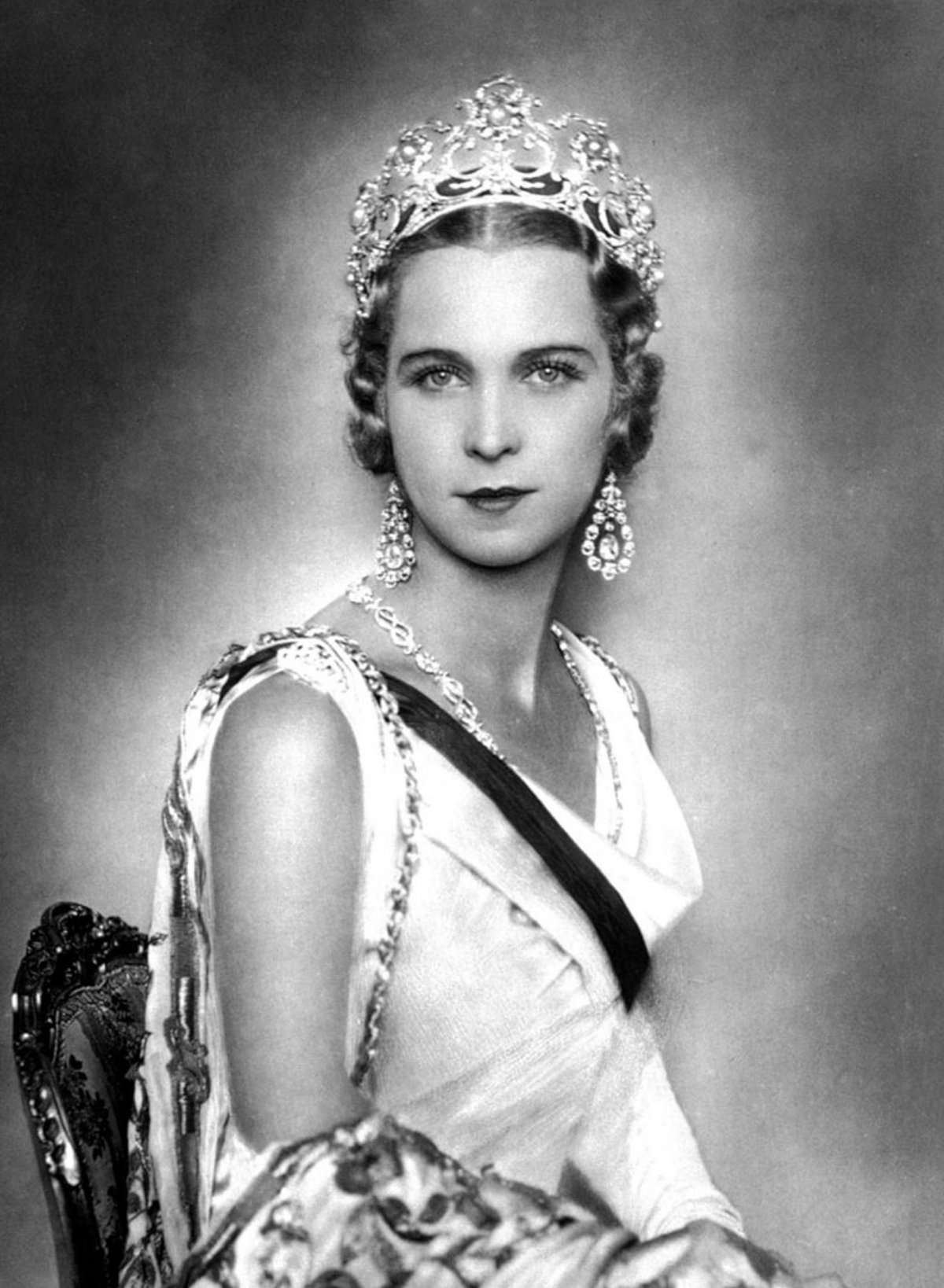
The tiara, sentimentally, was present for two of the most important days of Umberto’s life. The jewel was commissioned by his grandmother, Queen Margherita, to wear for his baptismal ceremony in 1904. She also served as one of the baby prince’s godparents, and she wore the tiara as she participated in the baptism. Margherita kept the tiara for the rest of her life, and when she died in 1926, she bequeathed it to Umberto so that his future wife could wear it.
By that time, rumors were already swirling about an engagement to Marie-José, and internal negotiations about the marriage may already have begun, so it’s possible that Margherita knew who the next wearer of the tiara would be. Marie-José made her public debut in the tiara on her wedding day, and she wore it often in the years that followed. Above, she wears the tiara in a notable official portrait from the 1930s.
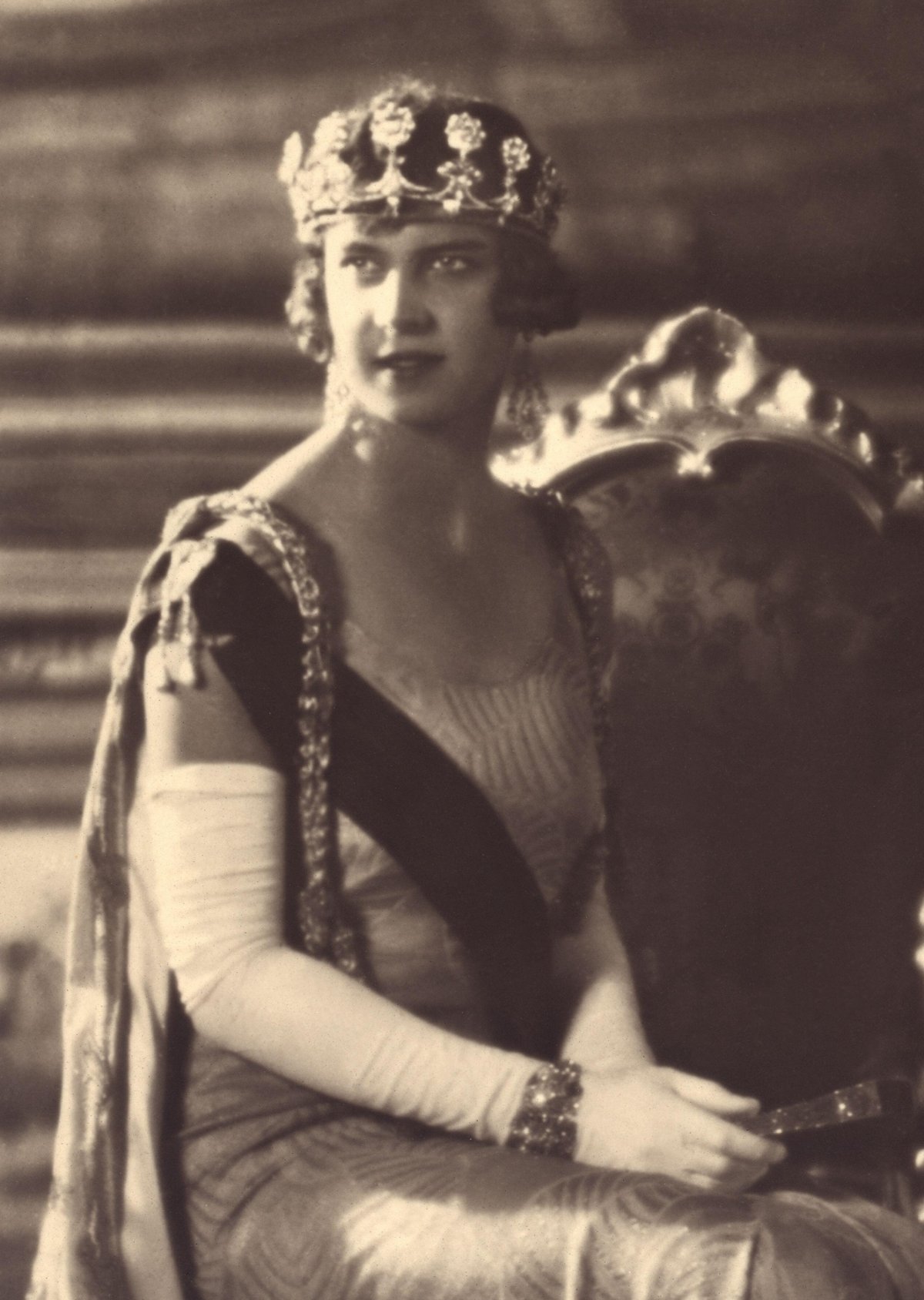
The magic of Queen Margherita’s tiara, which was made for her by Musy, is that it can be worn in a whole range of different configurations. Marie-José wore it the full tiara in an open setting on her wedding day, but she also wore it in a more closed, coronet-like arrangement. Here, in another official portrait, she wears the floral elements from the tiara without the scrolling arches.
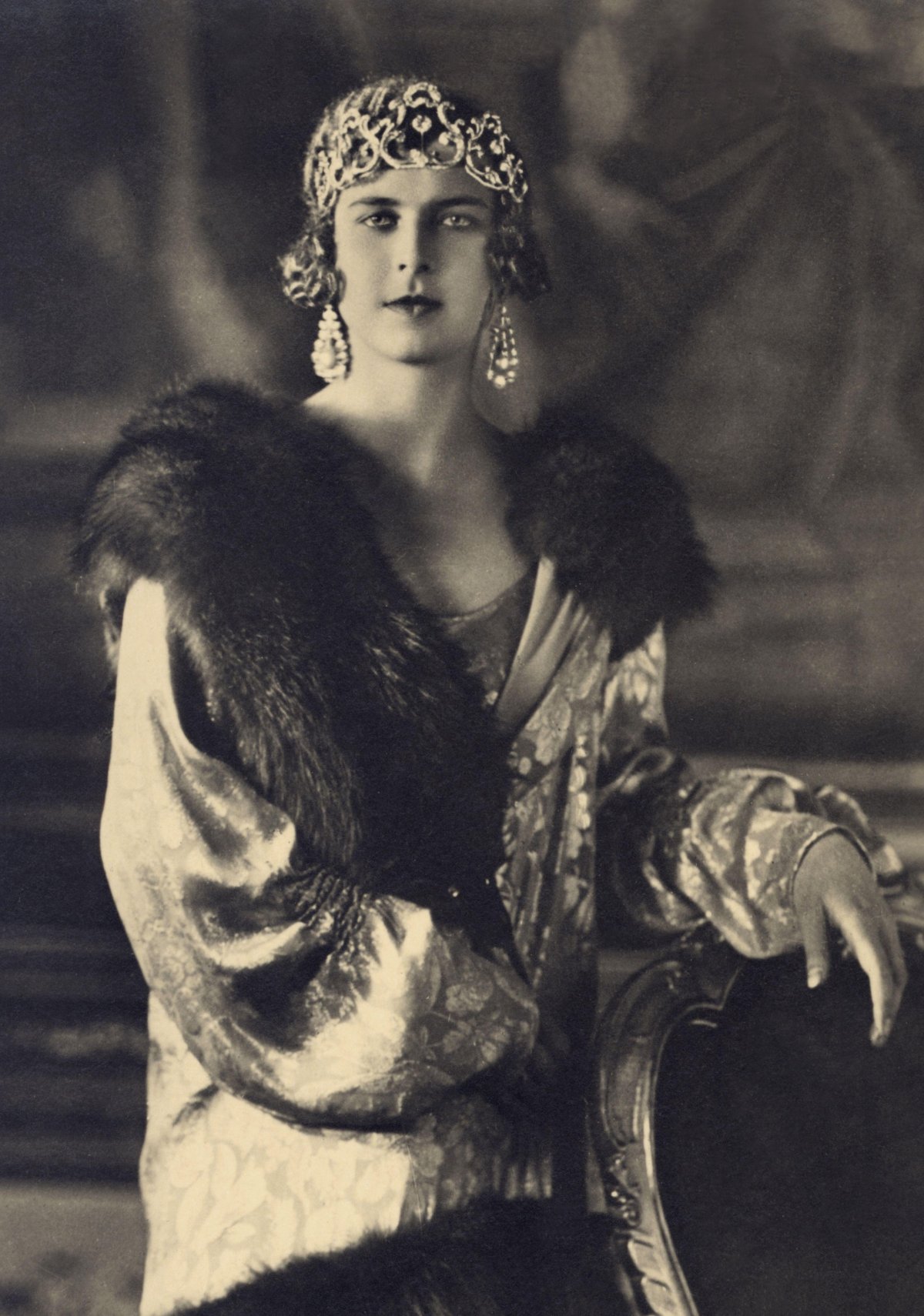
And here, she wears those arches as a separate tiara. In both cases, the portraits date to the years immediately following the royal wedding. A big tell is the positioning of the tiaras: low across the forehead in a style that was particularly trendy in the 1920s and very early 1930s.
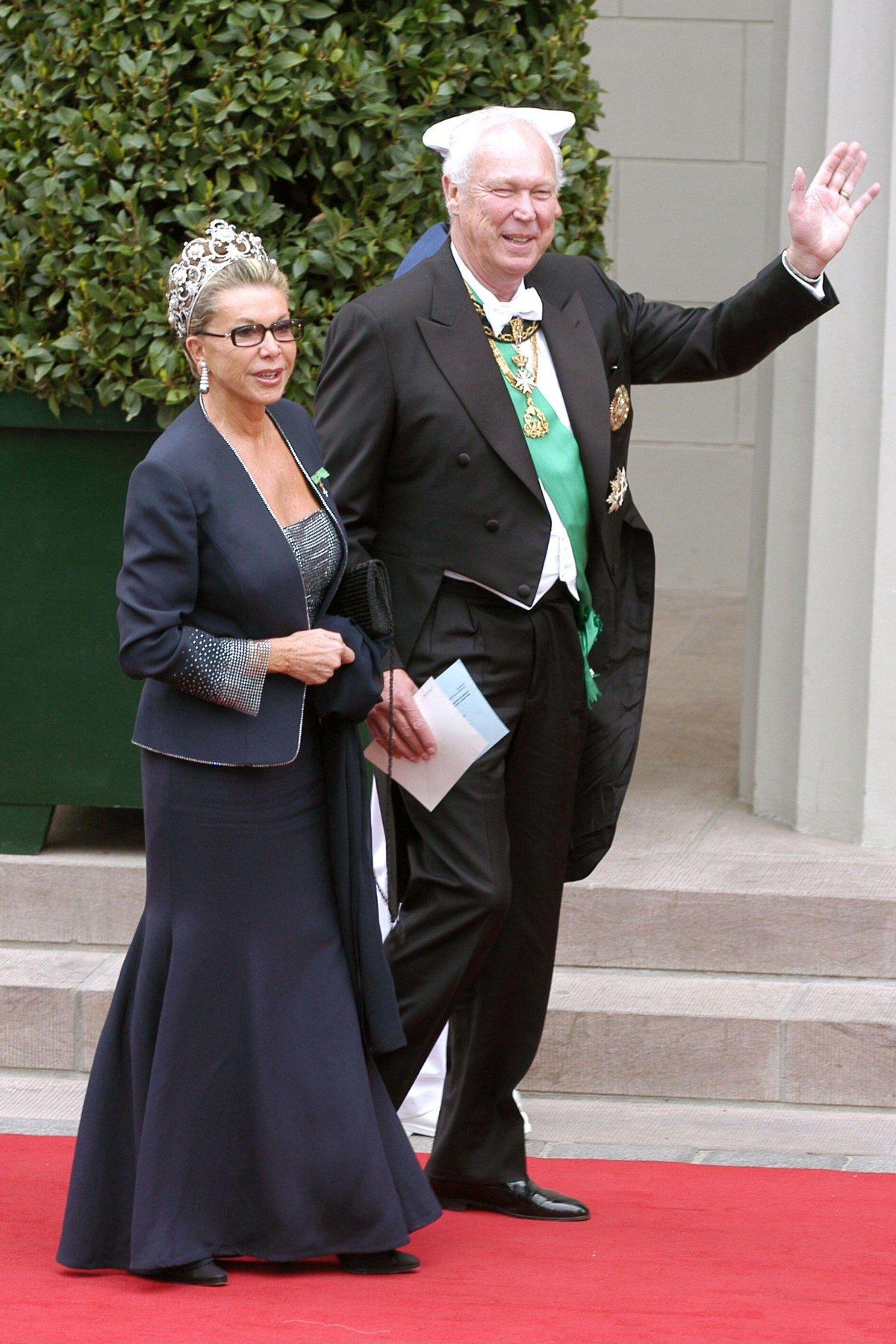
Marie-José kept the tiara for the rest of her life. She and Umberto briefly became King and Queen of Italy in 1946, just weeks before the Italian monarchy was abolished for good. Though some state jewels were left behind in a bank box, the tiara joined Marie-José as she went into exile, where she and Umberto settled into amicably separate lives.
When Marie-José died in 2001, the tiara went to her son and daughter-in-law, Prince Vittorio Emanuele (who died in 2024) and Princess Marina. So far, Marina remains the most recent wearer of the tiara, having brought it out of the vaults briefly for the Danish royal wedding in 2004.
Leave a Reply
You must be logged in to post a comment.