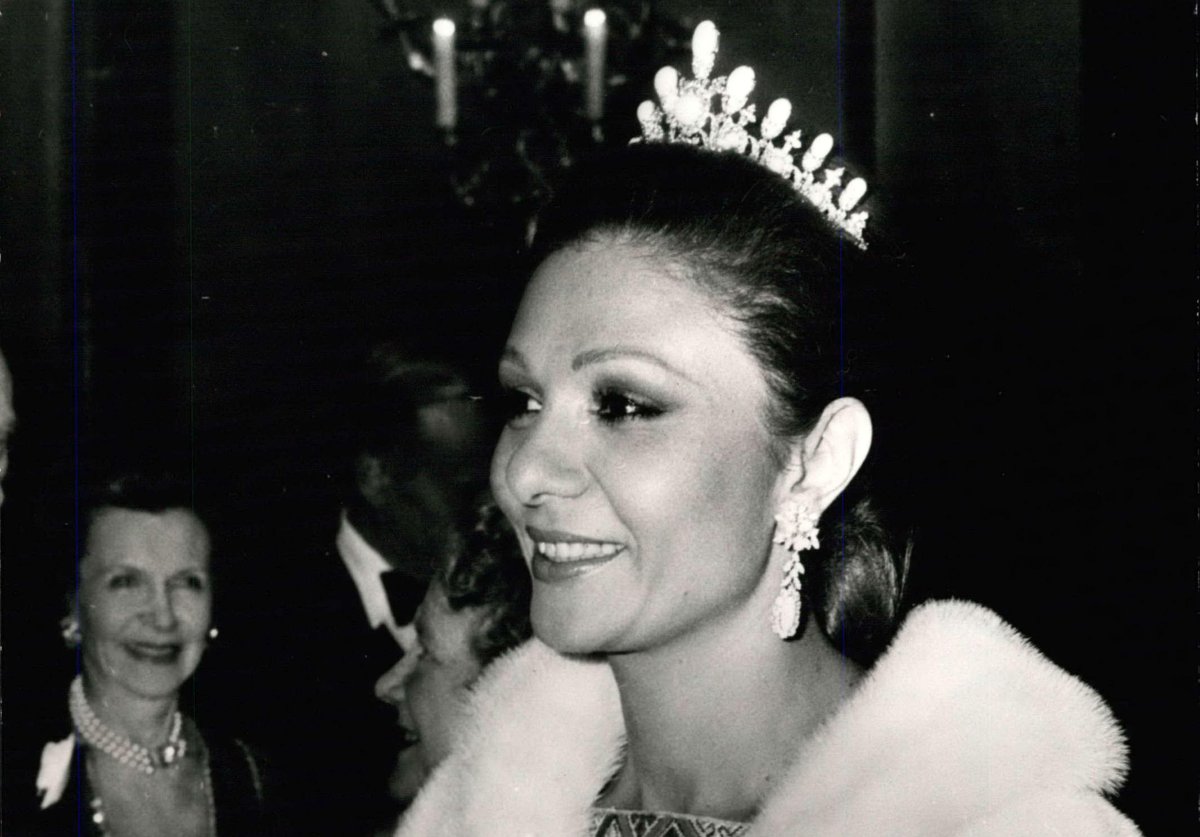
Today, the former Empress of Iran, Farah Pahlavi, celebrates her birthday. With that milestone in mind, we’ve got a look back today at an interesting tiara moment for the former shahbanou at the Royal Opera House in Covent Garden half a century ago.
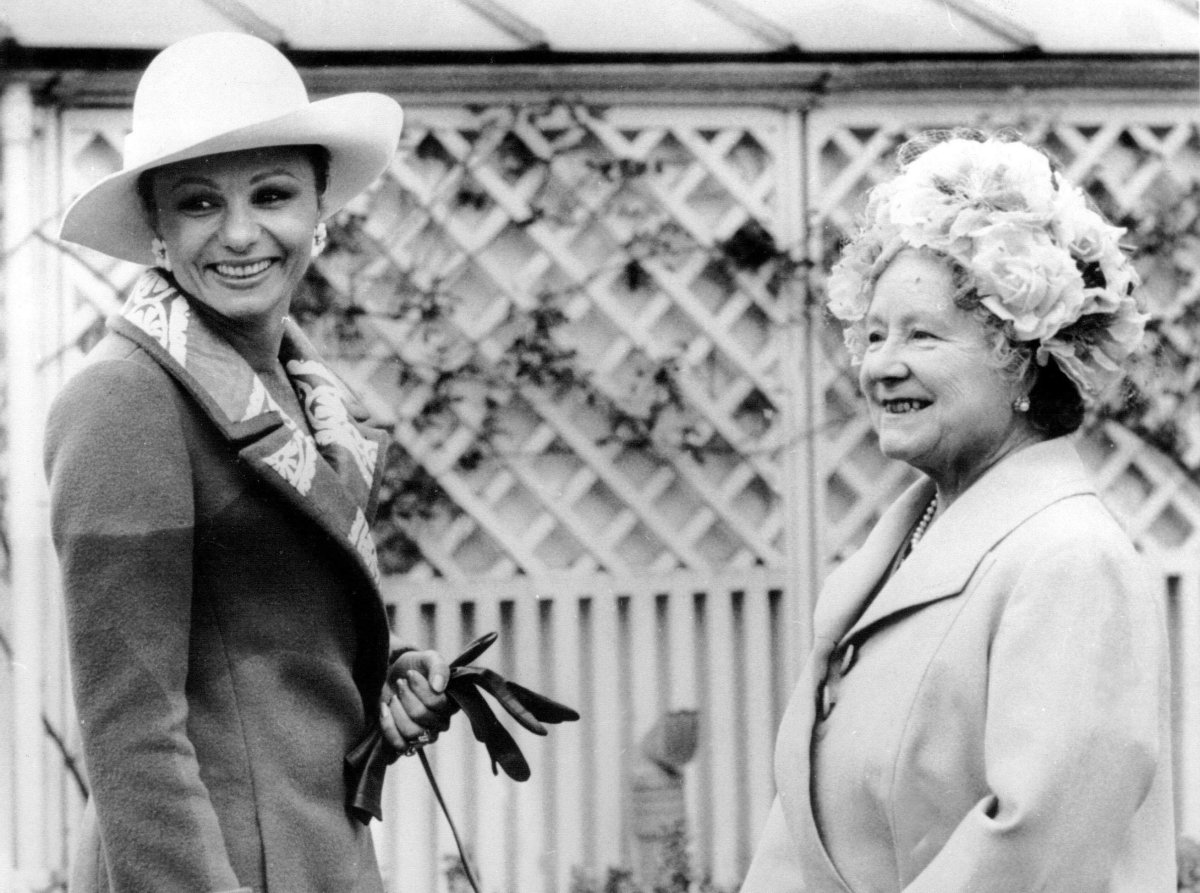
In April 1976, Farah Pahlavi arrived in London for a six-day visit dedicated to events in the field of arts and culture. She stayed in London at Clarence House as a guest of the Queen Mother during the visit. Among the events on the program were a stop at the new National Theatre—”One of the best mornings I’ve spent in my life,” the Empress noted—as well as a trip to watch the London Symphony Orchestra rehearse at the Royal Albert Hall. She also visited the Prime Minister and had lunch with the Queen.
On April 7, the Queen Mother and the Empress headed to Covent Garden to watch a performance by the Royal Ballet at the Royal Opera House. The program for the performance included four ballets: Balanchine’s Serenade, with music by Tchaikovsky; Nijinsky’s Afternoon of a Faun, set to music by Debussy; Hans van Manen’s Twilight, with music by John Cage; and Elite Syncopations, choreographed by Kenneth MacMillan, artistic director of the Royal Ballet, to music by Scott Joplin.
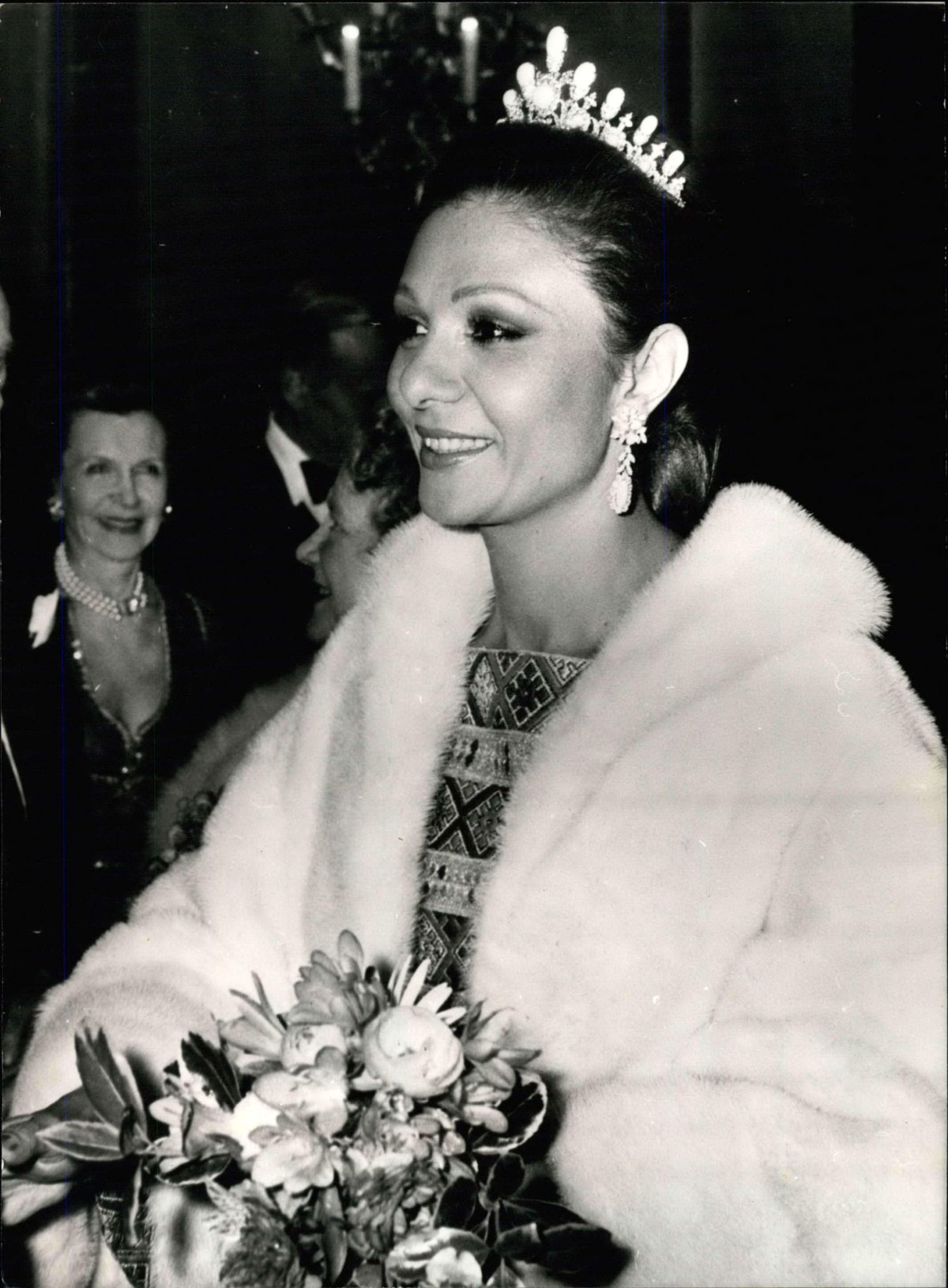
The performances inside went well, but the event wasn’t without controversy. Given the political tensions already simmering in Iran at the time, protests during the London visit were inevitable. Thirty students demonstrated outside the theater, and two were arrested for throwing eggs at the empress, though neither Farah nor the Queen Mum were struck.
The Queen Mother and the Empress had arrived for the performance in full gala attire, with Farah wearing a suite of terrific turquoise and diamond jewelry, a white fur jacket, and a heavily-embroidered evening gown inspired by traditional Persian patterns in shades of blue and gold.
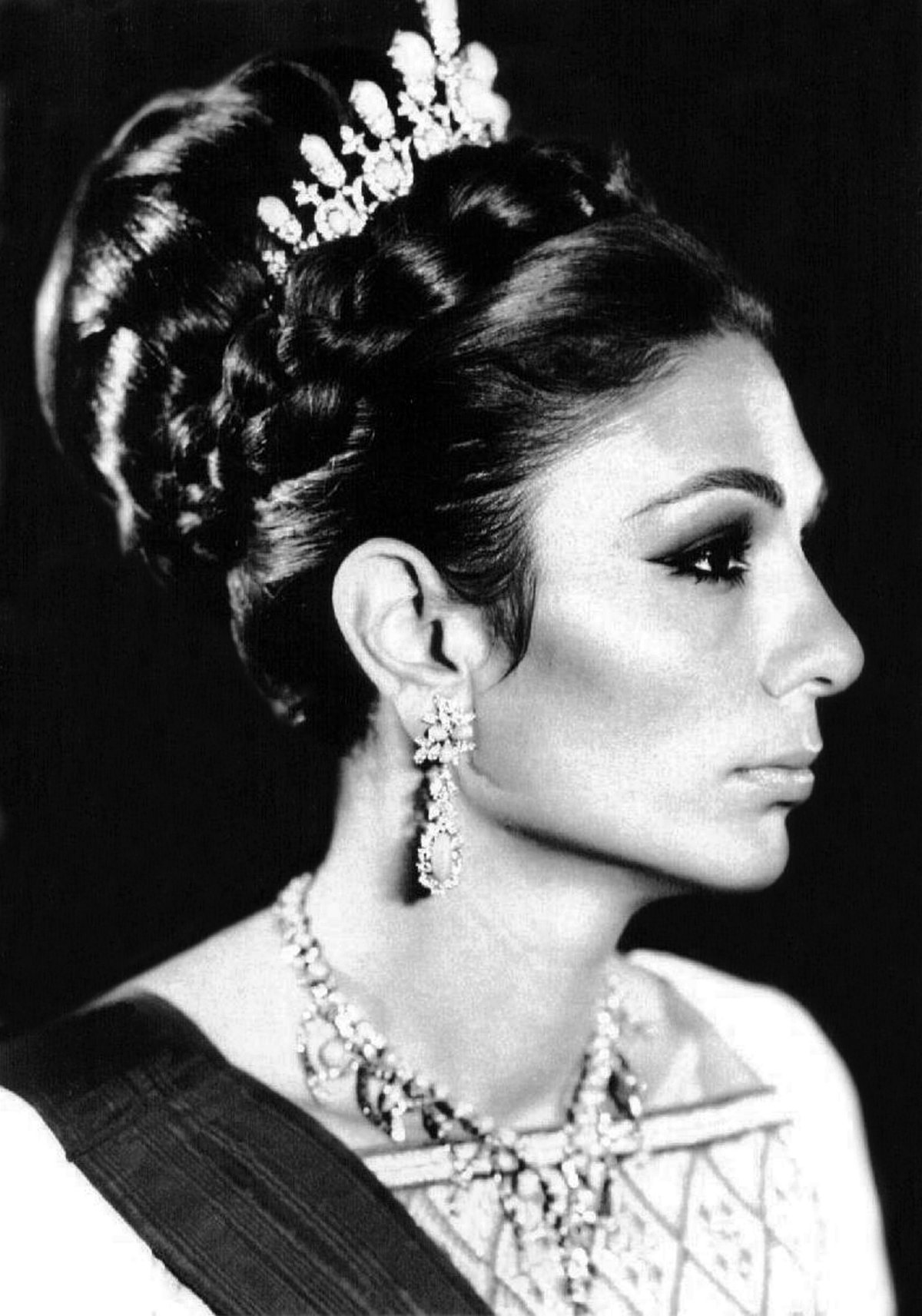
The turquoise and diamond tiara and the matching earrings were made for the Empress at some point during the late 1960s. In the official portrait above, which dates to around 1970, she wears the earrings and the tiara with a different embroidered dress. Exactly which jeweler was responsible for the pieces is not entirely clear, though the set has been attributed to Van Cleef & Arpels. This would certainly make sense, given both the style of the jewels and that the firm made other pieces of jewelry for Farah during her husband’s reign. The turquoises, like virtually all of the Pahlavi-era jewels, were left behind in Iran when the family went into exile in 1979.
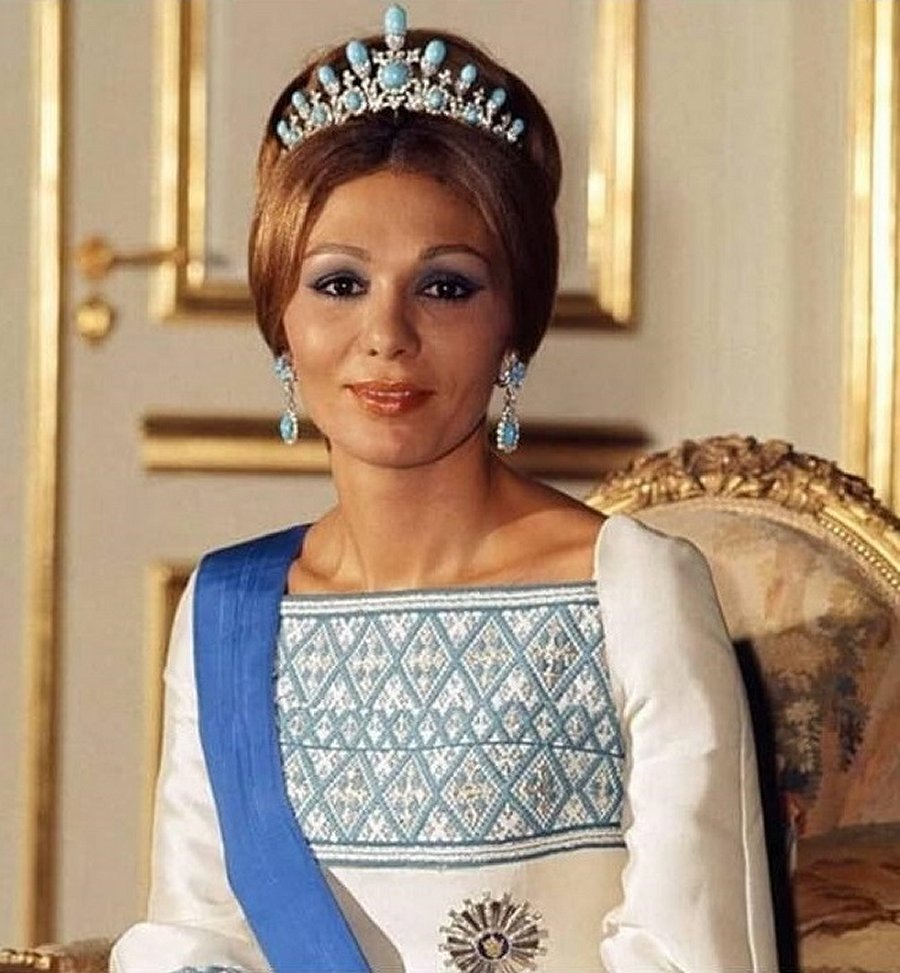
Here’s another famous portrait of Farah from another official 1970s session, which shows the brilliant blue of the Persian turquoises to greater effect. These sky blue turquoises have been mined for thousands of years in the region around the Iranian city of Nishapur, and the stones have significant importance in Persian culture, with the color of the gems representing the blue of heaven.
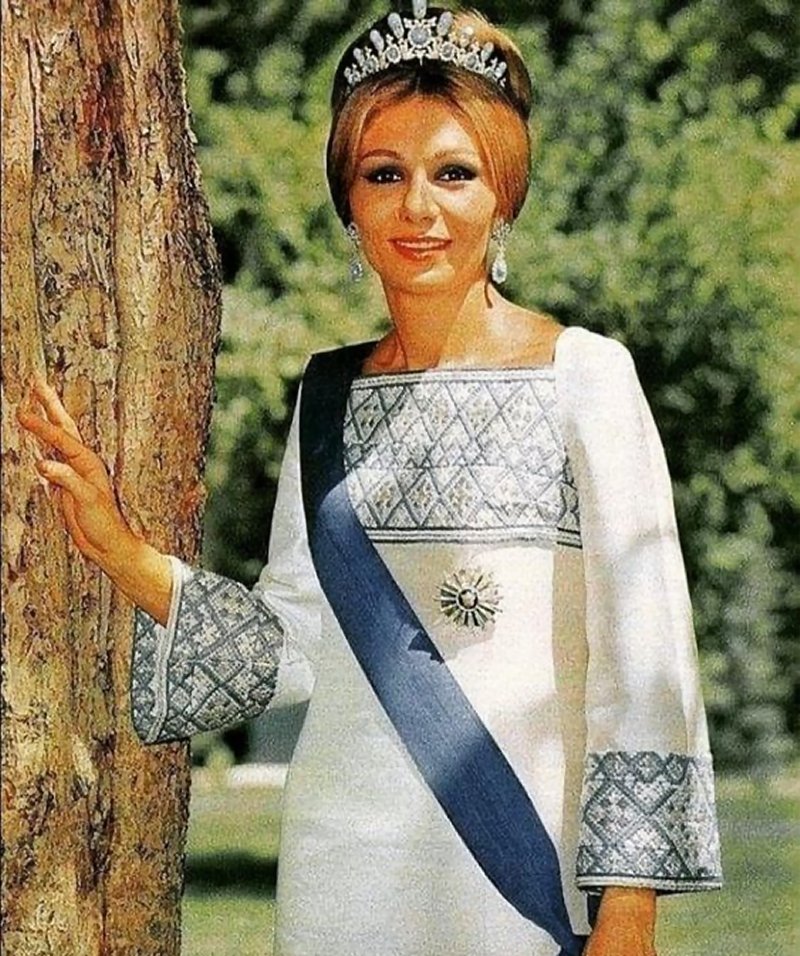
Here’s another image from that same portrait session, which I covered in detail in an earlier article here on the site. The white and blue dress that Farah wears here is also inspired by traditional Persian geometric patterns. It was sold at auction in Germany in 2020.
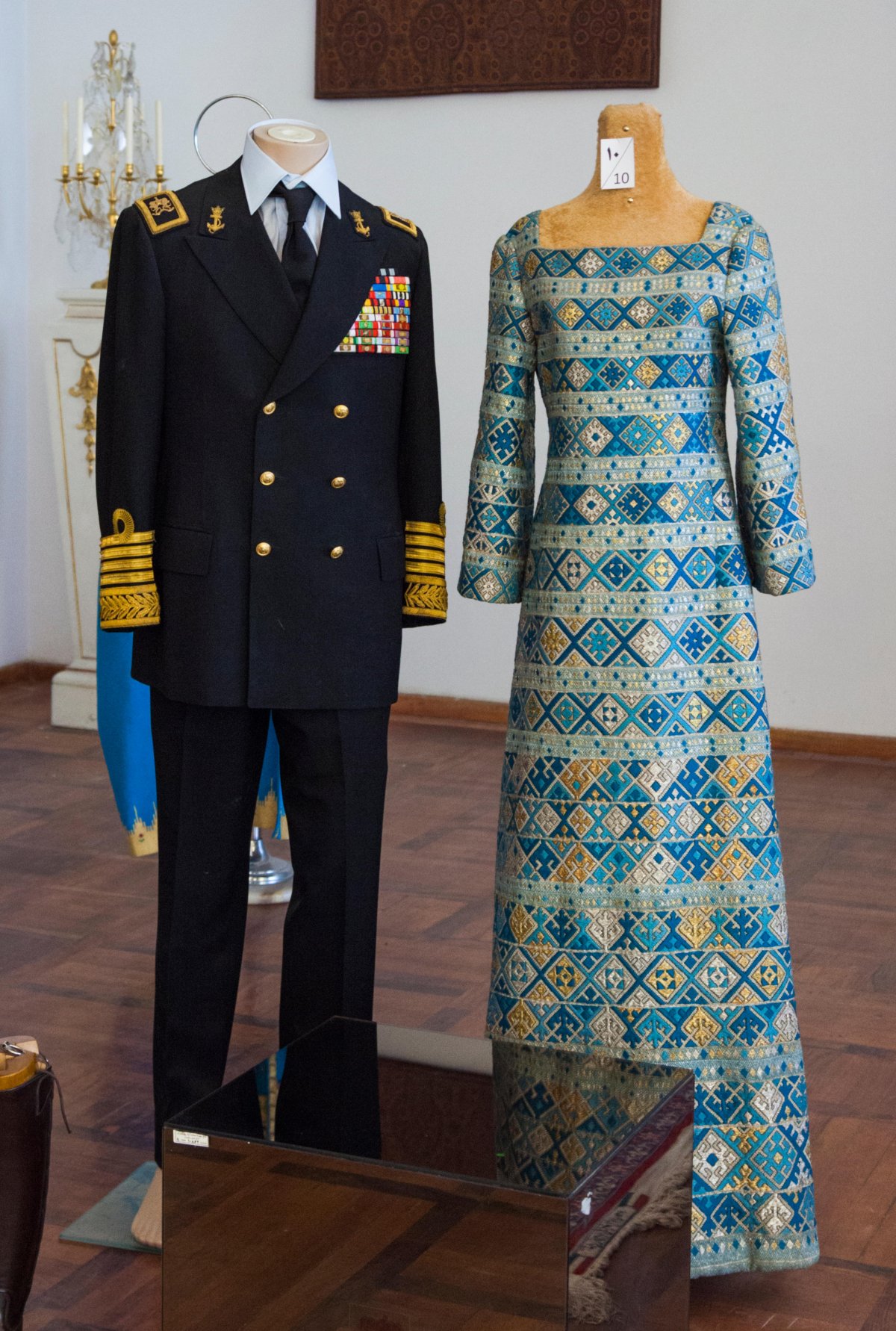
The dress that Farah wore with the turquoises at the Royal Opera House appears to be this one, which features much more embroidery in even more vivid colors. It’s pictured here on display in Iran in the autumn of 2015.
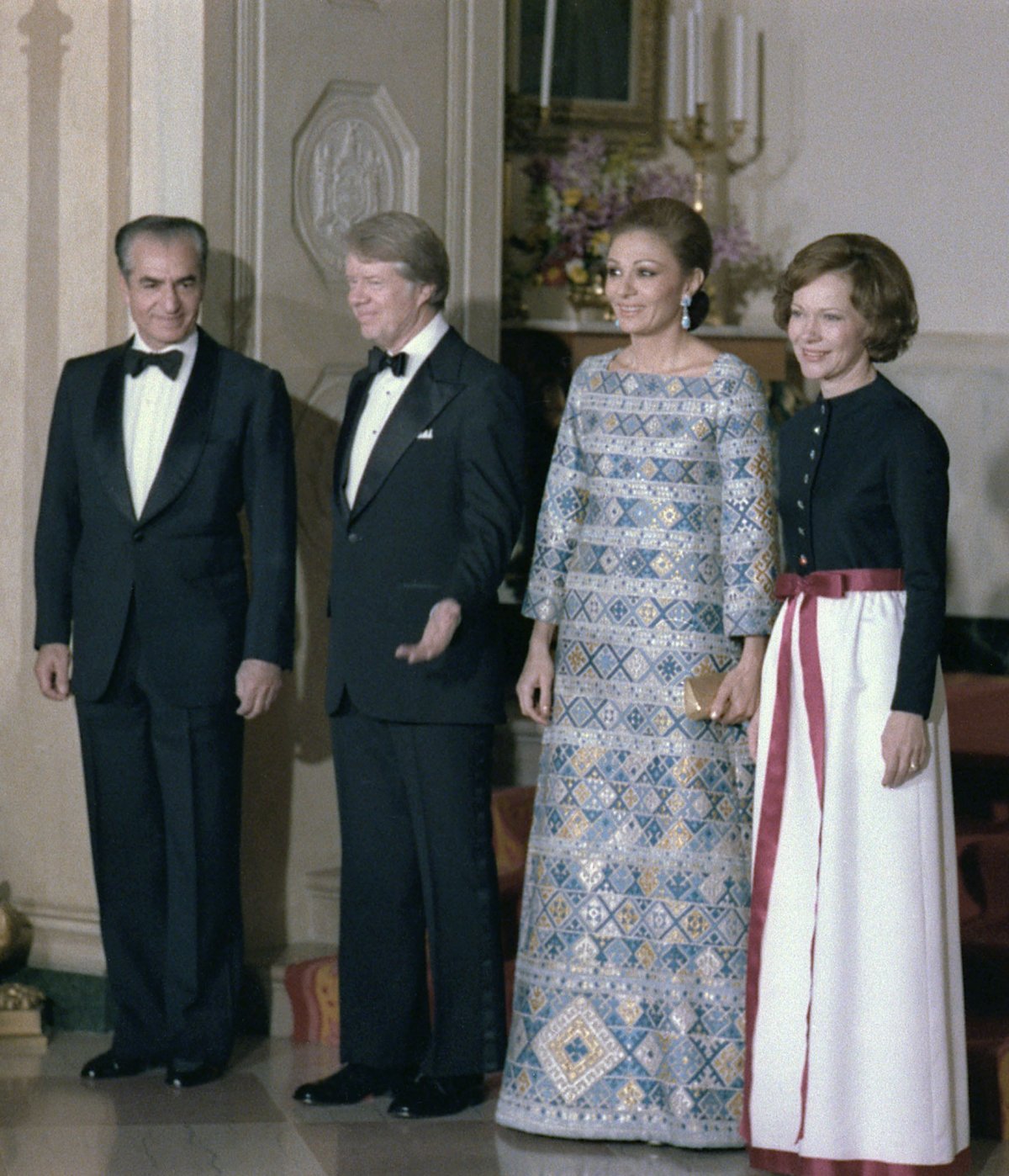
Farah also wore the dress, as well as the turquoise and diamond earrings, the following year in Washington for a dinner at the White House with the Carters. The event took place a little over a year before the Pahlavis were exiled from Iran during the revolution, and almost two years before the Shah’s arrival for cancer treatments in the United States resulted in a political quagmire for the Carter administration.
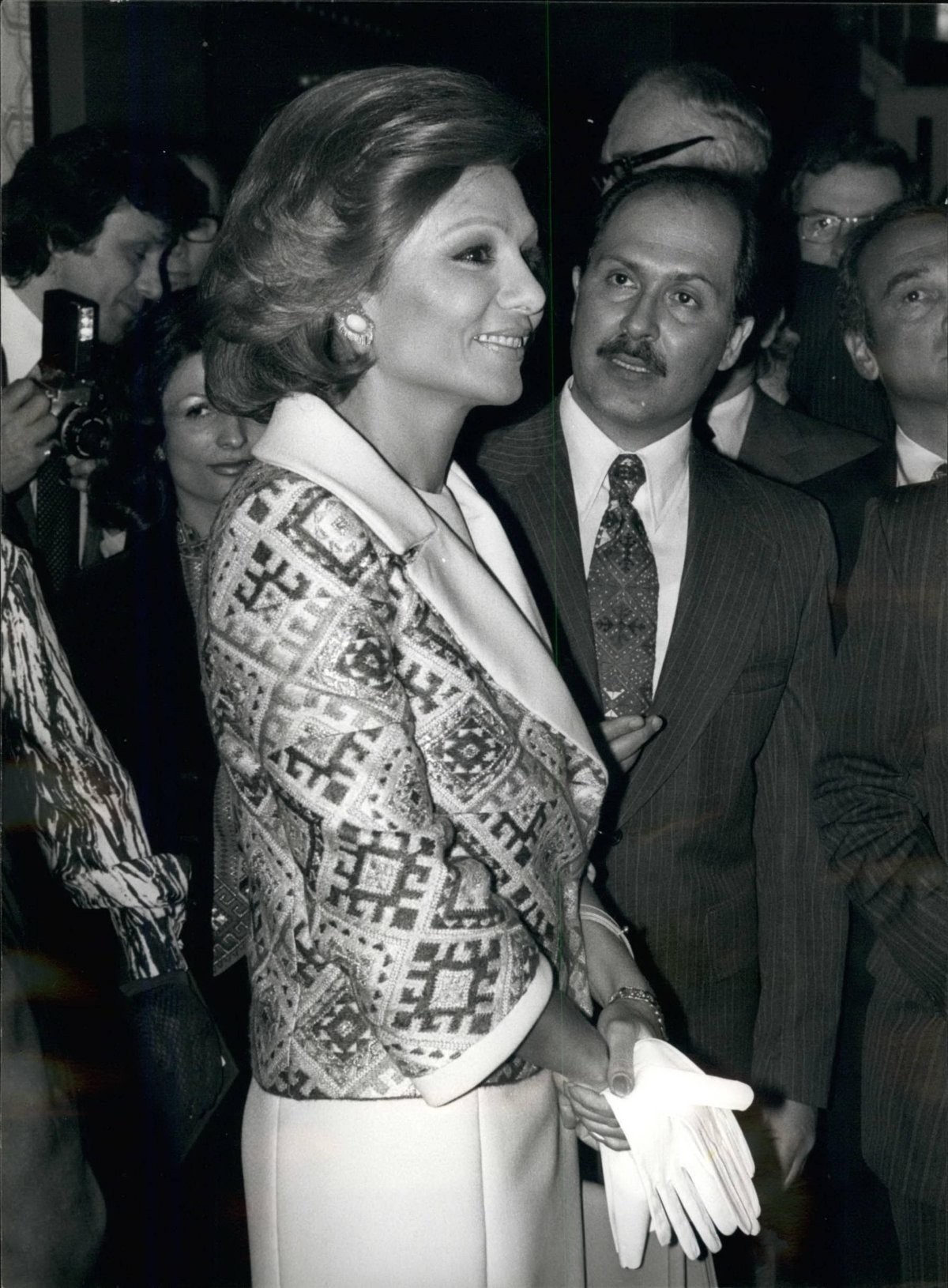
Farah also wore another similar embroidered garment during her 1976 visit to London: a jacket, which she brought along for the opening of the “World of Islam” exhibition at the Science Museum in Kensington. The modern earrings she wore for the exhibition opening were also set with bright blue turquoises.
And what did the Queen Mother wear to the Royal Opera House that night? Believe it or not, she’s actually visible in this photograph, with her profile popping up just over Farah Pahlavi’s shoulder. Sadly, though, her gown and jewels are not visible in the picture, and another image showing her jewels and attire from the evening has so far proved elusive. Given the time period, though, it’s most likely that she wore either the Greville Tiara or Queen Victoria’s Indian Circlet for the night at the ballet.
Leave a Reply
You must be logged in to post a comment.