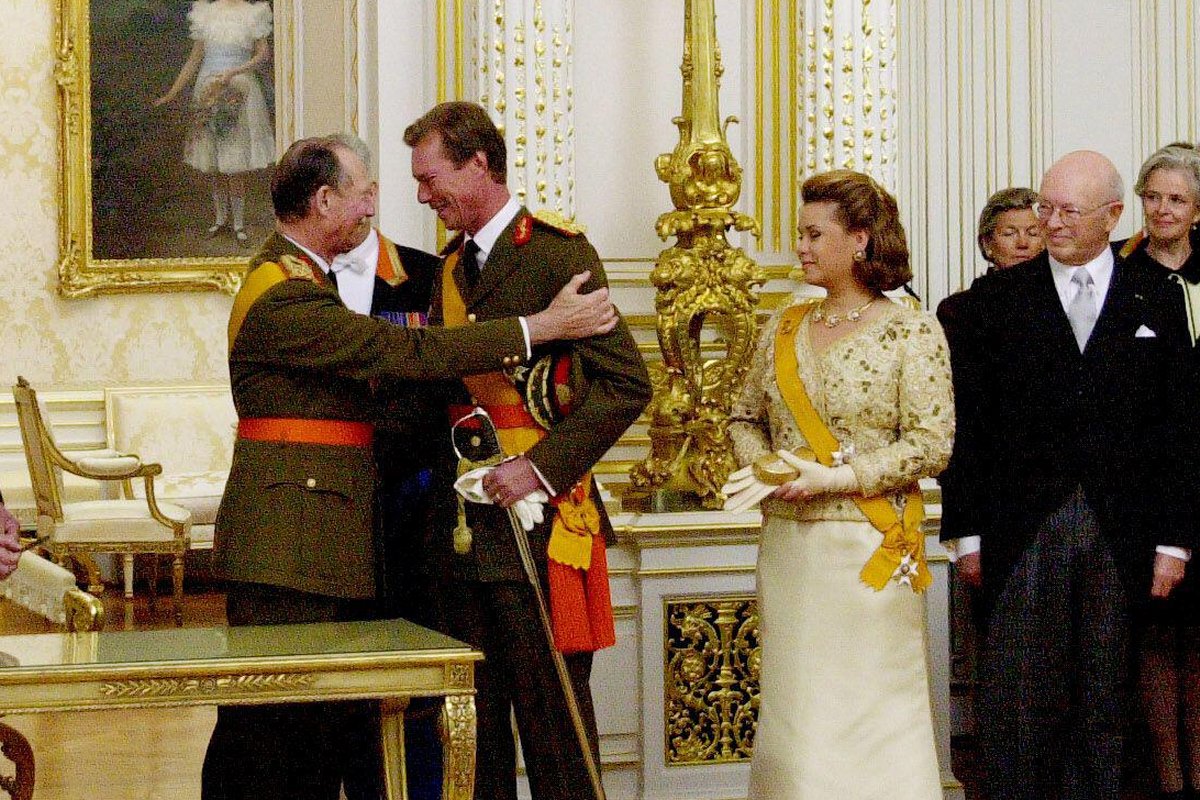
On Friday, the little grand duchy of Luxembourg will have a brand-new sovereign. Grand Duke Henri, who has been on the throne for 25 years, will abdicate in favor of his eldest son, Hereditary Grand Duke Guillaume. Abdication is an established tradition in Luxembourg, and today, we’ve got a look back at the jewels worn for the two most recent abdication ceremonies in the tiny European nation.
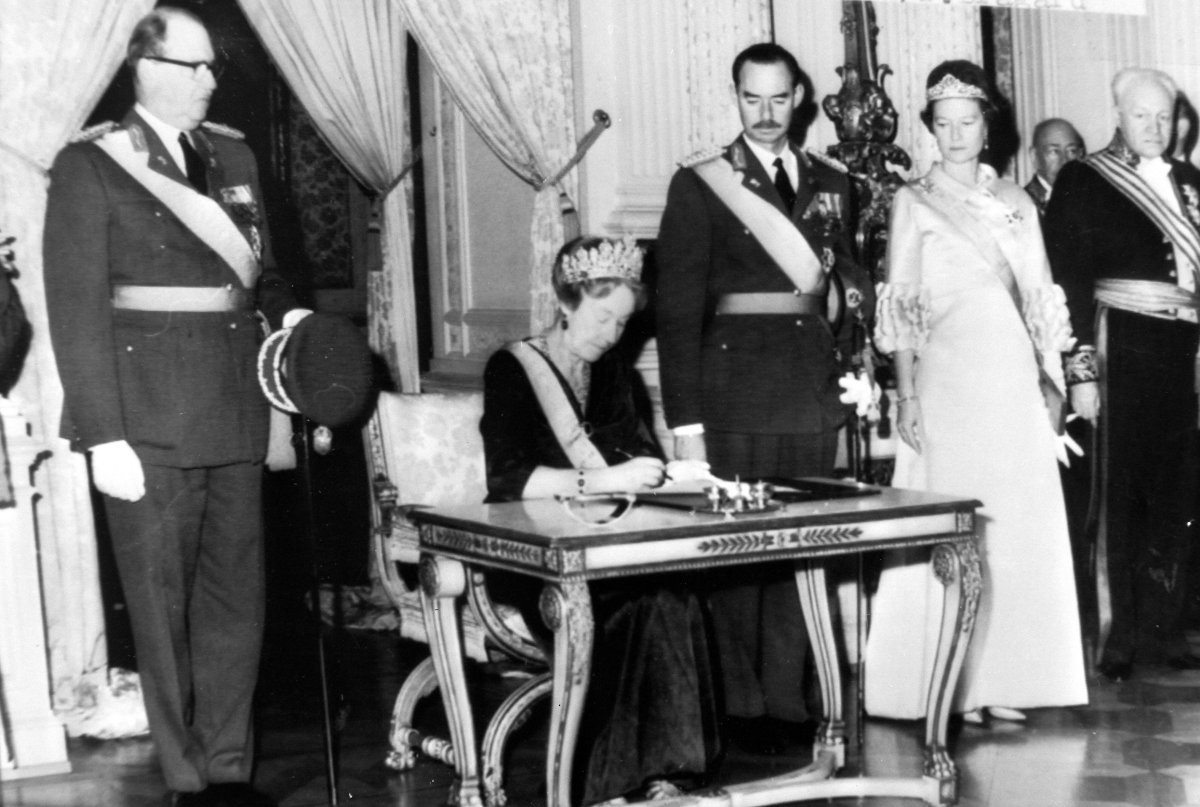
On November 12, 1964, Grand Duchess Charlotte sat down at an ornate desk inside the Grand Ducal Palace and signed the papers that ended her 45-year reign in Luxembourg. Charlotte had been catapulted on to the throne in 1919 after the disastrous end of the reign of her older sister, Grand Duchess Marie-Adélaïde, who had been accused of sympathizing with the Germans during World War I. With her sister tucked away in a convent, Grand Duchess Charlotte managed to shore up public opinion, saving the monarchy in the process.
Ten months after her accession, Charlotte married her first cousin, Prince Felix of Bourbon-Parma. They had two sons and four daughters together. Their first child, Hereditary Grand Duke Jean, was educated in Britain and served with the Irish Guards during World War II. In 1953, he married Princess Joséphine-Charlotte of Belgium, with whom he had five children. The youngest, Prince Guillaume, was only a year old when Grand Duchess Charlotte decided to abdicate in her Jean’s favor.
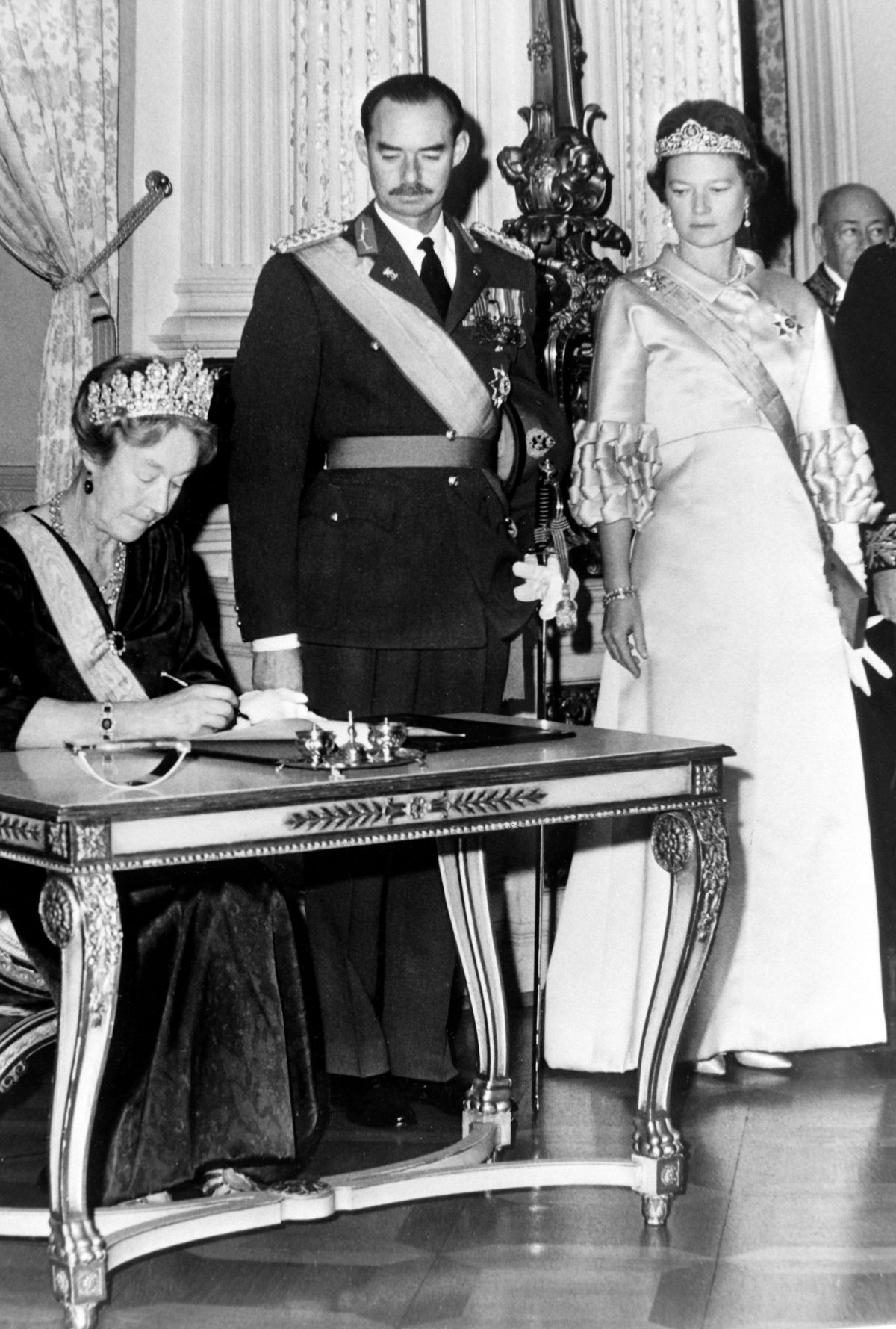
The 1964 abdication ceremony was a formal affair, with Prince Felix and Hereditary Grand Duke Jean in uniform and Grand Duchess Charlotte and Grand Duchess Joséphine-Charlotte in gowns and tiaras. Charlotte wore the grand Empire Tiara with diamonds and emeralds as she signed her abdication papers. Looking on, Joséphine-Charlotte wore the Belgian Scroll Tiara with the diamond and pearl fleur-de-lis brooch that belonged to her grandmother, Princess Ingeborg of Sweden.
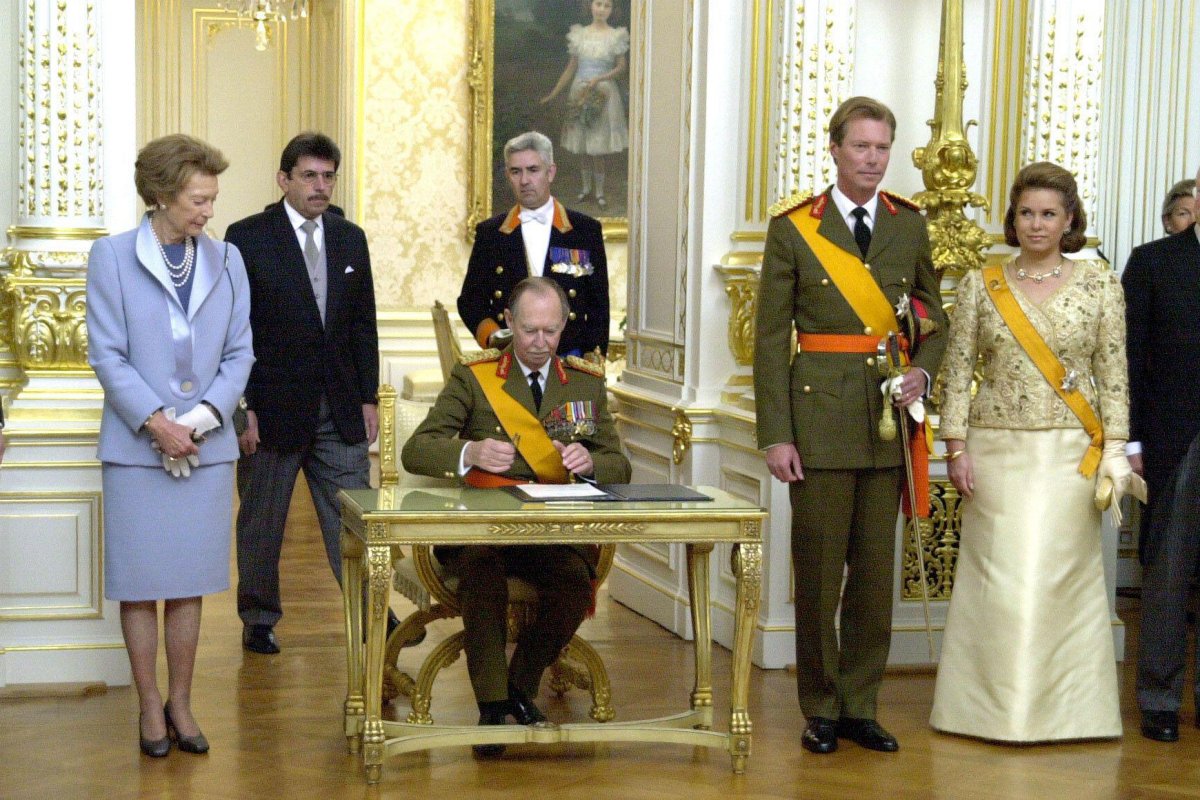
Thirty-six years later, it was Grand Duke Jean’s turn to sit at the same desk in the same room at the Grand Ducal Palace to sign his own abdication papers. He had decided to hand over the throne to his elder son, Hereditary Grand Duke Henri, who had followed in his father’s footsteps by attending Sandhurst before forging his own path, studying political science in Switzerland.
While he was a student in Geneva, Henri met Maria Teresa Mestre y Batista, who was born in Cuba and raised in New York. The two were married in 1981, starting a family that grew to include four sons and a daughter. Henri was 45 when his father’s abdication elevated him to the position of Grand Duke of Luxembourg.
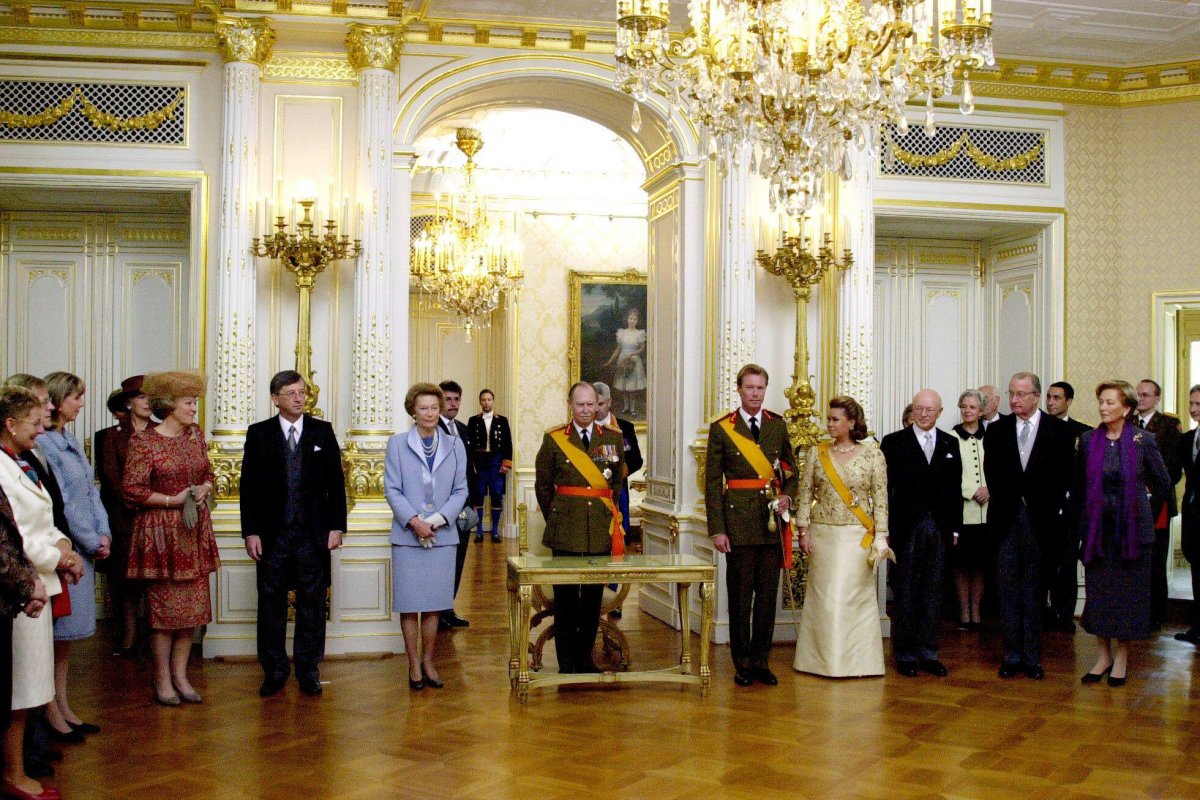
The abdication ceremony in October 2000 was a less formal affair. Both Jean and Henri wore uniforms, but the rest of the men who were present wore suits, and the ladies mainly wore daytime attire. Henri’s wife, Maria Teresa, was the outlier, wearing a long gown and the sash and star of the Gold Lion of the House of Nassau, signaling her elevation to the role of Grand Duchess.
The ceremony was witnessed by family members and numerous Luxembourgish dignitaries, as well as members of foreign royal families who have strong ties to Luxembourg. Queen Beatrix of the Netherlands was there, as were King Albert II and Queen Paola of Belgium. The Netherlands and Luxembourg have strong national links that date back to the time when the two countries were ruled together as a personal union by the Dutch monarch. The links to Belgium are both diplomatic and personal: King Albert and Grand Duchess Joséphine-Charlotte were siblings, both children of King Leopold III of Belgium and Princess Astrid of Sweden.
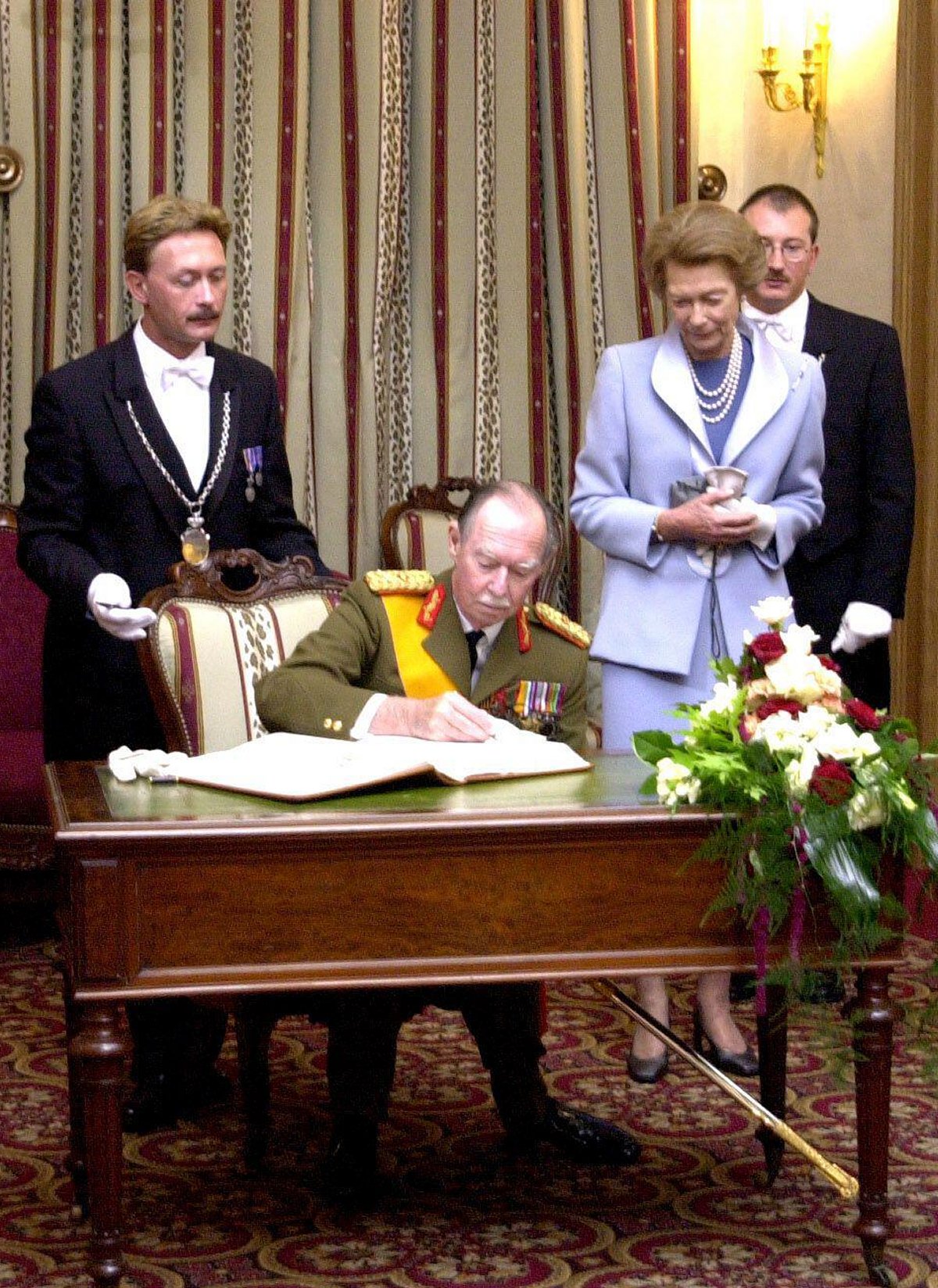
For her husband’s abdication ceremony and the inauguration of her son, Grand Duchess Joséphine-Charlotte wore an ensemble in shades of purple: jacket, blouse, and skirt. She accessorized with pearls, including a lovely three-row necklace, and a bar brooch set with diamonds and sapphires, which she pinned near her left shoulder.
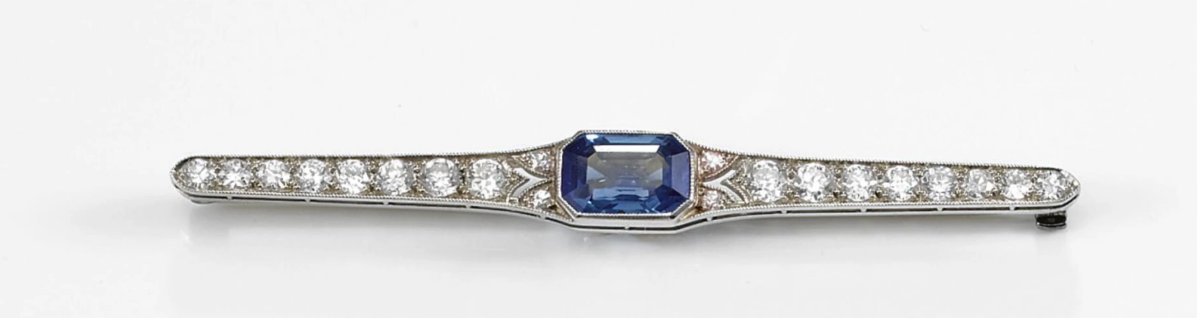
Here’s a closer look at the brooch, which featured an an emerald-cut sapphire flanked by diamonds in a millegrain setting. The brooch is no longer a part of the family’s jewelry collection. It was quietly sold at Sotheby’s in Geneva in October 2007, fetching a price of 5,625 euros. The piece’s royal provenance was not mentioned in the auction notes.
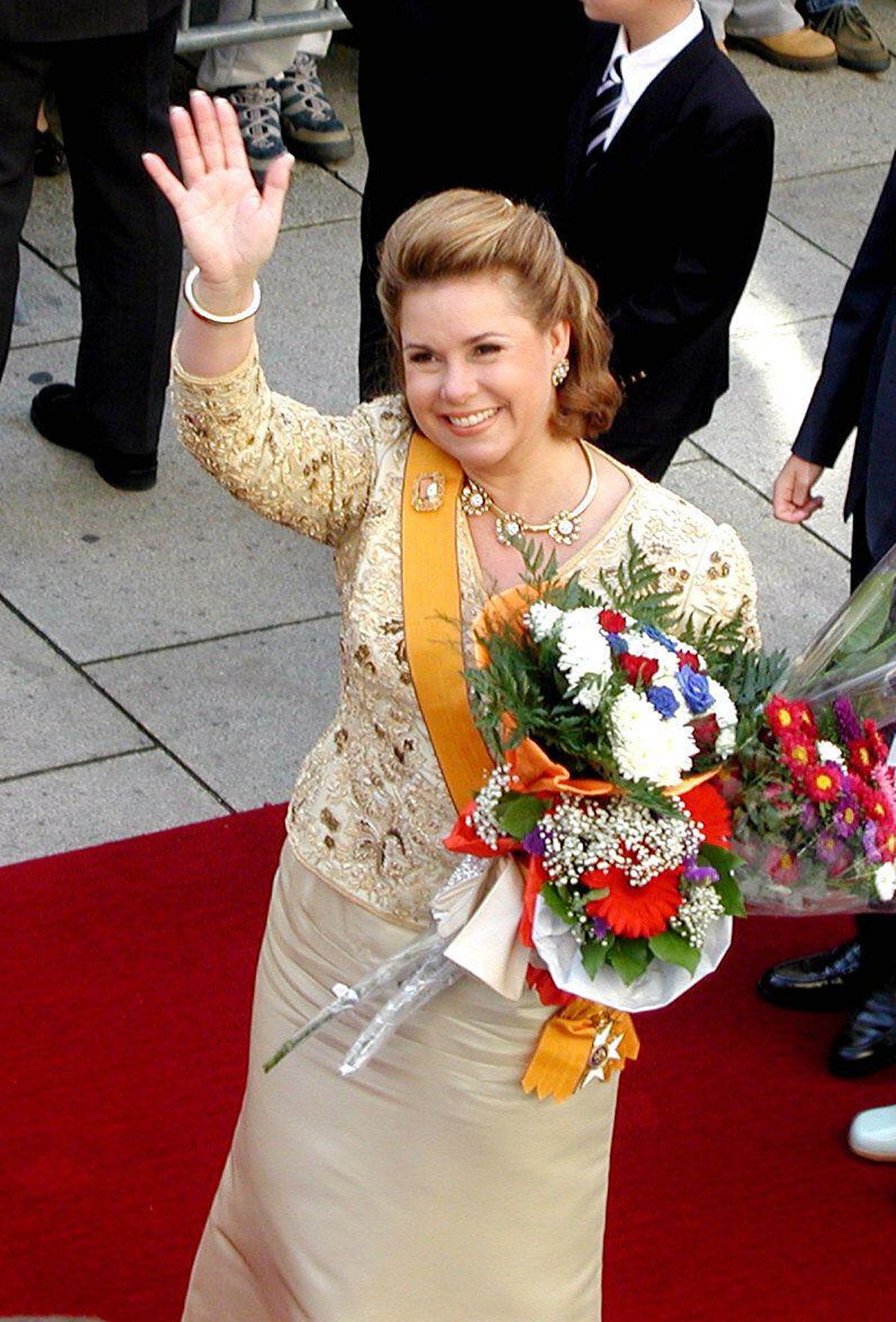
For her husband’s first day as Grand Duke, Maria Teresa wore an interesting suite of gold-hued jewelry with a floral design. Her flower button earrings match the trio of enhancers on the necklace. She secured her order sash with a large citrine and gold brooch. Interestingly, I can’t recall seeing Maria Teresa wear this floral suite of jewelry again on any other occasion. When she posed for an early official portrait in the same dress, she wore the Chaumet Emerald Tiara, emerald and diamond earrings, and a diamond necklace instead.
Leave a Reply
You must be logged in to post a comment.