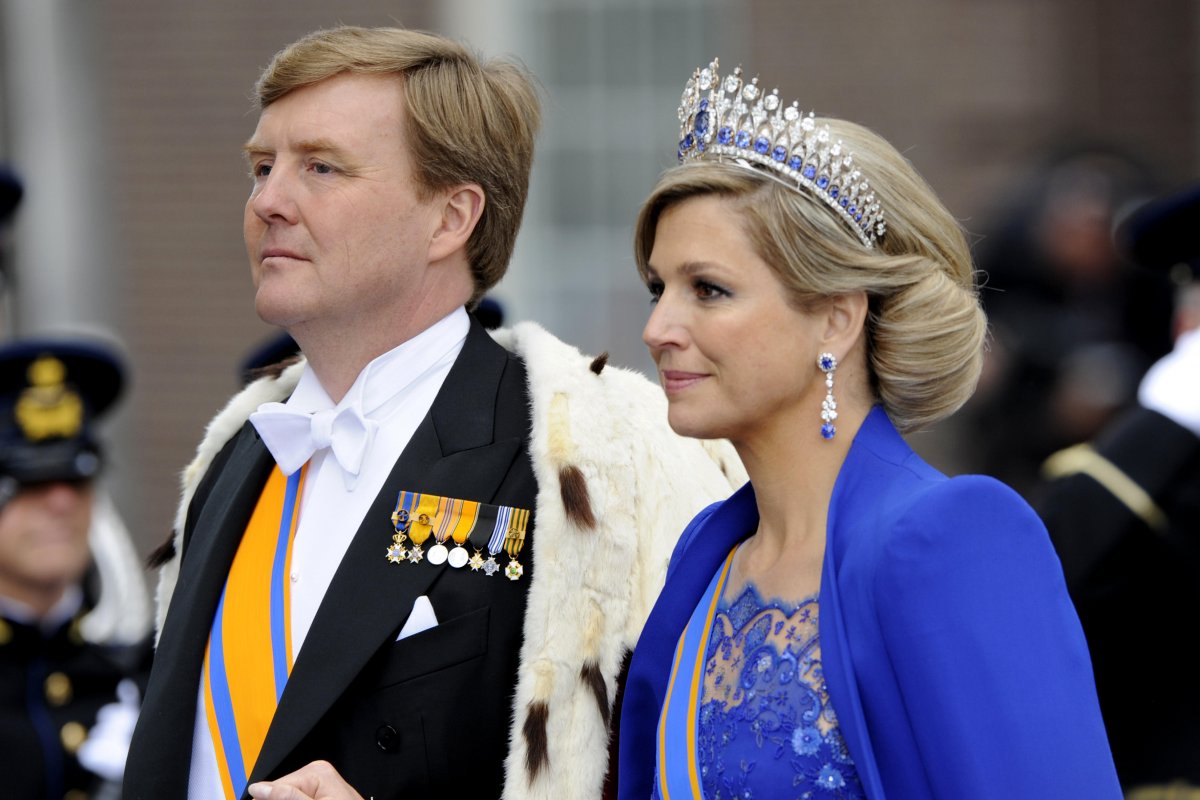
The Dutch royal vaults are teeming with spectacular jewels, but perhaps one of the grandest pieces of all is the nineteenth-century diamond and sapphire tiara made for Queen Emma.
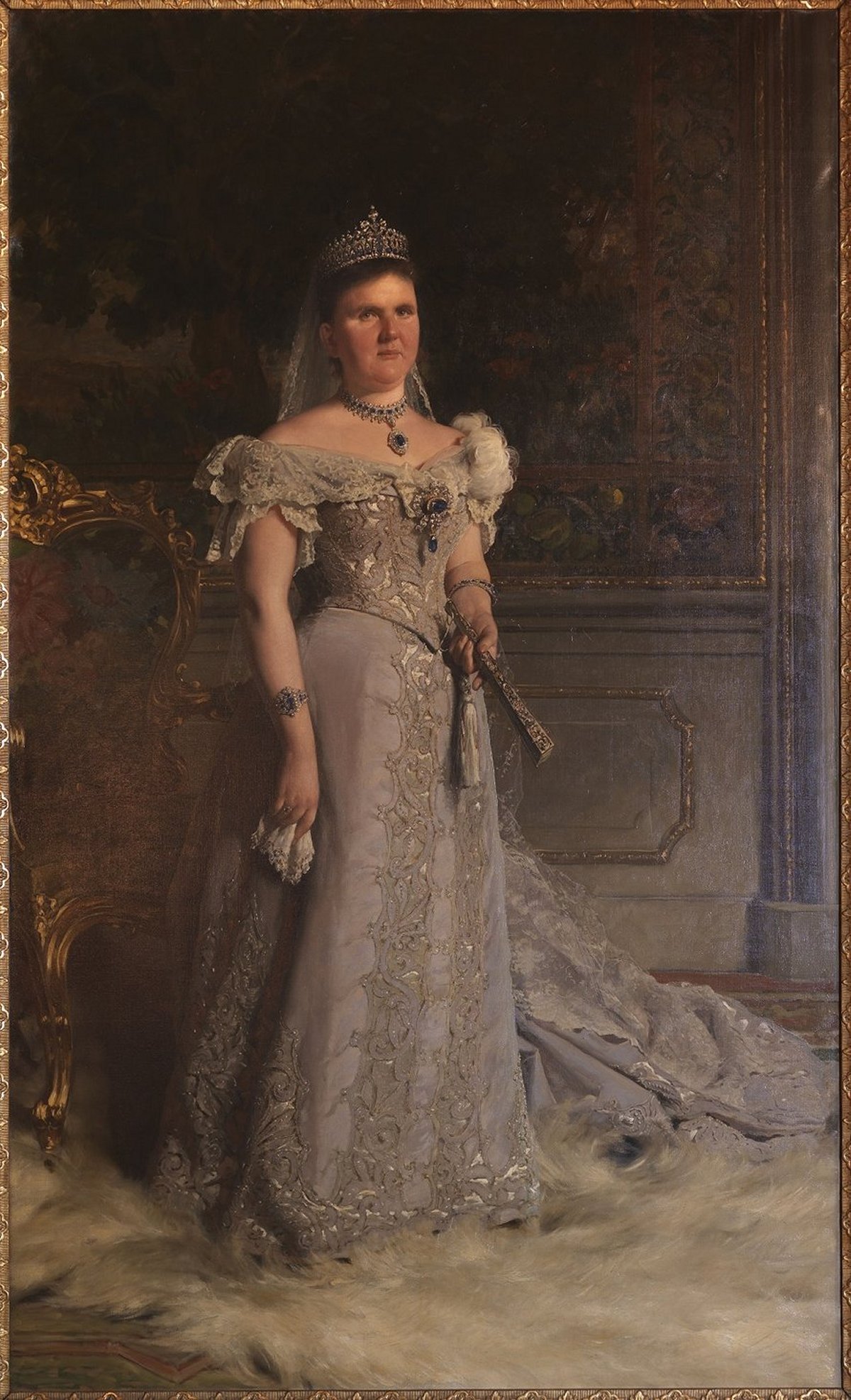
This towering sapphire tiara is one of those that is often incorrectly said to have been made by Mellerio dits Meller. That long-standing statement has been corrected numerous times over the past two decades—notably, in a book about Dutch jewelry by Rene Brus, and then again by Vincent Meylan in his book about Mellerio. It’s also often said that the tiara was designed by the great Oscar Massin, but while the makers may have taken inspiration from one of his sketches, that seems also to be untrue.
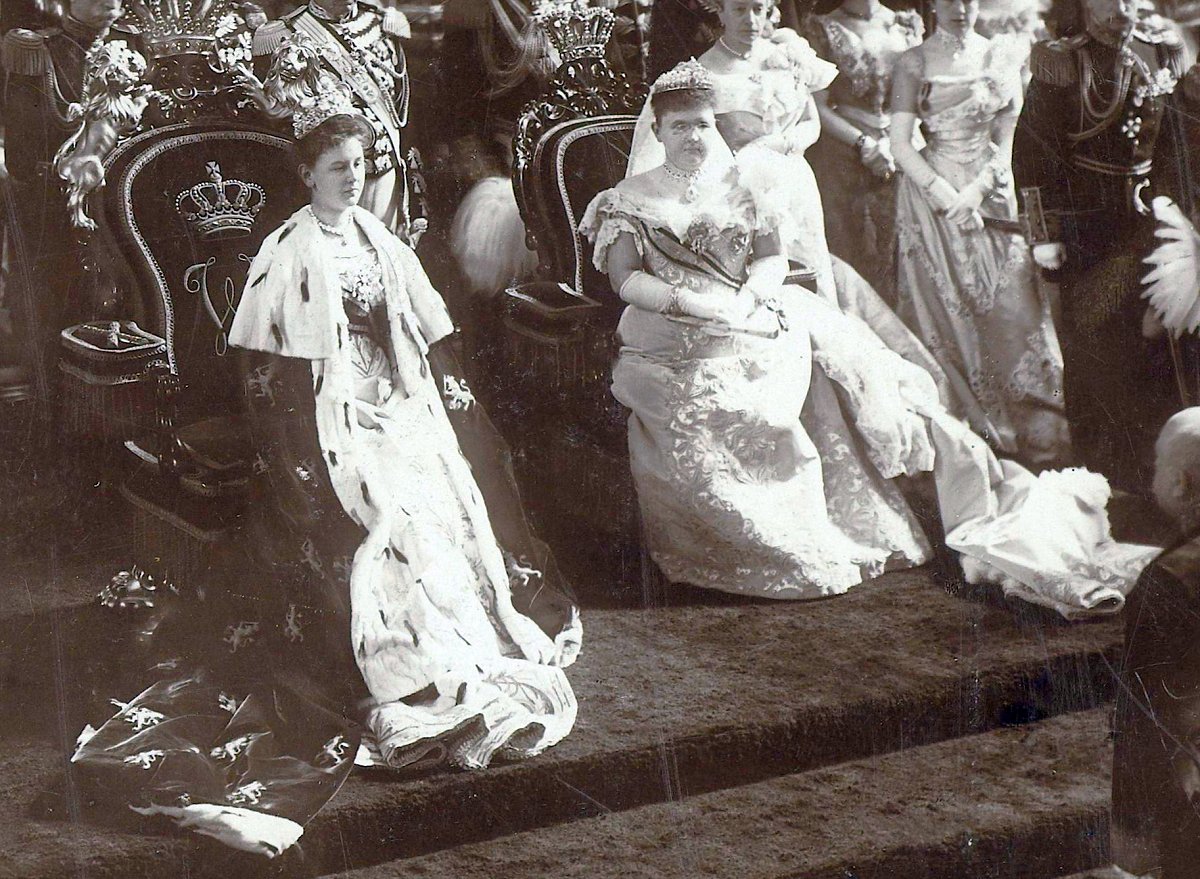
In 2013, George Hamel presented new research on the tiara, concluding that it was ordered by King Willem III of the Netherlands for his wife, Queen Emma, in 1881 from a Dutch firm, Maison van der Stichel. Hamel’s discovery came via a newspaper clipping from the time of Queen Wilhelmina’s inauguration in 1898. Queen Emma wore the sapphire tiara for the ceremony (pictured above), and Maison van der Stichel is named as the maker of the piece. For more on Hamel’s findings, I recommend Erik Schoonhoven’s excellent article (in English) on Hamel’s research.
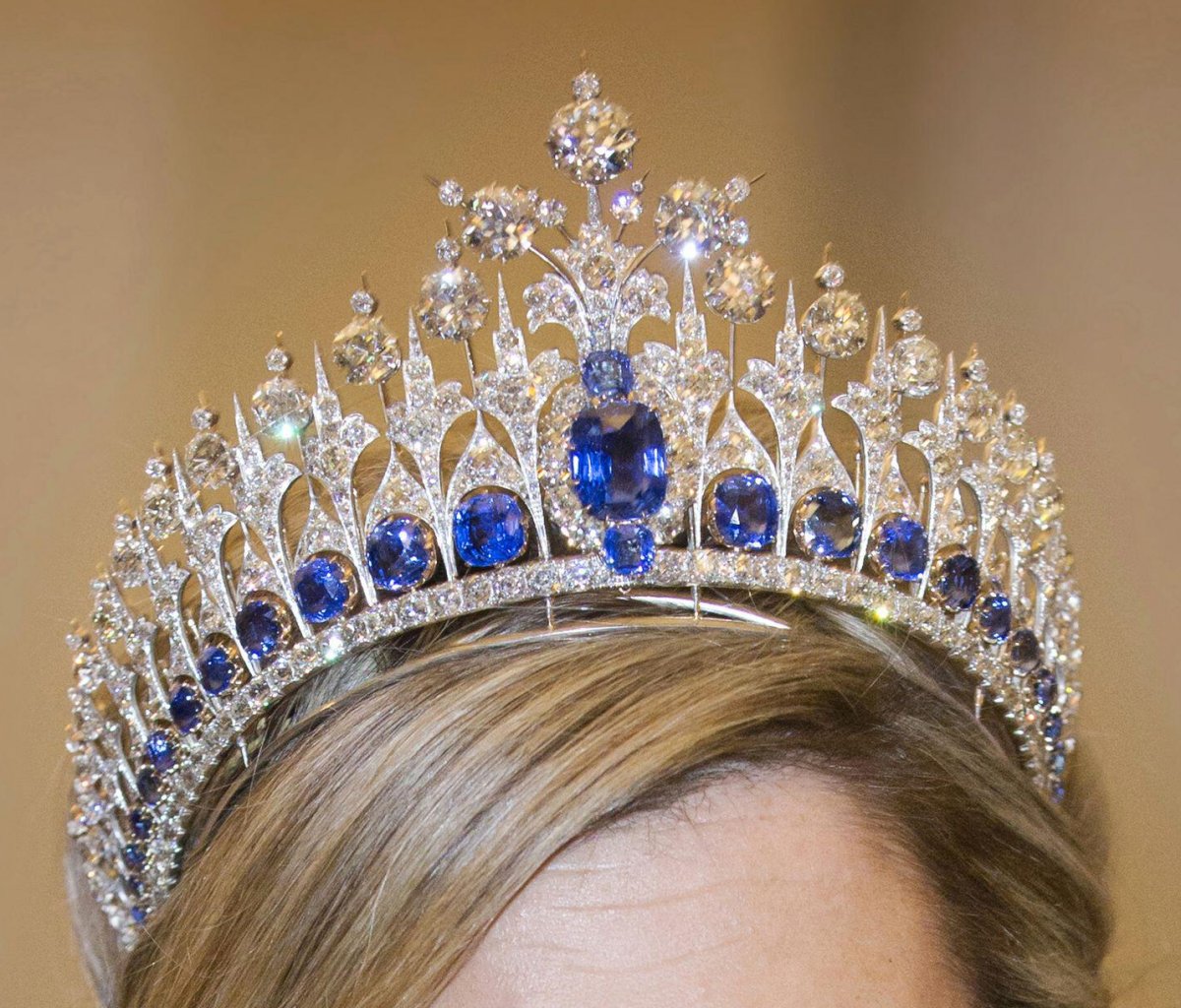
The tiara was originally set on a frame that allowed it to be dismantled into parts, including a haircomb. The central sapphire element can be detached and worn as a brooch. (Hamel’s findings showed that the central element was not, as was often said, an heirloom from Willem III’s mother, Queen Anna Pavlovna.) In 1928, the tiara was overhauled by Van Kempen (then the Dutch court jeweler), who made alterations to the golden frame, making it one complete frame rather than a series of detachable ones, and removed and replaced some gemstones.
The jewel itself is something of a Gothic wonder. More than six hundred diamonds are set in the piece, some on thin wires to produce an en tremblant effect. The sapphires are Sri Lankan, including the grand central sapphire, which weighs in at around 44 carats.
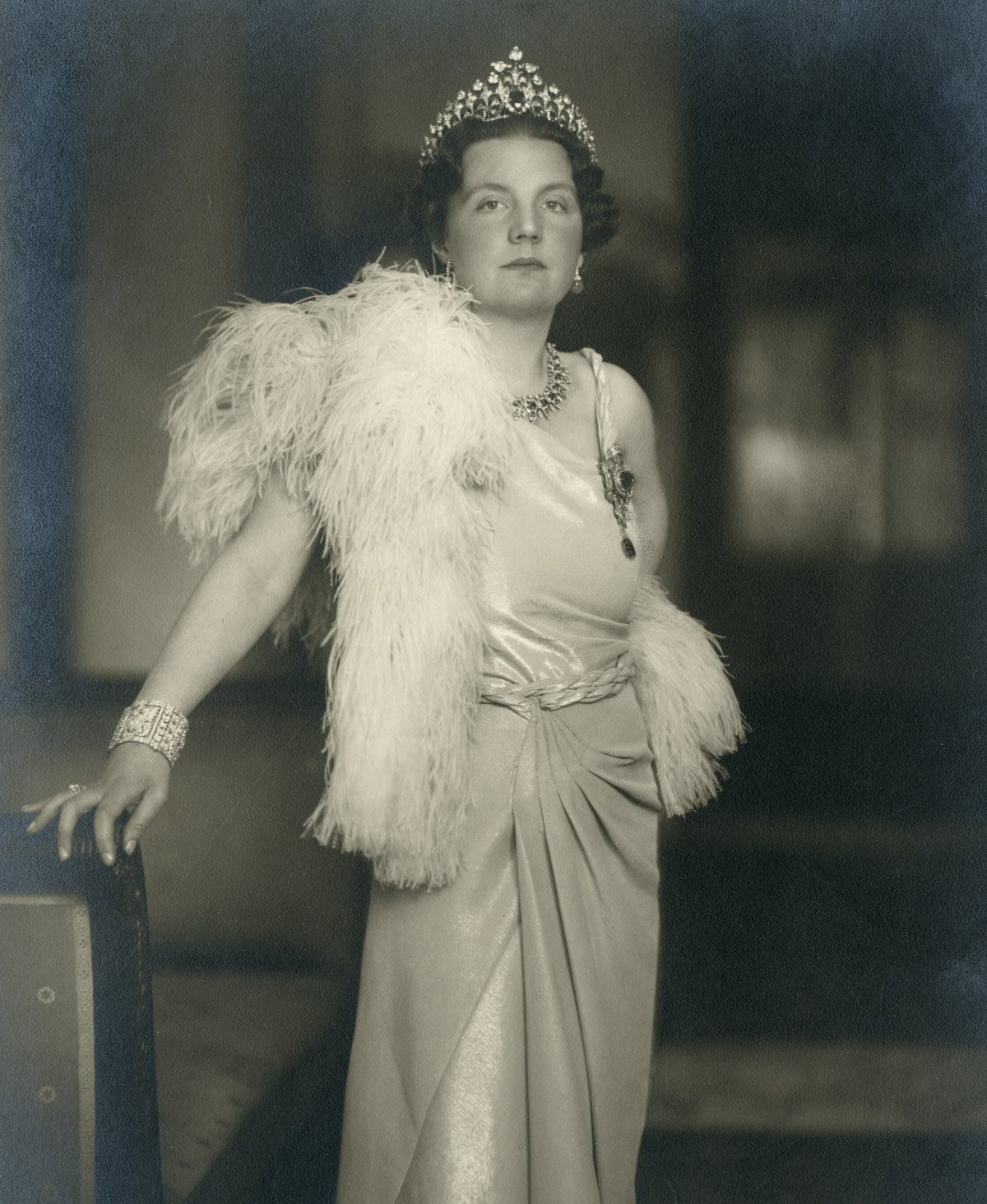
Queen Emma died in 1934, and it’s possible that she left the tiara directly to her granddaughter, the then-Princess Juliana. To my knowledge, Juliana’s mother, Queen Wilhelmina, was never photographed in the tiara. Juliana wore the tiara in a notable series of official portraits taken in 1937 by Franz Ziegler. (The necklace she often wore with the tiara, including in the portraits above, is now often worn by the Dutch royal women on a tiara frame.) Juliana wore the tiara throughout her reign, including an outing during the return dinner held as part of her 1972 state visit to the United Kingdom.
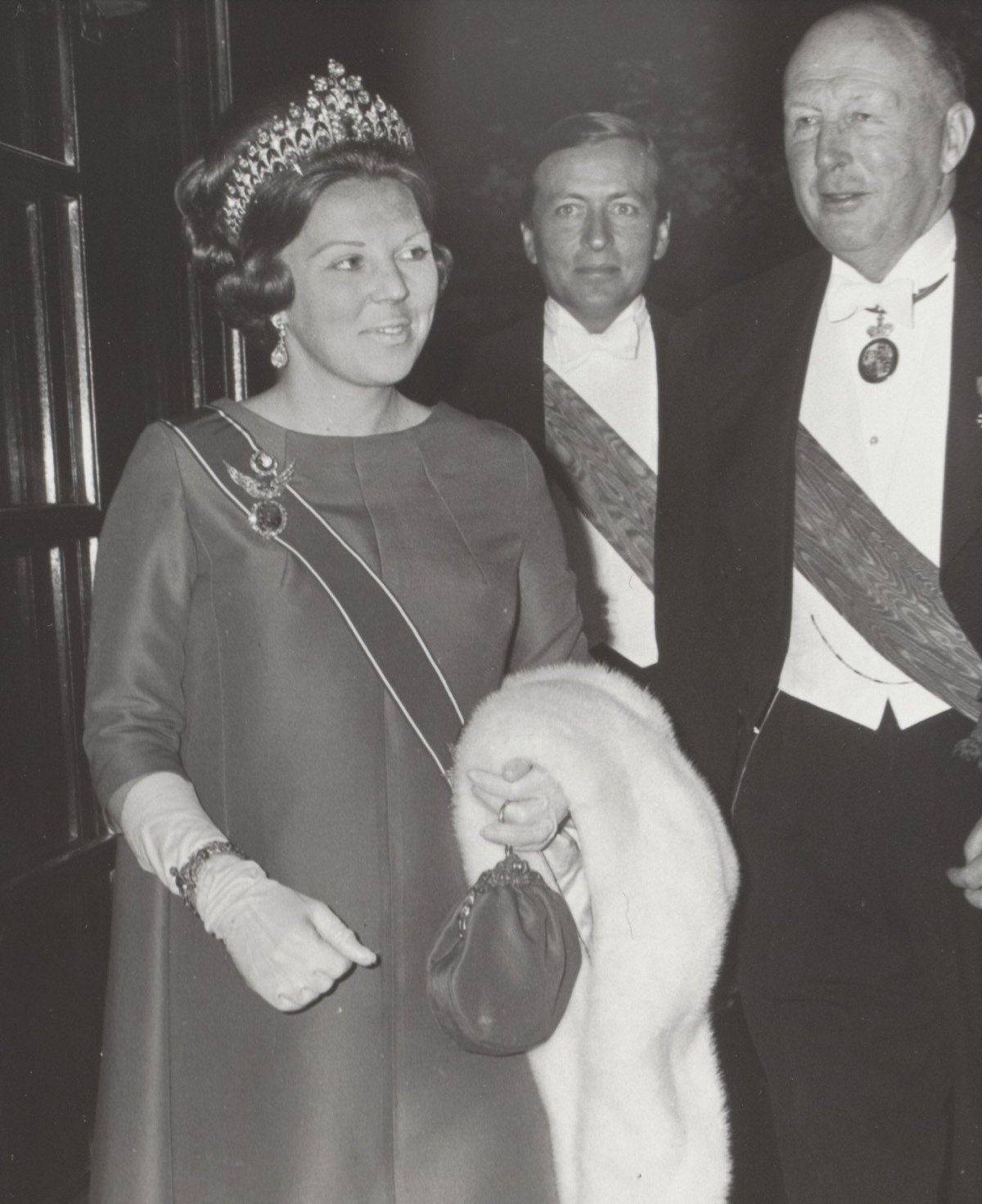
As she did with so many of the family’s grand jewels, Queen Juliana placed the tiara in the family’s foundation. Her daughter, Beatrix, wore the tiara both before and after her own accession to the throne in 1980. Above, she wears the tiara for a gala in London in 1968.
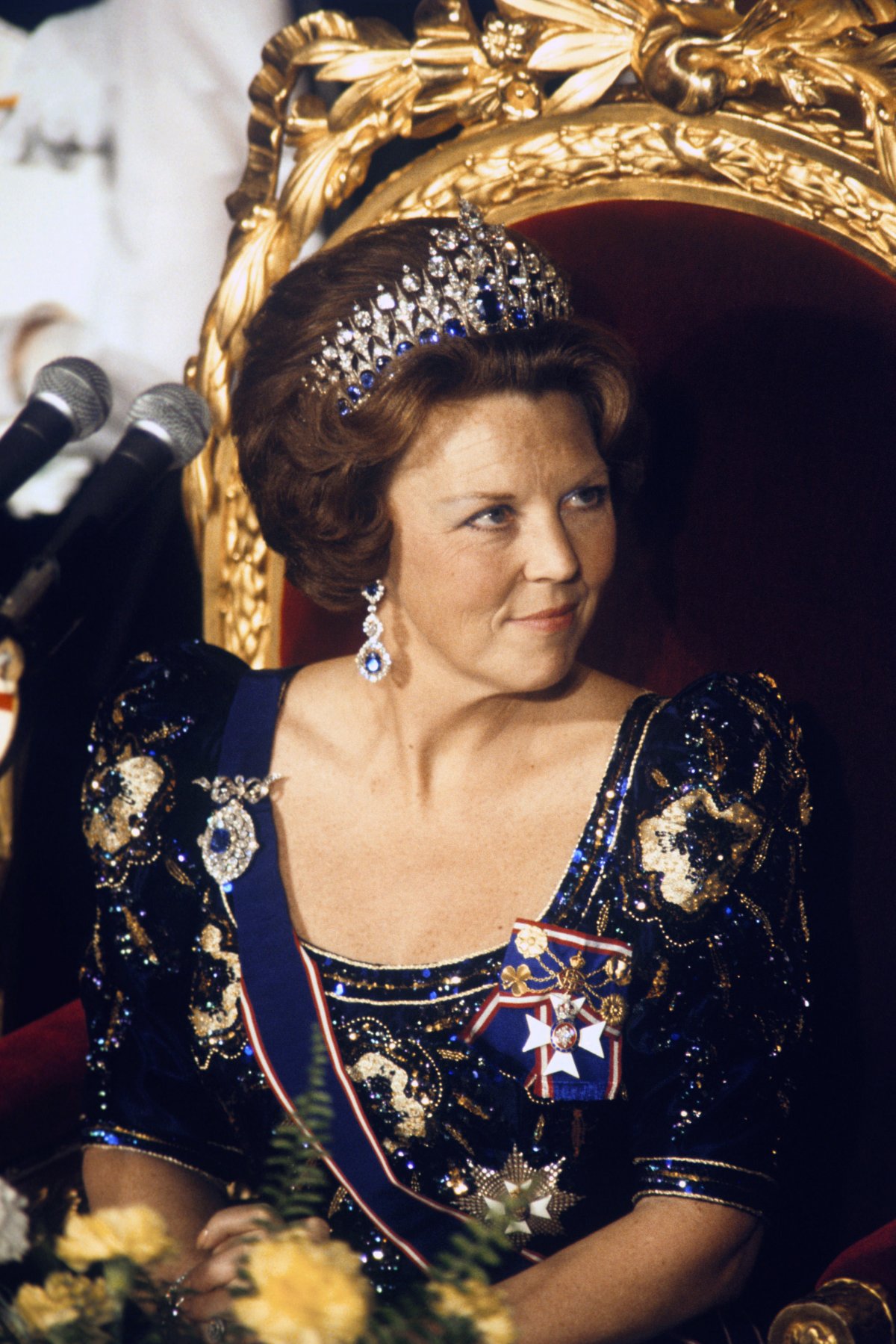
And here, she makes another British appearance in the tiara, wearing it at the Guildhall in London during her 1982 state visit. The piece sometimes looked slightly smaller on Beatrix, but that’s because it sank a bit into her famous hairstyle, camouflaging the lower parts of the tiara.
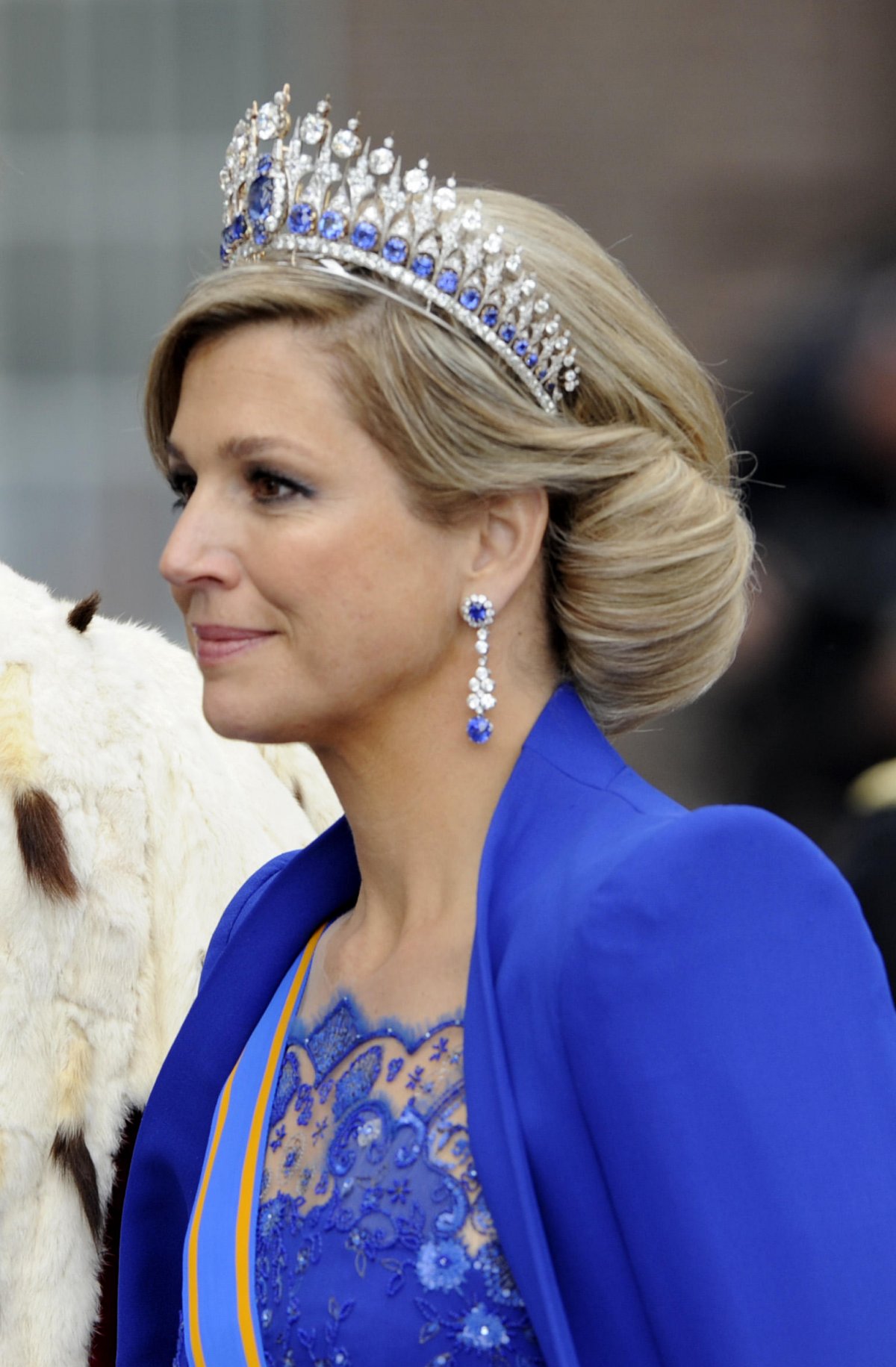
In 2013, ahead of the inauguration of King Willem-Alexander, more alterations were made to the tiara. The base was supplemented so that the piece now sits slightly higher on the wearer’s head. Queen Máxima wore the tiara for the first time in public at her husband’s inauguration, but on that occasion, she didn’t actually wear the complete piece. The tall central diamond plume of the tiara was removed for the event and replaced with a single round brilliant, giving the tiara a curved shape resembling a Russian kokoshnik.
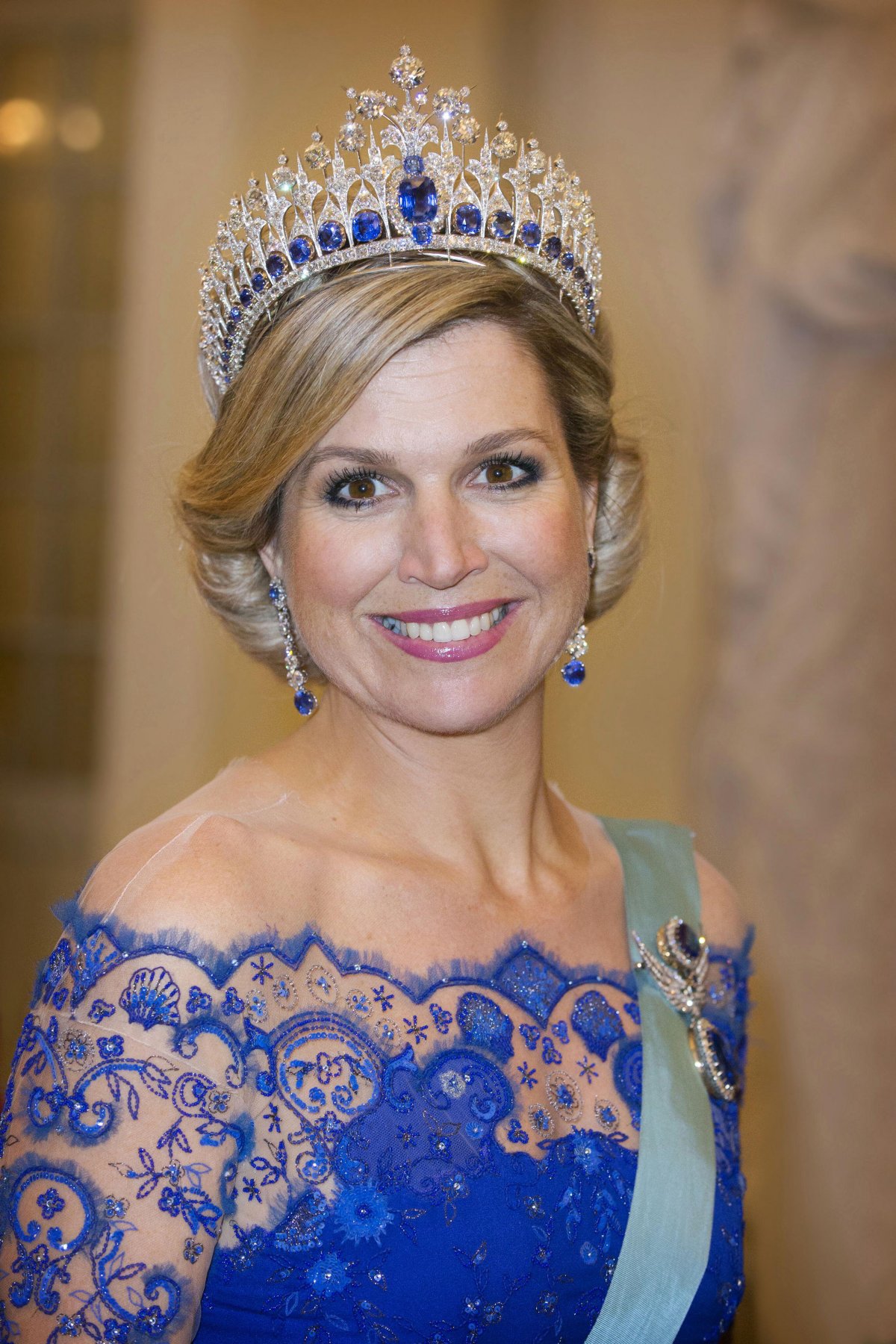
That diamond alteration wasn’t permanent, though. Queen Máxima wore the impressive full version of the tiara for the first time in public during a state visit to Denmark in March 2015, even repeating her inauguration gown for the occasion. This picture of the full tiara, shown here during the state banquet, really emphasizes the Gothic design of the tiara, which soars skyward like a cathedral.
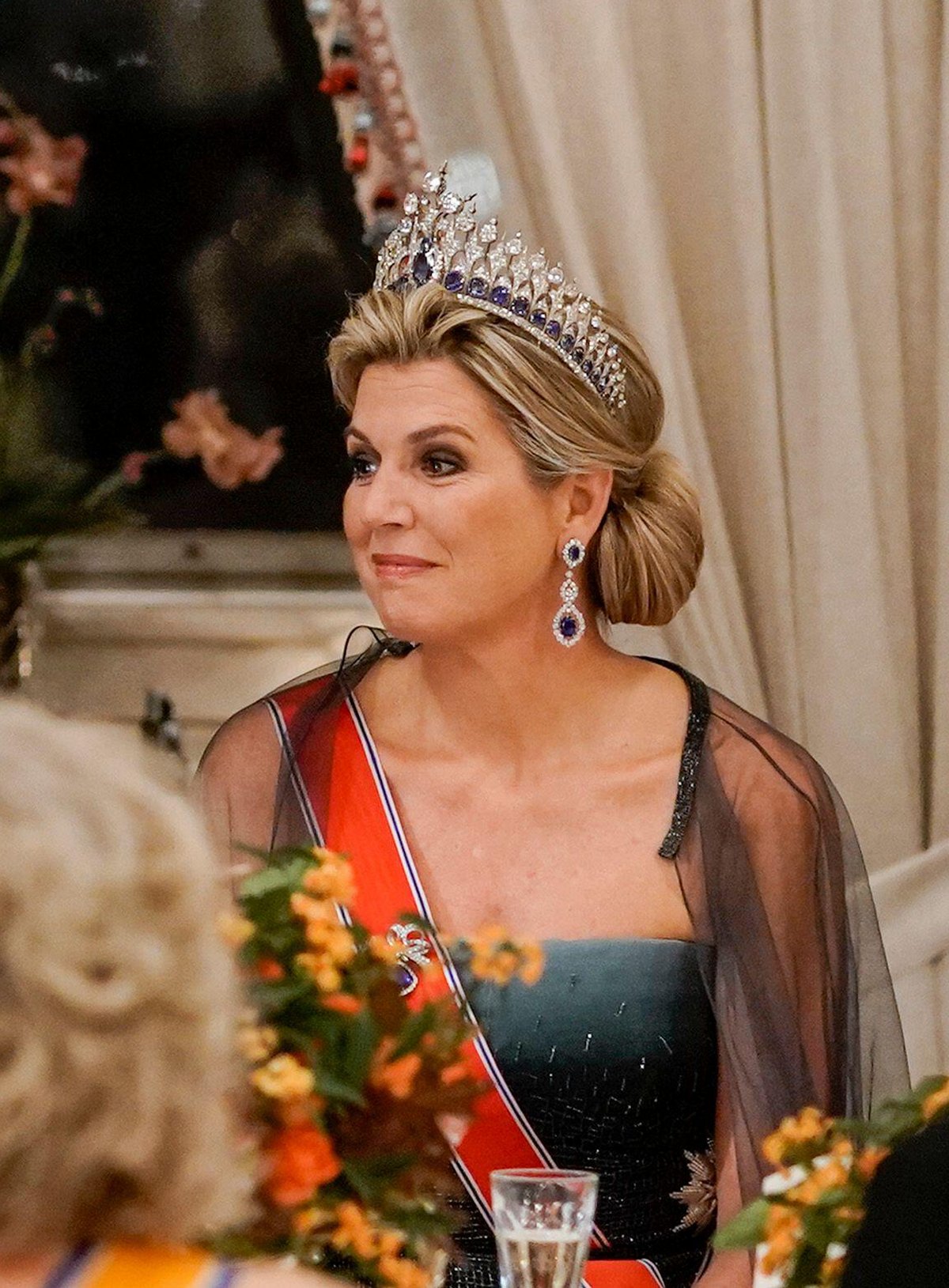
Over the past decade, we’ve seen Máxima wear the sapphire tiara a handful of times, usually for important royal moments. Here, she wears it during the Dutch state visit to Norway in the autumn of 2021. She’s paired the tiara with a variety of sapphire jewels from the vaults on each occasion, but she’s smartly decided not to wear a necklace with the piece. It doesn’t need the competition—it sparkles more than enough on its own!
Leave a Reply
You must be logged in to post a comment.