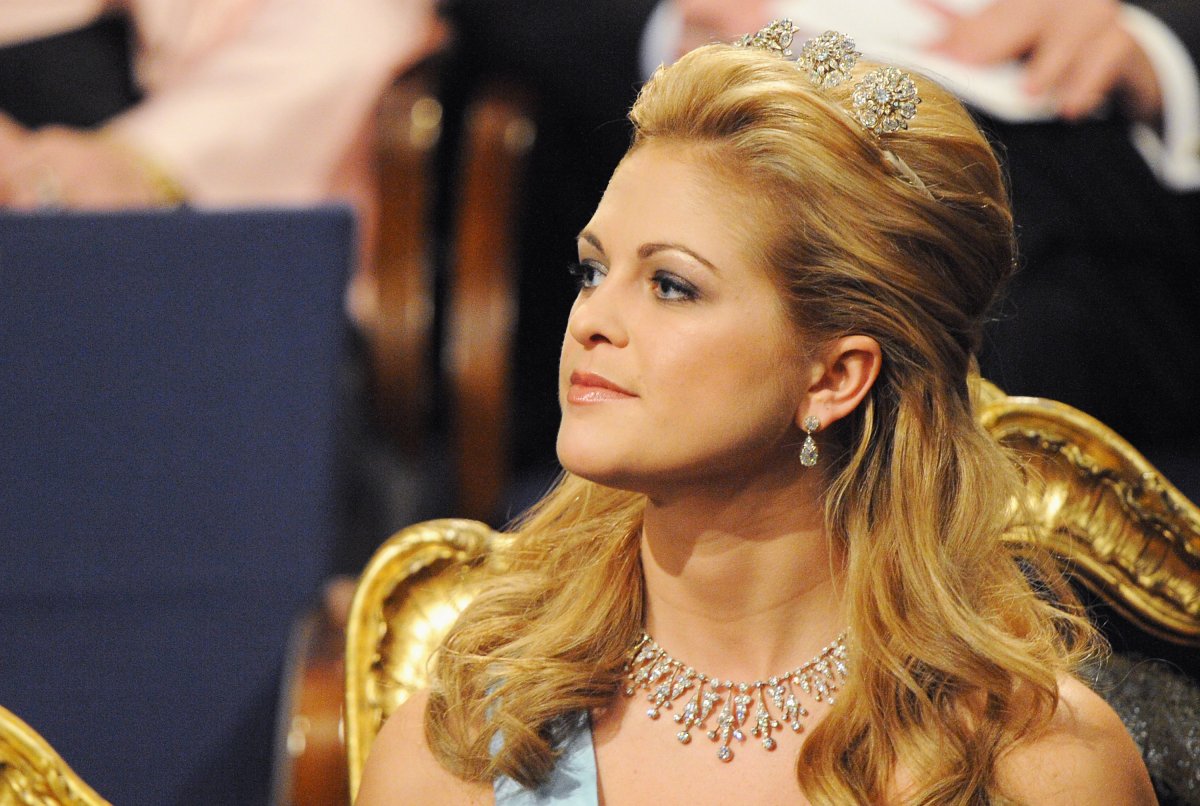
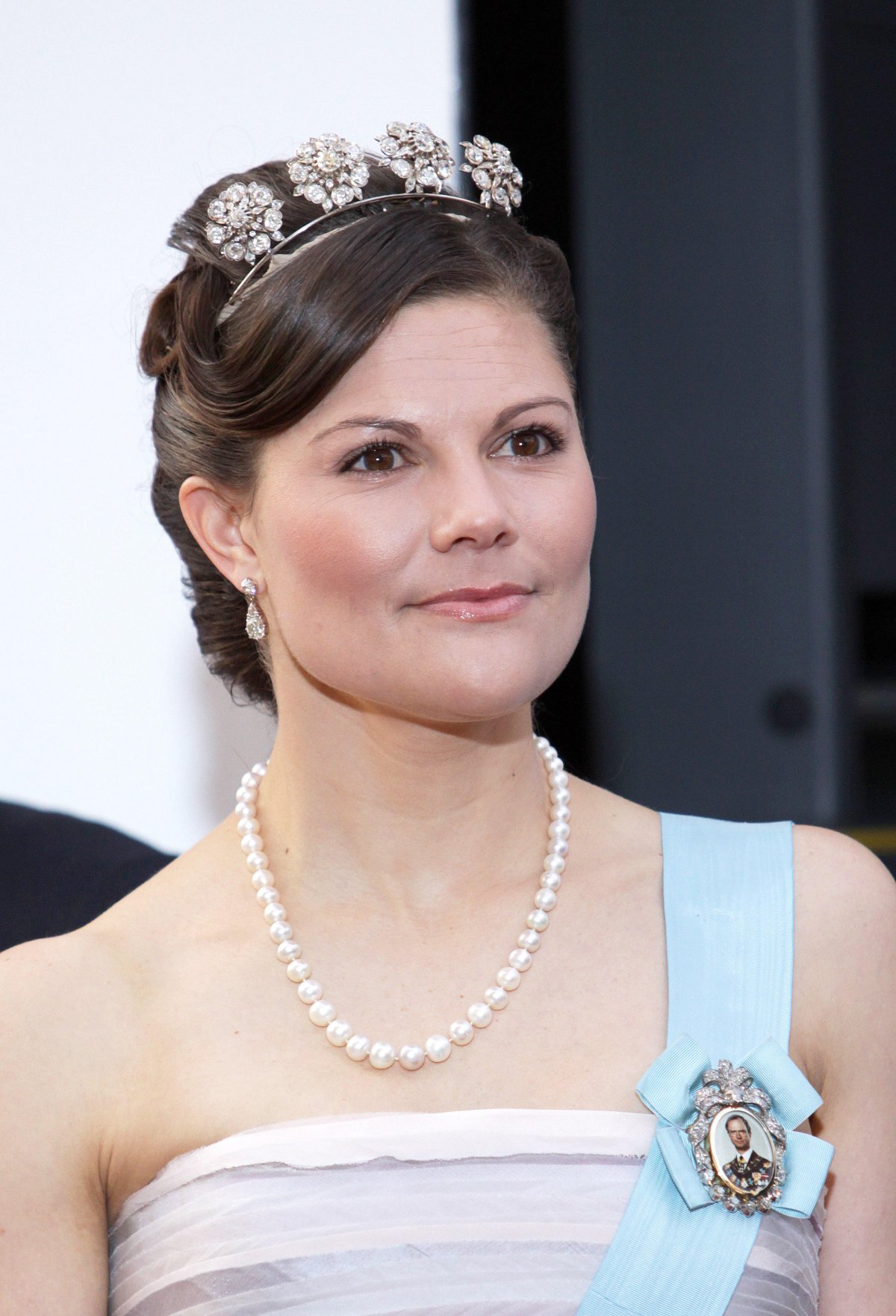
The Bernadottes of Sweden have two significant tiaras made of round diamond “button” elements placed on rather simple tiara frames. One of the tiaras has six buttons, and the other has four. Today, we’re taking a closer look at the Four Button Tiara.
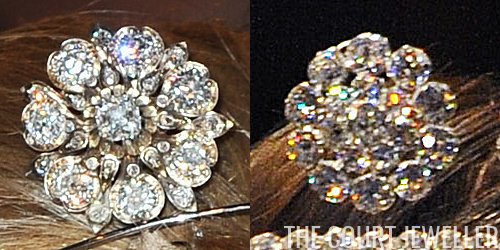
The buttons on the tiaras look extremely similar, especially from a distance, but each tiara features a different kind of floral button. The six button elements are rosettes, featuring ten small round diamonds hugging a larger floral cluster of seven additional diamonds. The four button elements are more complex (and, I think, more beautiful); they feature seven round diamonds encircling a central diamond in a sunburst design. The edges of the buttons include tiny diamond “leaves” between the “petals,” making the buttons look a little bit like Tudor roses.
While the Swedish royals have an array of heirloom jewels with impressive provenances, these buttons are possibly some of the most significant ornaments in their collection. We know where the diamond rosettes from the Six Button Tiara originated: the Swedish royal court has confirmed that the buttons from the Six Button Tiara are the same “diamond rosettes” that were attached to the crown worn by King Carl XIV Johan, who was born Jean Baptiste Bernadotte, at his coronation in 1818.
The Four Button Tiara’s ornaments, however, have a less clear provenance. One theory suggests that the buttons also first belonged to King Carl XIV Johan. He was a Maréchal d’Empire under Napoleon I in France, and some have speculated that these buttons may have adorned his gala uniform. The other theory on the origin of these buttons suggests that they originated not in France but with an even older generation of Swedish royals. Queen Louisa Ulrika, who was the consort of King Adolf Fredrik, had a set of diamond buttons that she wore in her hair; she also had a stomacher that included elements similar to the tiara’s buttons.
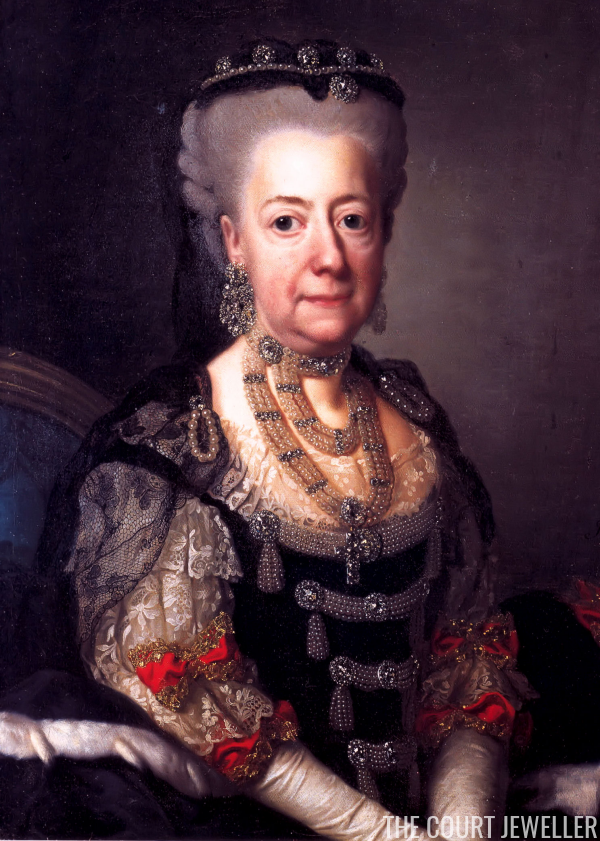
Here’s a portrait that shows her wearing some of these pieces. If these are the same ornaments worn by Louisa Ulrika, that would mean they were created at some point in the middle of the eighteenth century, and it would also mean that they’re rare examples of jewels in the current Swedish royal collection that pre-date the Bernadotte dynasty.
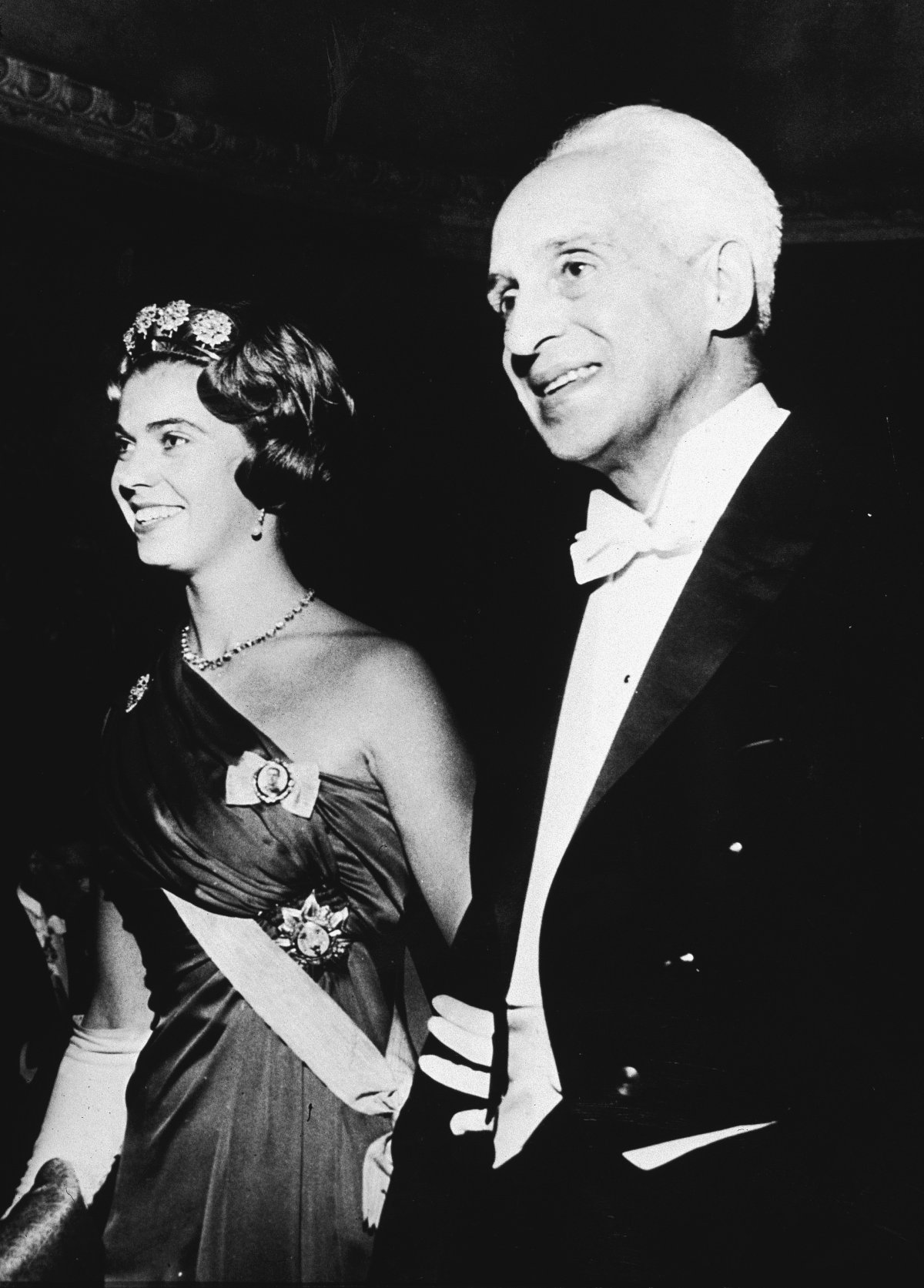
While the buttons themselves are antique, both tiaras are apparently twentieth-century creations. The current king’s sisters began wearing the Four Button Tiara in the 1950s. Above, you see Princess Margaretha wearing the tiara at the Nobel Prize ceremony in 1959.
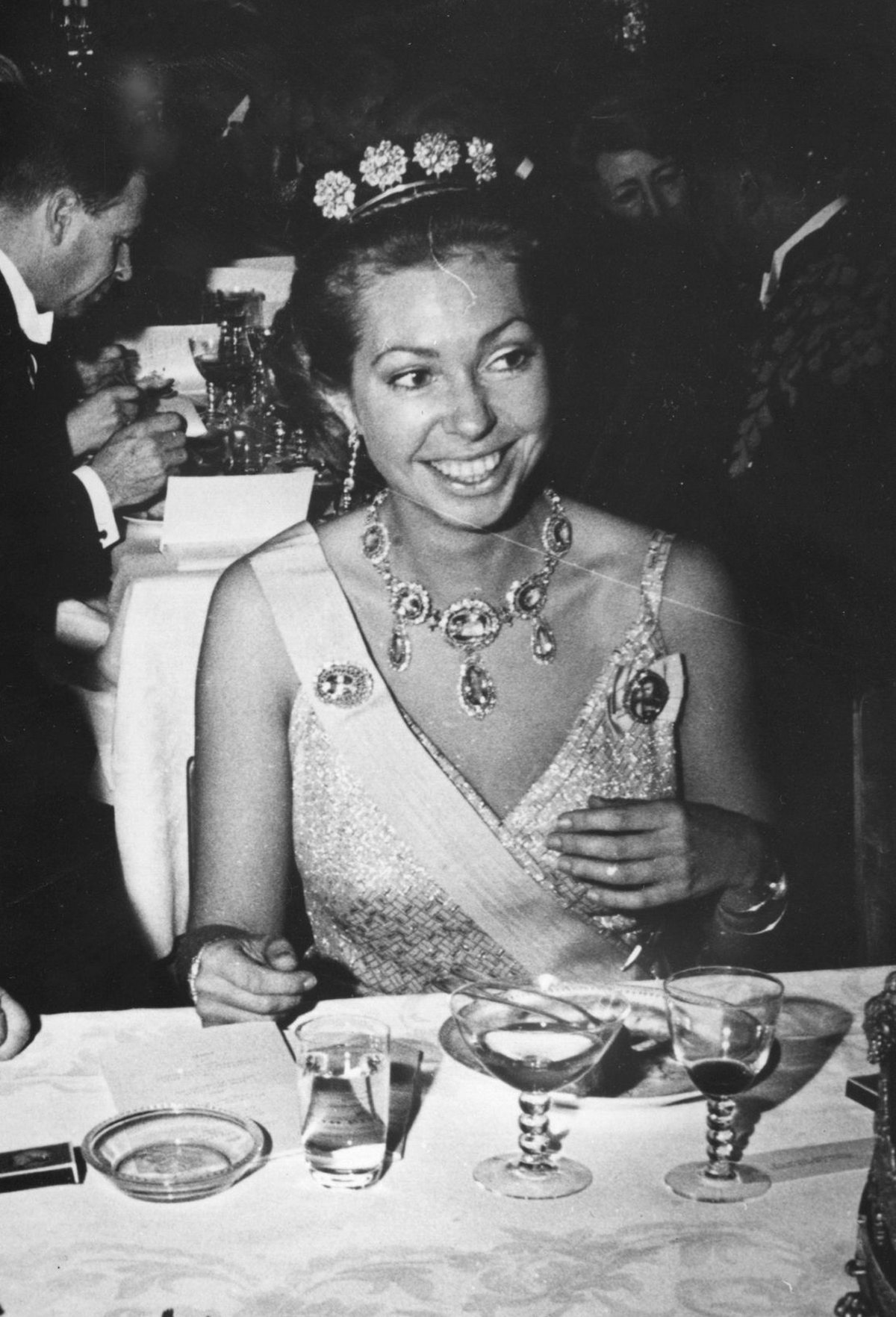
And here’s Princess Christina, the youngest of the Haga princesses, wearing the Four Button with the family’s magnificent pink topaz suite at the Nobels in 1970.
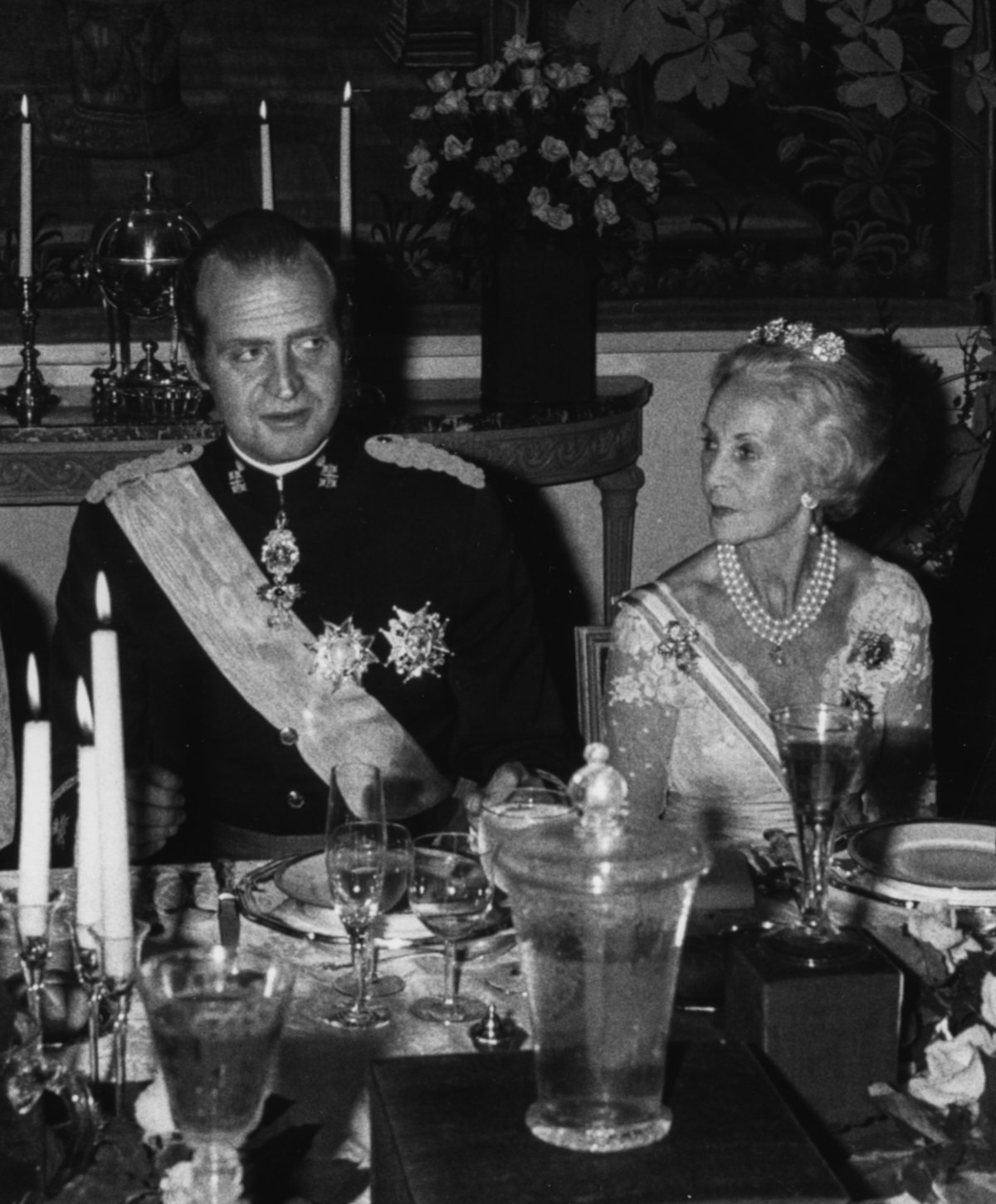
The Six Button Tiara was assembled for the use of the late Princess Lilian, but she also wore the Four Button Tiara. Above, she dons the tiara during the Spanish state visit to Sweden in 1979. The Six Button is a more elaborate piece overall; the Four Button has a much simpler frame, and it sits lower on the wearer’s head. Occasionally the base is supplemented by an extra row of diamonds.
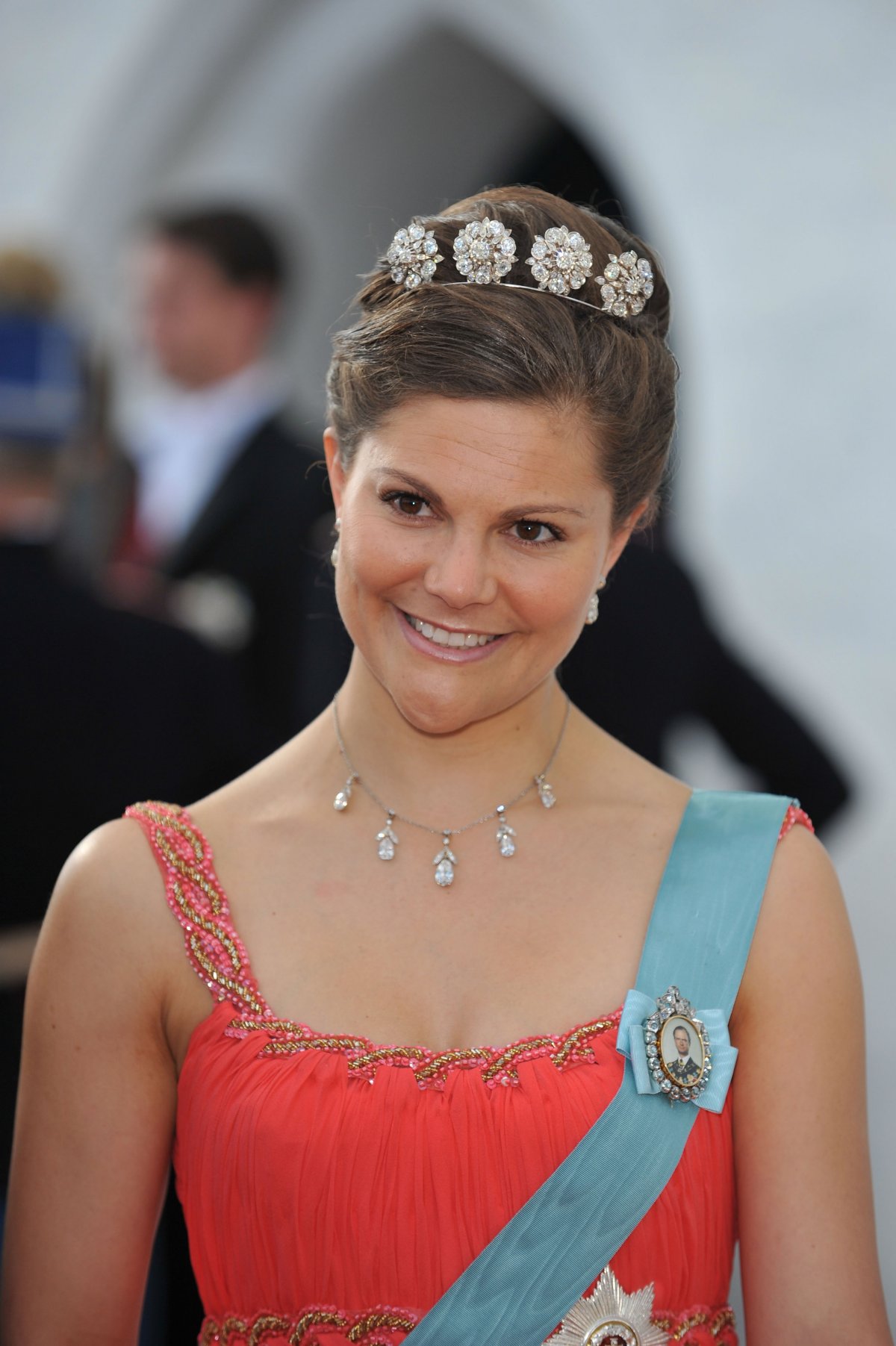
To the best of my knowledge, Queen Silvia has never been photographed in the Four Button Tiara, but her daughters and daughter-in-law have all worn it for various occasions. Here, Crown Princess Victoria wears the tiara for the wedding of Prince Joachim and Princess Marie of Denmark in 2008.
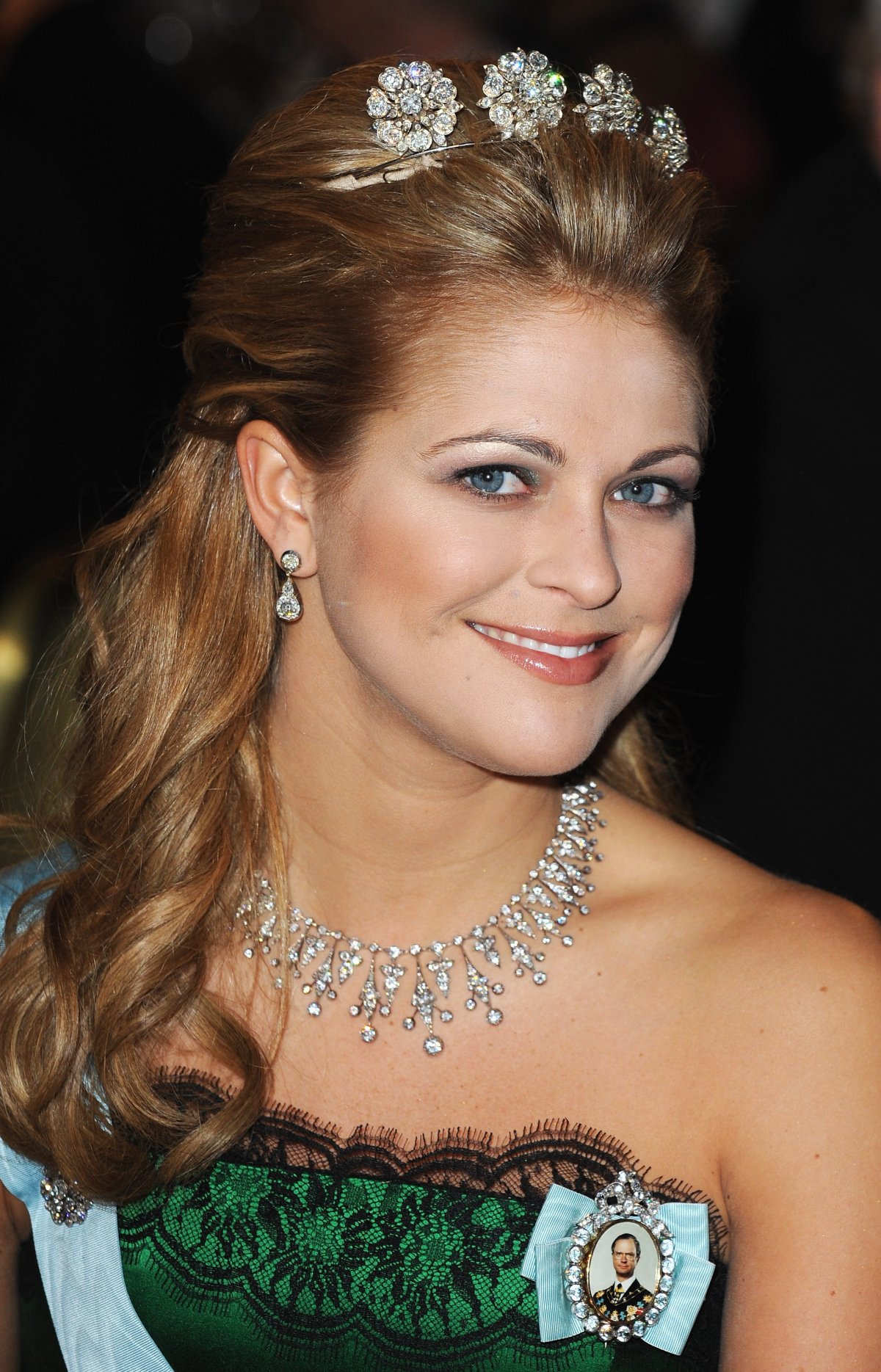
And here, Princess Madeleine wears the tiara for the Nobel Prize ceremony and banquet in December 2009. She also snuck in a second tiara, wearing the Modern Fringe Tiara in its necklace setting.
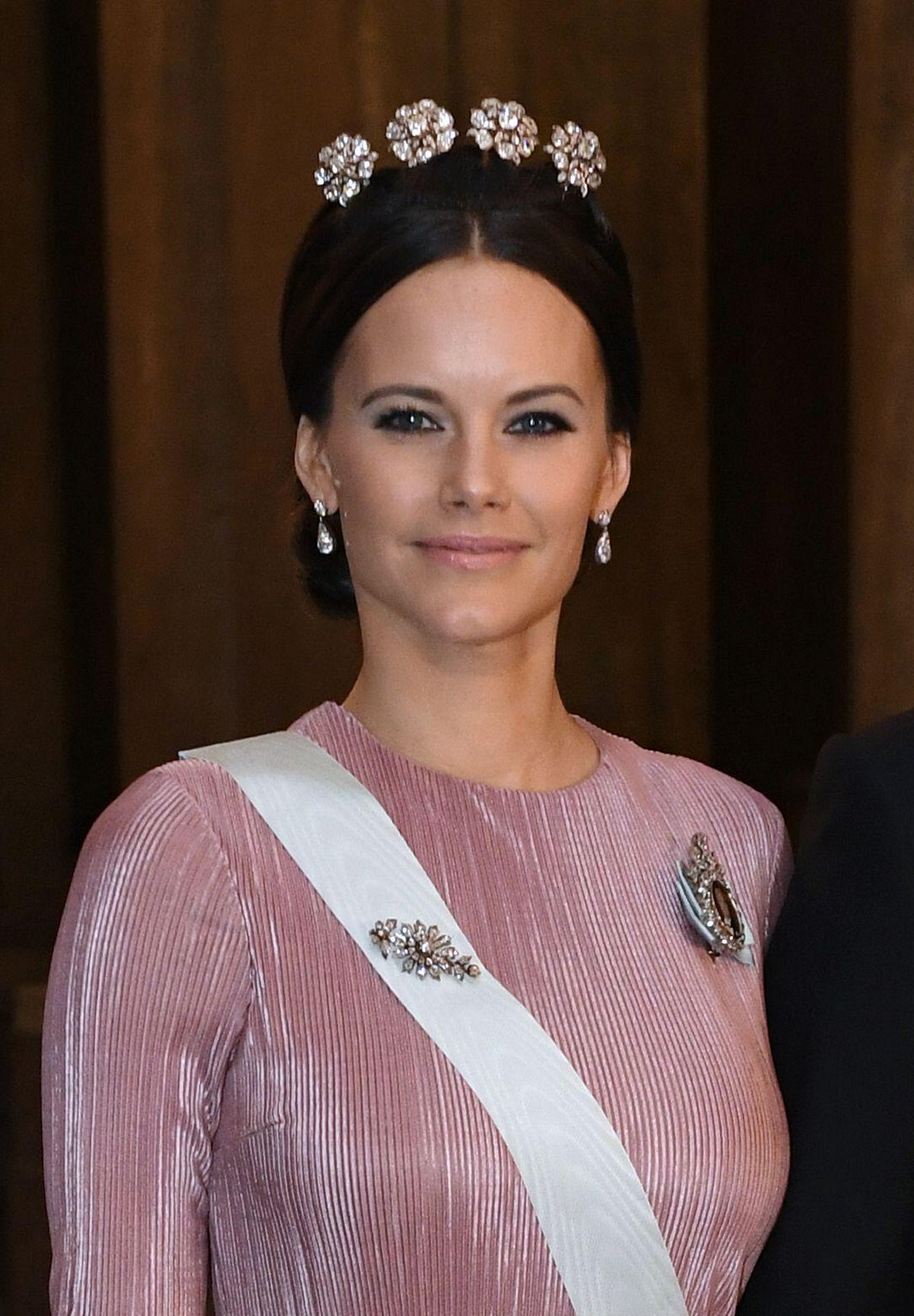
Princess Sofia made her first appearance in the Four Button Tiara in December 2016 during the King’s Dinner for Nobel laureates at the Royal Palace. Both of the button diadems tend to be some of the more controversial sparklers in the Swedish jewel foundation among royal jewel lovers; I’ll admit that I’ve been guilty of calling the Four Button the “Jeep” tiara more than once in the past!
Leave a Reply
You must be logged in to post a comment.