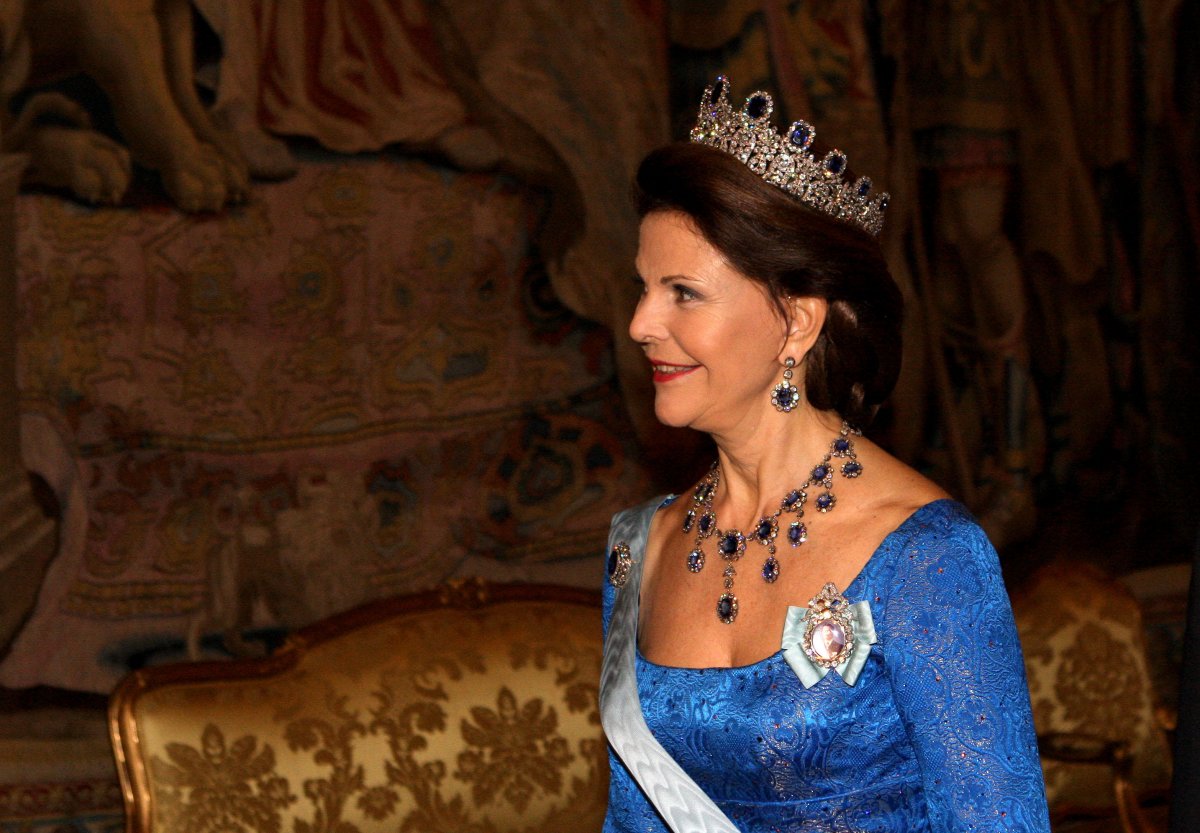
If you’re on the lookout today for jewels that belonged to members of the imperial family of France, you’d best look not only in the Louvre but also in the family foundation of the Bernadottes, the royal family of Sweden. Like many of their grandest pieces, the gorgeous sapphires in their collection started out in nineteenth-century France.
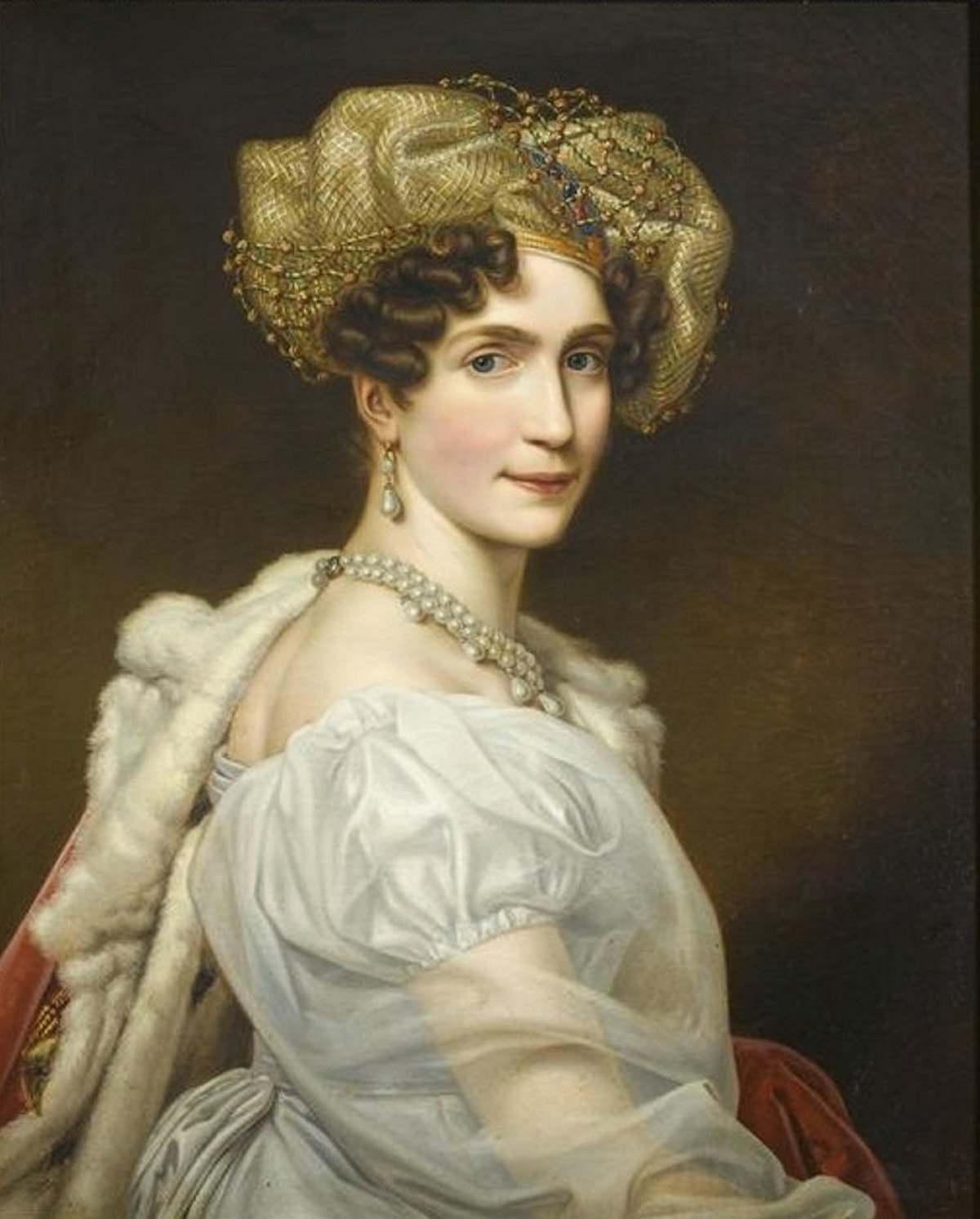
The parure’s first owner was Princess Augusta of Bavaria, the wife of Eugène de Beauharnais, the only son of Empress Joséphine of France. Augusta’s father, King Maximilian I Joseph of Bavaria, later bestowed the Leuchtenberg ducal title on his son-in-law, hence the tiara’s name. The sapphires, though, came from Eugène’s family: they were a gift from Empress Joséphine to Augusta to celebrate the birth of Eugène and Augusta’s son, Prince Auguste, in December 1810.
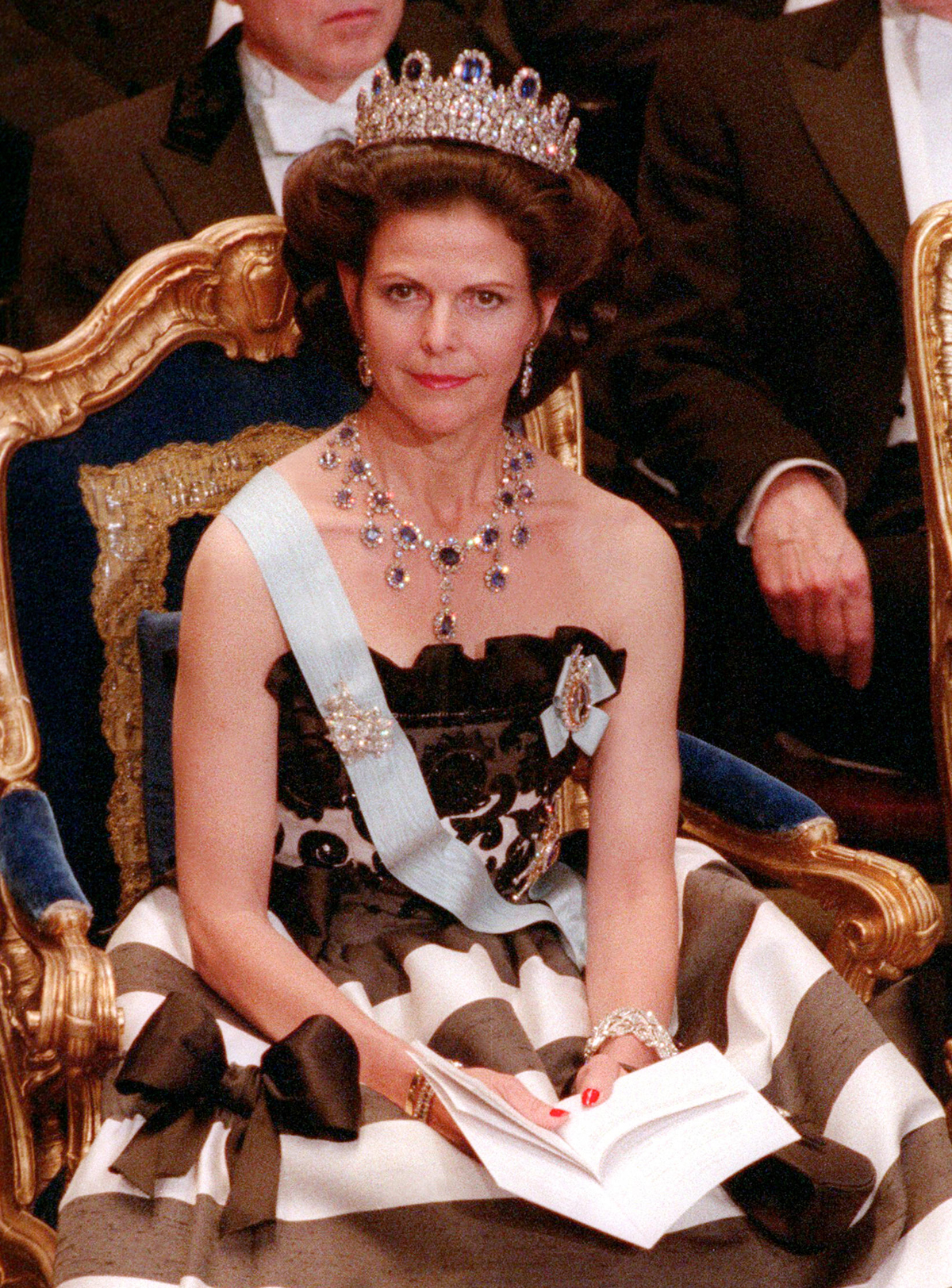
The parure includes a number of impressive sapphire and diamond pieces, including the tiara, a necklace, a pair of earrings, a brooch, and a set of hair ornaments. The tiara features diamond floral motifs topped by eleven sapphires. We’ve talked about the inflexibility of some tiaras, but this one is the polar opposite. The base is so flexible that the tiara lays completely flat when stored, making it both easy to transport and easy to wear. The sapphires on the tiara can also be removed, and they were at one time able to be interchanged for a set of large, pear-shaped pearls.
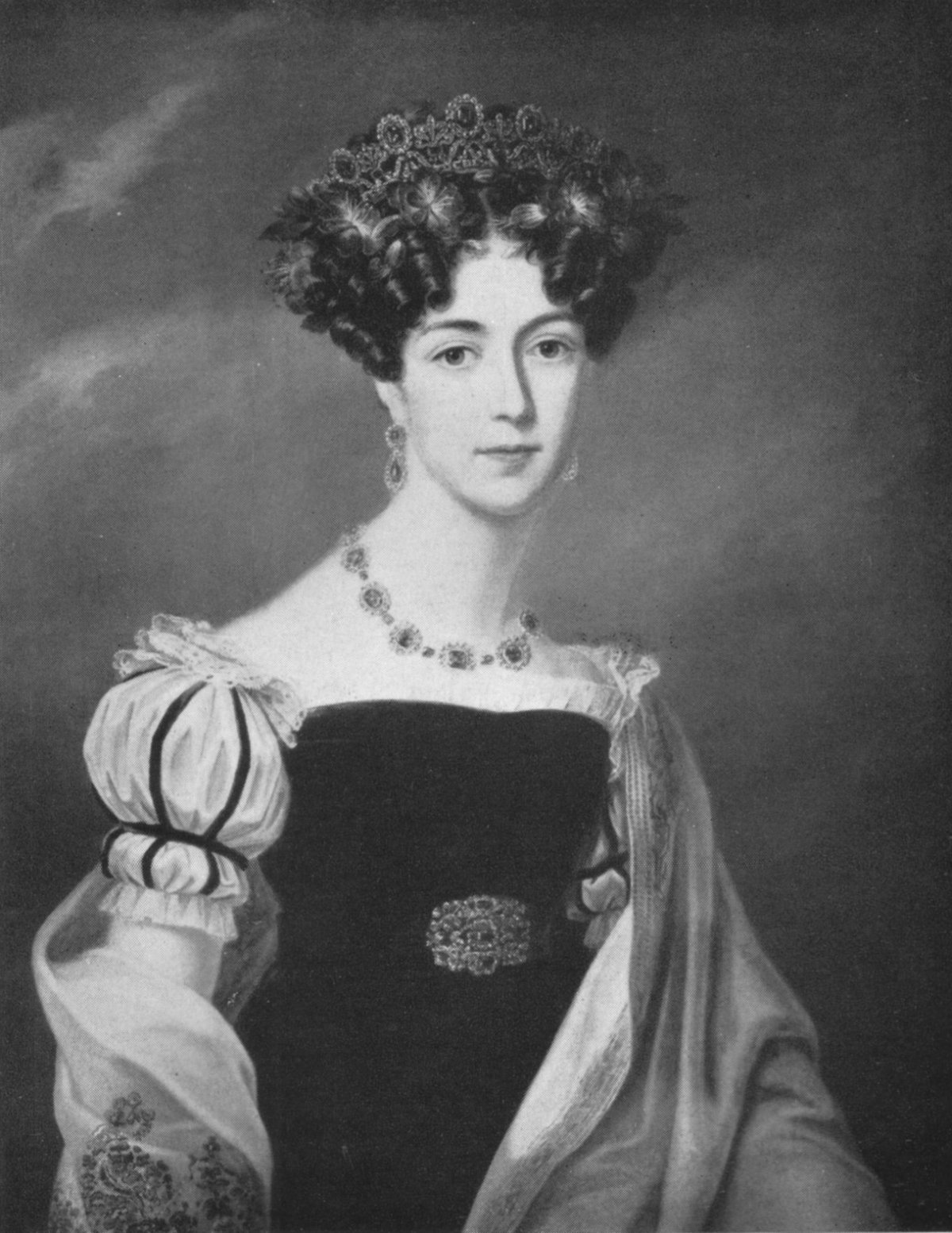
The Leuchtenbergs had several children, many of whom made successful dynastic marriages. One of their daughters, Amélie, became Empress of Brazil, and inherited her mother’s diamonds and emeralds. The eldest, Joséphine, married the future King Oscar I of Sweden, eventually becoming Queen Josefina of Sweden. She’s the one who inherited her mother’s sapphires, and they’ve resided in the Swedish royal vaults ever since. For several generations, the gems passed through the hands of various Bernadotte family members. Josefina’s son, King Oscar II, inherited them from his mother in 1876. Five years later, Oscar and his wife, Queen Sofia, gave the parure to their new daughter-in-law, Victoria of Baden.
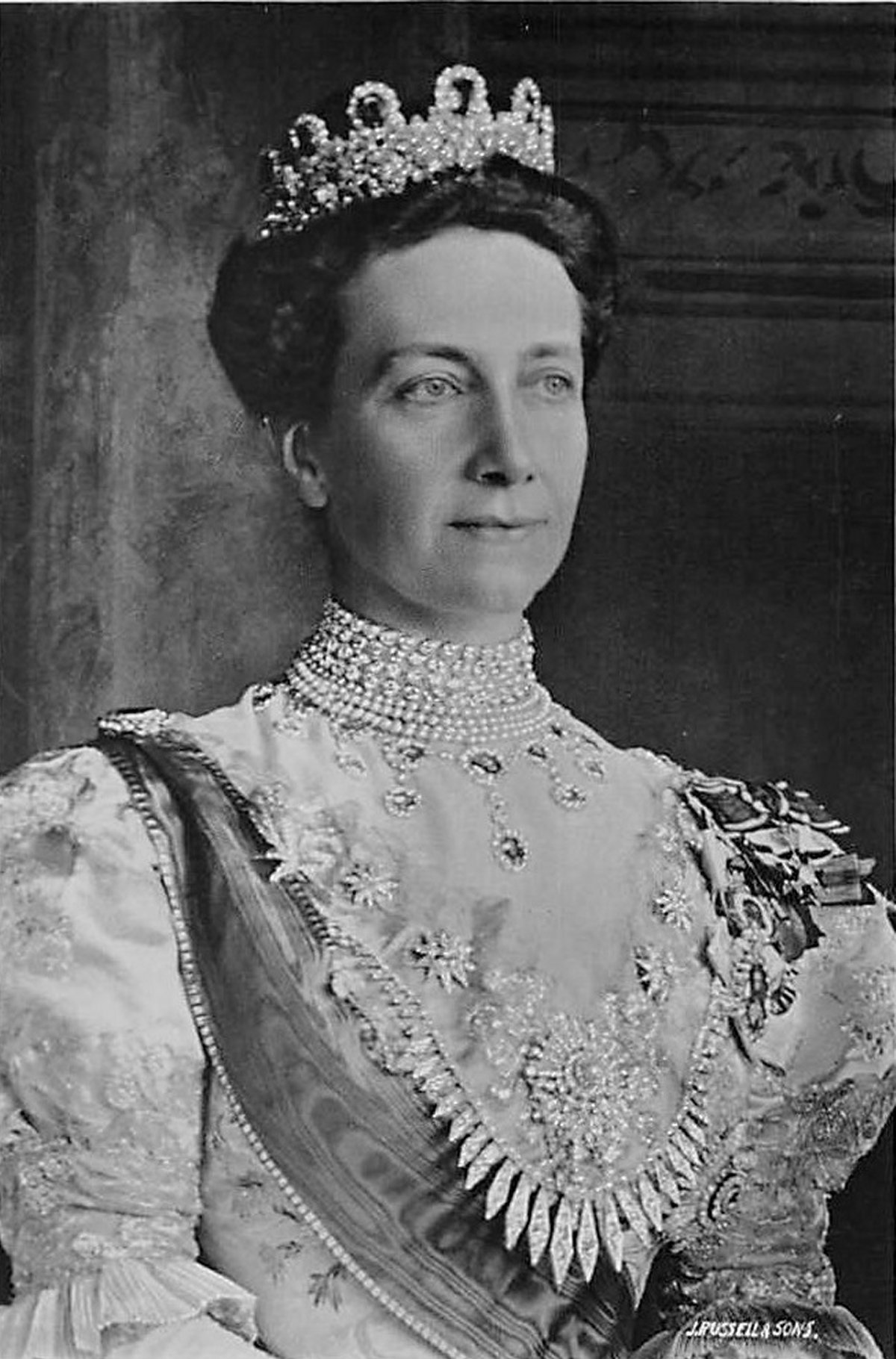
Victoria wore the set regularly as crown princess and as queen, and she was photographed in the tiara and the rest of the parure. But rather than leaving the sapphires to any of her children or their spouses, Queen Victoria decided to preserve the set by bequeathing it to the family’s jewel foundation on her death in 1930. This is good for a couple of reasons — the main one is that the sapphires cannot be sold, but their presence in the foundation means that they are also available for more than one member of the family to wear.
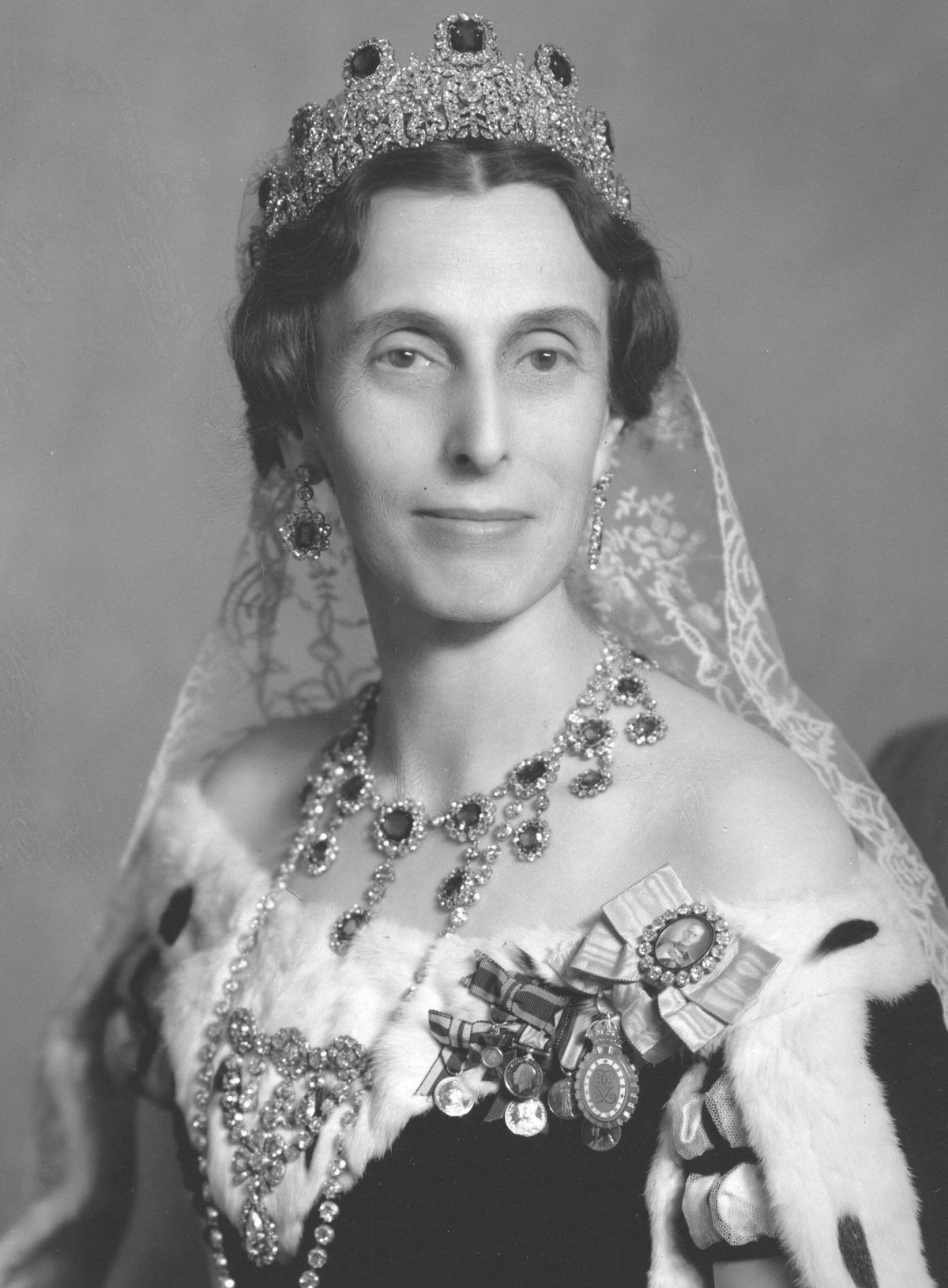
Even though they are theoretically available to all of the Bernadotte ladies, the sapphires have largely continued to be worn by Swedish queens. Queen Louise, the second wife of King Gustaf VI Adolf, made the sapphire tiara one of her signature pieces. But after her death in 1965, the country was without a queen for more than a decade.
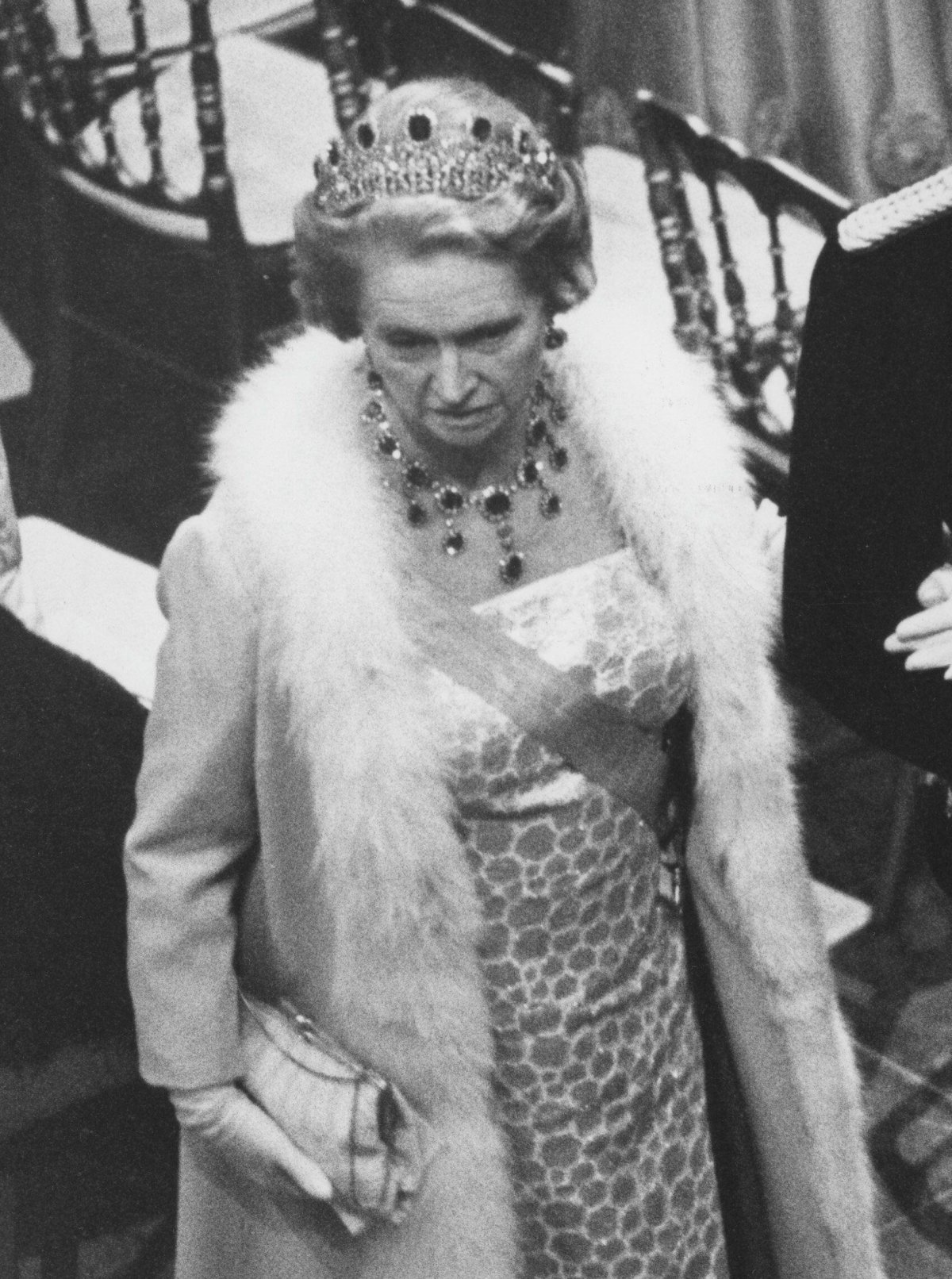
During that time, the sapphires were worn by Princess Sibylla, the mother of the current king, who served as first lady for her father-in-law. The set was also worn by Princess Birgitta at the wedding of the present King and Queen in 1976.
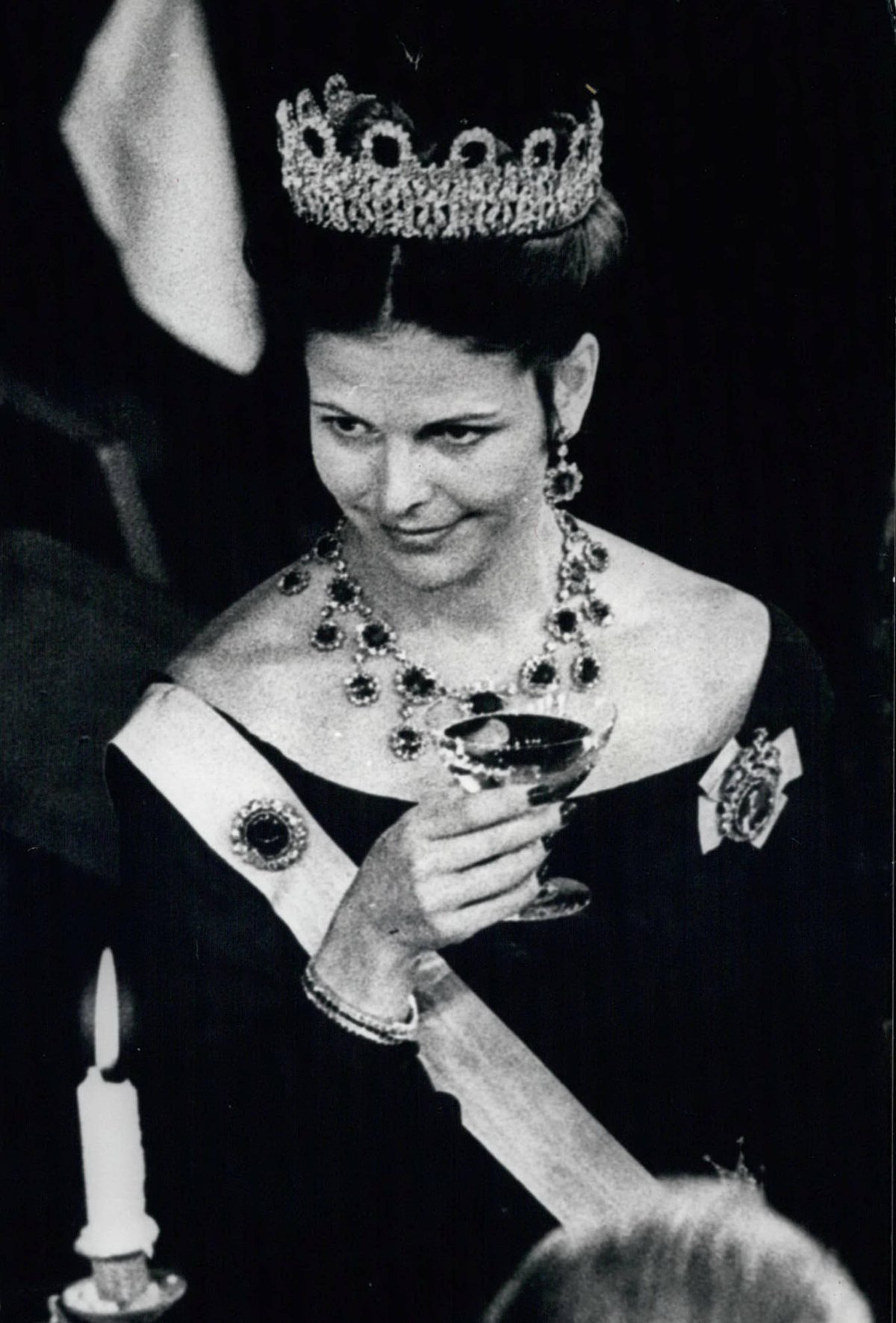
Since then, however, the sapphires have been used exclusively by Queen Silvia. The set is majestic, beautiful, easy to wear, versatile, and historic, so it’s easy to understand why it has become one of her most-used tiaras.
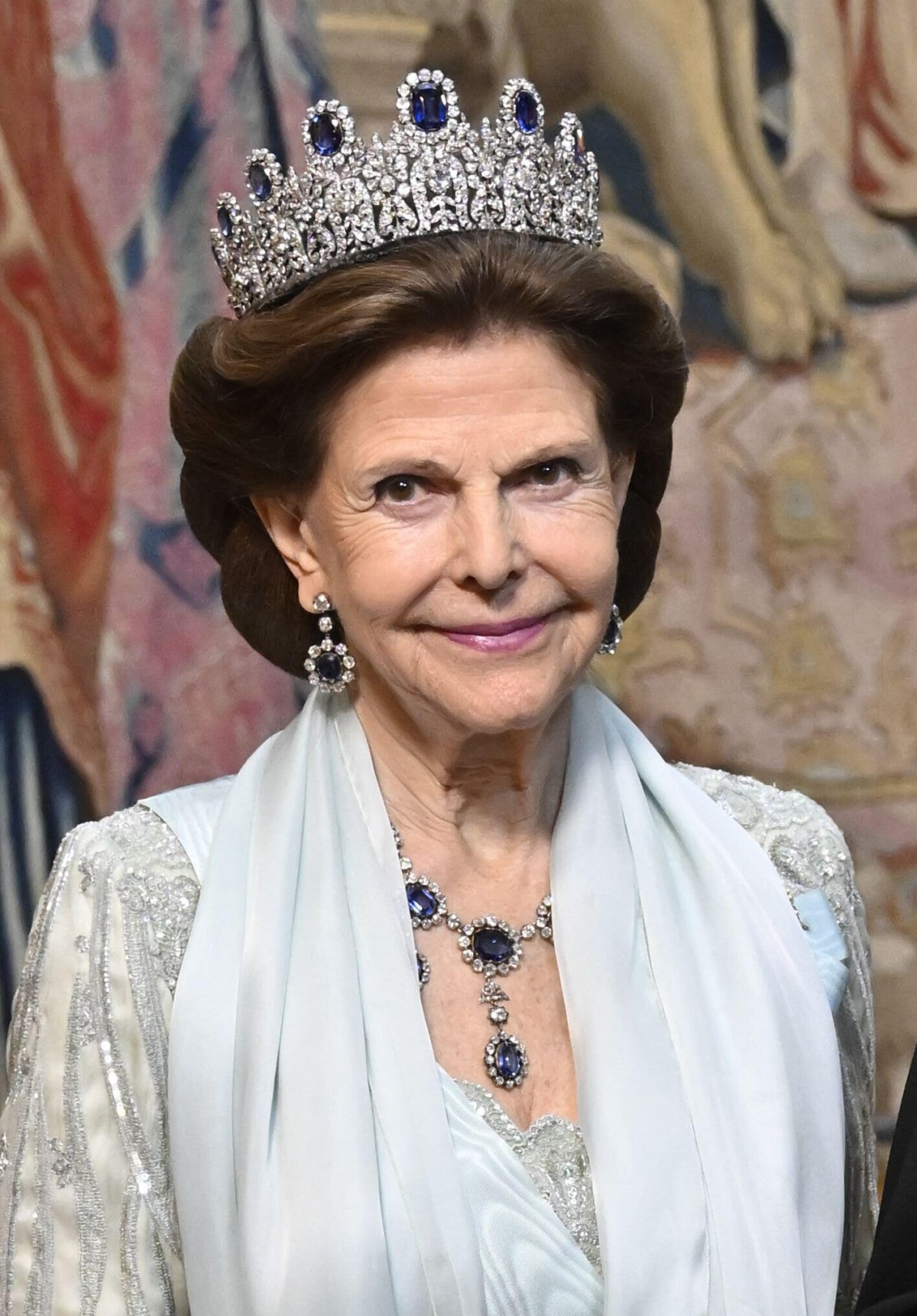
It’s also one of the tiaras she wears about every other year to the Nobel Prize ceremony. She also often wears it for the King’s Dinner, held at the Royal Palace in Stockholm on the day after the annual Nobel Prize banquet.
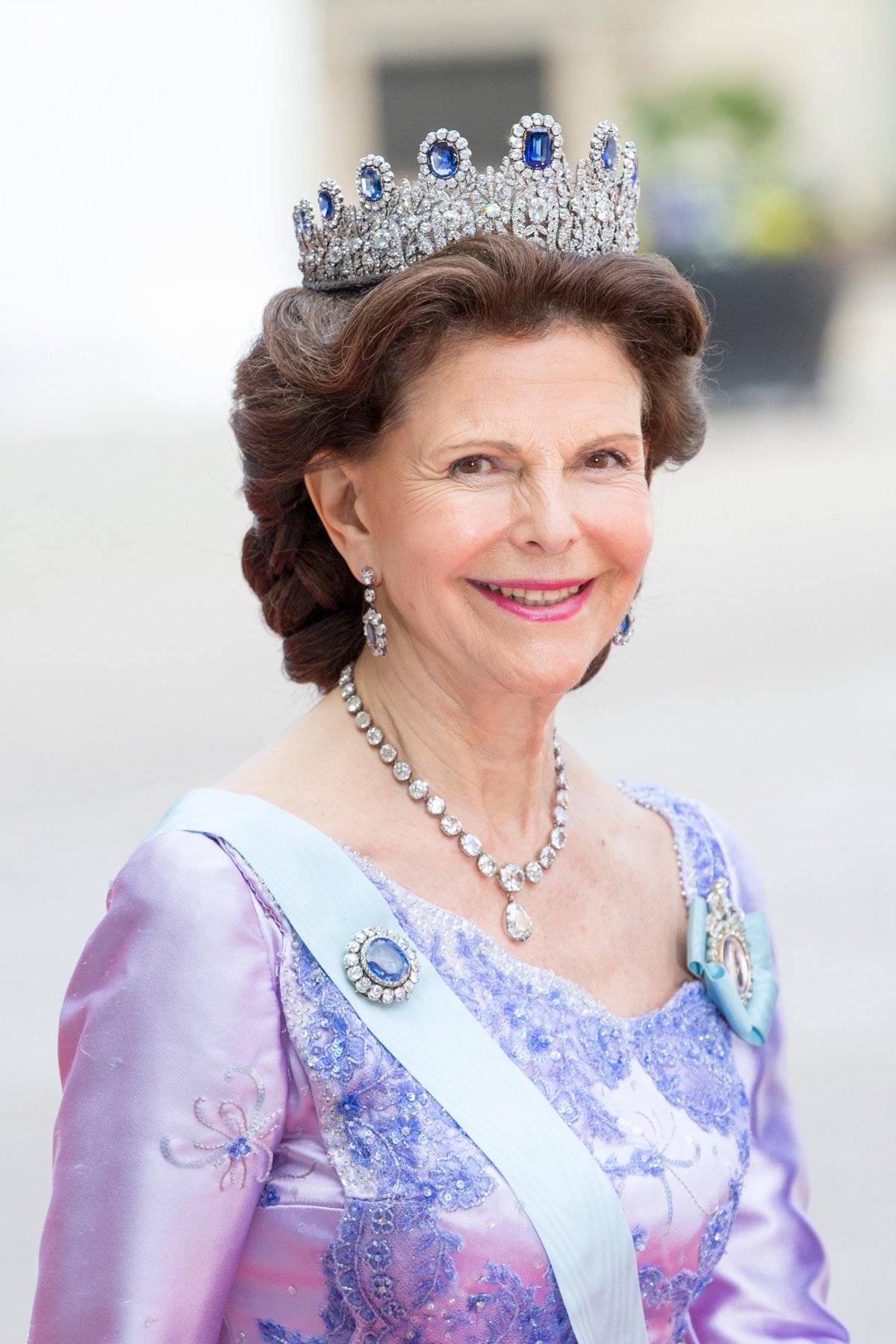
Queen Silvia has continued to wear the tiara regularly at state banquets, Nobel celebrations, and even royal weddings for almost 50 years. She memorably wore the tiara for the wedding of her only son, Prince Carl Philip, in 2015. On that occasion, even amid the grand tiaras worn by other royal ladies, it definitely said, “I’m the queen!” No wonder, then, that Silvia has said that the sapphire tiara is her very favorite one from the Swedish royal collection.
Leave a Reply
You must be logged in to post a comment.