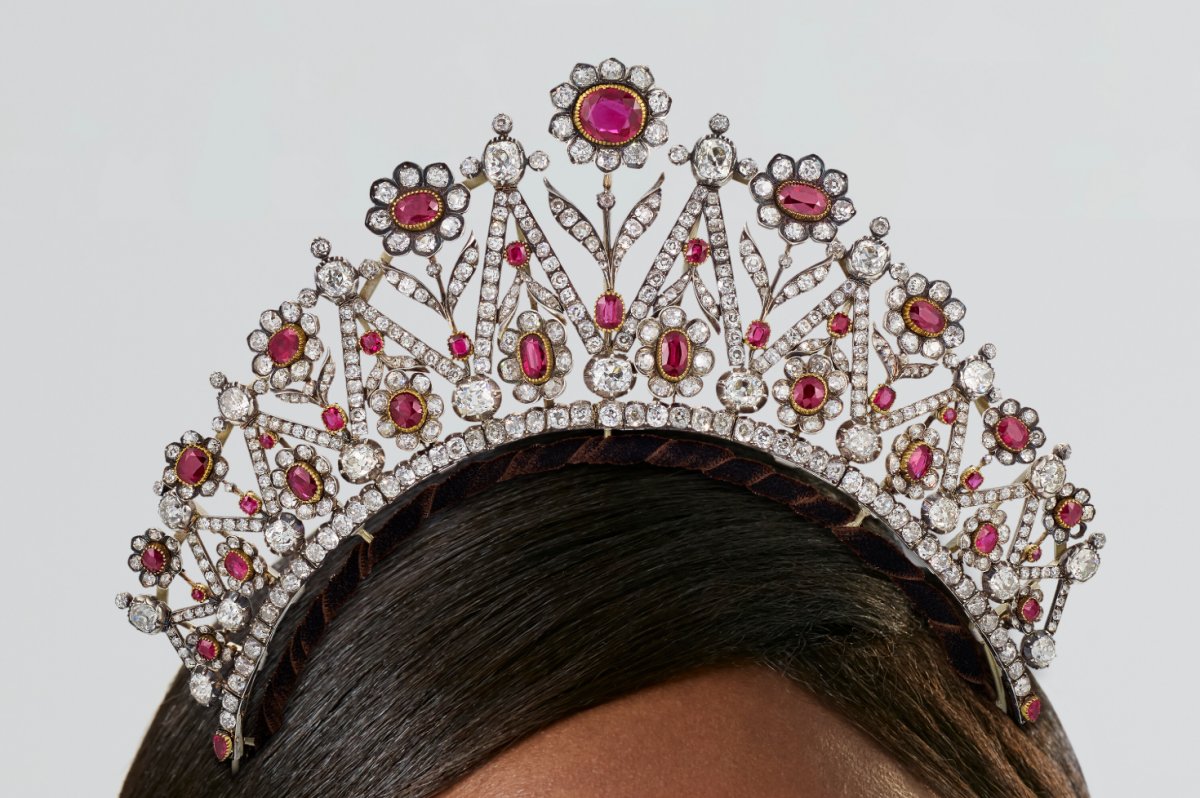
Next week in Switzerland, the hammer will fall on a collection of treasures that belonged to a British countess at Christie’s. Today, we’ve got a closer look at the tiaras and jewels, which were inherited by Lady Stradbroke from her fascinating, thrice-married grandmother—who had interesting royal connections.
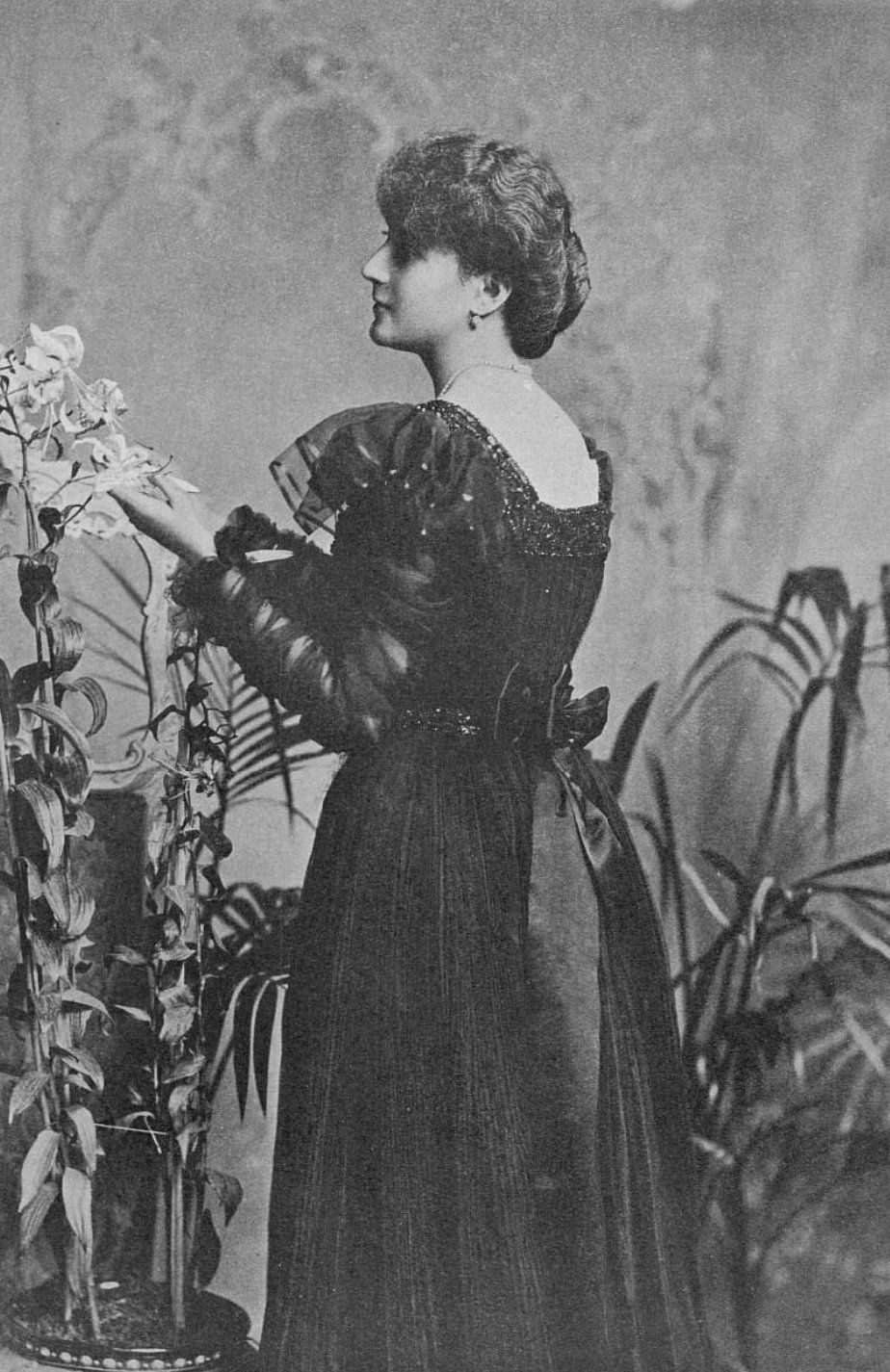
The jewels being offered next week at Christie’s belonged to Helena Fraser, who married the 3rd Earl of Stradbroke in 1898. Helena was the daughter of Lt.-Gen. James Keith Fraser, son of Lt.-Col. Sir James John Fraser, 3rd Baronet, and Amelia Ward, a granddaughter of the 10th Baron Ward. Born in 1874, she spent a good deal of her childhood with her maternal grandmother, Eleonor, a society hostess who lived at Luton Hoo.
Eleanor is a fascinating character. The third daughter of an MP, she was married three times. Her first husband was the Hon. Humble Dudley Ward, younger brother of the 1st Earl of Dudley. They had three children together, including Helena’s mother, Amelia, before his death in 1870. Two years later, Eleanor married John Gerard Leigh, who had inherited the magnificent estate of Luton Hoo in Buckinghamshire from his father a year earlier.
Eleanor’s second marriage was brief. Leigh died in 1875, but he left her a legacy that set her up for the rest of her life. He left her a great deal of his fortune, including a life interest in Luton Hoo. As the widowed “Mrs. Gerard Leigh,” she used Luton Hoo to host elaborate parties and weekends, which were often attended by the Prince of Wales and the Duke and Duchess of Teck. So close was Eleanor to the Waleses and the Tecks that, when the Duke of Clarence proposed to Princess May in 1891, he asked for her hand at Luton Hoo.
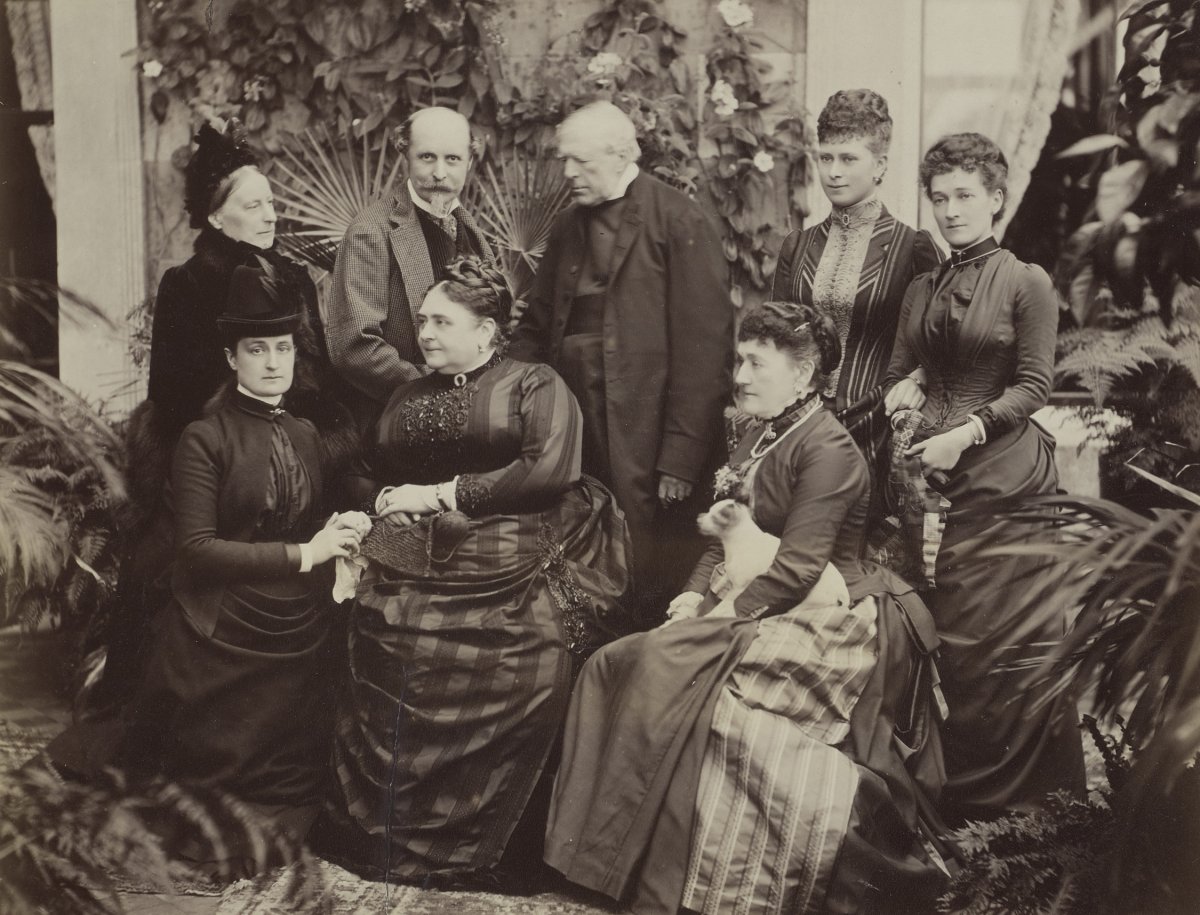
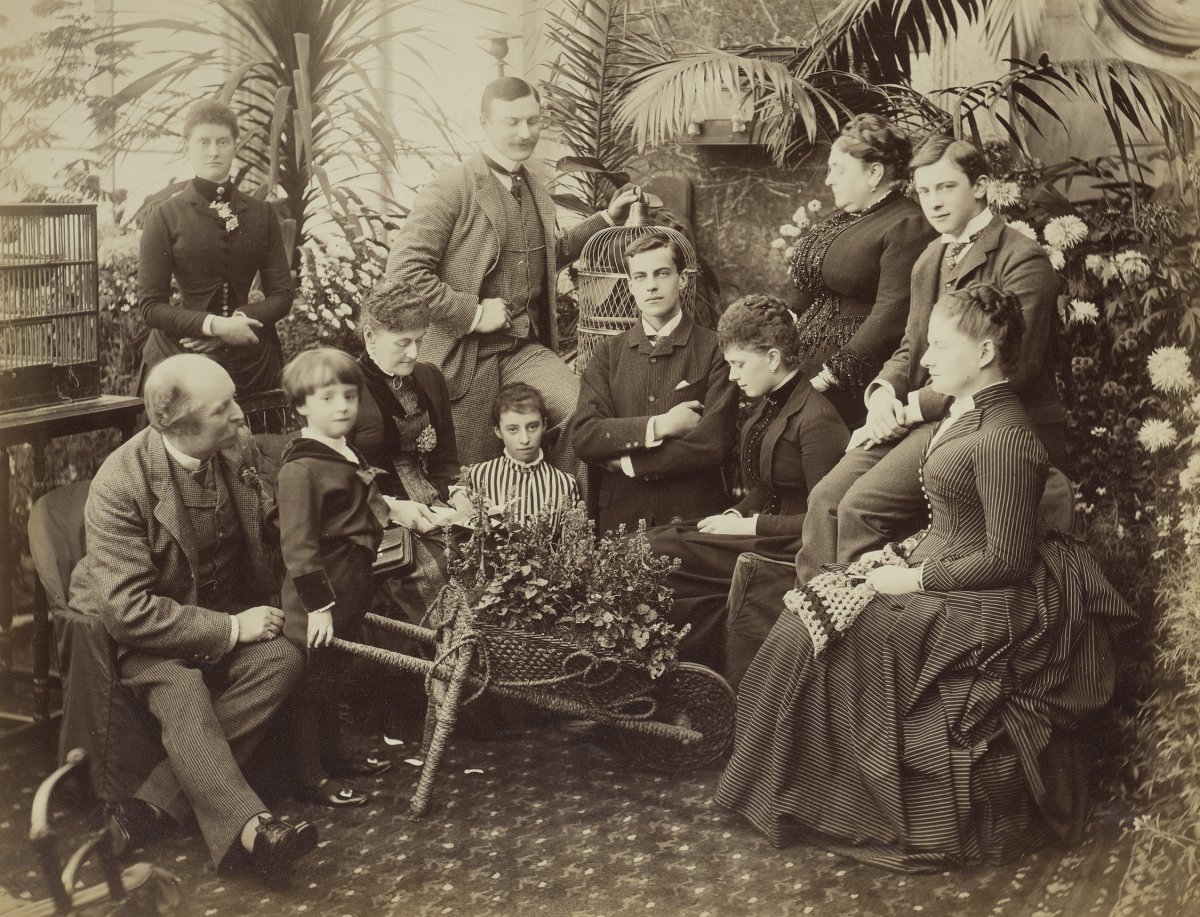
Eleanor’s connection with the Waleses helped her find her third husband: the Danish minister to London, Christian de Falbe. They were married in 1883, a year after his first wife died giving birth to their younger son. In the photograph above, taken during a house party in 1887, Christian looks directly at the camera, while Eleanor sits holding a small dog, with the future Queen Mary standing behind her.
While spending time with her grandmother at Luton Hoo, Helena Fraser was drawn closer into prominent aristocratic circles. She made her debut at court in May 1892, and afterward she was often found at court functions at both Buckingham Palace and Marlborough House. She attended the famed Devonshire House Ball in the summer of 1897, wearing a costume described by various contemporary and modern sources as either “Delilah” or “an attendant of the Queen of Sheba,” who was played by Daisy, Princess of Pless.
A few months later, society was surprised when it was announced that Helena was engaged to marry George Rous, the 3rd Earl of Stradbroke. Twelve years her senior, Lord Stradbroke was a career soldier, serving as a lieutenant colonel with the 1st Norfolk Artillery Volunteers. Their wedding in the summer of 1898 was a major society occasion. The Ipswich Journal wrote, “Lord Stradbroke is not only to be congratulated upon his marriage to Miss Keith Fraser on Saturday, but also upon the fact that it was, perhaps, the smartest wedding the present London season has witnessed, graced as it was by the Princess of Wales, the Princess Victoria, Princess Christian, Princess Marie of Greece, and, indeed, the elite of the land.”
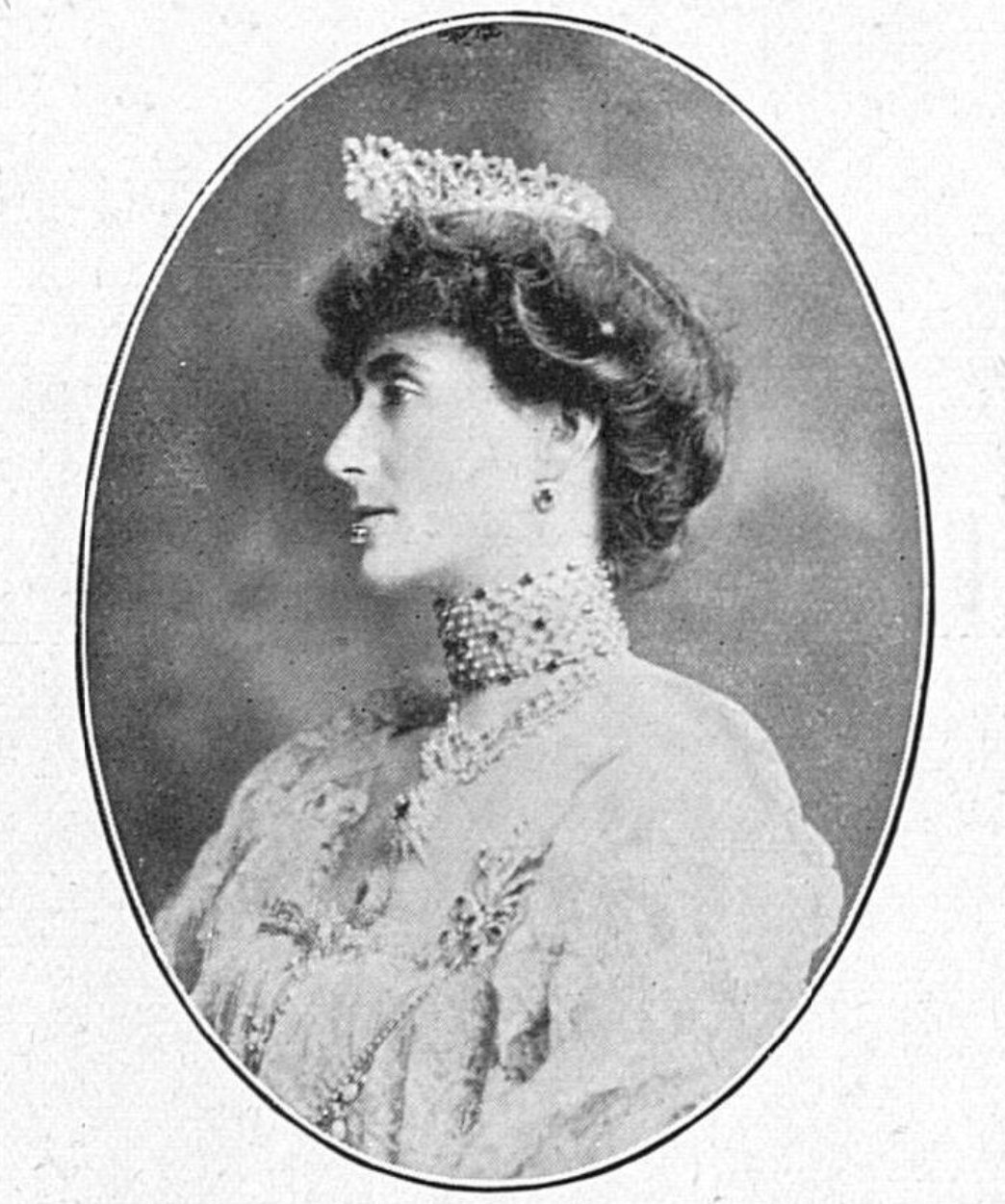
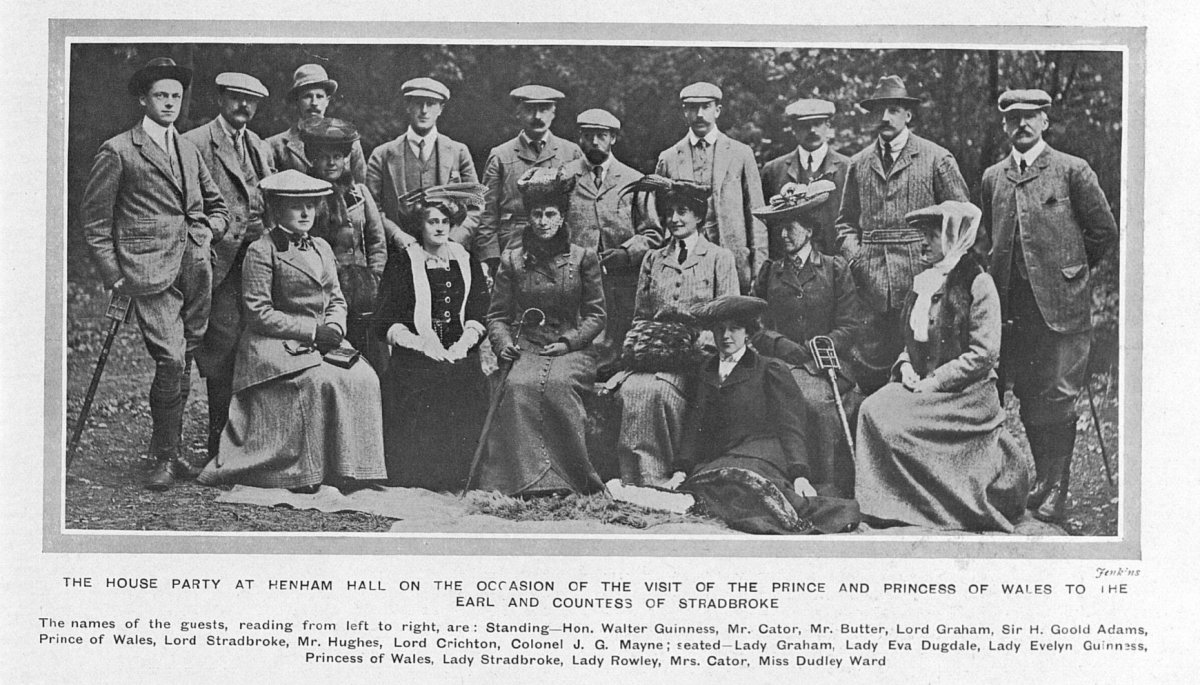
After their marriage, Lord and Lady Stradbroke continued the family tradition of hosting royalty, often welcoming the Prince and Princess of Wales (later King George V and Queen Mary) to their Suffolk estate, Henham Hall. Meanwhile, they also managed to produce a family of eight children. The couple were prominent guests at the coronation of King Edward VII and Queen Alexandra in August 1902. Lord Stradbroke had been named an aide-de-camp to the new monarch a few months earlier, and Lady Stradbroke glittered in jewels that she had inherited from her grandmother, Eleanor, who had passed away in December 1899.
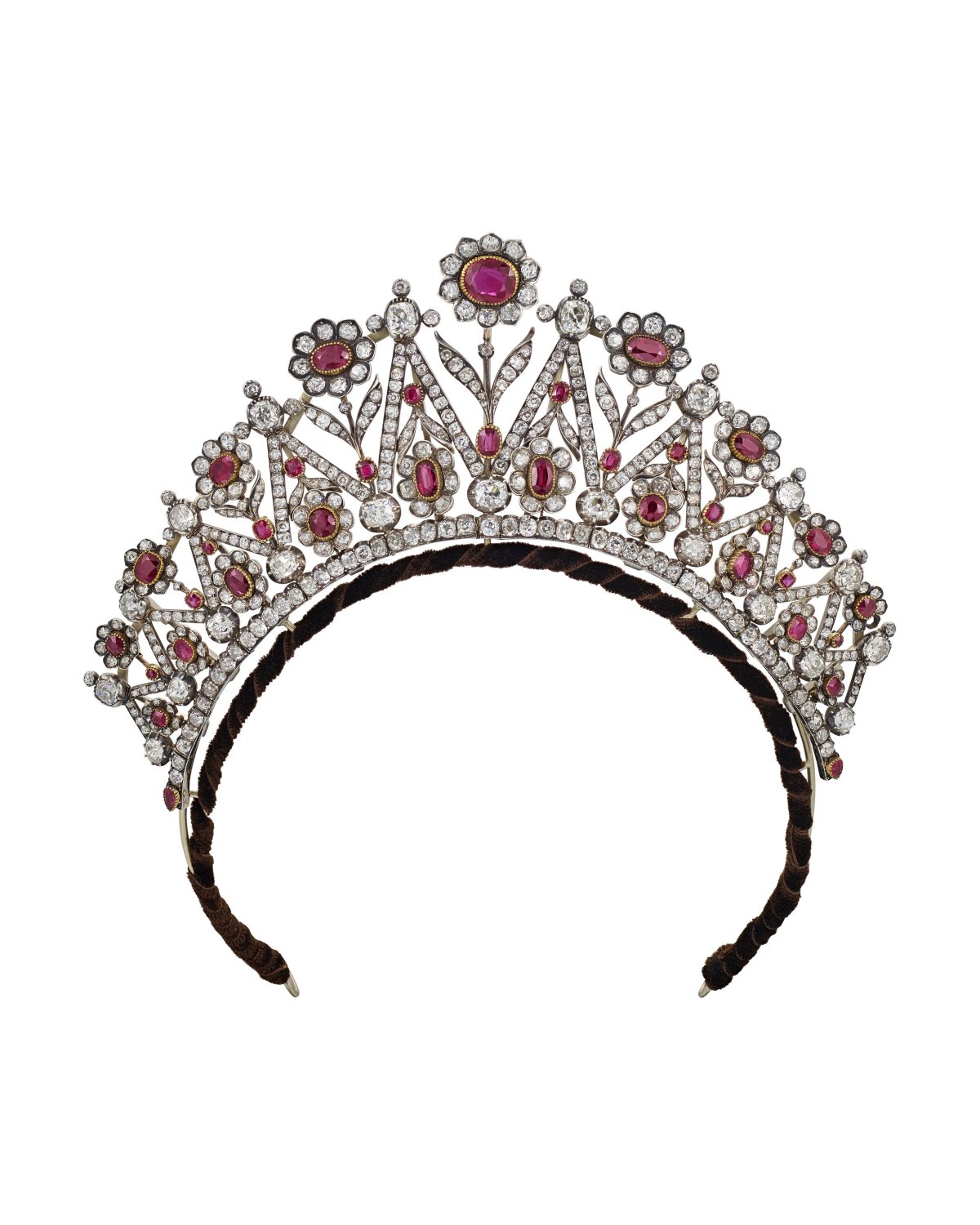
Now, an entire collection of Lady Stradbroke’s jewels, including some of the diamonds and rubies that she wore for the 1902 coronation, are being sold at auction by Christie’s in Geneva. The Magnificent Jewels auction includes the countess’s ruby and diamond floral tiara, which she wore for the 1902 coronation in a closed, coronet-style setting.
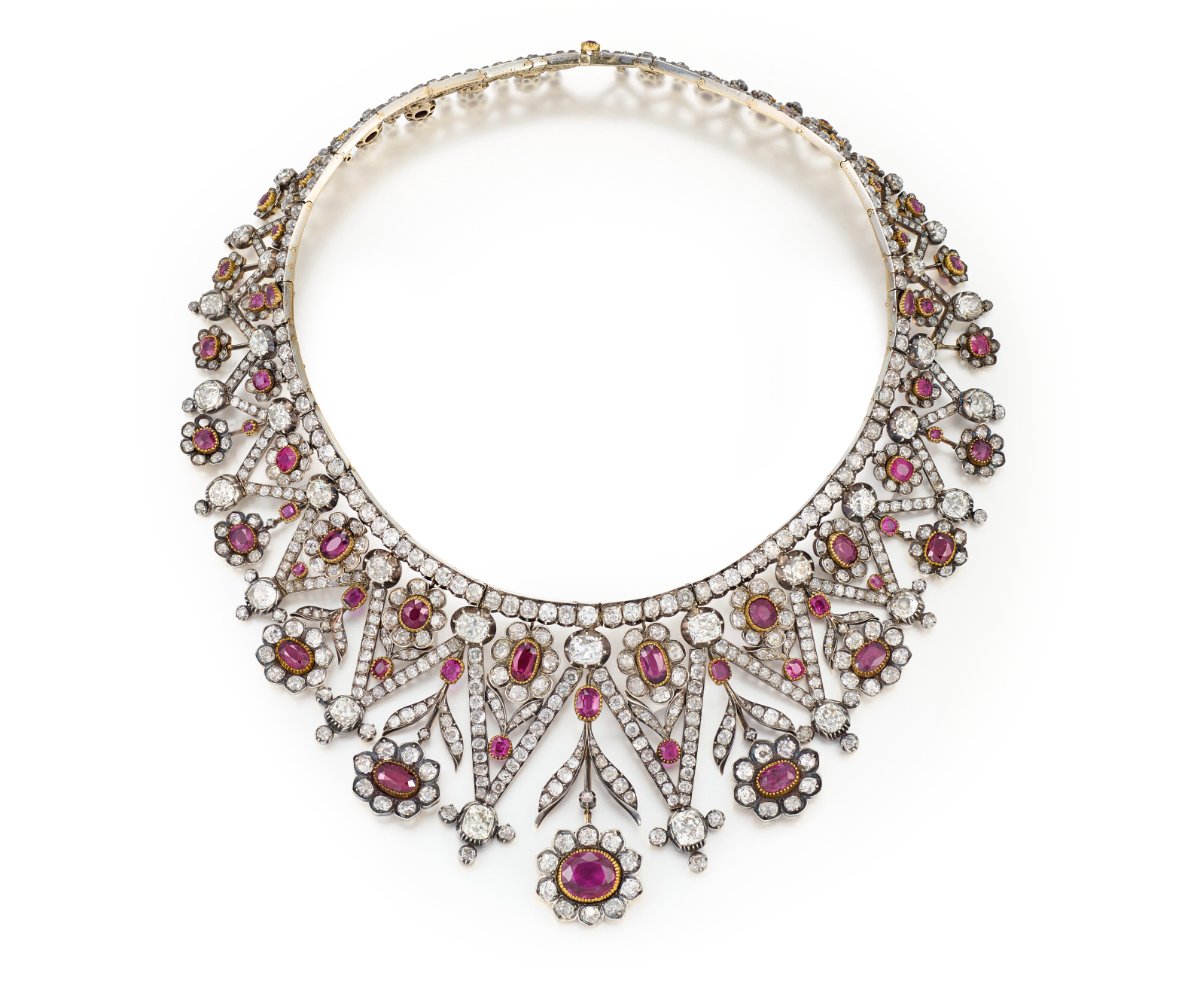
The tiara can also be taken off its frame and worn as a necklace. The jewel, which dates to around 1880, is set with Burmese rubies. Contemporary newspapers chronicling Edward and Alexandra’s coronation noted that “the pretty Countess of Stradbroke’s unique tiara, necklace and parure of great rubies and diamonds was amongst the finest there, and most becoming with a long veil of priceless old lace.” Christie’s expects the convertible tiara to bring between 280,000-480,000 Swiss francs (or about $350,000-600,000 USD).
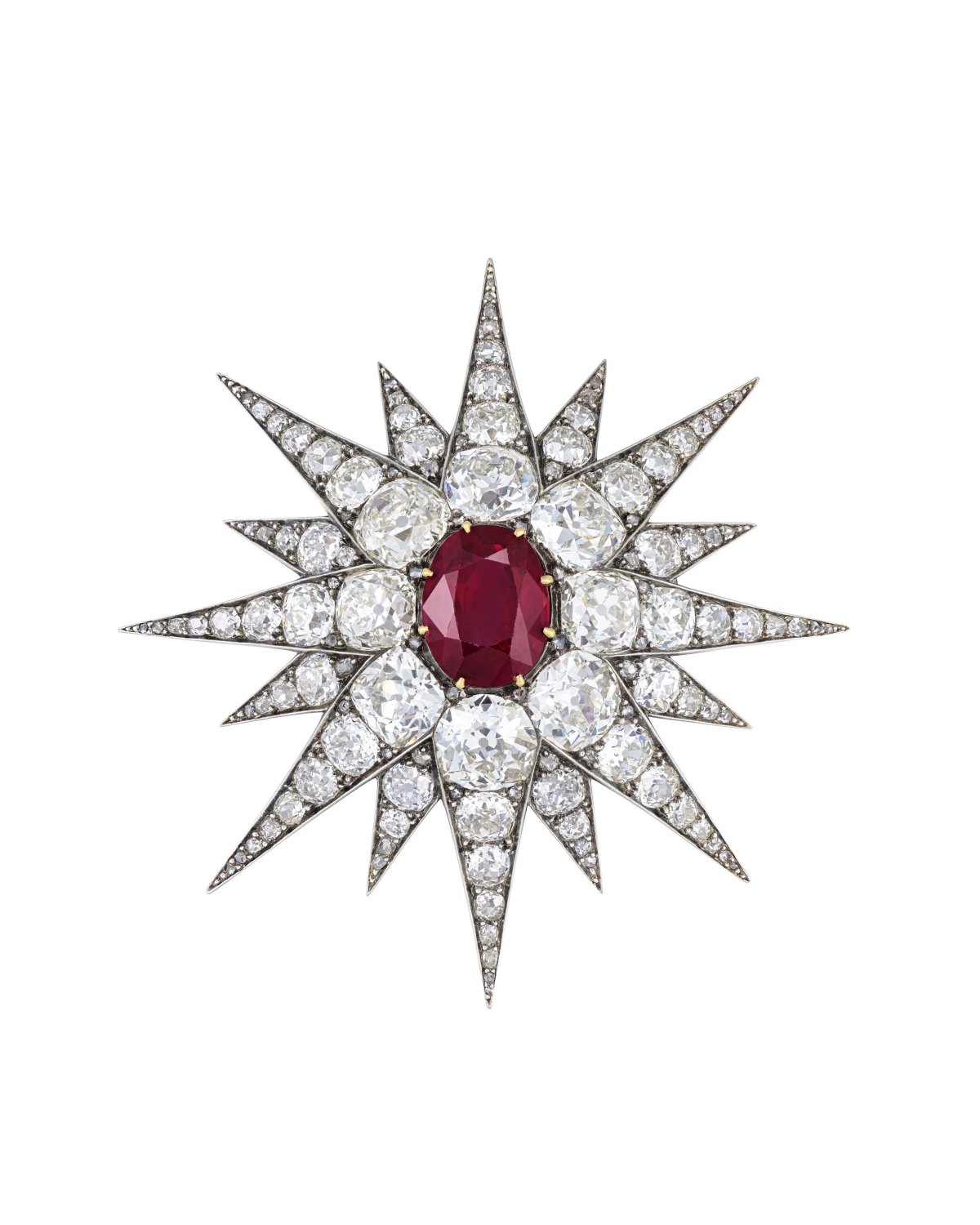
Two more of Eleanor’s diamond and ruby jewels were also incorporated into Helena’s coronation ensemble. From her necklace, she suspended a pair of brooches as pendants. The first piece was a classic diamond star ornament with a 10-carat ruby center. Christie’s dates the piece to 1880 and describes it as “superb.” It is expected to sell for a whopping 1,100,000-1,600,000 Swiss francs (or something like $1.36 million-1.98 million USD).
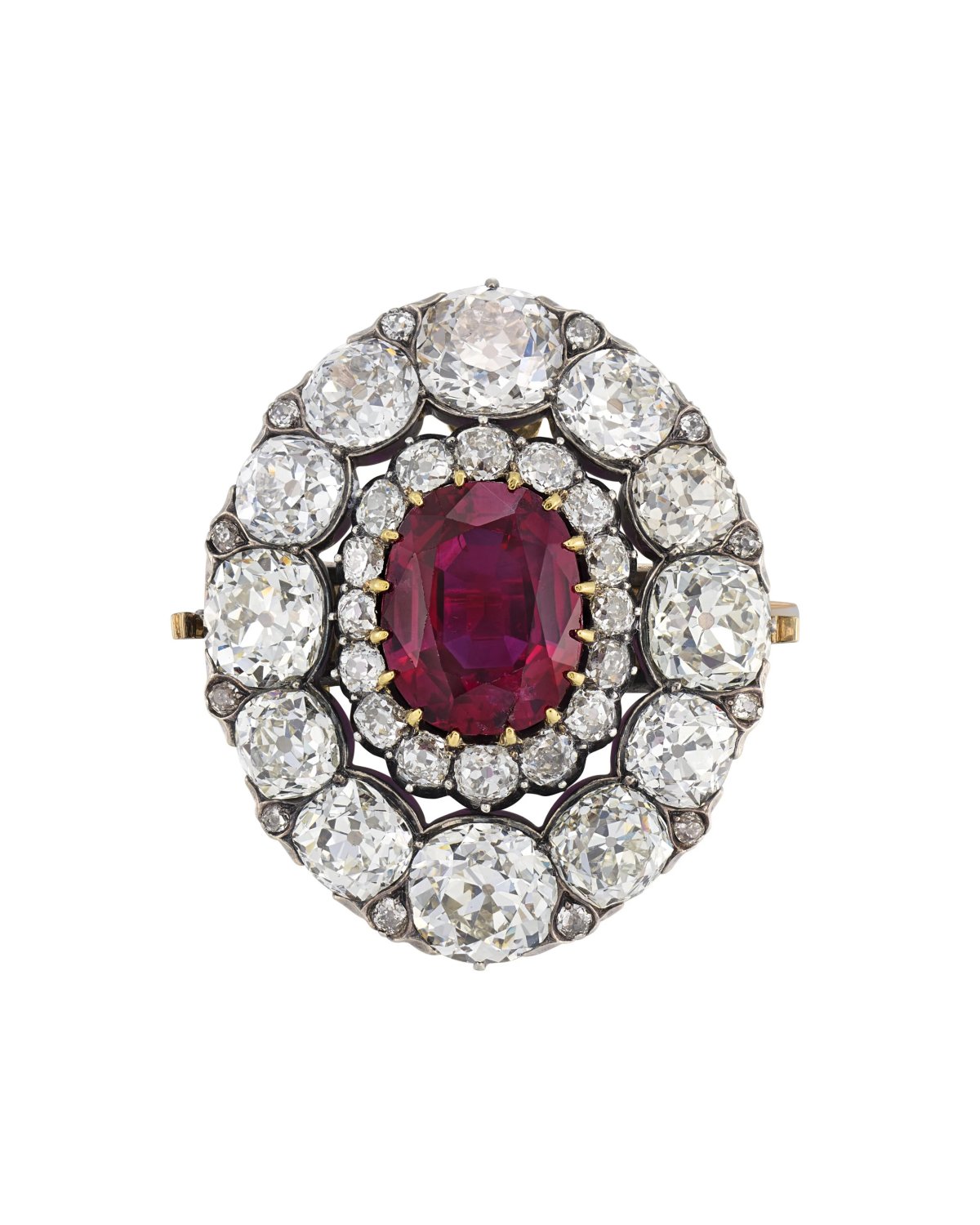
The second pendant, suspended from the diamond star, was this diamond and ruby cluster ornament. The brooch, made around 1890, features a central ruby that weighs nearly eight carats, surrounded by a double halo of diamonds. Its auction estimate is set at 160,000-220,000 Swiss francs (or around $200,000-270,000 USD).
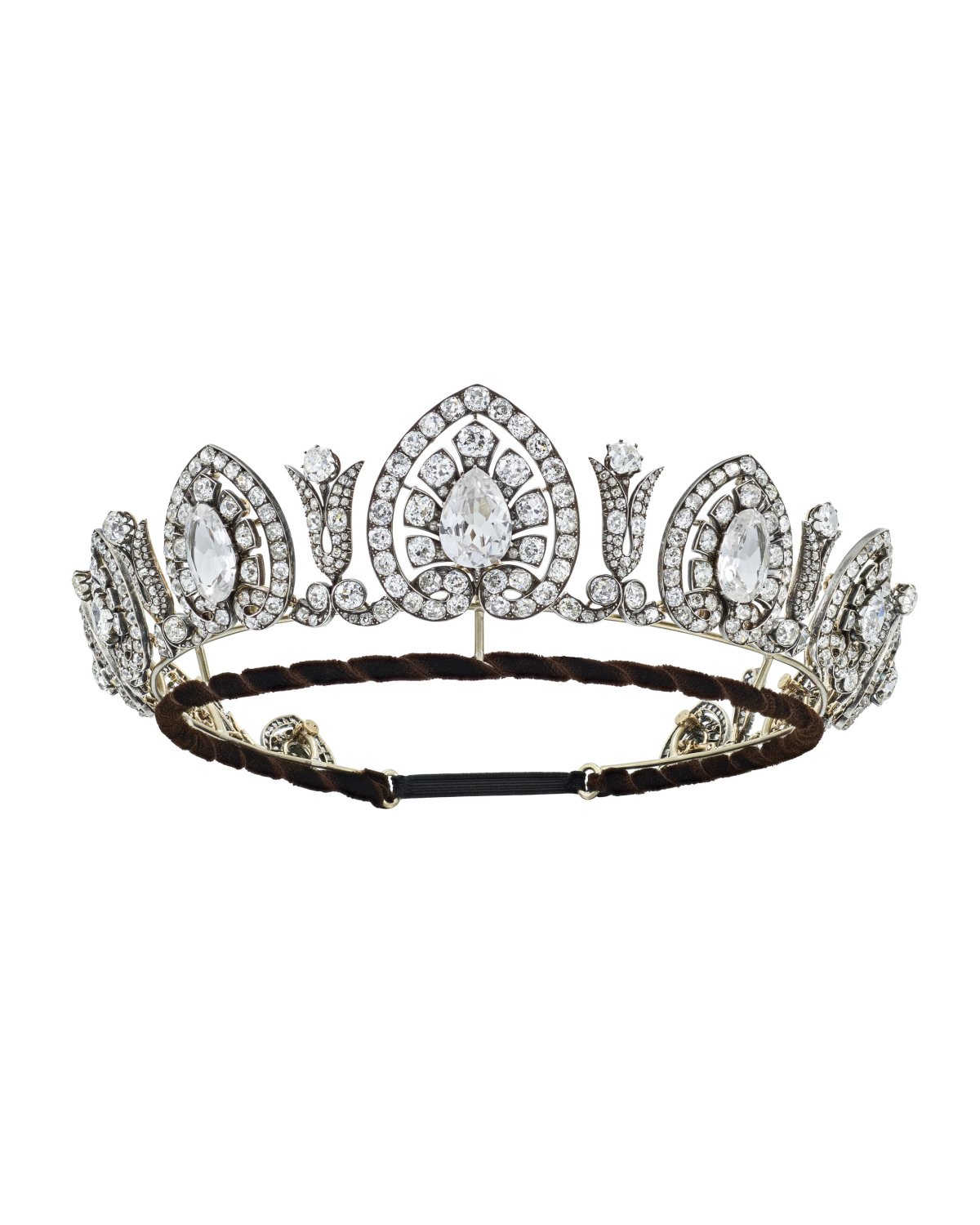
Helena inherited several more fantastic jewelry pieces from her grandmother, too. Among them was a second convertible tiara. This diamond jewel features a palmette motif, a design that was particularly popular at the end of the nineteenth century. The Duchess of Devonshire had a palmette diadem, and so did the Countess of Derby. Christie’s dates the tiara to 1870, and it’s possible that it was acquired by Eleanor during her second marriage.
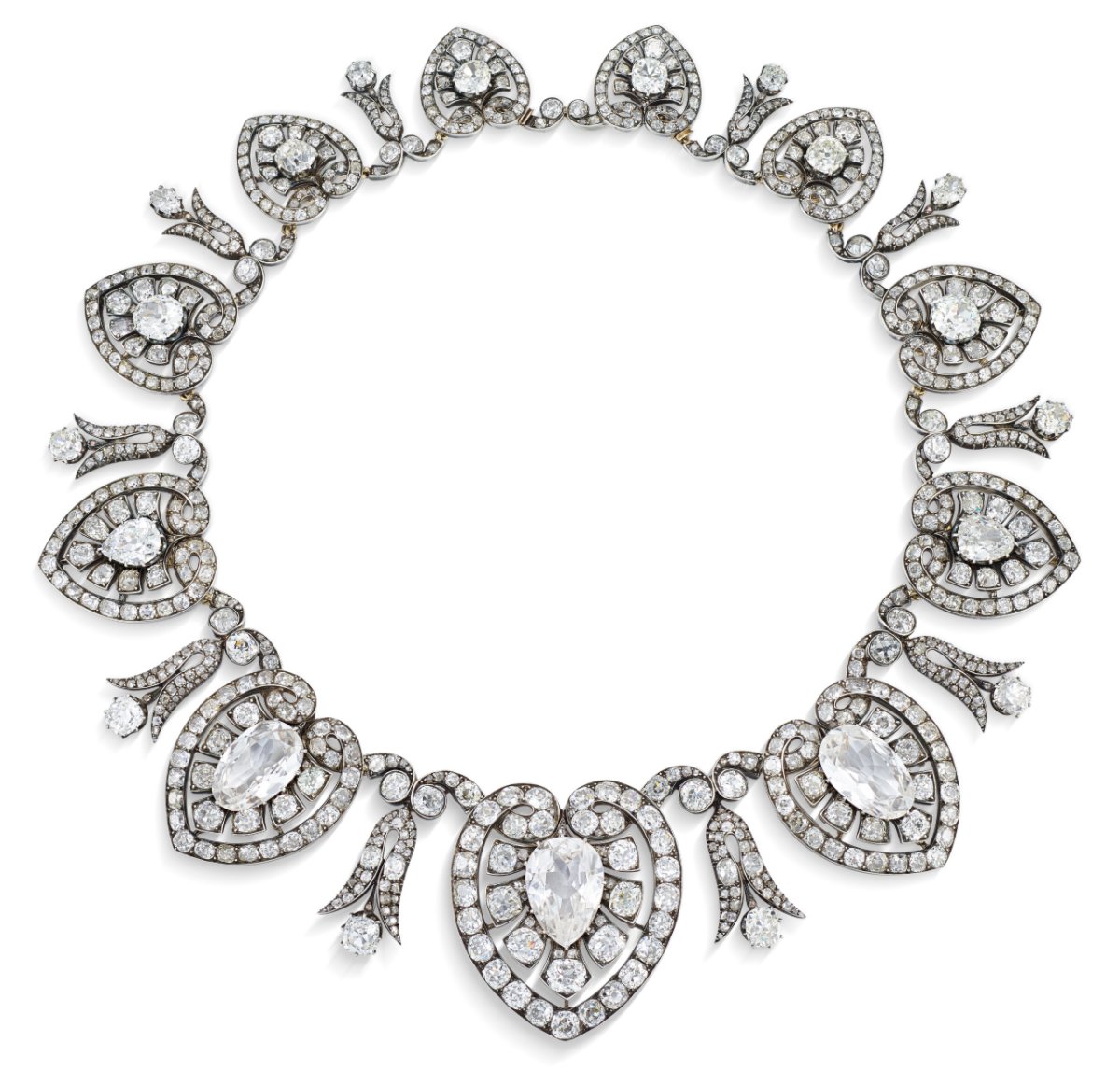
Like the ruby and diamond tiara, Eleanor’s palmette tiara is convertible and can be worn as a necklace. The individual palmettes can also be detached and worn as brooches, though the brooch fittings were lost at some point during the piece’s history. Interestingly, Helena wore the necklace setting of the palmette jewel as part of her costume for the Devonshire House Ball in 1897. (Eleanor, who was still alive at the time, likely loaned the necklace to her granddaughter personally on that occasion.) When it sells next week, Christie’s expects the convertible tiara to fetch between 65,000-120,000 Swiss francs (or about $80,000-150,000 USD).
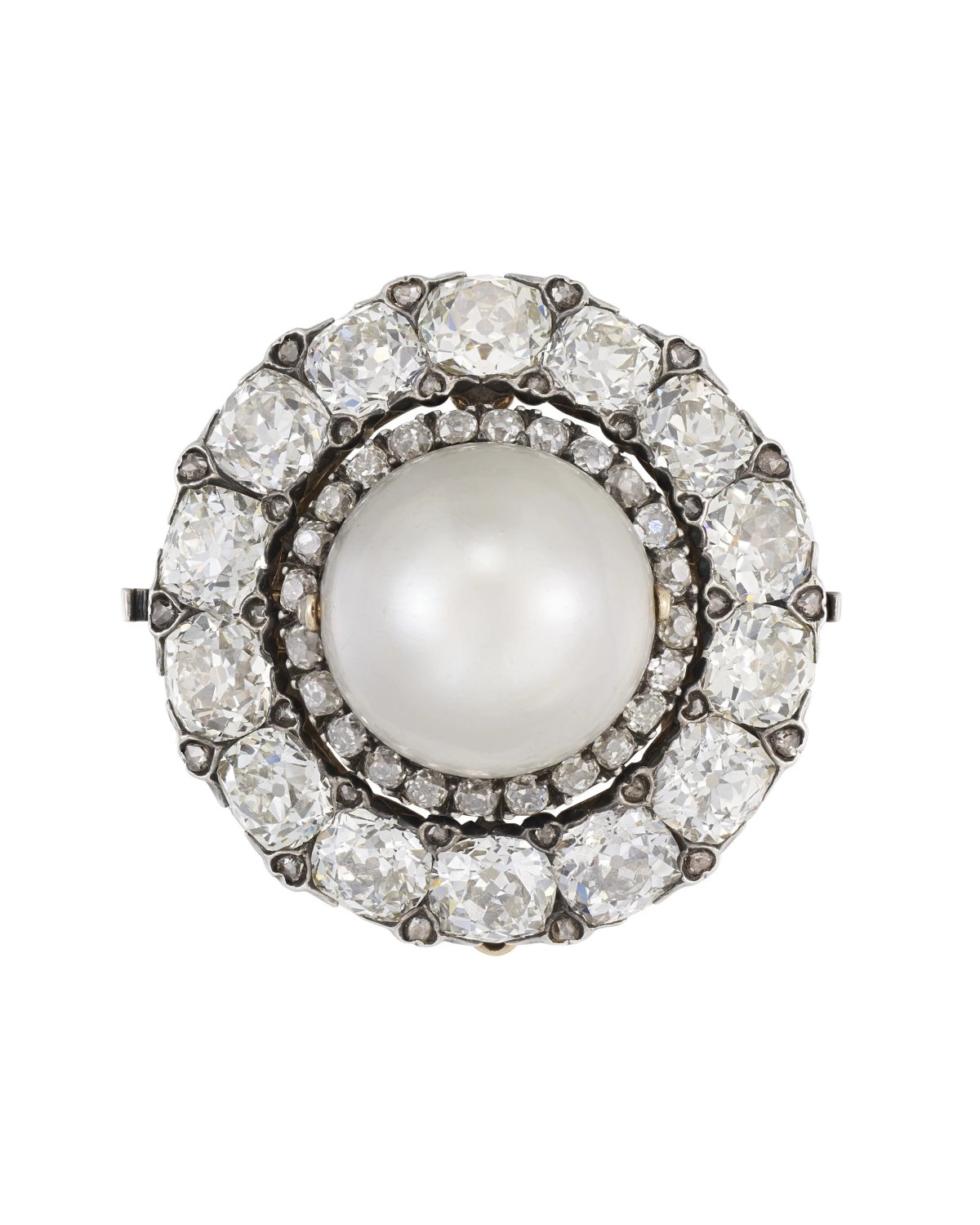
The collection of Stradbroke jewels being sold at Christie’s also includes two more brooches. The first is this antique diamond and pearl cluster brooch. The button-shaped natural pearl is surrounded by a double border of diamonds set in silver and gold. The jewel, made around 1880, is expected to bring between 110,000-160,000 Swiss francs (or something like $135,000-200,000 USD).
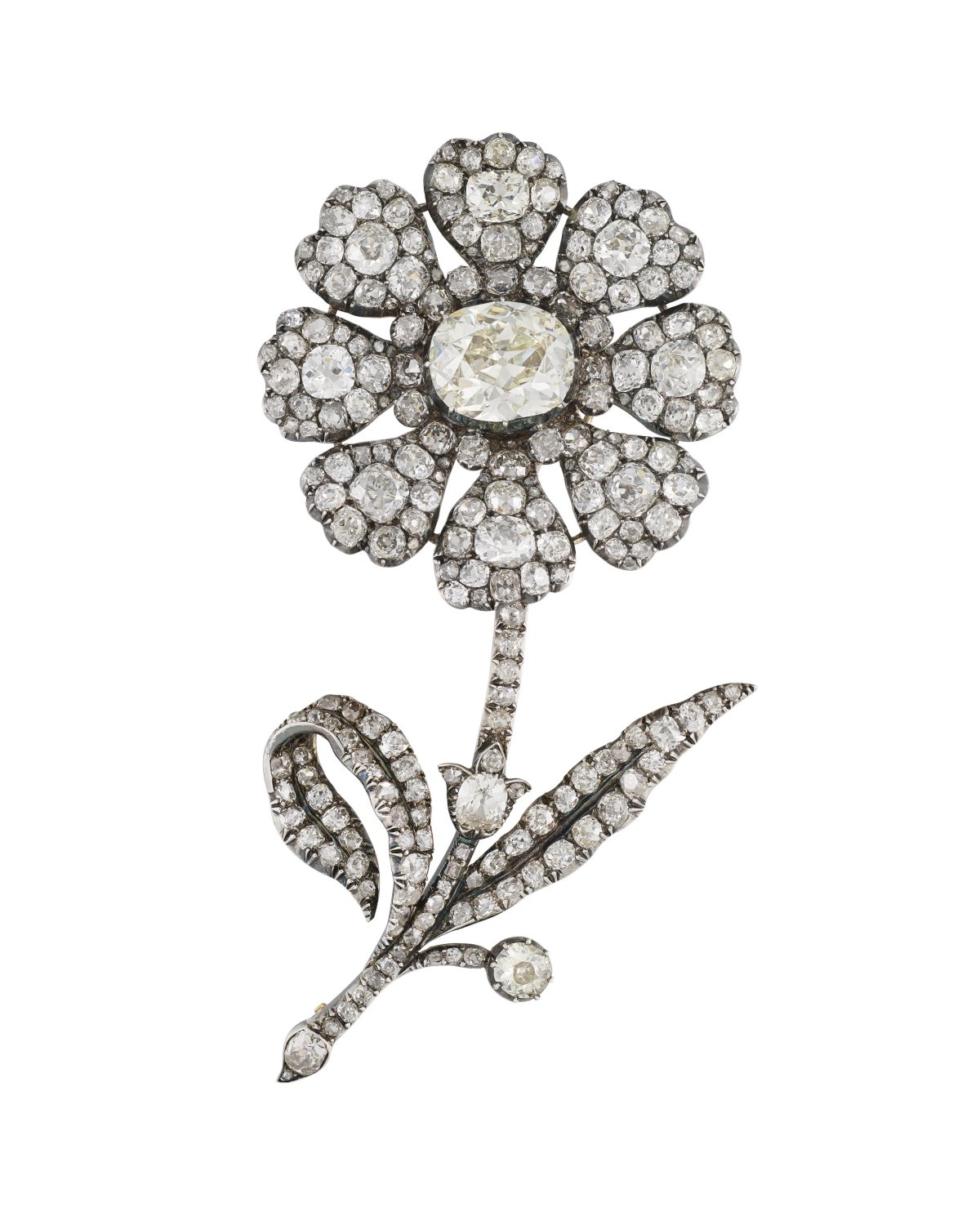
The other additional brooch is this sweet little diamond flower, which was made around 1880. The head of the flower can be detached from its stem and worn separately as a pendant. Christie’s auction estimate for the brooch is between 35,000-45,000 Swiss francs (or about $43,000-56,000 USD).
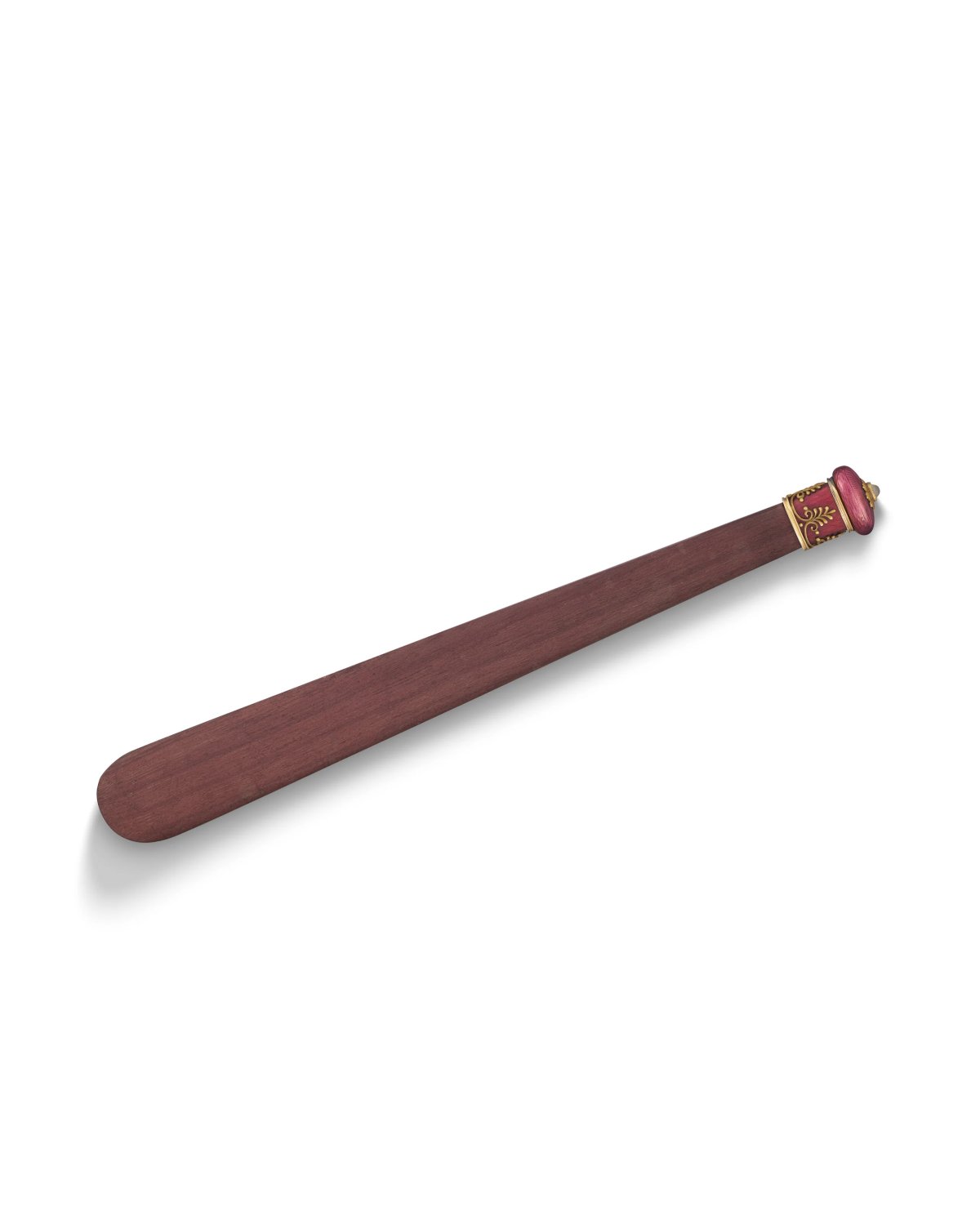
The final bejeweled object from the collection owned by Helena is this little piece from Fabergé. It’s not a baseball bat—it’s a letter opener! The objet is a 20th-century piece, made in Moscow in 1907 or 1908. A cabochon moonstone sits atop the red enameling at the end of the opener. It’s expected to fetch between 6,000-8,000 Swiss francs (or around $7,400-10,000 USD).
Helena lived to enjoy her jewels for half a century after Eleanor’s death in 1899. Indeed, Helena had ample opportunities to wear them, including during Lord Stradbroke’s tenure as Governor of Victoria in Australia in the 1920s. In 1949, when she was 75, Helena fell at Henham Hall and broke her femur. She passed away two weeks later.
In her will, Helena shared some lovely words about her husband, who died in 1947: “Nothing that I can write can express my love and devotion and appreciation of my late husband, of his wonderful character and his goodness. I fell in love with him in 1891 and every year since our marriage in 1898 I have, if possible, felt a greater love for him and admiration of his goodness, unselfishness and sense of duty.” The majority of her estate was bequeathed to their third son, Major the Hon. George Rous. Her jewels remained with the family, and her descendants are the ones selling them now.
The experts at Christie’s clearly have high hopes for the collection, which they’ve dubbed “a splendid casket of ancestral jewellery.” They note, “This splendid collection of nineteenth century jewellery, which Helena inherited from her grandmother Eleanor, represents the confidence and prosperity of the period as well as some of the best surviving examples of Victorian jewellery, incorporating gemstones of a size and quality seldom seen at the time outside of royal collections.”
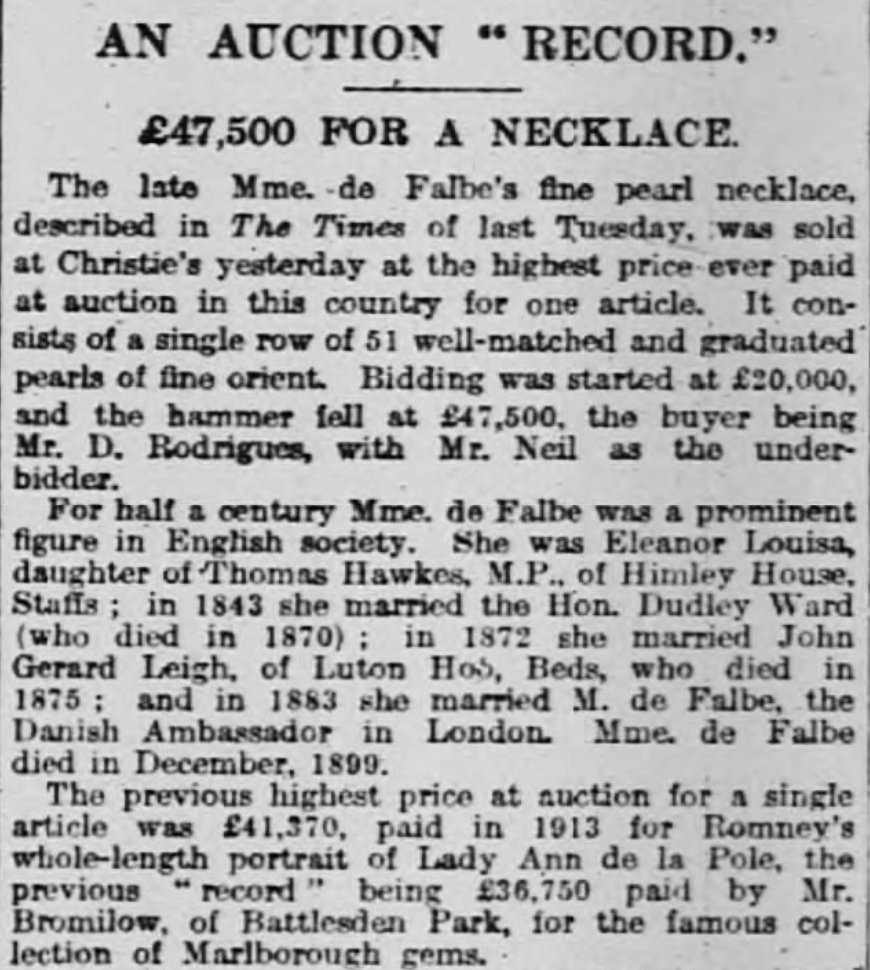
Interestingly, though, this isn’t the first time that Eleanor’s jewelry has made a prominent appearance in the auction rooms at Christie’s. In London in the summer of 1918, the auction house offered a “magnificent” pearl necklace from Eleanor’s collection, described by the Times as “composed of a single row of fifty-one large graduated pearls of superb orient.”
The necklace brought a stunning price when the hammer fell: £47,500, which for the time was the highest amount ever paid for a single auction item, breaking a record that had stood since 1913. Will Eleanor’s jewels break records again next week in Geneva? We’ll all have to tune in to see the Magnificent Jewels auction results on Tuesday, November 11.
Leave a Reply
You must be logged in to post a comment.