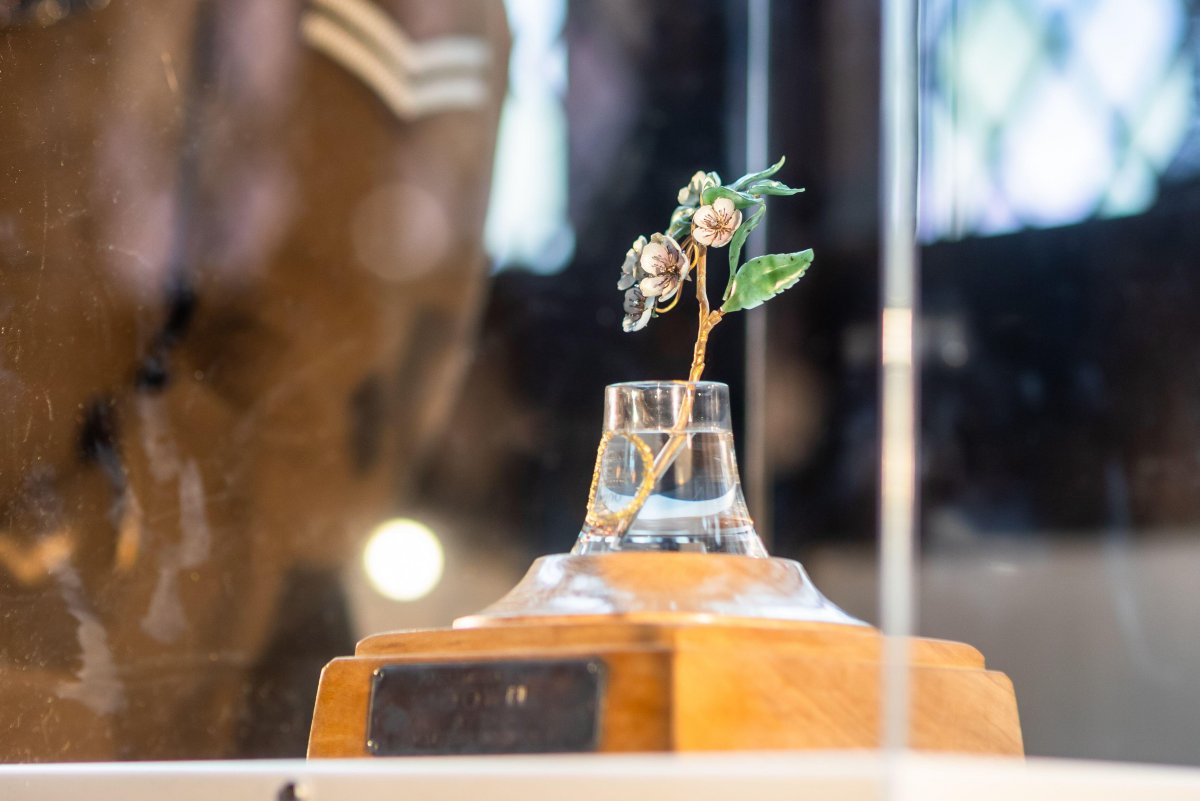
This week, members of the public had the rare chance to see a special piece of Fabergé art on display in Worcester: a little objet d’art in the shape of a sprig of pear blossom, commissioned to honor a British Army regiment.
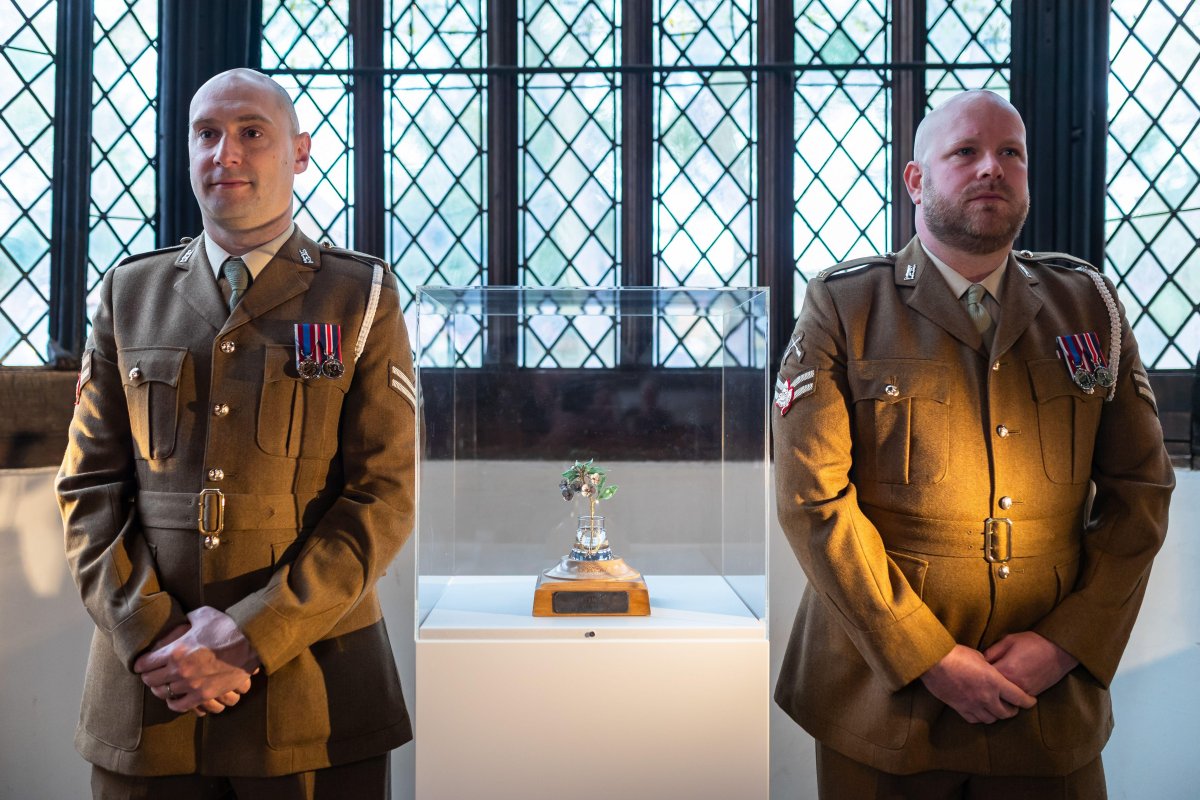
On Monday, visitors to The Commandery in Worcester stumbled on a bonus local history treat. The museum, which is housed in one of the Royalist headquarters from the English Civil War, features lots of Worcestershire history highlights. Ahead of Armistice Day, the museum was allowed to display a treasure from the Worcestershire Yeomanry Museum Trust collection: a special art object linked to The Queen’s Own Worcestershire Hussars.
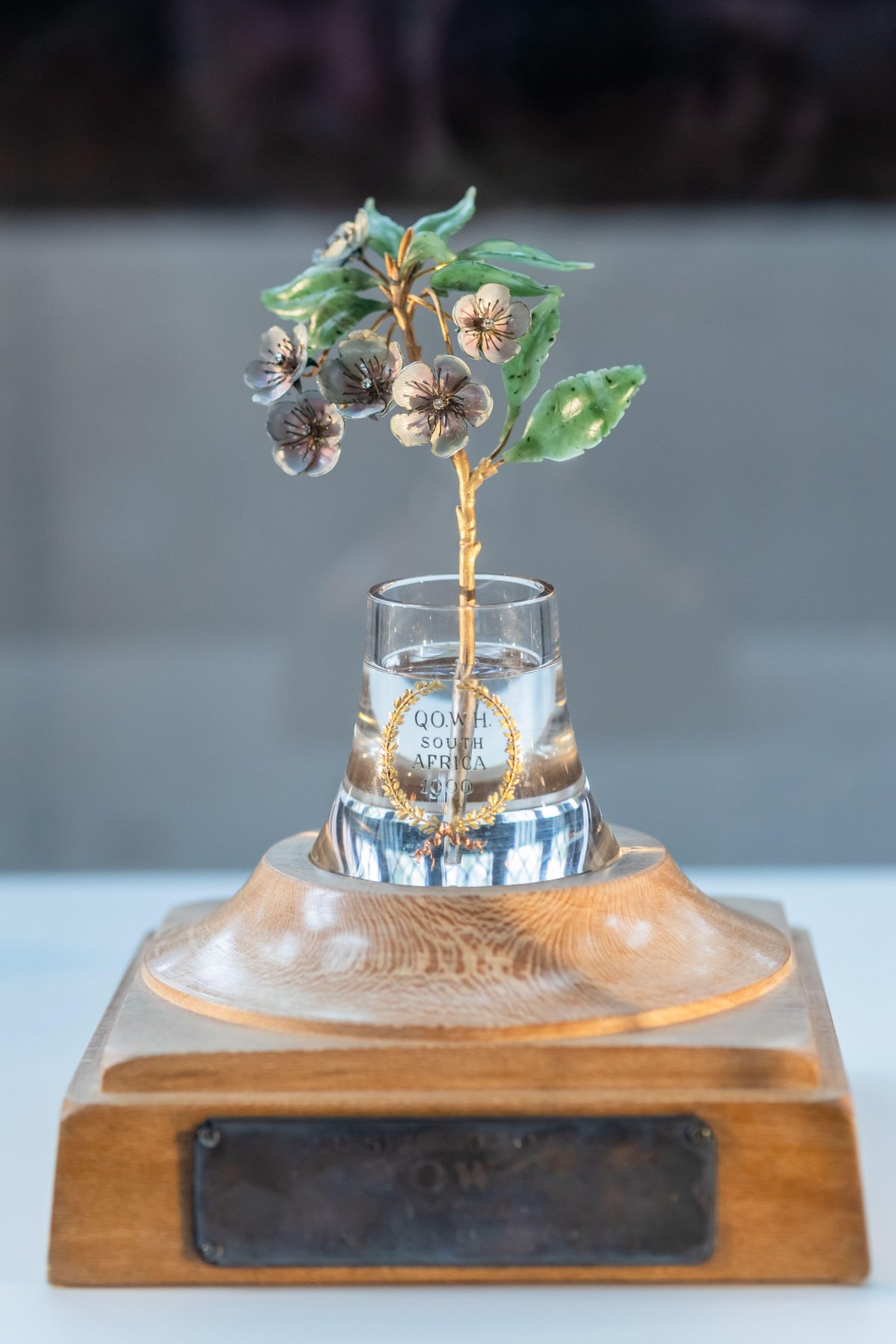
The beautiful little art piece is one of the naturalistic floral objects made by Fabergé. The piece features a sprig of pear blossom, with blooms, leaves, and a stem made of pink and white enamel, diamonds, silver, gold, and jade, in a carved rock crystal vase. The vase is engraved, “Q.O.W.H. South Africa 1900.”
The initials on the vase stand for The Queen’s Own Worcestershire Hussars, a yeomanry regiment of the British Army that participated in the Second Boer War and World War I. The regiment was called to service in South Africa in 1899, with a local aristocrat, the Earl of Dudley, serving as its second in command. (Worcestershire’s Witley Court, now a ruin, was owned by the Earls of Dudley from the 1830s until 1920.)
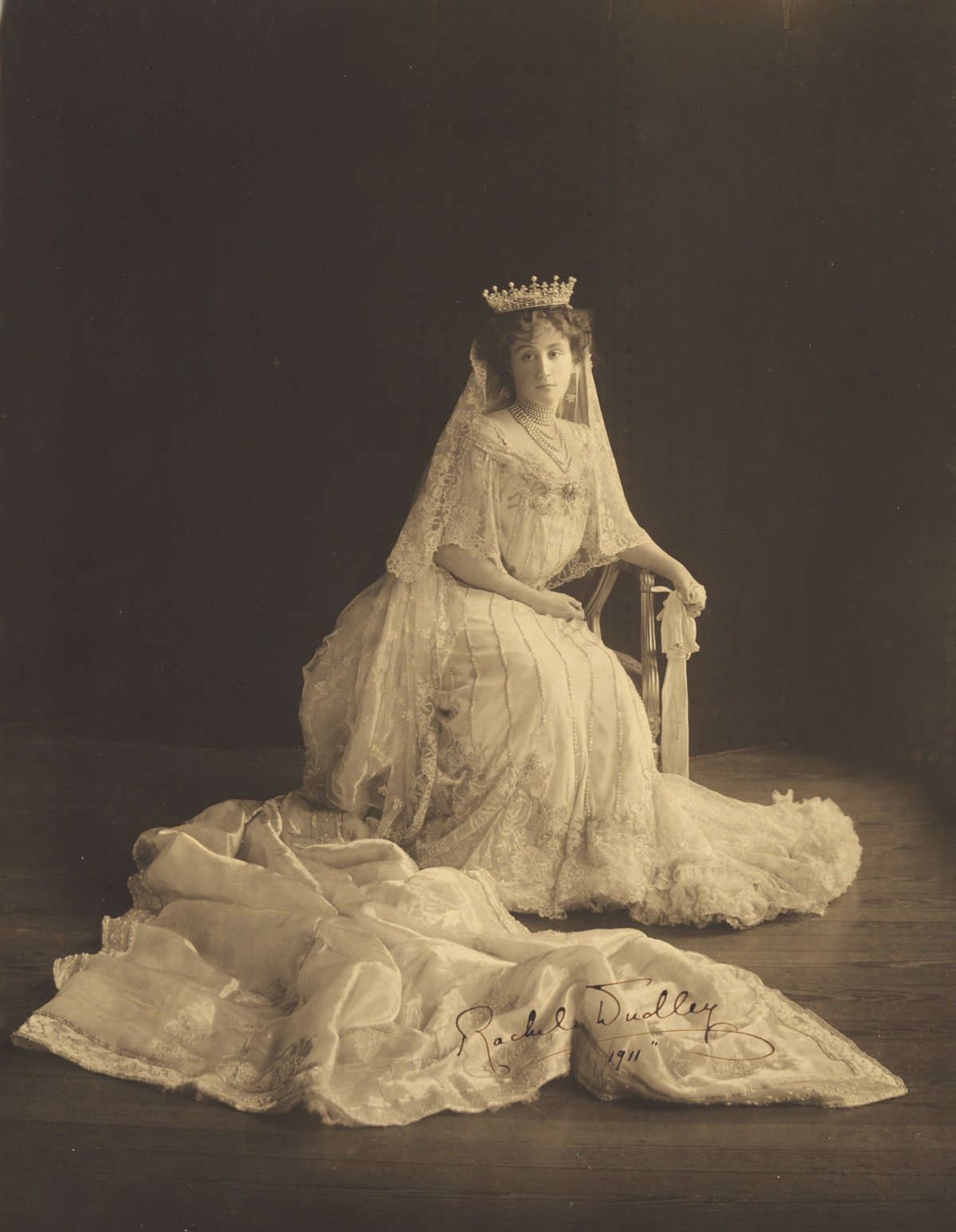
Also taking a great deal of interest in the regiment was the Earl of Dudley’s wife. Lord Dudley had married Rachel Gurney in 1891. She was a descendant of two fascinating families: the Gurneys, an influential family of bankers, and the Pattles, a family established in the upper ranks of Anglo-Bengali society in Calcutta. Rachel was a granddaughter of Sara Pattle Prinsep, whose home in Kensington, Little Holland House, became a noted literary salon in the middle of the nineteenth century. Rachel grew up around a collection of notable relatives, including her great-aunt, the photographer Julia Margaret Cameron, and her second cousin, the novelist Virginia Woolf.
Rachel’s parents ended up divorcing rather scandalously, and she was subsequently raised and promoted in society by her mother’s cousin, the Duchess of Bedford. The Duchess was a keen philanthropist, and Rachel followed in her footsteps as Countess of Dudley. She became deeply involved in outreach efforts to provide good medical care to those living in poverty in Ireland and in Australia, where her husband served for a time as Governor General. (As you can see above, she also at one point owned a tiara that was a close design cousin of the Girls of Great Britain & Ireland Tiara.)
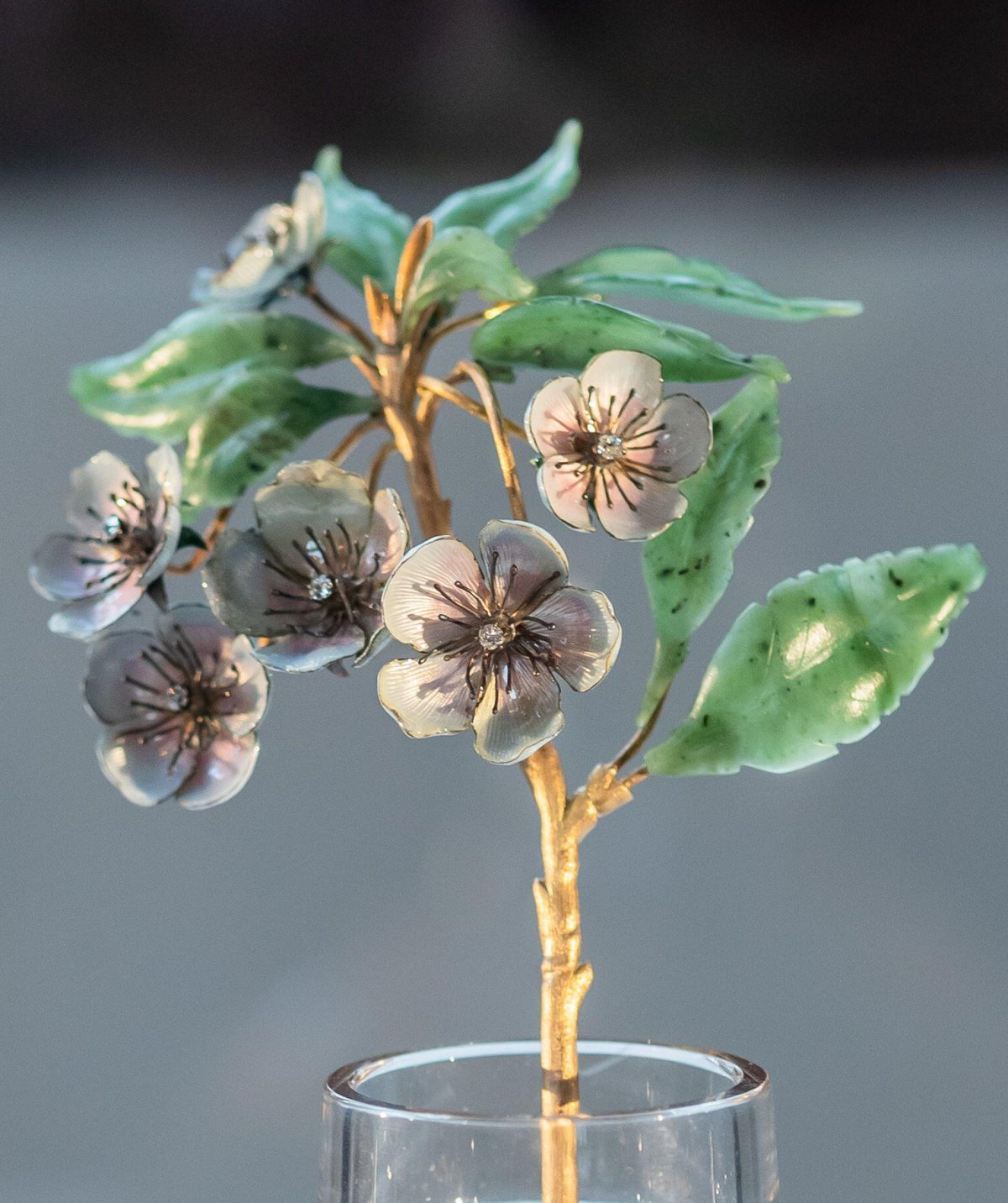
In 1900, as the soldiers of her husband’s regiment were preparing for their deployment, Lady Dudley offered several gifts to the men in the ranks. The Worcestershire Chronicle reported that Rachel prepared a care package for each soldier that included “a woolen cap, a cholera belt, and several packets of concentrated food.” She also personally presented each of them with a silk sprig of pear blossom, meant to be tucked into their hats, which the newspaper claimed that they “valued even more than [the] useful presents.” The pear tree had long been used as a heraldic symbol in Worcester, dating back to the reign of Queen Elizabeth I, so the little silk ornament was a patriotic reminder of home.
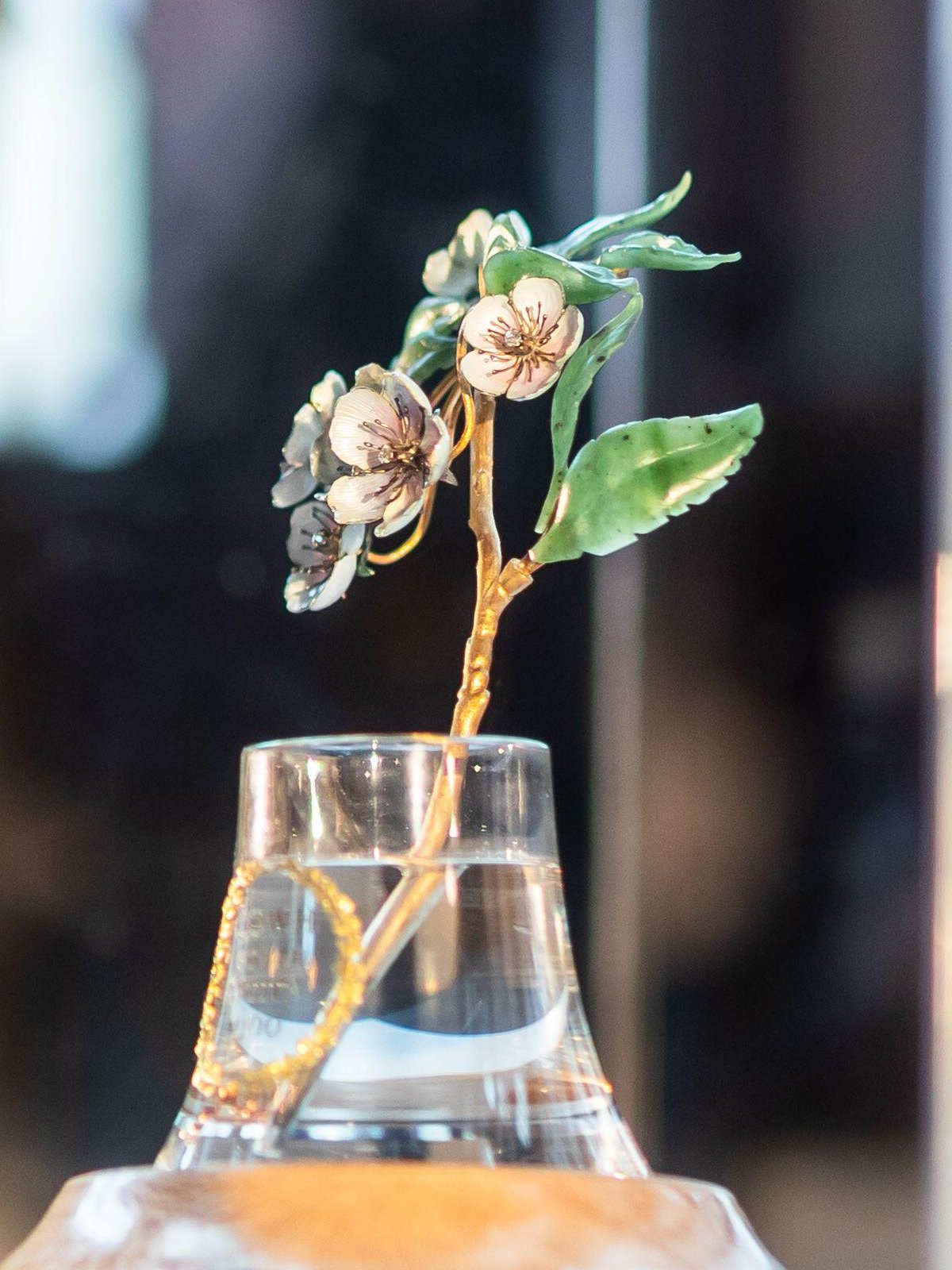
When the regiment returned to Worcester, Lady Dudley had another special surprise for them. She had commissioned Fabergé to make a lovely little regimental jewel to commemorate their service: a rock crystal vase holding a sprig of pear blossom. The Worcestershire Advertiser reported the presentation in June 1901:
“One of the most interesting features of the Worcestershire Yeomanry encampment at Hewell Park this week has been a presentation to the regiment by the Countess of Dudley of a jewelled copy of the emblem won by the men of the service squadron of the Worcester Imperial Yeomanry during their campaign in South Africa. The trophy consisted of a sprig of pear blossom in enamel and silver, and it was in a case bearing the inscription ‘Presented to the Q.O.W.H. by the Countess of Dudley’ while on the trophy itself were the words ‘Q.O.W.H., South Africa, 1900.’ The Countess was accompanied by Lady Windsor and the Duchess of Bedford.”
The Queen’s Own Worcester Hussars no longer exist, having been folded into other regiments during various reorganizations, but the little Fabergé pear blossom remains today with the Worcestershire Yeomanry Museum Trust. The pear blossom is displayed occasionally, usually for events related to The Queen’s Own Worcester Hussars, including dinner nights. When the late Queen Elizabeth II lunched with an associated regiment, the Queen’s Own Mercian Yeomanry, in Coventry in 1980, the pear blossom was placed in front of her on the table.
In 2018, the pear blossom was showcased on an episode of the BBC’s Antiques Roadshow. Geoffrey Munn drew gasps from the crowd when he stated that he believed the regimental jewel was worth £1 million. Through shocked laughter, the trust representative emphasized that the little treasure is not for sale.
Leave a Reply
You must be logged in to post a comment.