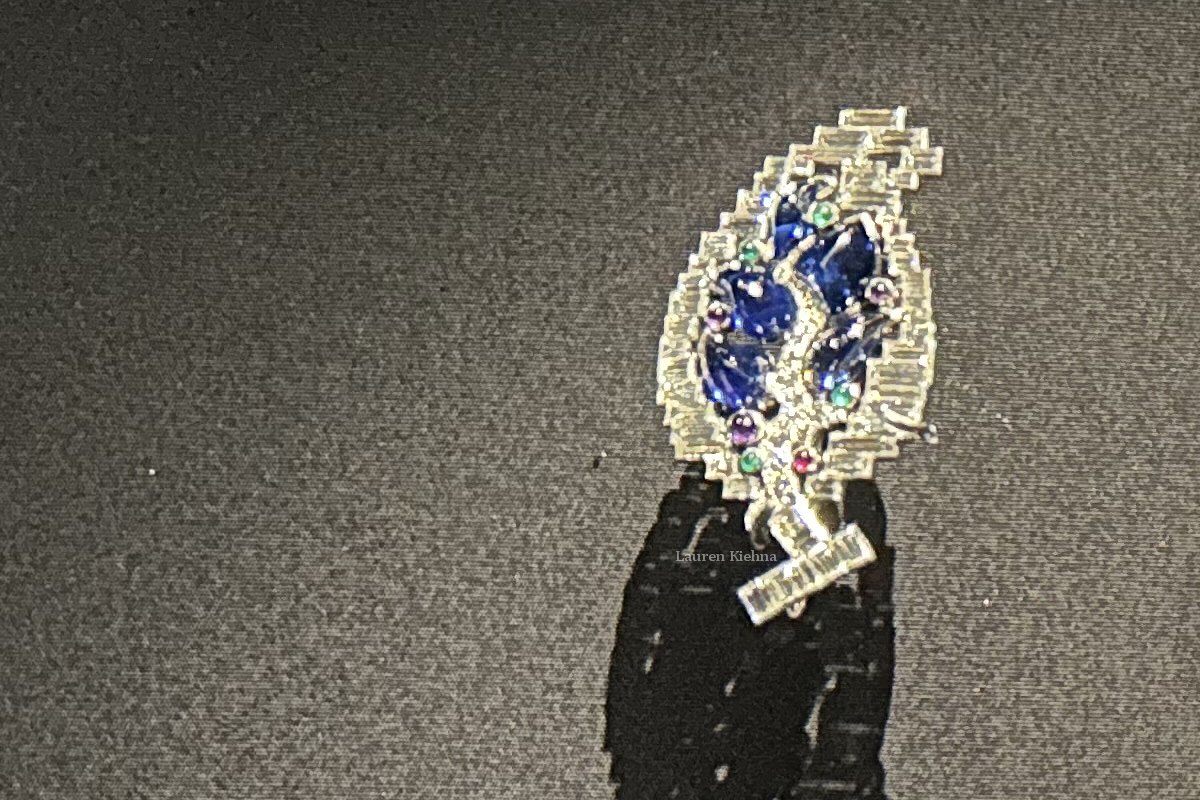
With September suddenly hurtling toward its conclusion, I wanted to make time to highlight a few more sapphire jewels currently on display as part of the Cartier exhibition at the V&A. First up: the glamorous multi-gem leaf brooch worn by both Queen Elizabeth II and the Queen Mother.
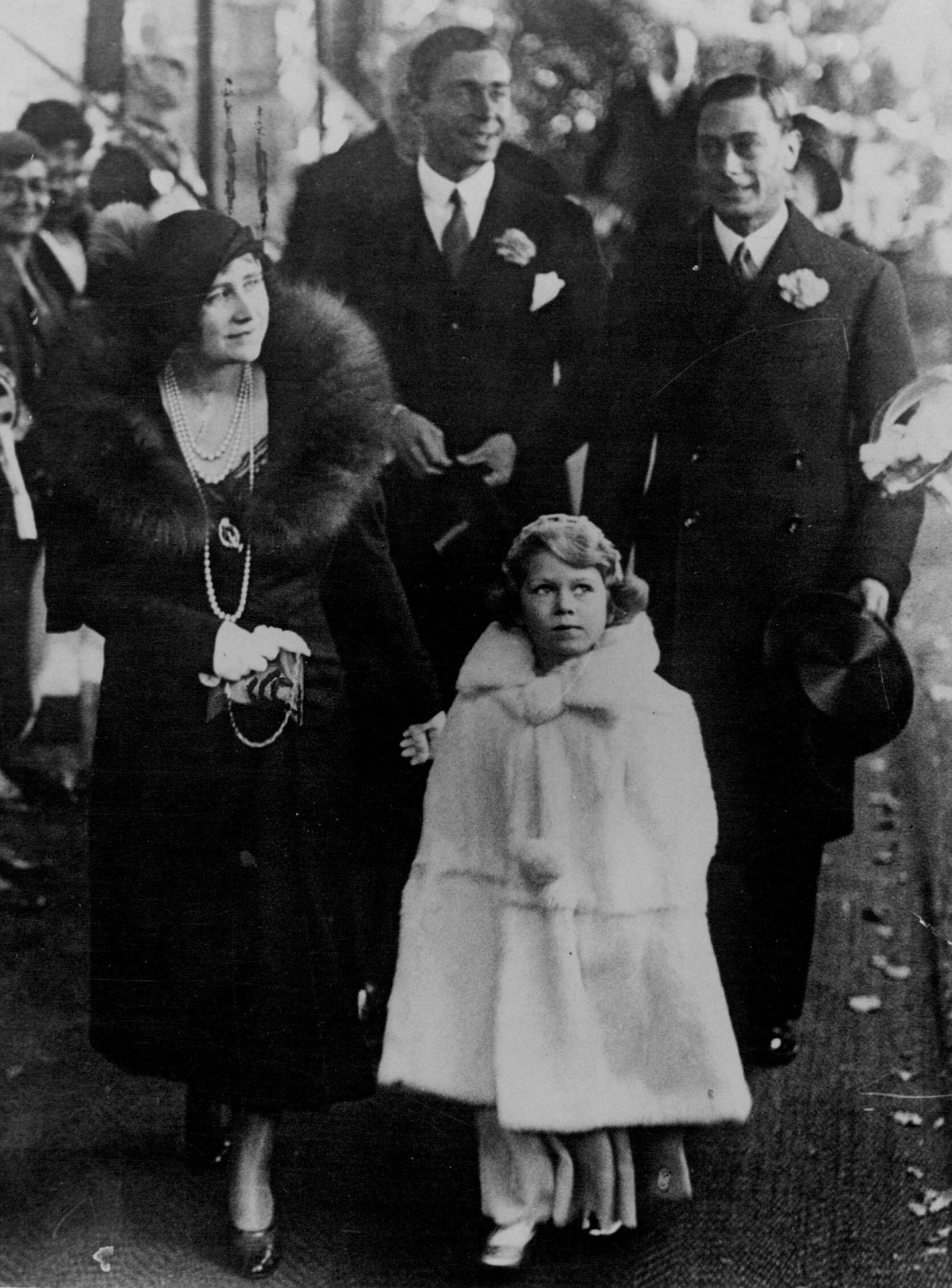
In October 1931, the Duke and Duchess of York were in the spotlight as they arrived at the village church in Balcombe to attend a royal wedding. The Duchess looked elegant in a dark brown ensemble trimmed with blue fox, but the star of their family party was their little daughter, Princess Elizabeth. The five-year-old princess proudly walked at the front of the procession of bridesmaids as her cousin, Lady May Cambridge, married Captain Henry Abel Smith, a former aide-de-camp to her father, the Earl of Athlone.
(Fun fact: the two adult bridesmaids at the wedding were Princess Sibylla of Saxe-Coburg and Gotha and Princess Ingrid of Sweden. During the proceedings, Ingrid introduced Sibylla to her brother, Prince Gustaf Adolf of Sweden, who was also a guest at the nuptials. He’s walking behind the Duke of York in the photograph above. Gustaf and Sibylla fell in love, got married, and had five children, including the present King of Sweden.)
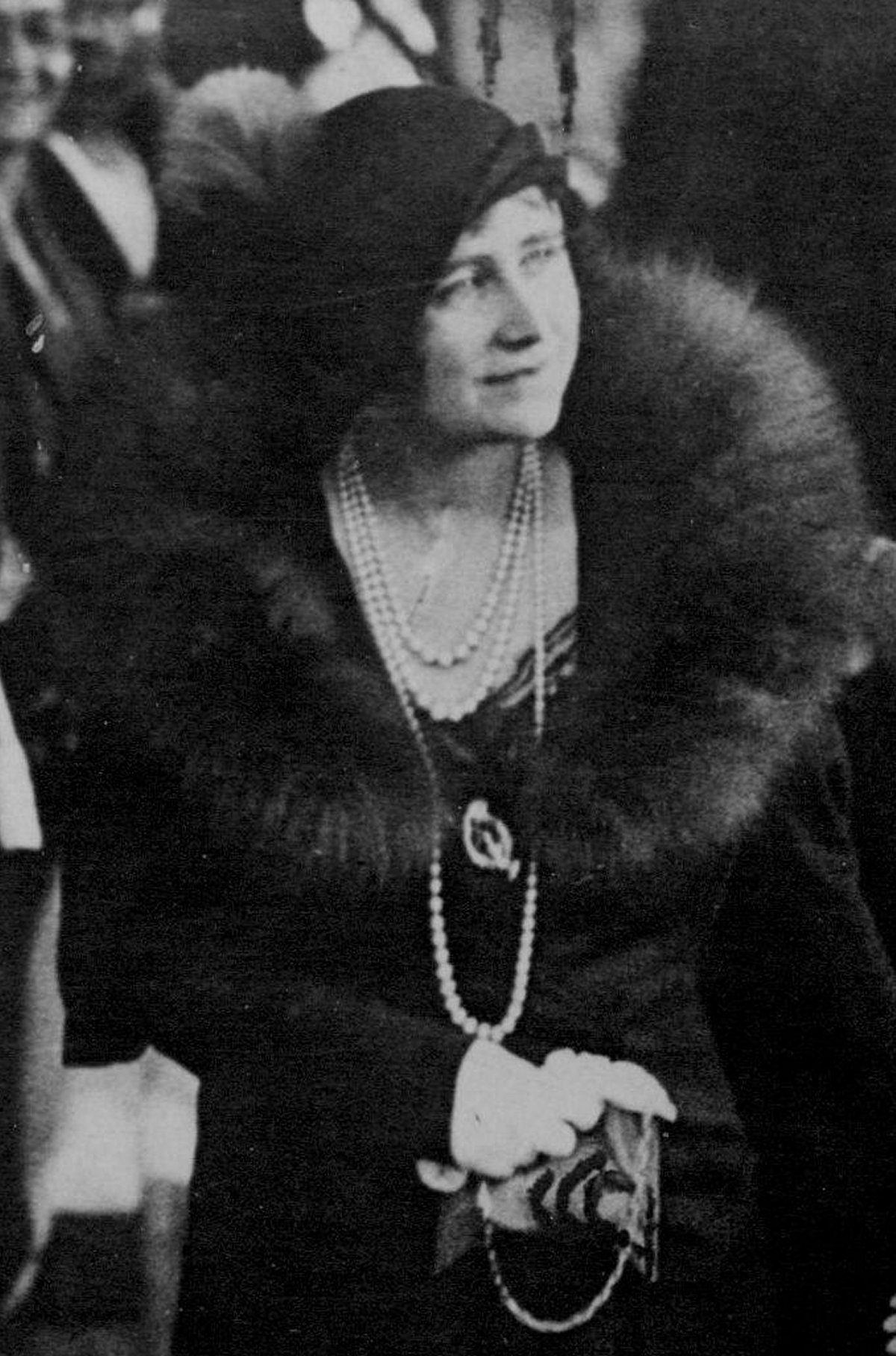
While all eyes at the wedding were on the charming little princess, the Duchess was draped in jewels, including several strands of pearls. On her bodice she pinned a petite brooch in the shape of a boteh, the Indian design motif that had been popularized as part of paisley patterns.
The jewel had been purchased for the Duchess by the Duke at Cartier London. Made in 1928, the piece featured large cabochon sapphires and small amethysts, emeralds, and rubies, hugged by a frame of baguette-cut diamonds and set in platinum. The design of the piece is typical of many Indian-inspired jewels made by the firm at the time, and the combination of colorful gemstones echoes the tutti frutti pieces that were popular during the era.
Eventually, the jewel was supplanted in Elizabeth’s jewelry box by a much larger and more ornate paisley-style brooch: her Palm Leaf Brooch, which she commissioned from Cartier in 1938. During the war, she decided to pass the smaller, more colorful leaf brooch along to her daughter as a birthday gift.
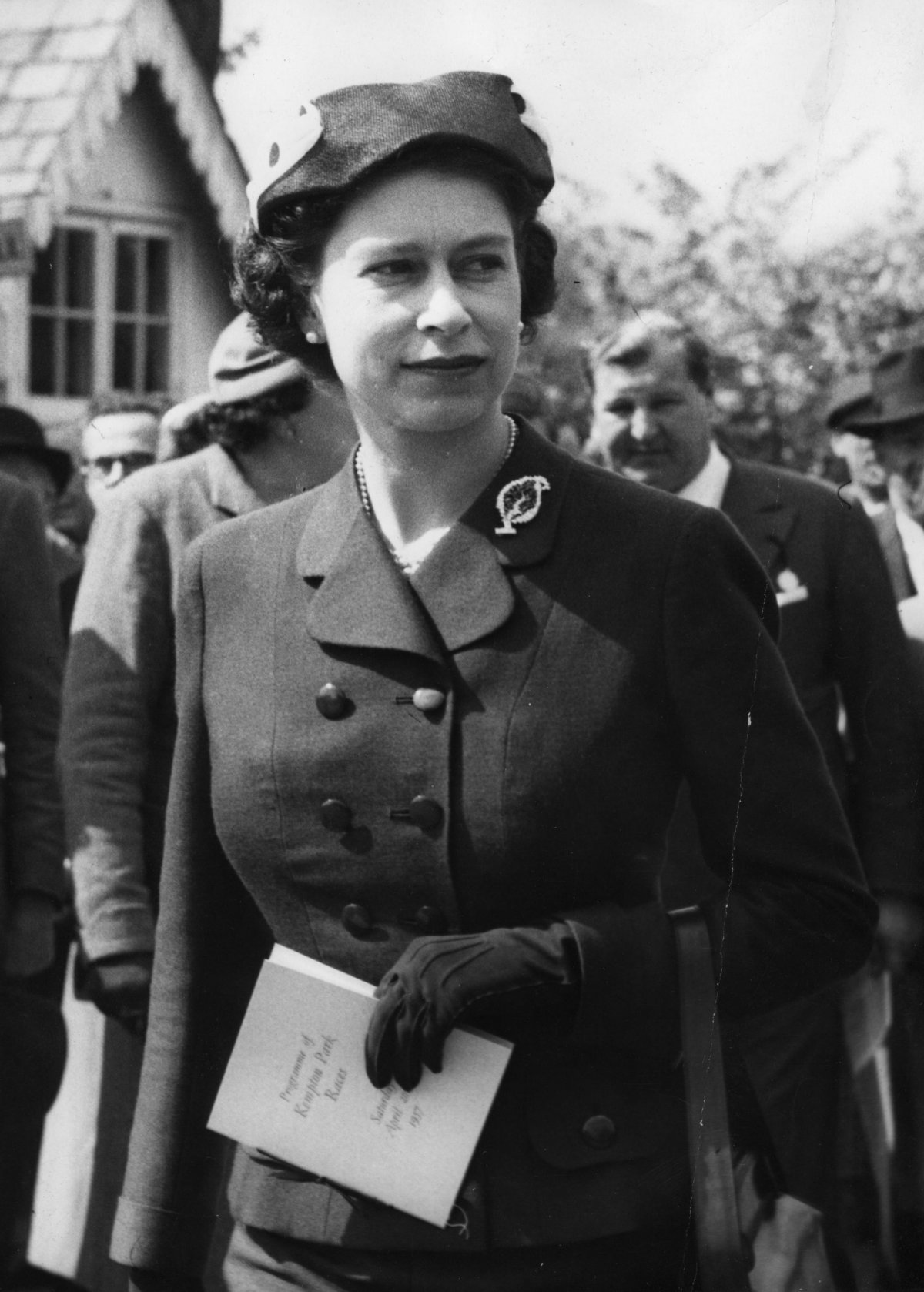
In the years immediately after the war, and throughout the beginning of her reign, Queen Elizabeth II could be seen wearing the brooch on a relatively frequent basis. Above, she has the brooch pinned to her collar as she attends the Kempton Park Races in the spring of 1957. It must have been a good luck charm on the occasion, because her horse, Doutelle, won the 2000 Guineas Trial Stakes that afternoon.
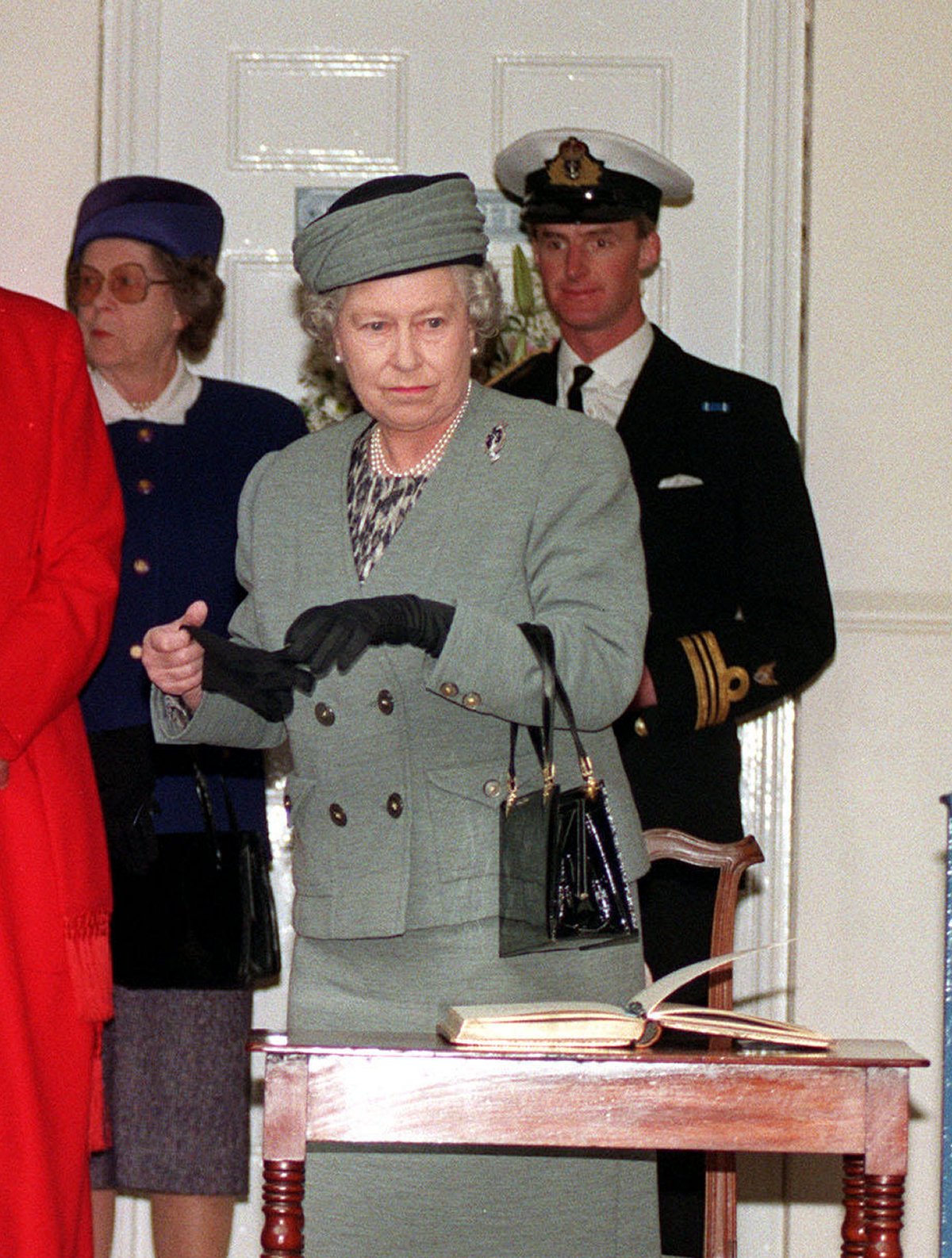
Over the years, the little paisley brooch was largely relegated to the back of the Queen’s jewelry box, as pieces of Art Deco and midcentury jewelry began to fade from fashion. She did still occasionally bring the brooch out for public engagements. One rare sighting of the jewel came in April 1997, when she wore it for a visit to St. George’s School in Windsor.
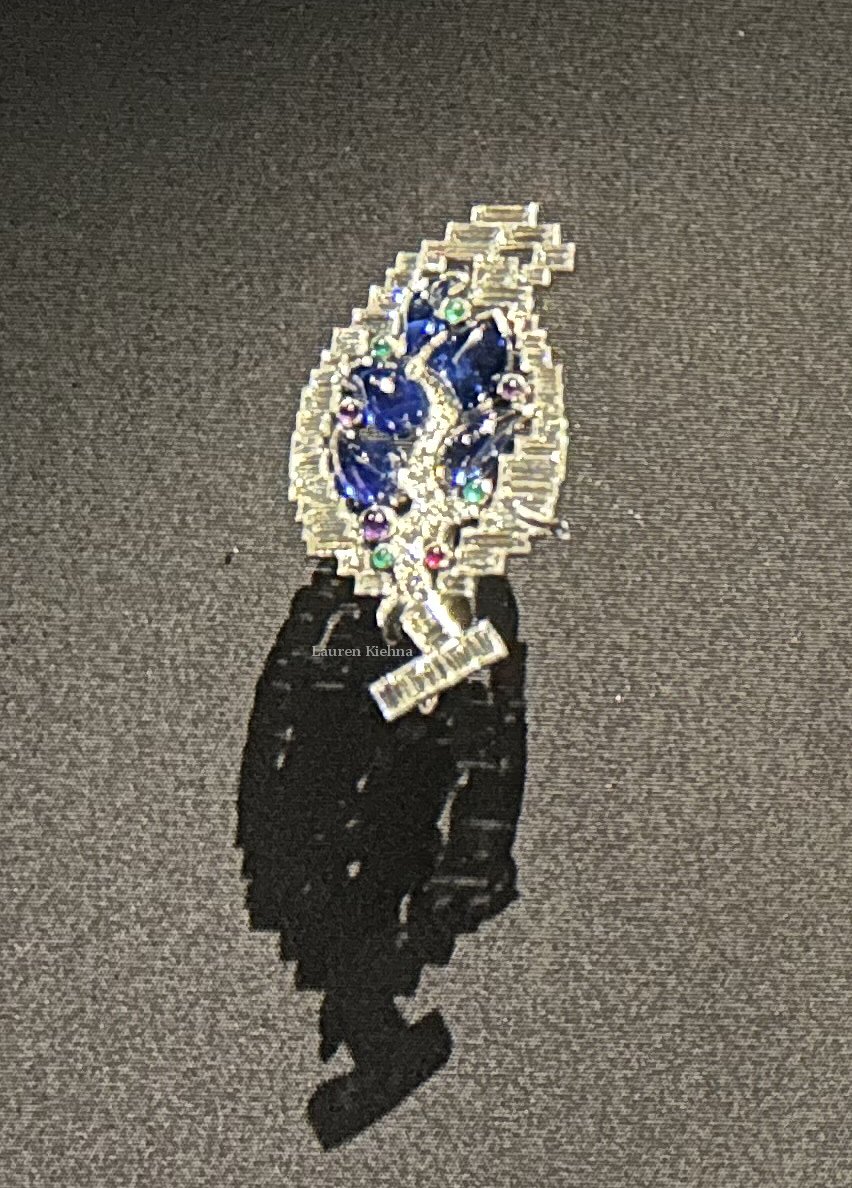
Now, viewers can inspect the little Cartier gem up close when they visit the Cartier exhibition currently running at the Victoria & Albert Museum in London. The jewel was loaned to the exhibition by King Charles III.
This is one of those jewels that I found very difficult to photograph, in part because of the varied reflections of the pavé-set diamonds in the central stem and the large, bold baguettes all around the edge. But the piece is surprisingly captivating in person, especially those cabochon sapphires, which glow particularly beautifully under the museum lights.
Leave a Reply
You must be logged in to post a comment.