More than a century ago in Britain, August was Coronation Month. King Edward VII and Queen Alexandra were crowned in a delayed ceremony at Westminster Abbey, an event that was in many ways a pinnacle of the glamorous Edwardian era. Today, let’s return to the current Royal Collection Trust exhibition on the Edwardians, with a focus on the royal jewelry on display.
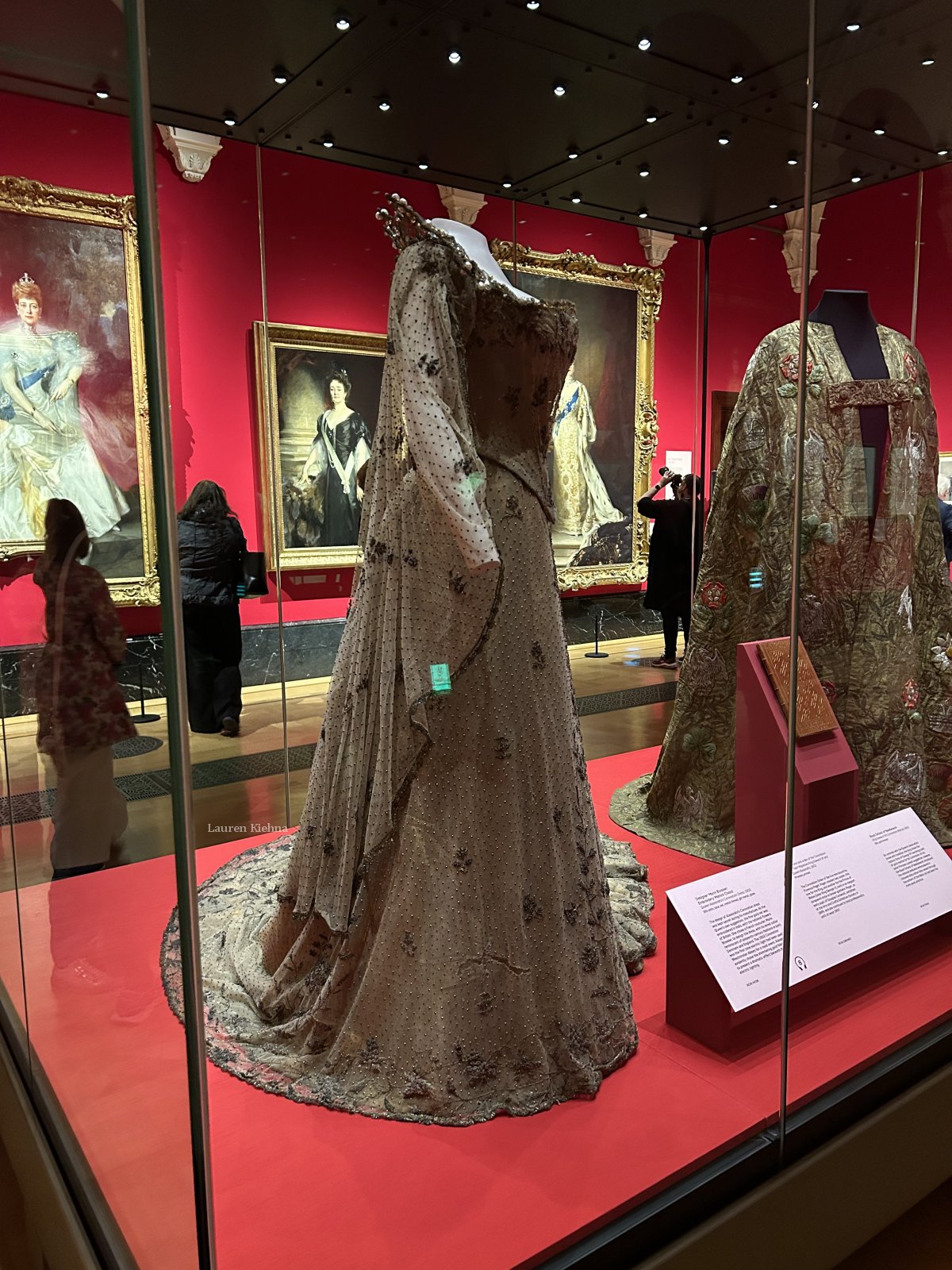
The Edwardians: Age of Elegance has been dazzling visitors to the King’s Gallery, Buckingham Palace now for several months. I was fortunate to be invited to the press preview ahead of the exhibition’s opening in April, and I spent hours marveling at the artwork, fashion, and art objects on display as part of the show. Above, coronation attire worn by Edward and Alexandra in 1902, including her fabulous coronation gown.
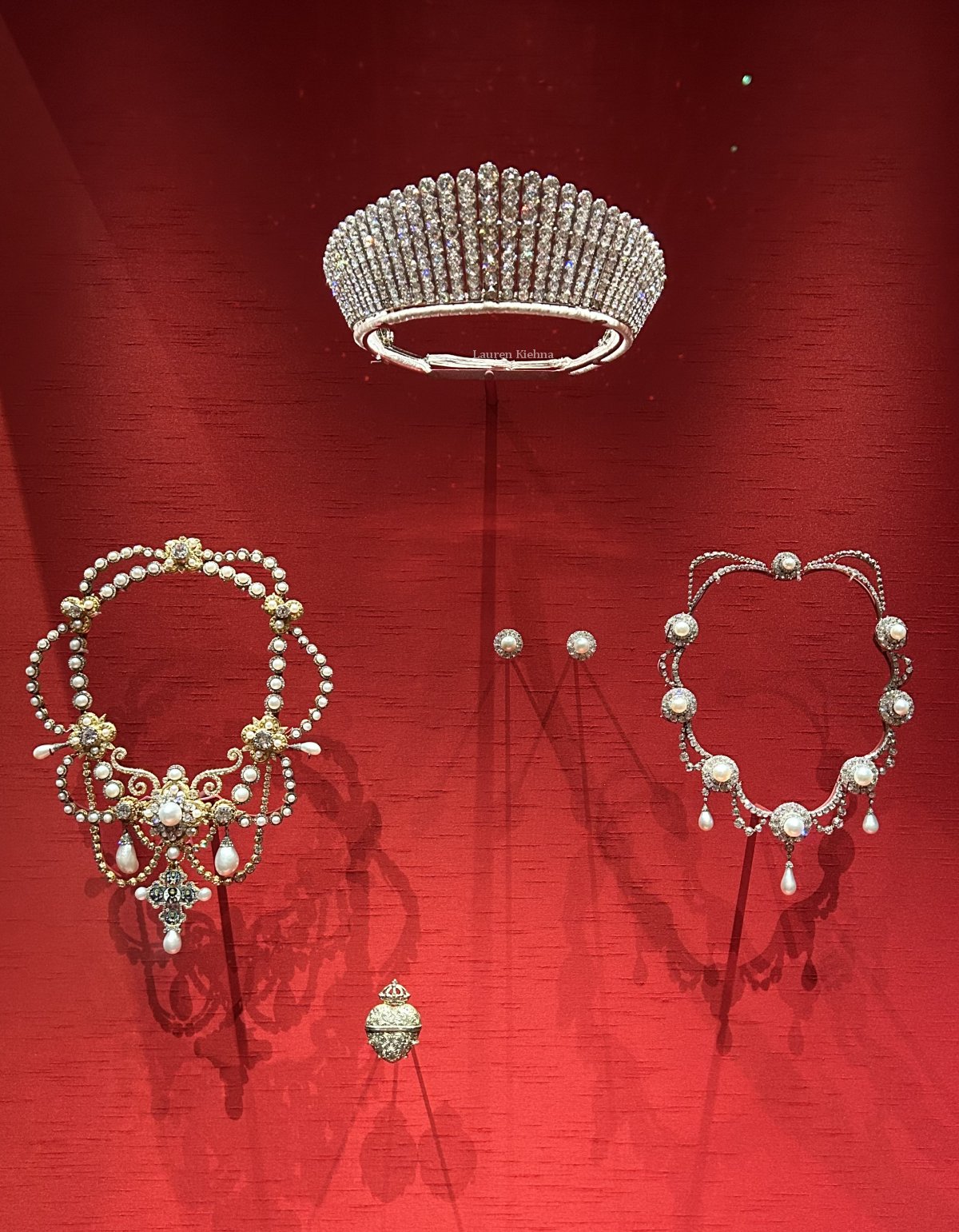
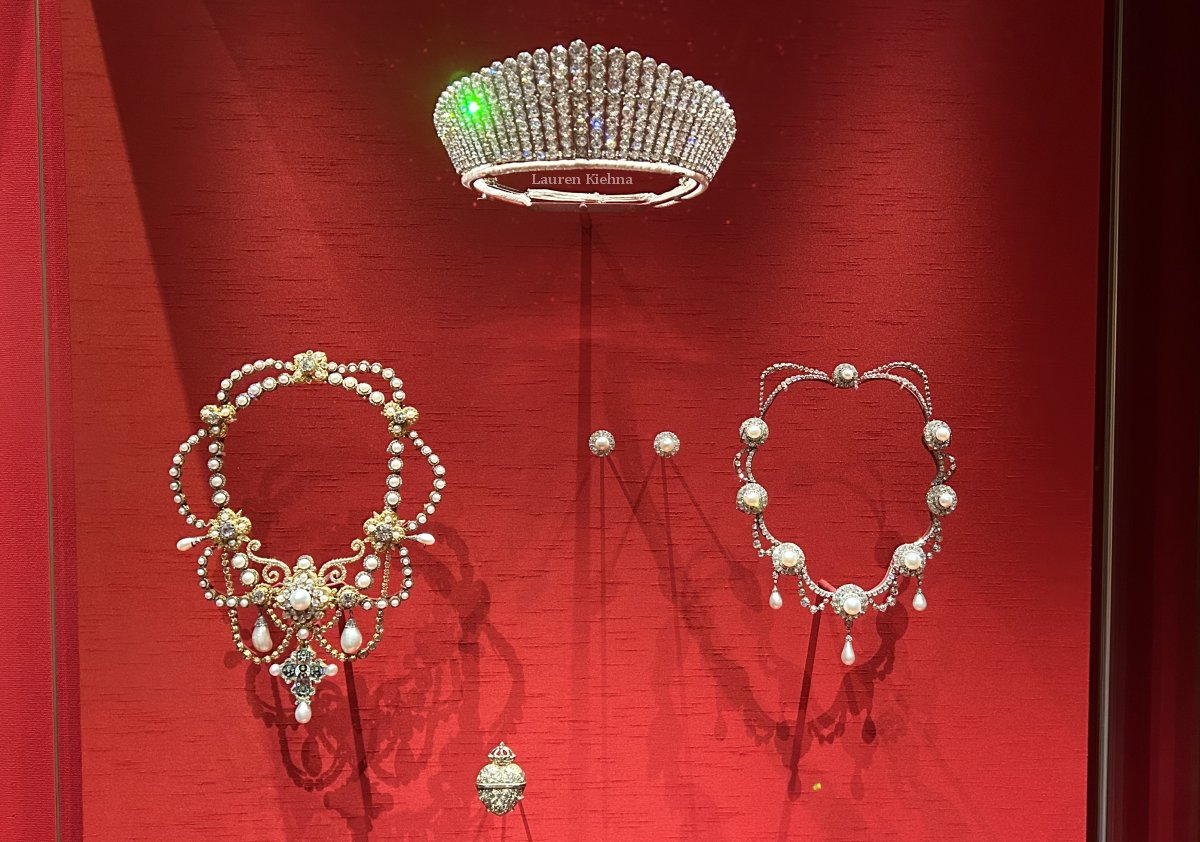
What really stunned me, though, was the sheer amount of royal jewelry on display, most of which had not been included in the preview materials provided by the RCT. Visitors to the exhibition encounter a few bejeweled objets d’art in the first room, including a famous Fabergé cigarette case. But in the second room, a wonderful surprise awaits: two cases filled with pieces of jewelry that belonged to Queen Alexandra and Queen Mary. Above is the case containing Queen Alexandra’s royal jewelry. Clockwise from the top: her diamond kokoshnik tiara, her wedding necklace and earrings, a small silver-gilt box in the shape of a heart, and the Dagmar Necklace.
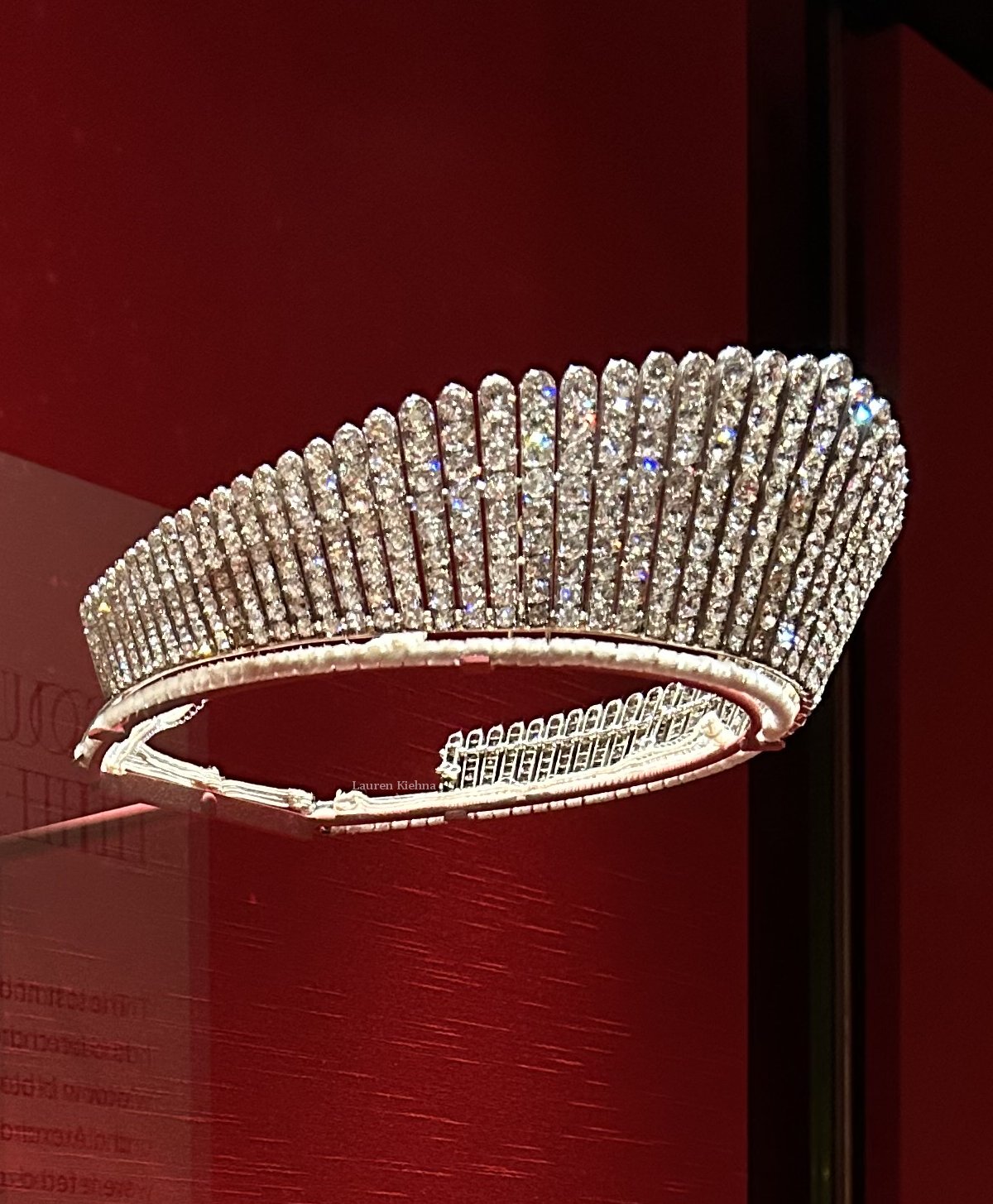
How about a closer look? Here’s another view of Queen Alexandra’s Diamond Kokoshnik Tiara, a splendid wall of diamonds made by Garrard in 1888. It was presented to Alexandra, who was then Princess of Wales, as a silver wedding anniversary present by a committee of aristocratic ladies. They asked her for input on the gift, and she suggested something similar to the traditional kokoshnik-style tiaras worn by her sister, Empress Marie Feodorovna of Russia. This magnificent jewel was the result.
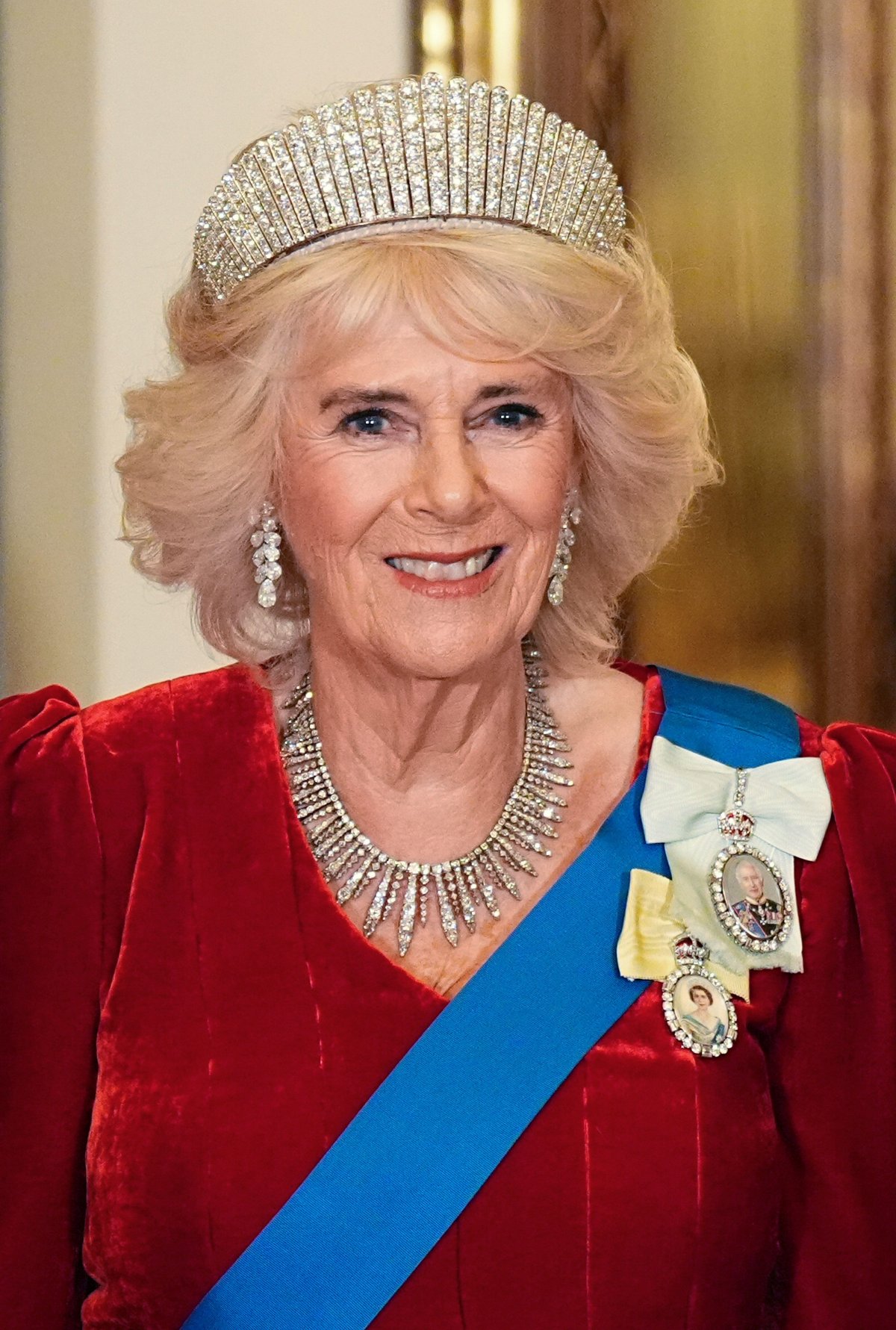
Alexandra wore the tiara often, and on at least one occasion, she loaned it to her mother, Queen Louise of Denmark. After her death, the tiara was treasured by Queen Mary, who left it to Queen Elizabeth II in 1953. She wore it for seven decades. Now, the tiara is worn by Queen Camilla, who made her debut in the jewel during the Qatari state visit in December 2024.
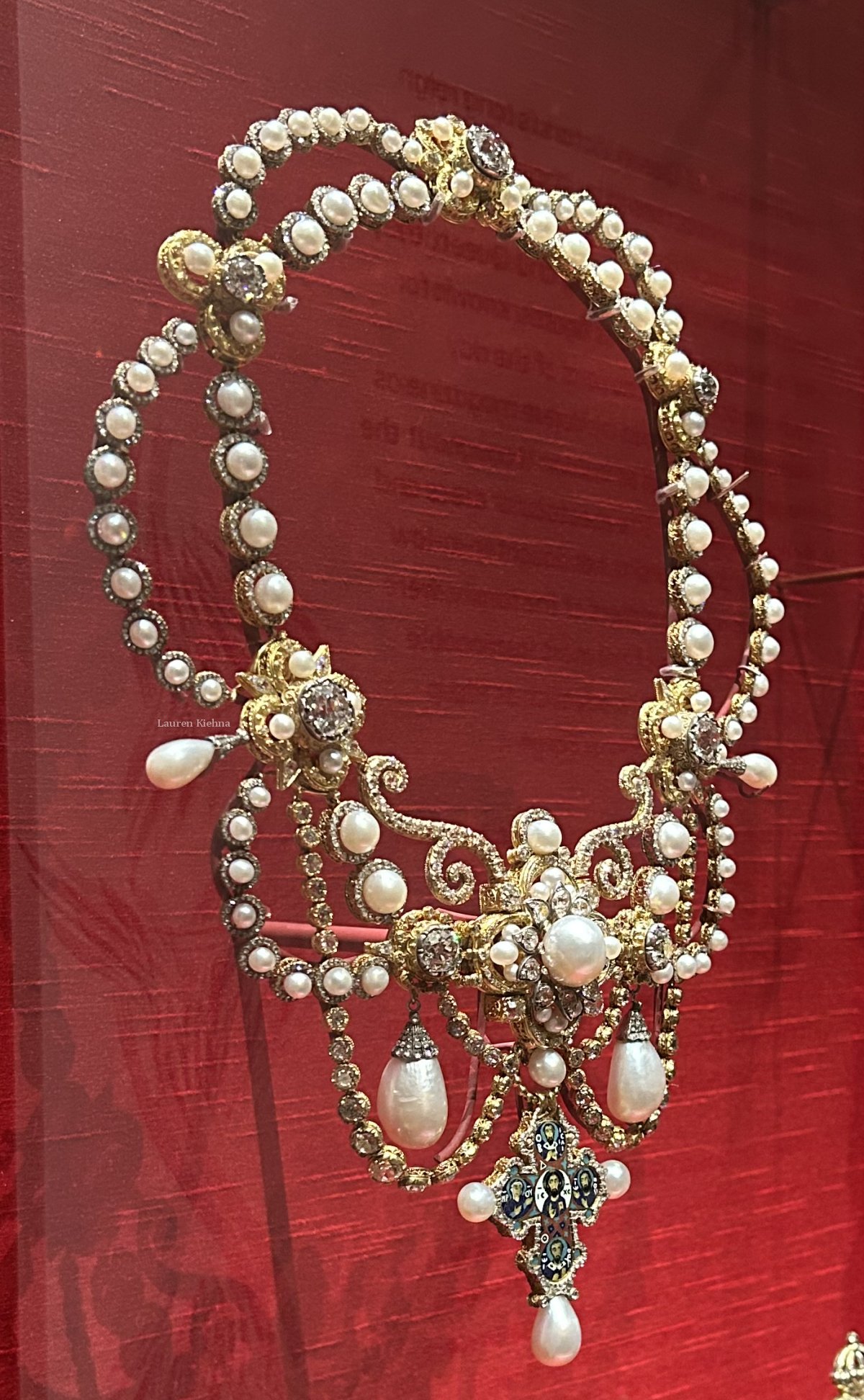
Equally impressive is the unusual and elaborate Dagmar Necklace, which was given to Alexandra as a wedding present by her father’s predecessor, King Frederik VII of Denmark, in 1863. The necklace was made by the Danish court jeweler, Jules Diderikson. When making the piece, he crafted a replica of the famous enamel cross that belonged to Queen Dagmar of Denmark (1186-1212) and suspended it as a pendant on the necklace. In the exhibition notes, the Royal Collection Trust states that “Frederik suggested that the replica contain a fragment of wood said to be from the True Cross and a scrap of silk from the grave of King Canute.”
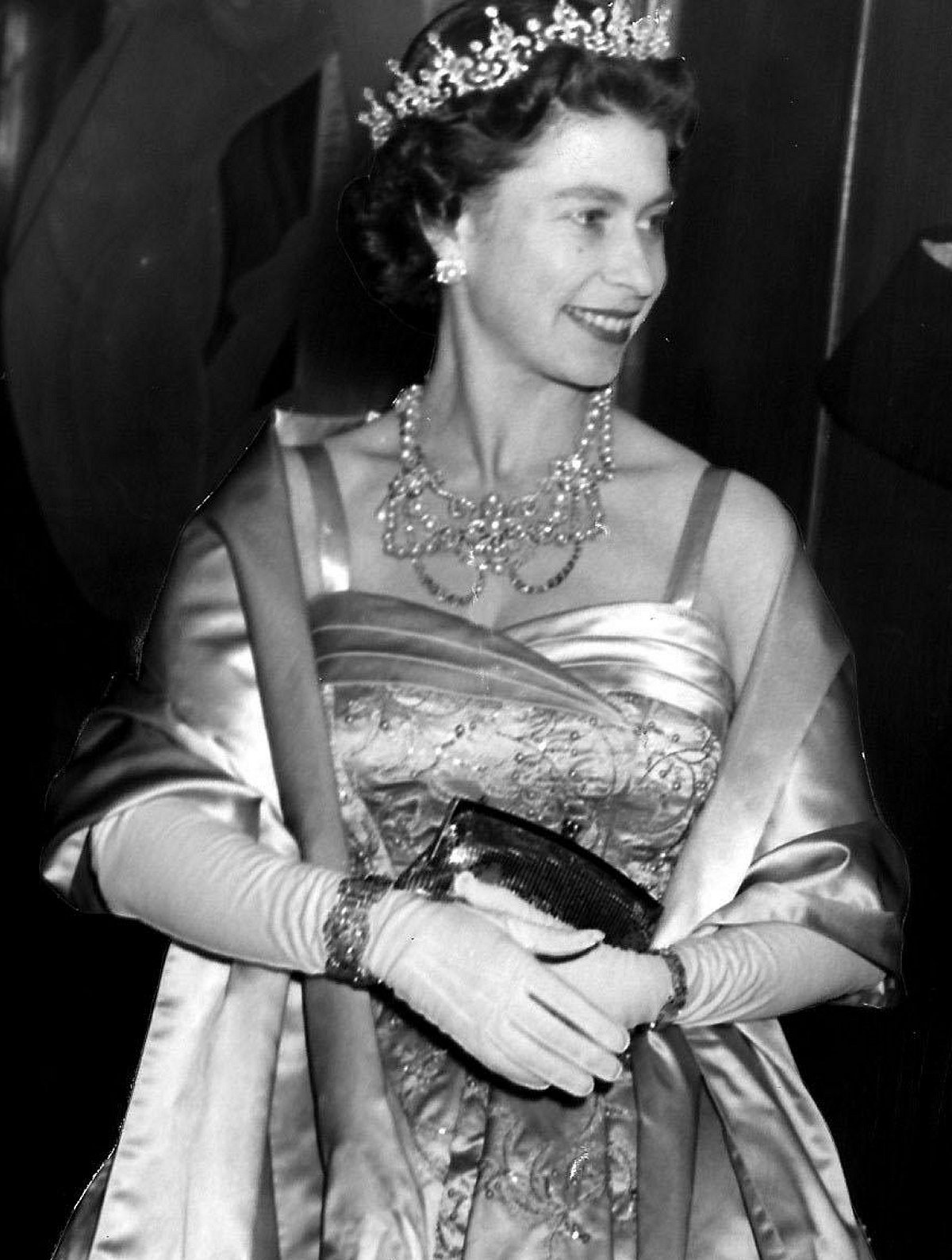
The necklace can be worn in various settings, with or without the Dagmar Cross itself, and with several other sections also able to be removed. Queen Alexandra wore one setting of the necklace as part of a mass of jewels on her coronation day. Queen Elizabeth II, the most recent wearer of the necklace, also wore it in a smaller setting, without the cross and some of the pendant pearls.
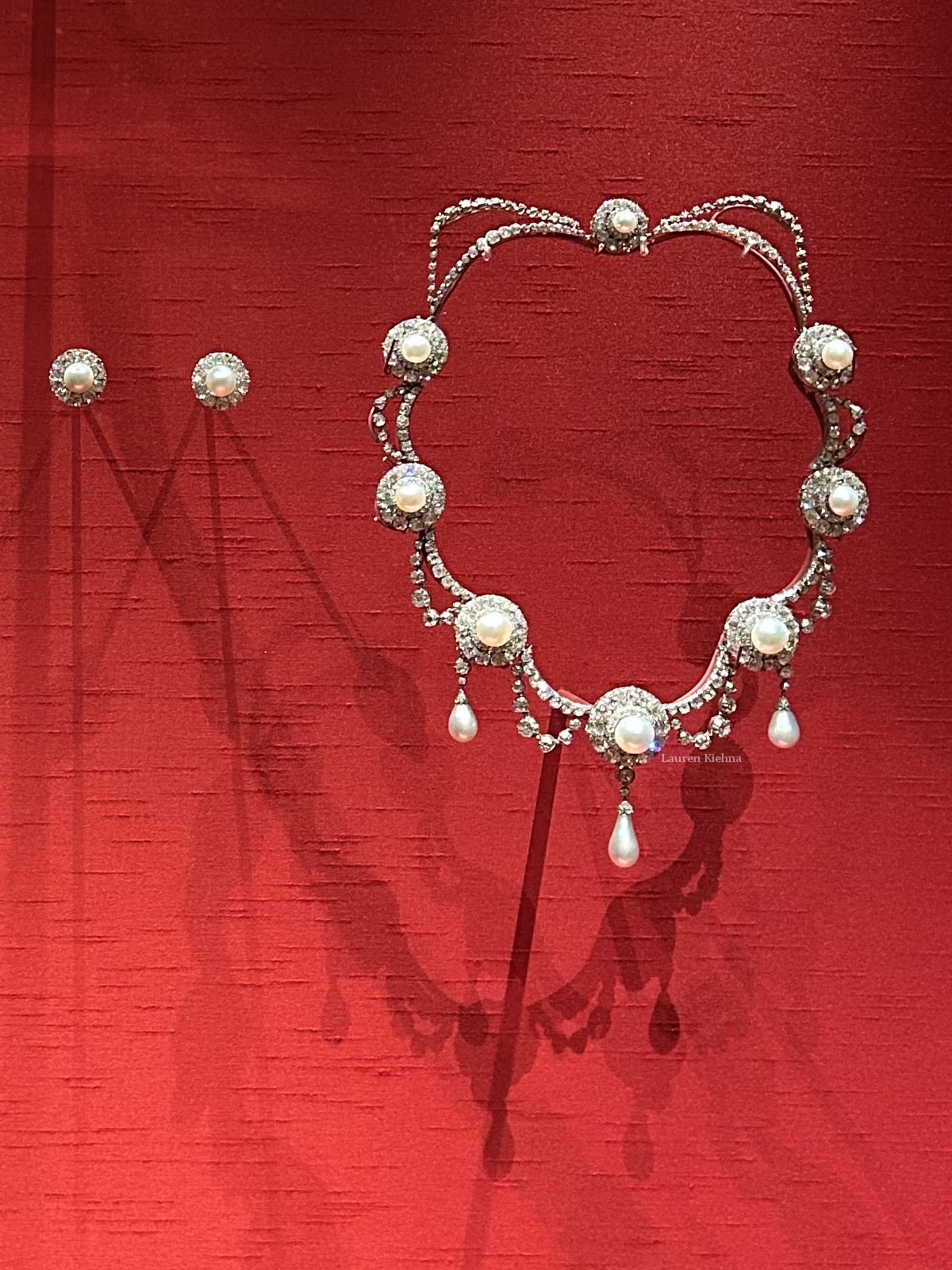
The other wearable jewelry pieces in Queen Alexandra’s display case are particularly special. This diamond and pearl necklace, and its matching earrings, were given to Alexandra as a wedding present by her new husband, the Prince of Wales (later Edward VII). They were part of a larger gift that also included a brooch (still with the royals today) and a tiara (no longer in the family collection). Alexandra wore the necklace, brooch, and earrings with her wedding gown in March 1863.
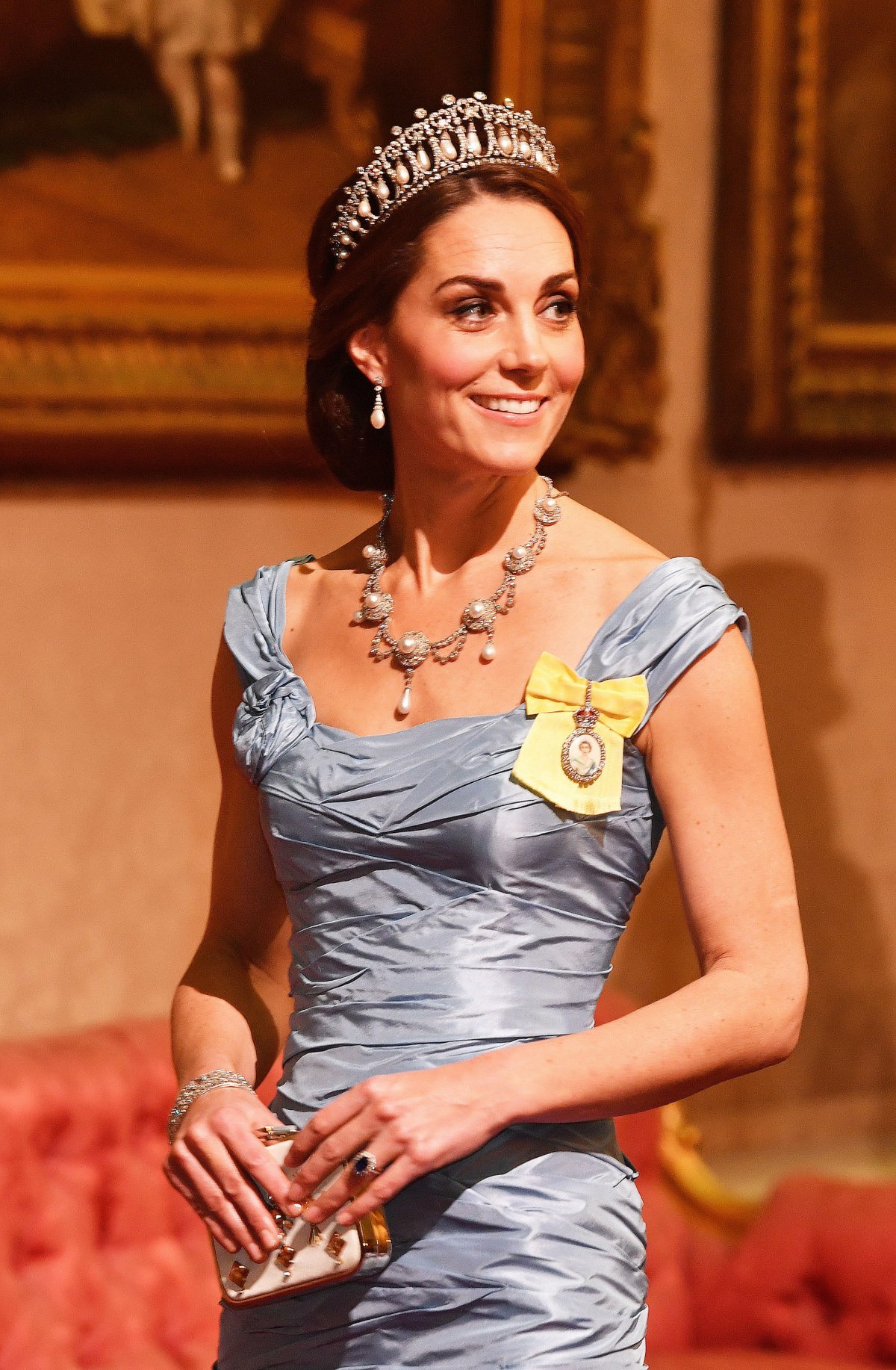
From Alexandra, the wedding pearls passed to Queen Mary. She gave the necklace to the Queen Mother, who wore it for decades, and left the earrings and brooch to Queen Elizabeth II. Today, the jewels are reunited in the royal vaults. We most recently saw the necklace on the present Princess of Wales, while the earrings were most recently worn by the late Queen.
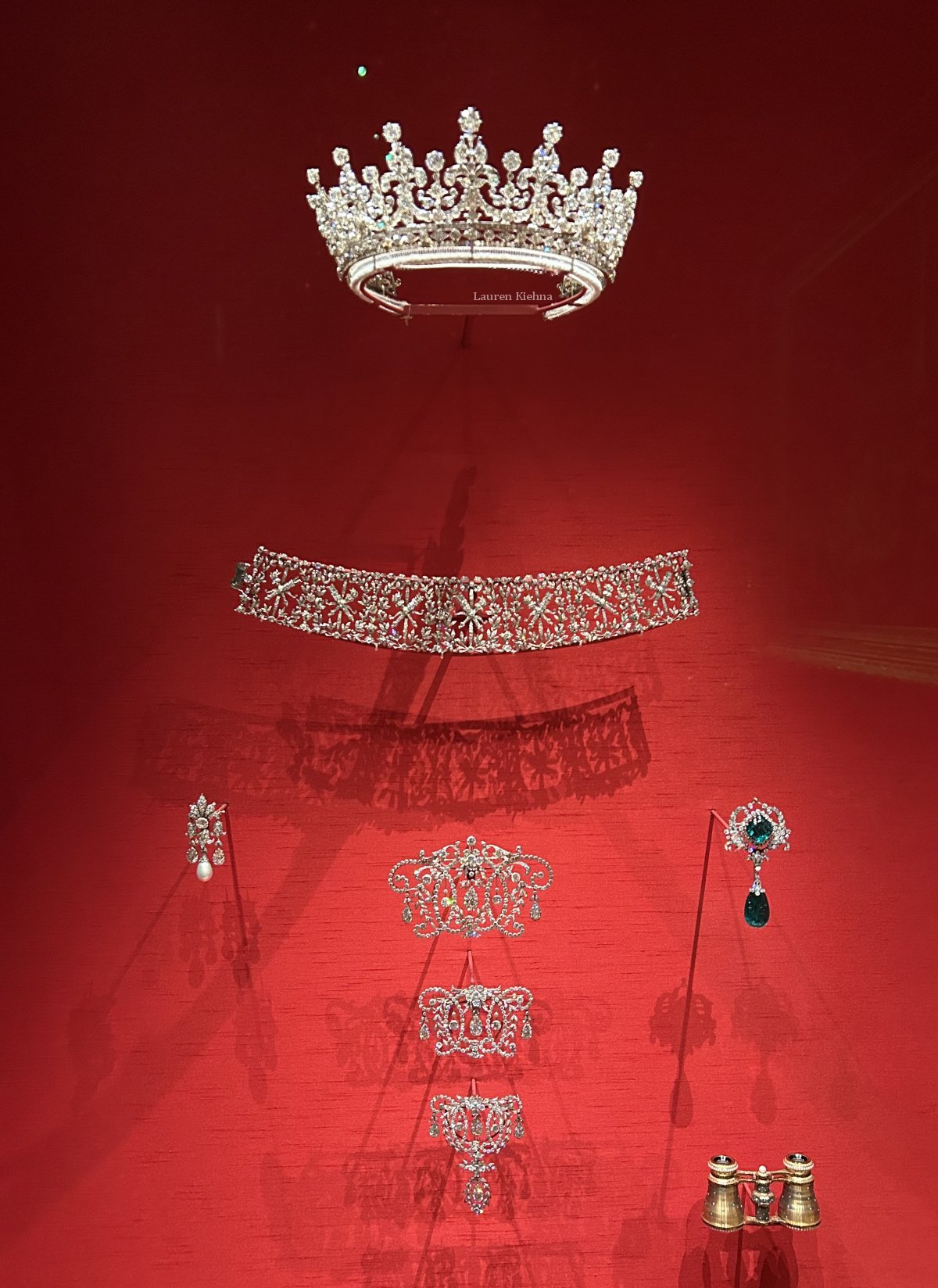
Beside Queen Alexandra’s jewelry is another display case containing some iconic royal jewelry pieces that belonged to her daughter-in-law, Queen Mary. Clockwise from top: the Girls of Great Britain & Ireland Tiara, the diamond and emerald scroll brooch from the Delhi Durbar Parure, a pair of Tiffany & Co. opera glasses, the diamond stomacher, and the Women of Hampshire Brooch.
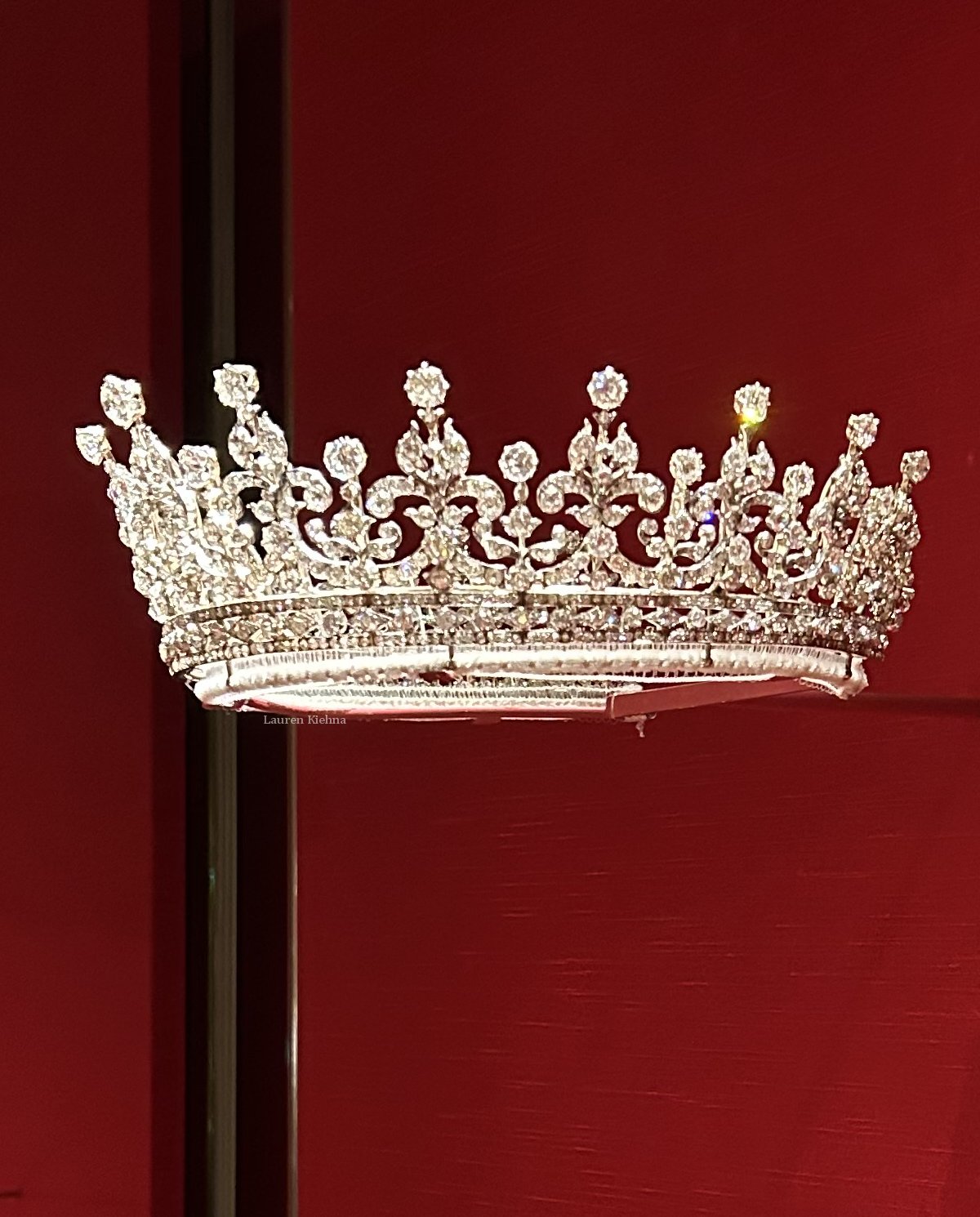
This was the moment when I’m pretty sure my soul left my body for a second: when I turned and saw the Girls of Great Britain & Ireland Tiara staring right at me. The jewel, one of the most classic tiaras in any royal collection, was given to Queen Mary in 1893 as a wedding present by a group of young women (the “girls” in the jewel’s name).
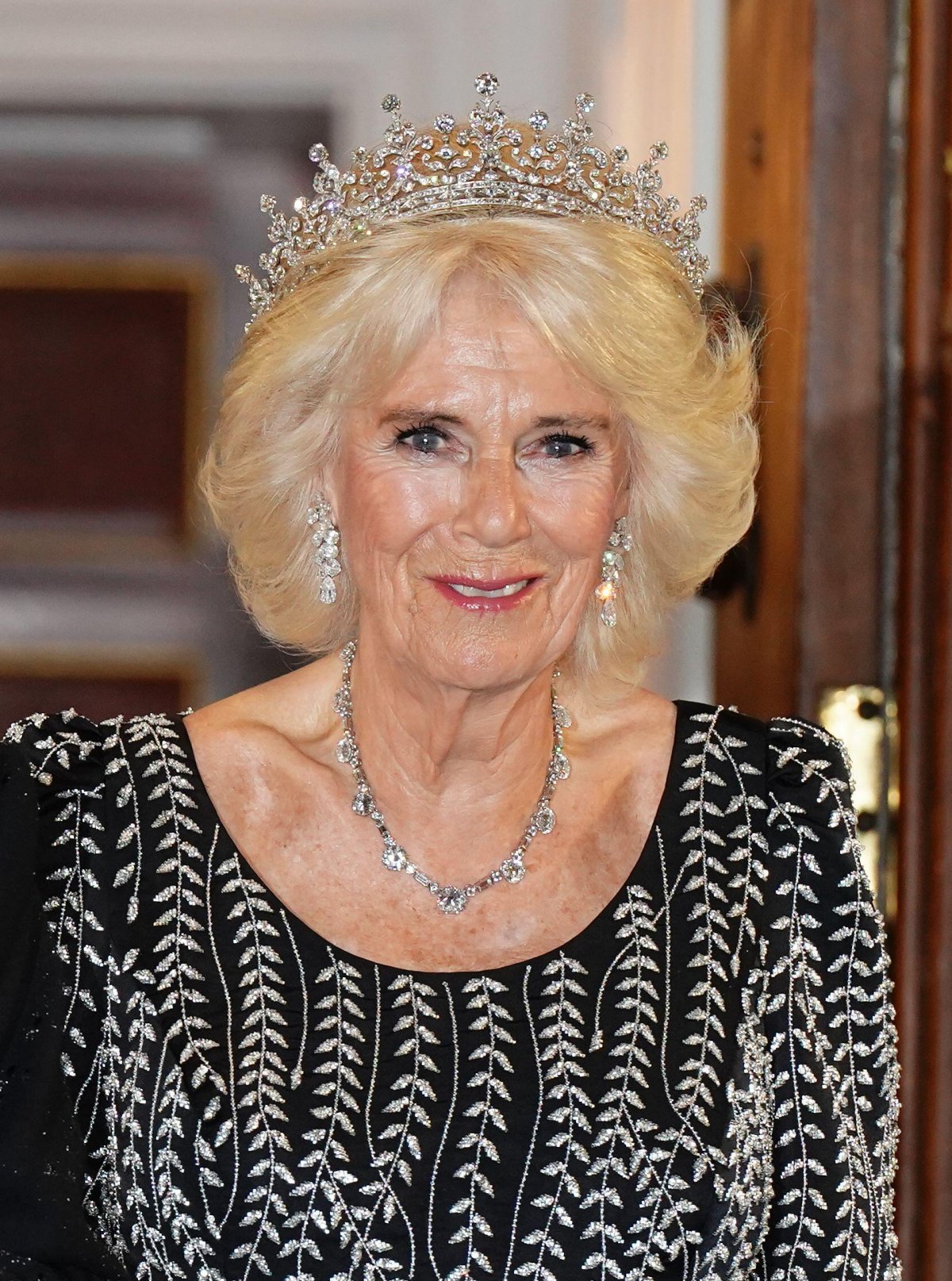
In 1947, Queen Mary gave the tiara to her granddaughter, Queen Elizabeth II, as a wedding present. She wore it faithfully for more than 70 years. Now, the tiara is sparkling on her daughter-in-law, Queen Camilla, who made her first appearance in the jewel at Mansion House a few months after the coronation in 2023.
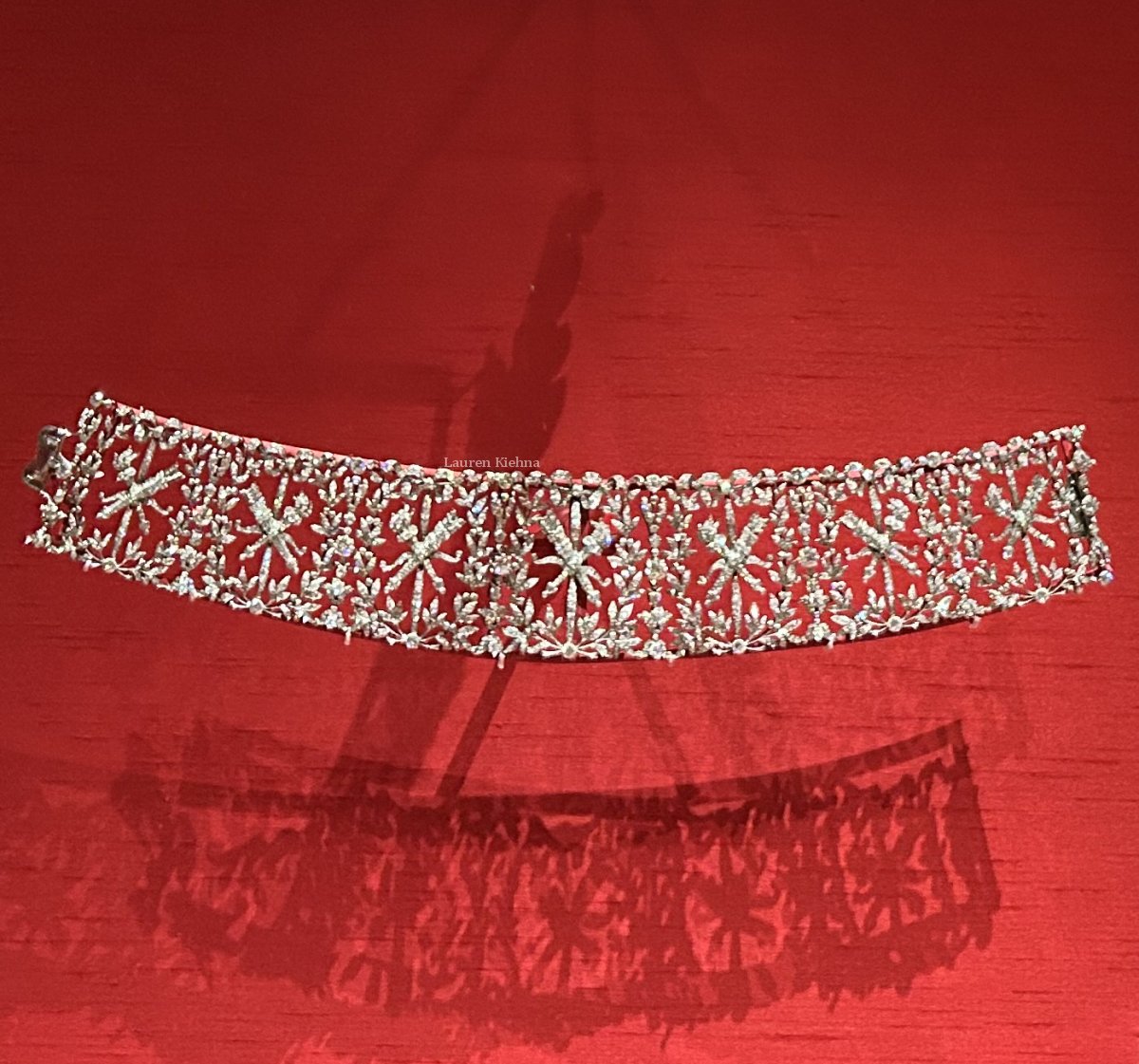
Beneath the iconic tiara was a jewel that was being exhibited to the public for the first time: Queen Mary’s Love Trophy Collar, which was commissioned in 1901 by Mary herself. Garrard made the necklace using diamonds taken from various pieces of jewelry that had belonged to her grandmother, the Duchess of Cambridge, and her aunt, the Grand Duchess of Mecklenburg-Strelitz. The center of each panel of the necklace features a love trophy: a burning torch and a quiver of arrows crossed with an archer’s bow, surrounded by a wreath of laurel.
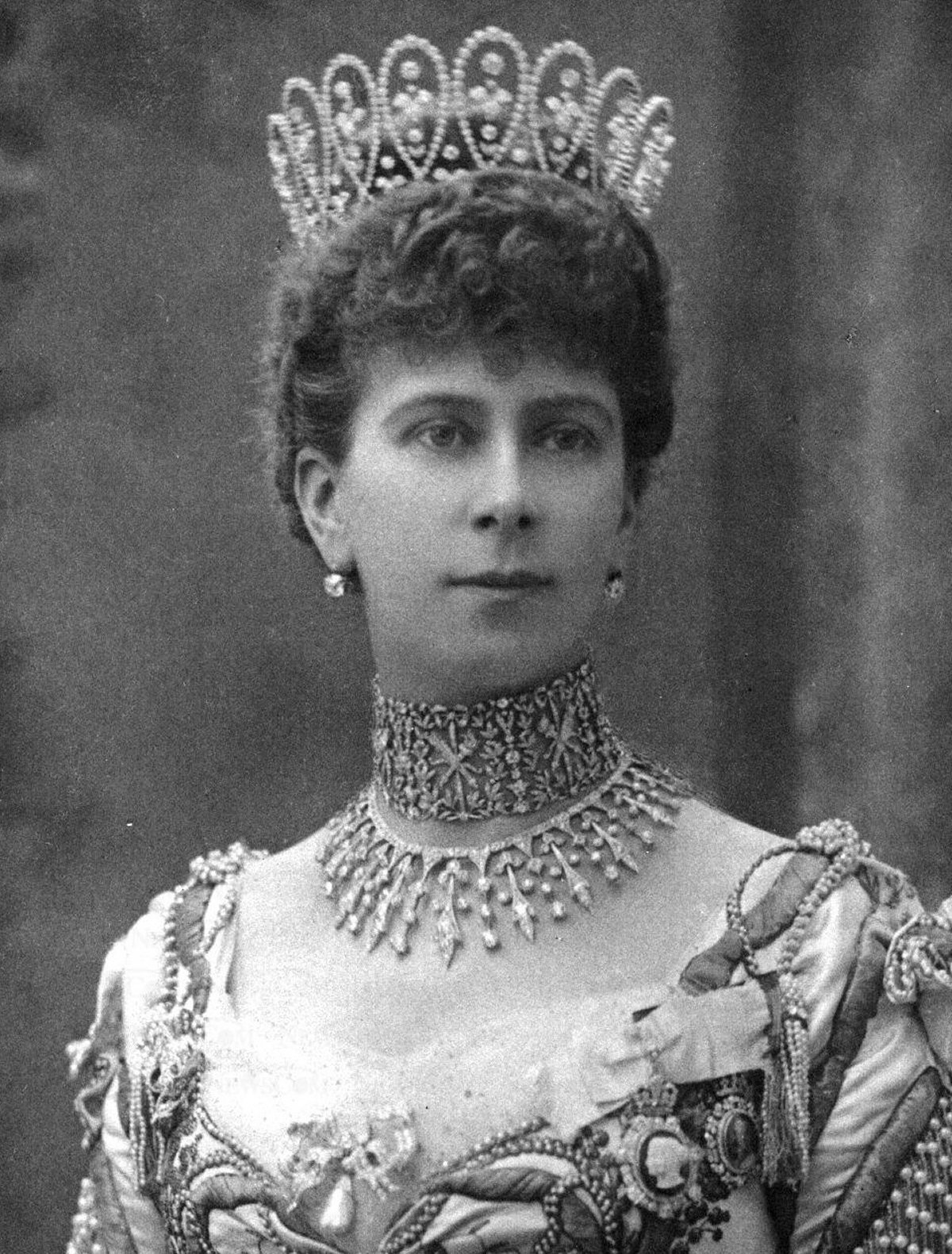
Queen Mary was photographed in the choker during her tenure as Princess of Wales. She ended up passing the jewel along to her daughter-in-law, the Queen Mother, who apparently never wore it. (A choker like this was not her style.) Queen Elizabeth II inherited it in 2002, and King Charles III and Queen Camilla became its guardians two decades later. So far, no one other than Mary herself has been photographed in the necklace.
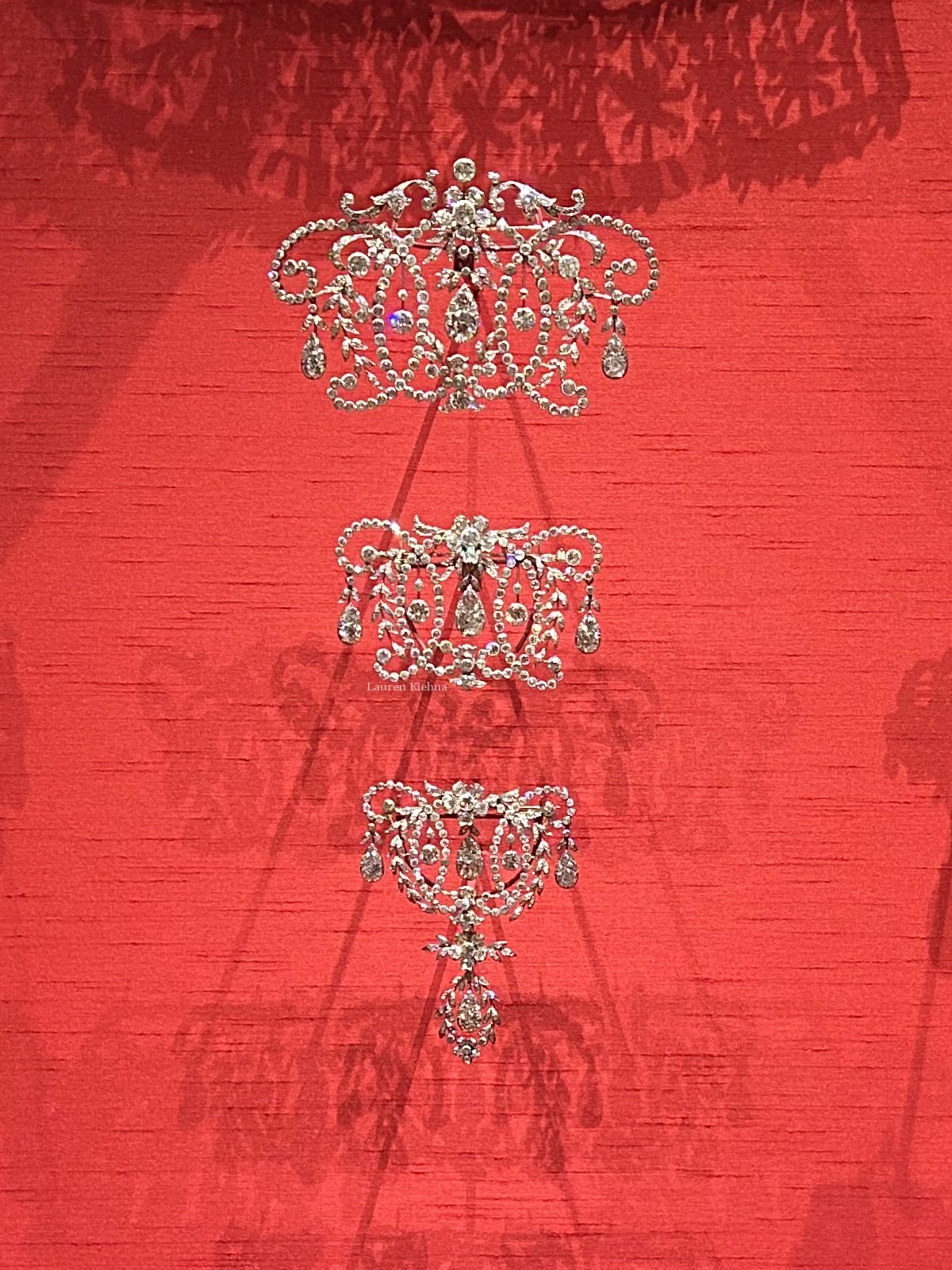
Below the choker necklace in the display case is another massive jewel that Mary commissioned herself. This delicate, lacy diamond stomacher was made in 1920 using diamonds that had been taken from two of Mary’s wedding presents, the Kapurthala Stomacher and the Swansea Crescent Brooch. The piece can be worn as one massive corsage ornament or in three separate sections.
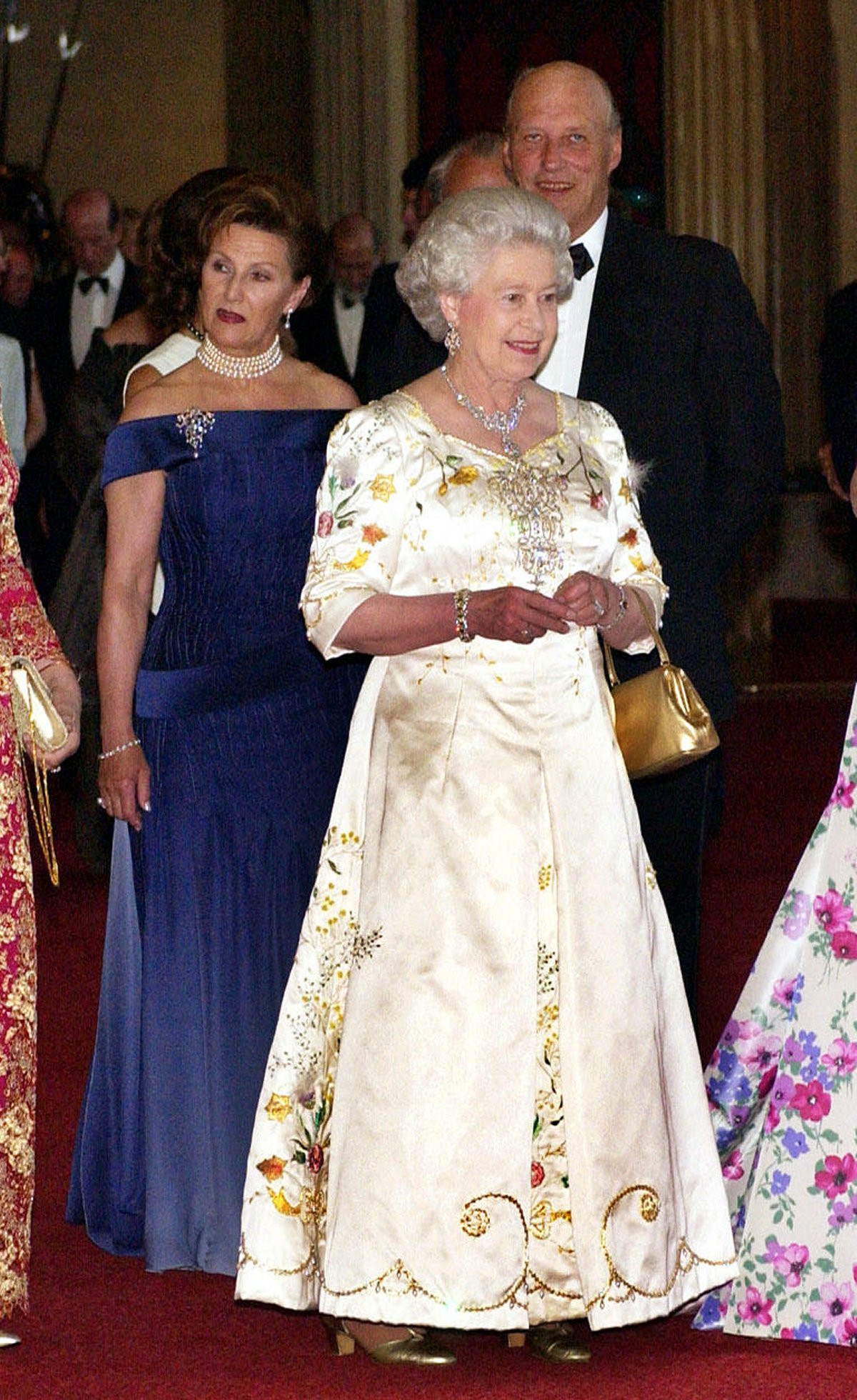
The stomacher was also given to the future Queen Elizabeth II by her grandmother as a wedding present in 1947. She wore it occasionally in its full setting—notably at the Golden Jubilee sovereigns’ dinner in 2002, pictured above—but also wore the separate sections as independent brooches.
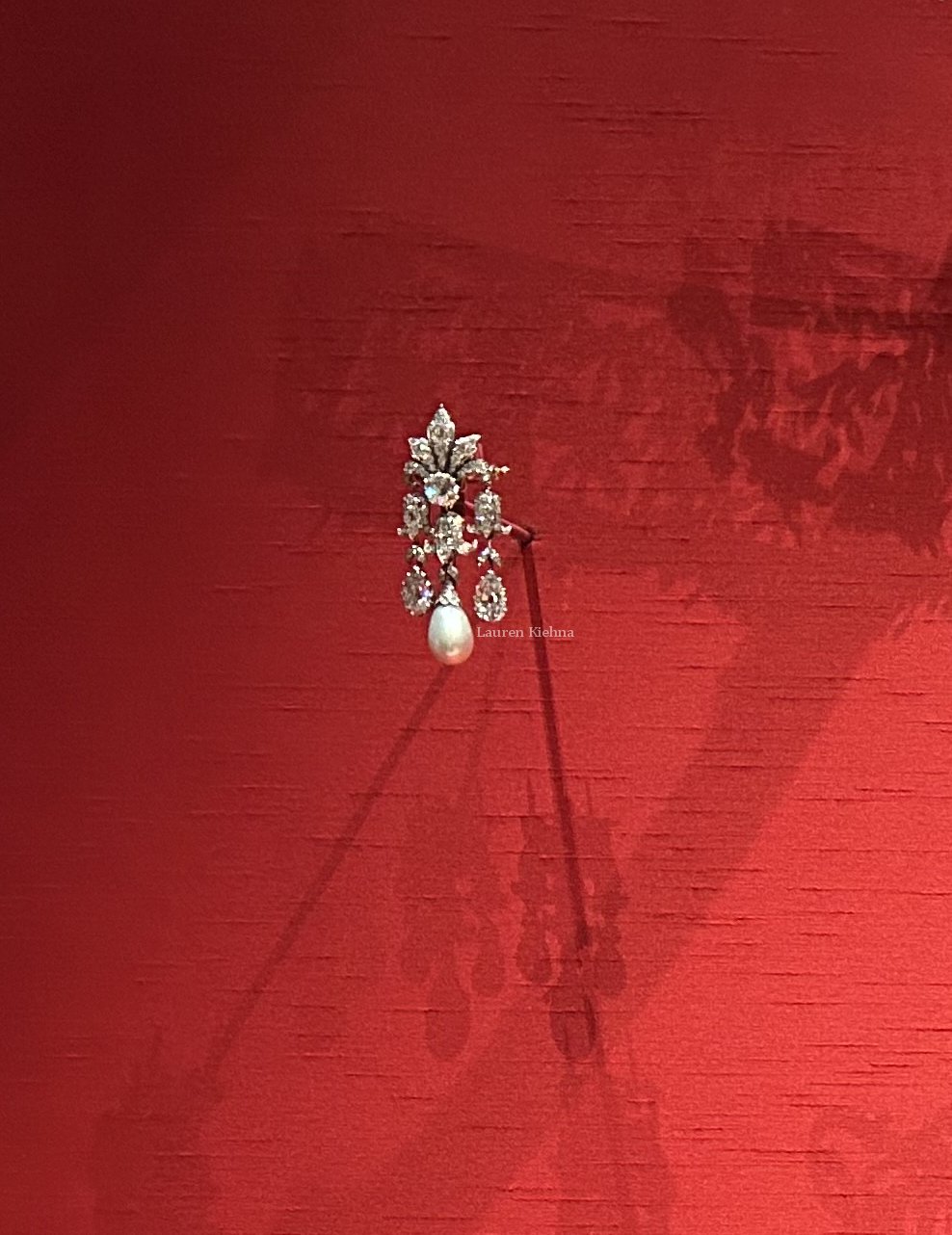
The display also includes two of Queen Mary’s brooches. This diamond and pearl jewel, the Women of Hampshire Brooch, was given to Mary as a wedding present in 1893 by a committee of women from (you guessed it!) the county of Hampshire, headed by the Dowager Duchess of Wellington. The petite brooch was originally set as a pendant on a necklace.
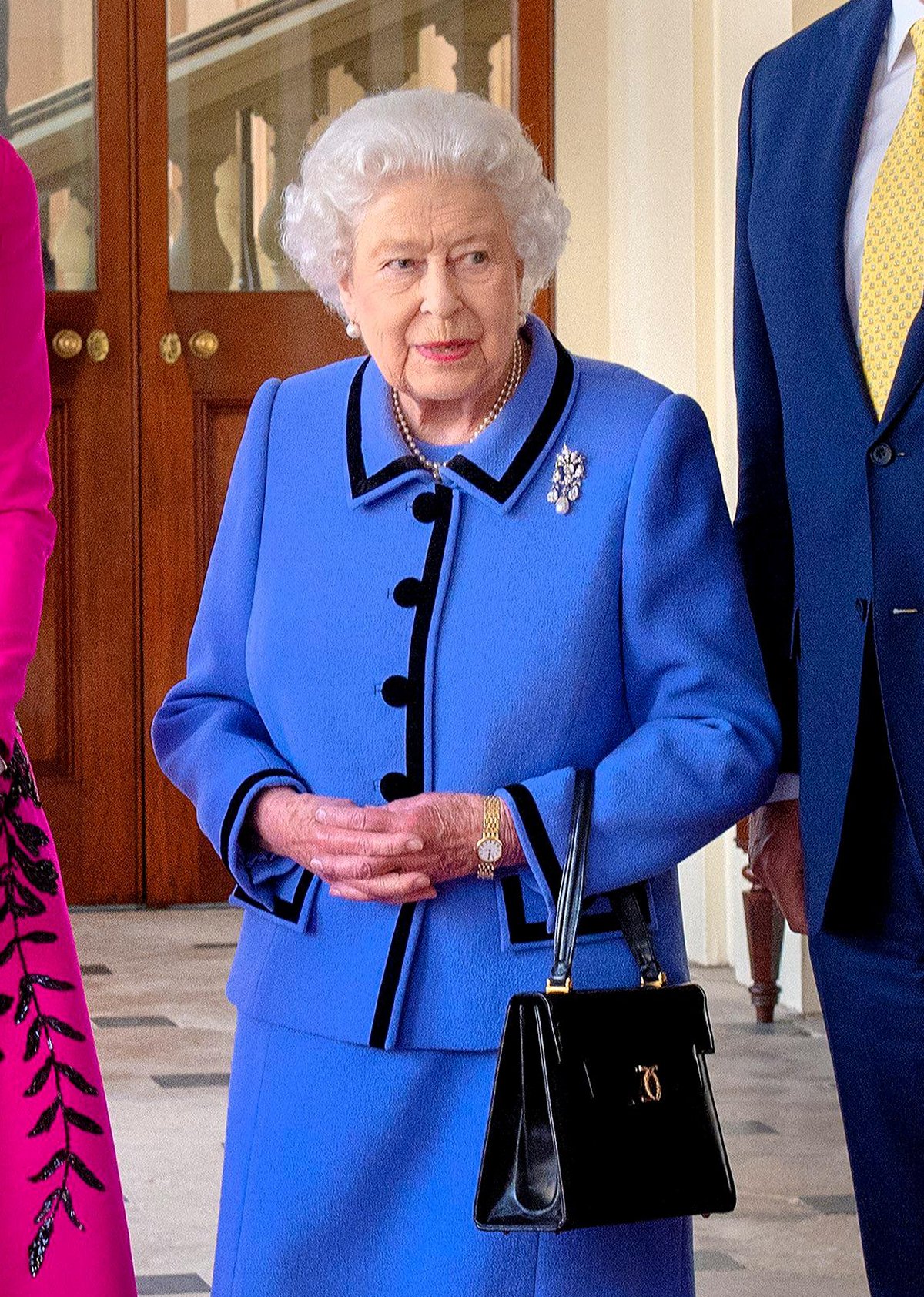
Queen Mary wore the brooch often for the next half century, and in 1953, she bequeathed it to her granddaughter, Queen Elizabeth II. She was the custodian of the jewel for the next seven decades, and so far, she’s the most recent person to be photographed wearing the brooch.
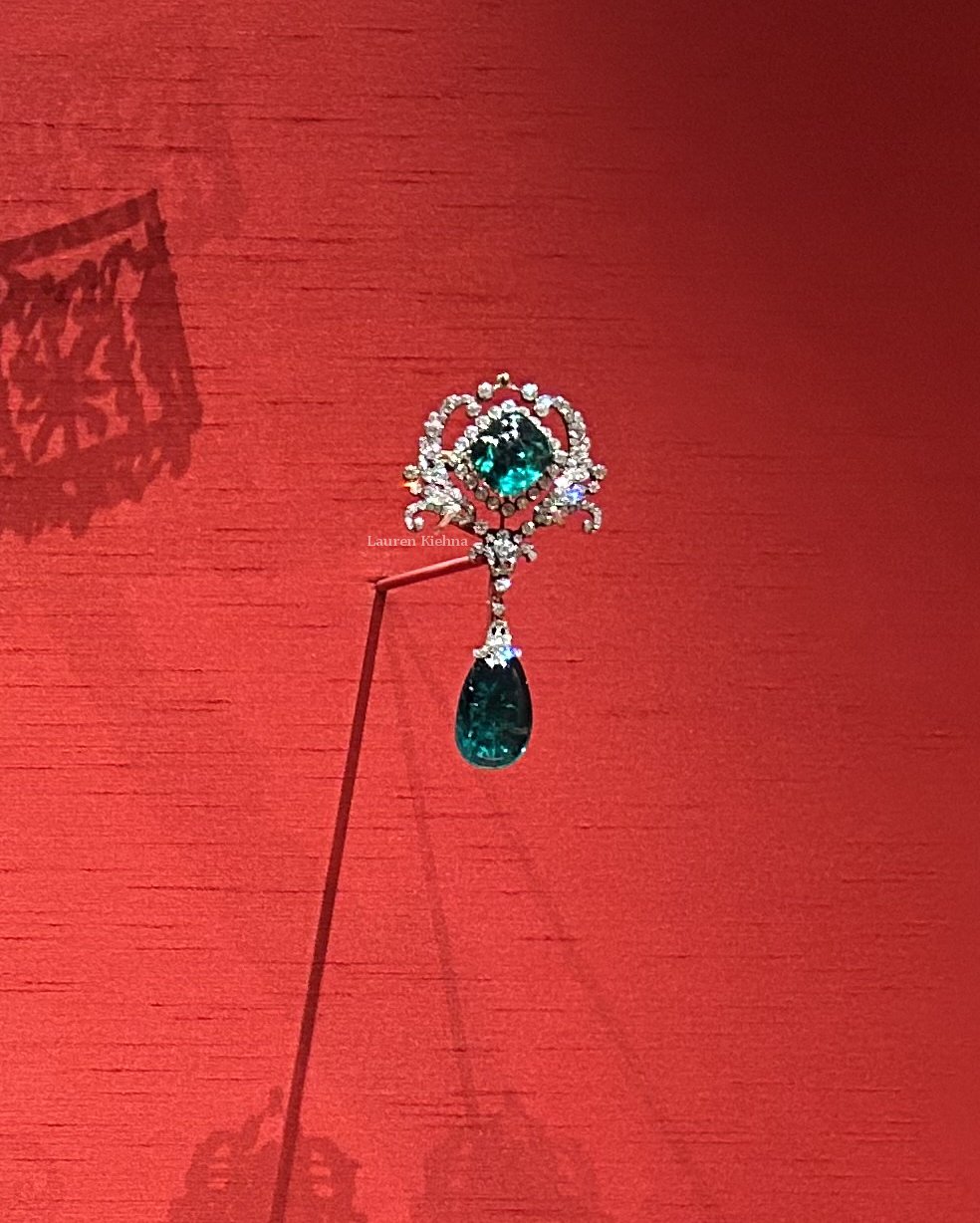
The second brooch in the case is an intricate diamond and emerald brooch that comes from the parure made for Queen Mary to wear at the Delhi Durbar in 1911. Originally, the brooch was incorporated as part of the larger stomacher crafted as part of the set. The emerald set in the center of the brooch and the emerald pendant both come from the Cambridge Emeralds, a collection of stones originally acquired by Mary’s grandmother, the Duchess of Cambridge—and retrieved by Mary from her late brother’s mistress, Lady Kilmorey, shortly before the coronation.
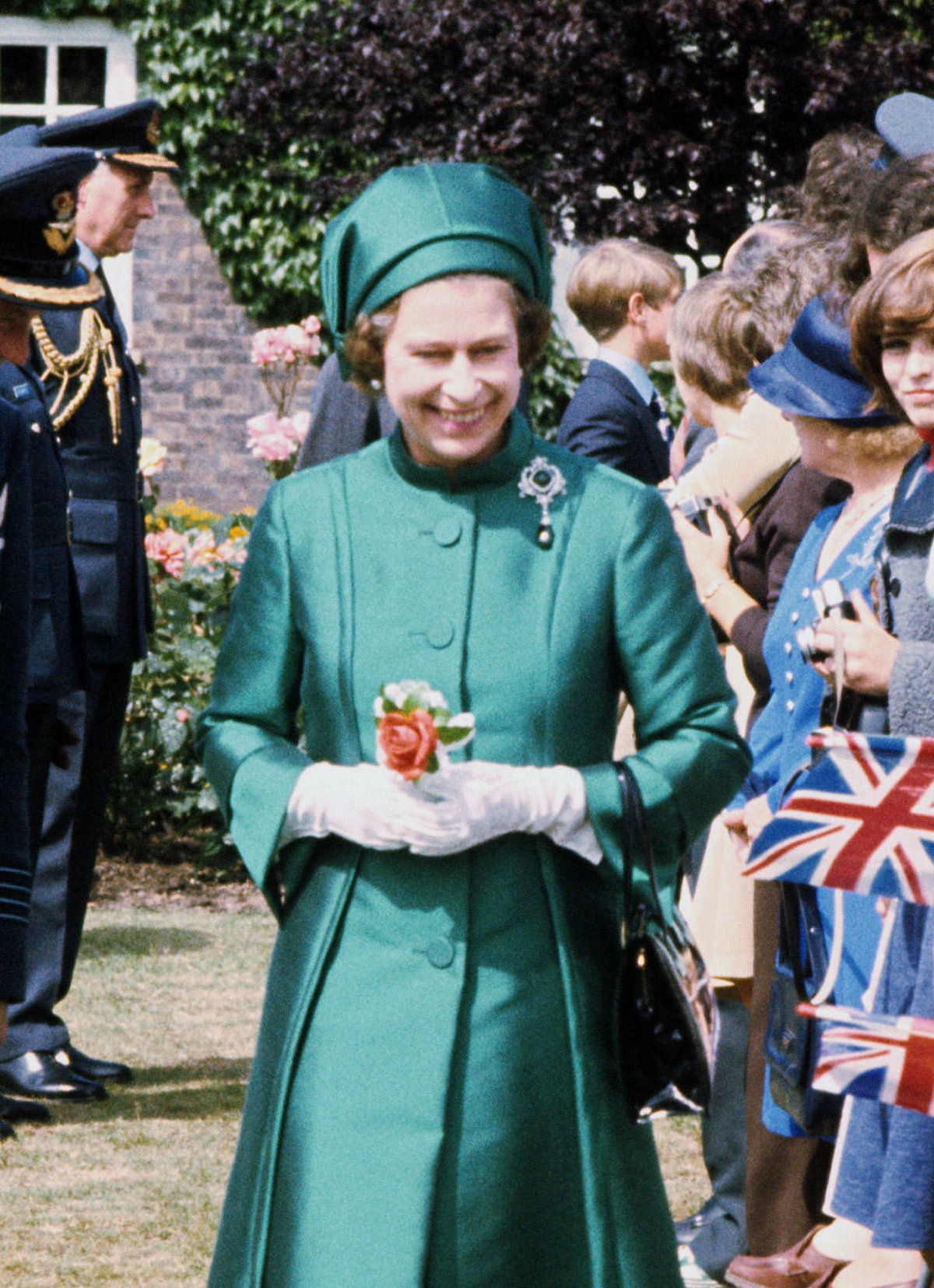
Queen Elizabeth II inherited the Delhi Durbar Scroll Brooch, as well as most of the Delhi Durbar Parure, when Queen Mary passed away in 1953. She wore the brooch on occasion throughout the years. She’s still the most recent wearer of this piece as well, but with Camilla recently wearing another brooch from the married set, I wouldn’t be surprised if we see this one worn in public again sooner rather than later.
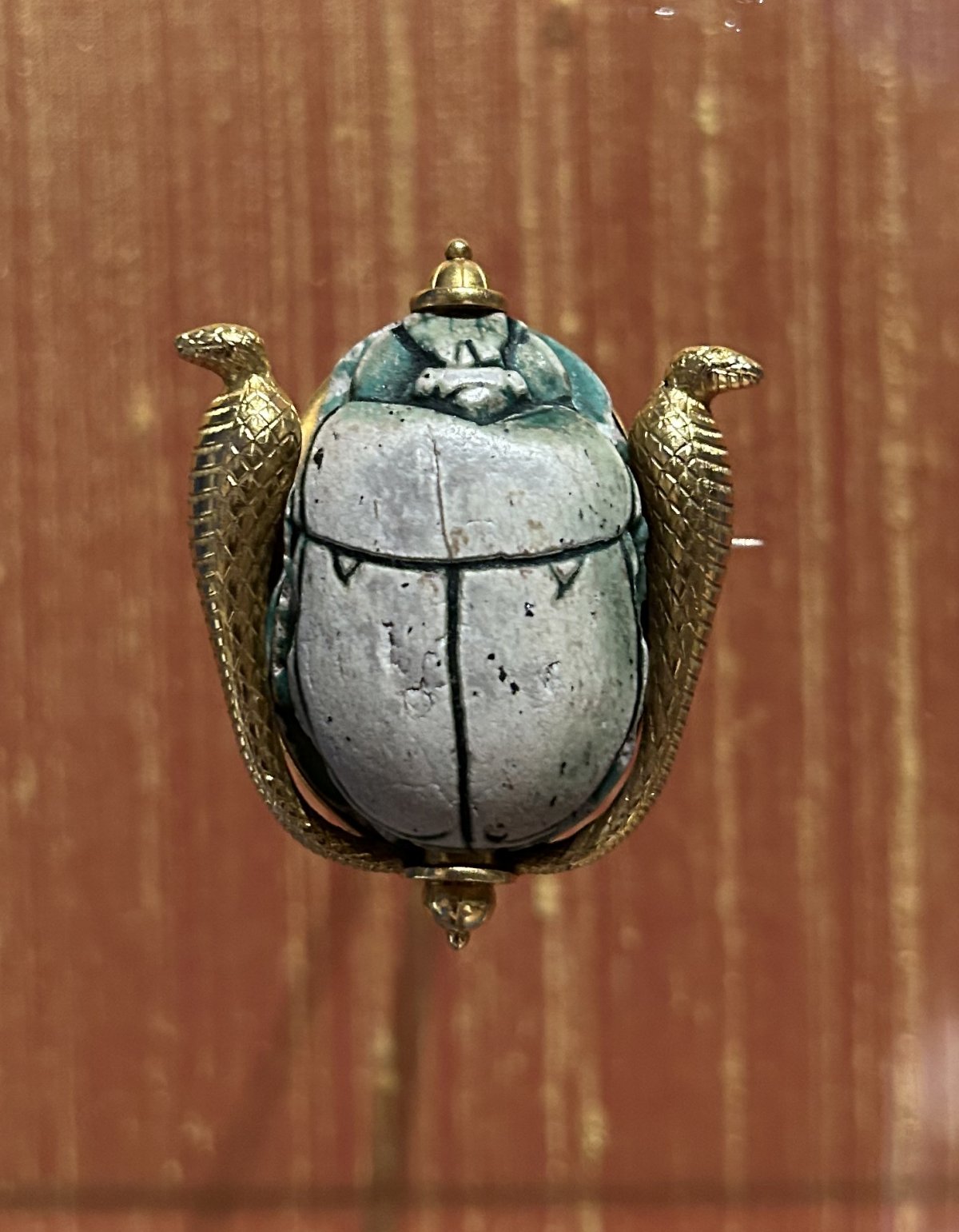
As you work your way through the other exhibition rooms, there are also a few more jewelry highlights. One of them is this unusual scarab brooch. It’s thought that the scarab was acquired by Edward VII during a trip to Egypt in 1862 and brought back to London to be set as a brooch for his bride-to-be. The jewel, made by Phillips, also features a pair of gold serpents in its design.
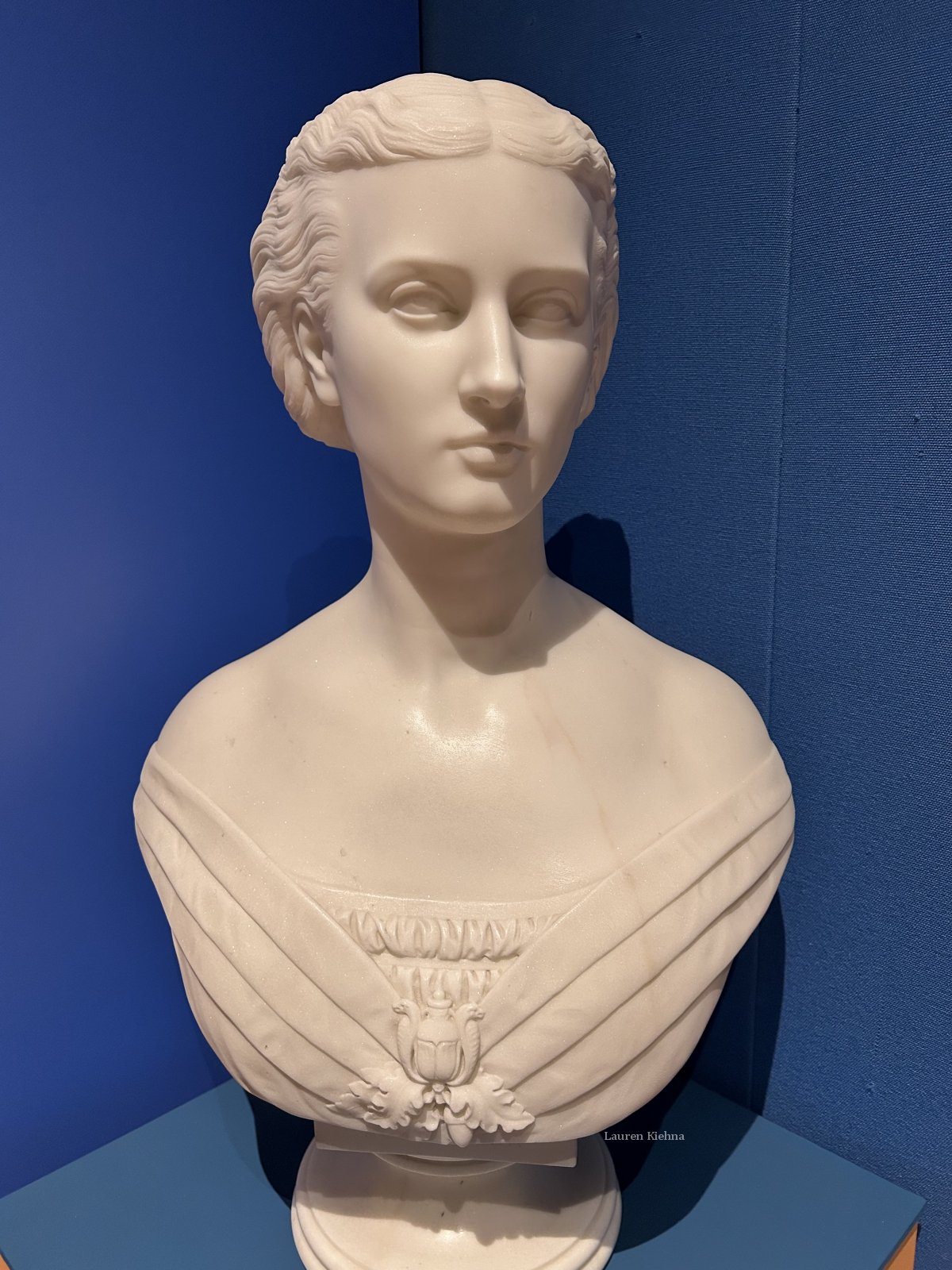
Alexandra was clearly delighted with the gift, because shortly after the couple’s royal wedding in 1863, she chose to wear it when she sat for a bust sculpted by Mary Thornycroft. The bust is included in the Edwardians exhibition, sitting near the real brooch, allowing the viewer to compare them in person.
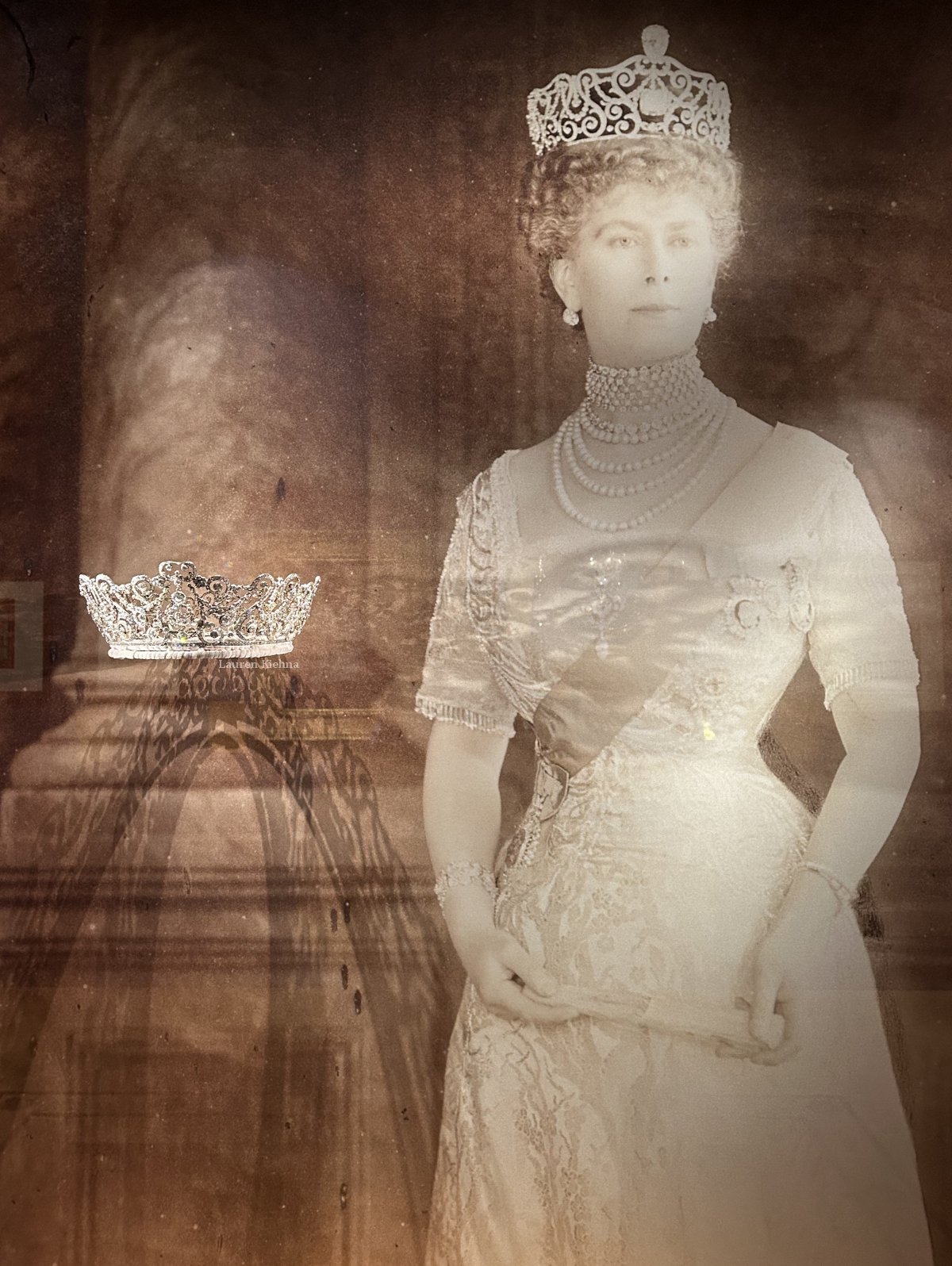
One of the last items showcased in the exhibition is another special piece of jewelry from Queen Mary’s collection: The Delhi Durbar Tiara. The spotlight piece of the parure of jewelry made for Mary to wear at the Delhi Durbar of 1911, the tiara was often called “May’s best tiara” by King George V. Mary wore it in different settings, including with some of the Cullinan Diamonds and Cambridge Emeralds.

Here’s a good close-up of the tiara from the exhibition. Later in life, Queen Mary handed the tiara over to her daughter-in-law, Queen Elizabeth the Queen Mother. She wore it occasionally, notably for the opening of parliament in Cape Town during the 1947 tour of South Africa, and kept it in her jewelry box until her passing in 2002.
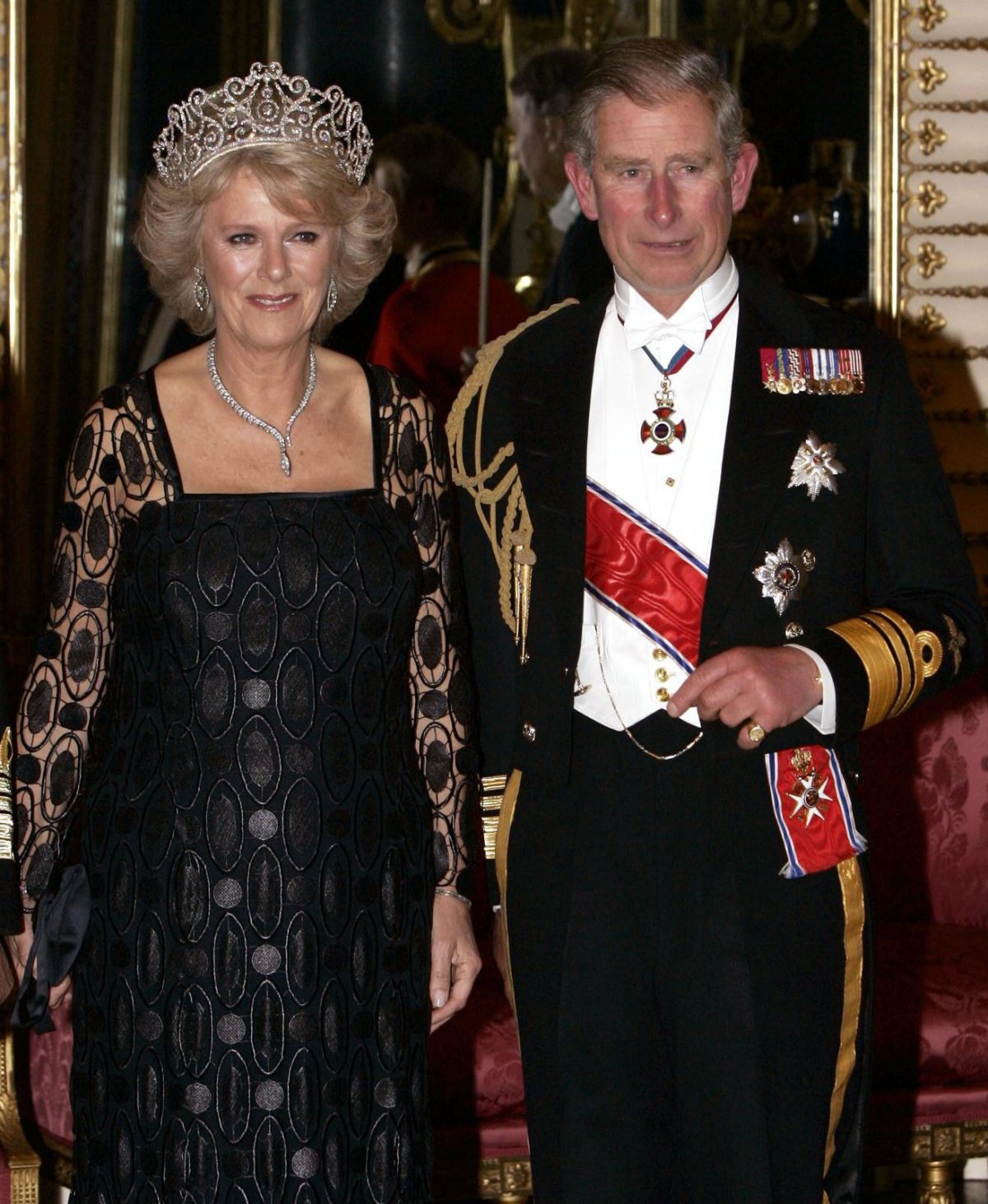
Though Queen Elizabeth II inherited the tiara from her mother in 2002, she never wore it in public. Instead, she loaned it to her daughter-in-law, Queen Camilla, who was then the Duchess of Cornwall. So far, she’s only worn the tiara once in public, for a state banquet during the King of Norway’s state visit in October 2005.
You can see all of these royal jewels yourself by visiting The Edwardians: Age of Elegance at the King’s Gallery, Buckingham Palace. The exhibition runs through November 23, and ticket pricing information can be found on the Royal Collection website.
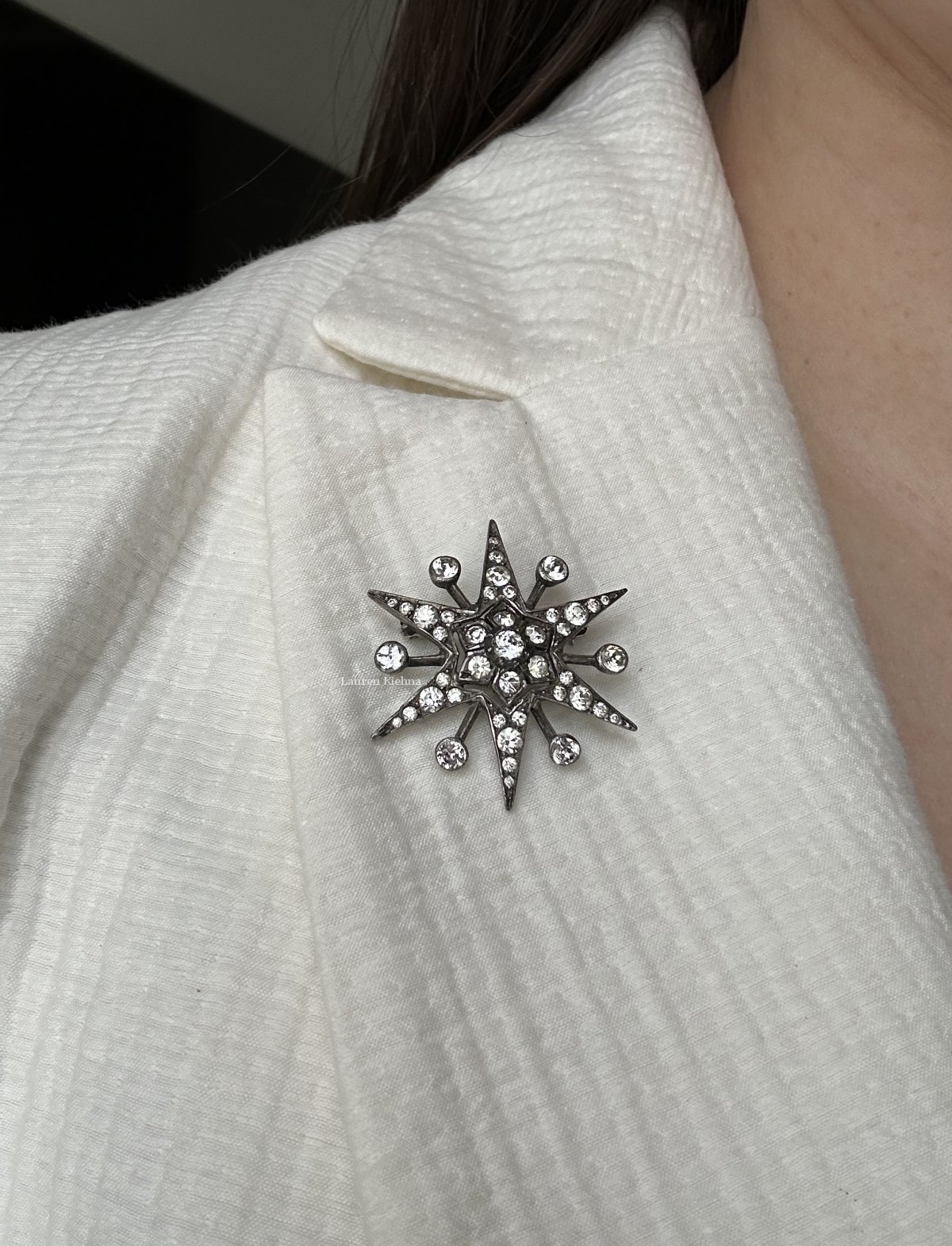
As a postscript, I brought along a piece of jewelry from my own collection when I viewed the exhibition—because who can go to the gallery at Buckingham Palace without a brooch?—and some of you have nudged me for more information on the jewel. For the occasion, I wore an antique star brooch from my jewelry box. The brooch dates to the 1920s and is made of sterling silver set with paste stones. (I can hear you all now yelping about how I need to have it cleaned!)
Leave a Reply
You must be logged in to post a comment.