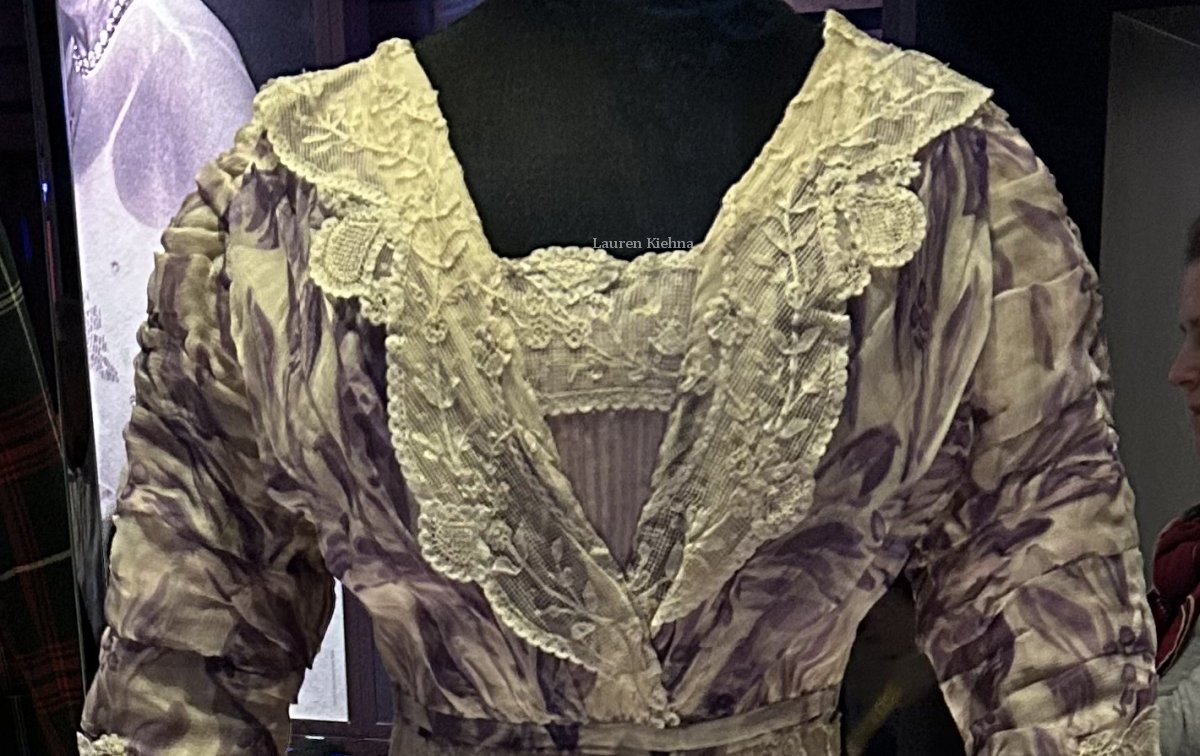
With Royal Ascot approaching next week, I decided to dig into the photographs from my recent trip to London for a closer look at a dress, supposedly worn by Queen Alexandra at the annual race meeting, that’s currently on display at Kensington Palace. But the more I dug into the history behind the dress, the more questions I had. Here’s a little summary of my current exploration—and the provenance question marks I still wonder about.
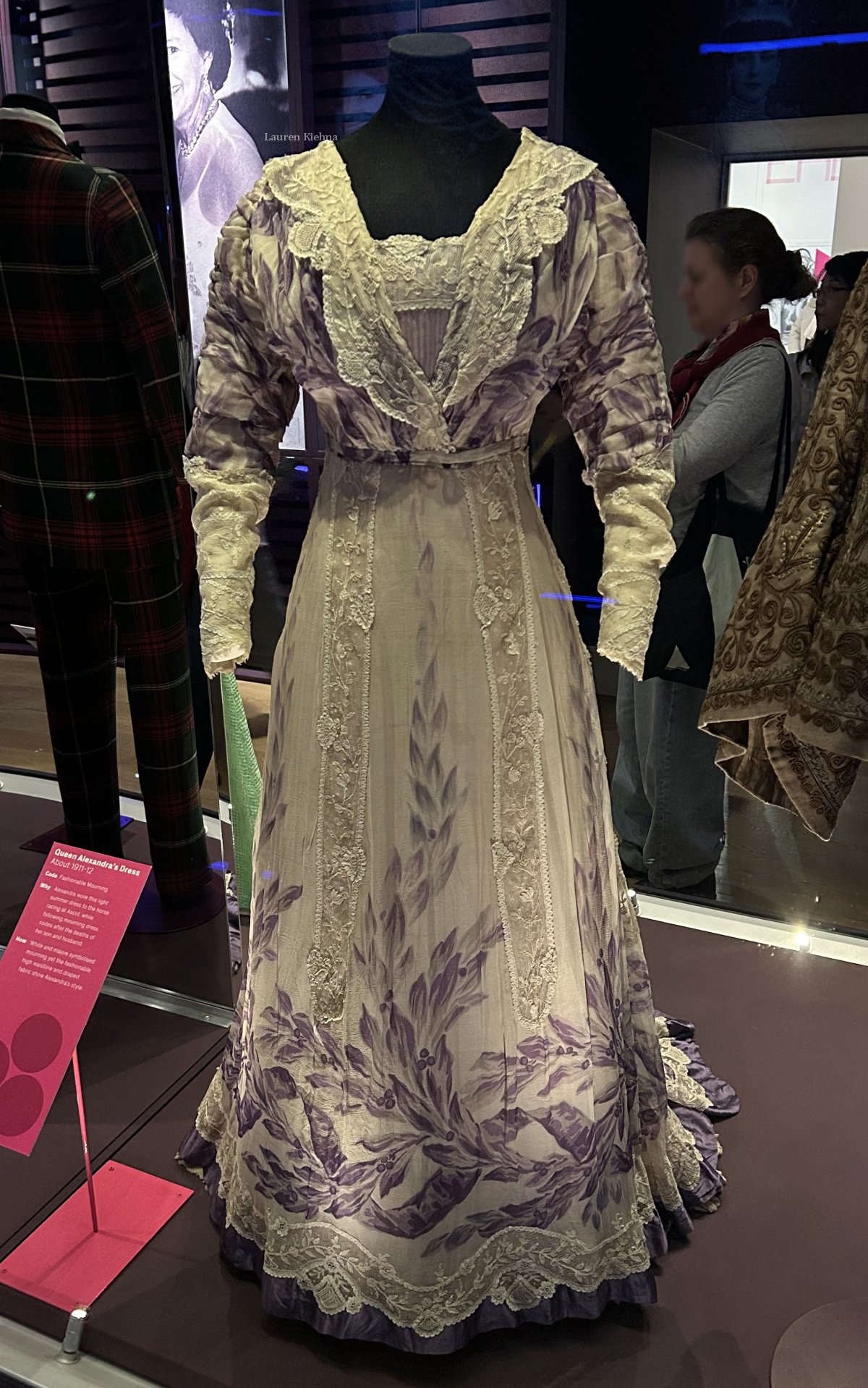
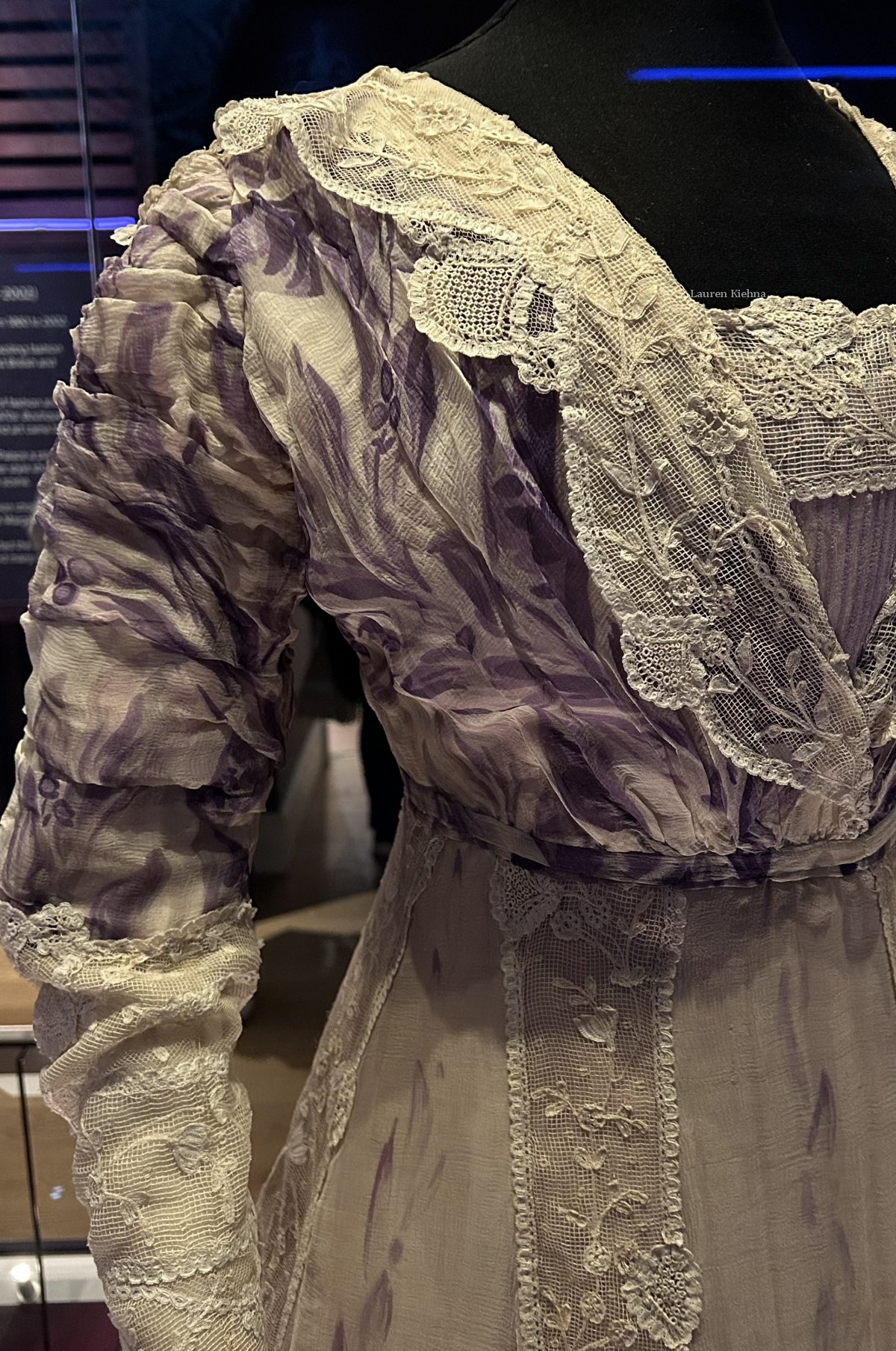
The floral dress, dating to the Edwardian period, is currently displayed as part of the special Dress Codes exhibition at Kensington Palace. The information placard that sits beside the garment calls it “Queen Alexandra’s Dress” and dates it to “about 1911-12.” The exhibition is all about placing clothing in context, so the placard goes on to note that the dress meets the requirements for “fashionable mourning.”
“Alexandra wore this light summer dress to the horse racing at Ascot, while following mourning codes after the deaths of her son and husband,” the placard text continues, adding, “White and mauve symbolised mourning yet the fashionable high waistline and draped fabric show Alexandra’s style.” Additional information provided on the Royal Ceremonial Dress Collection website helps us to imagine how Alexandra would likely have worn the dress: “The dress has small hooks attached inside around the neckline. These may have been used to attach an additional piece of lace to cover the area up to the neck.”
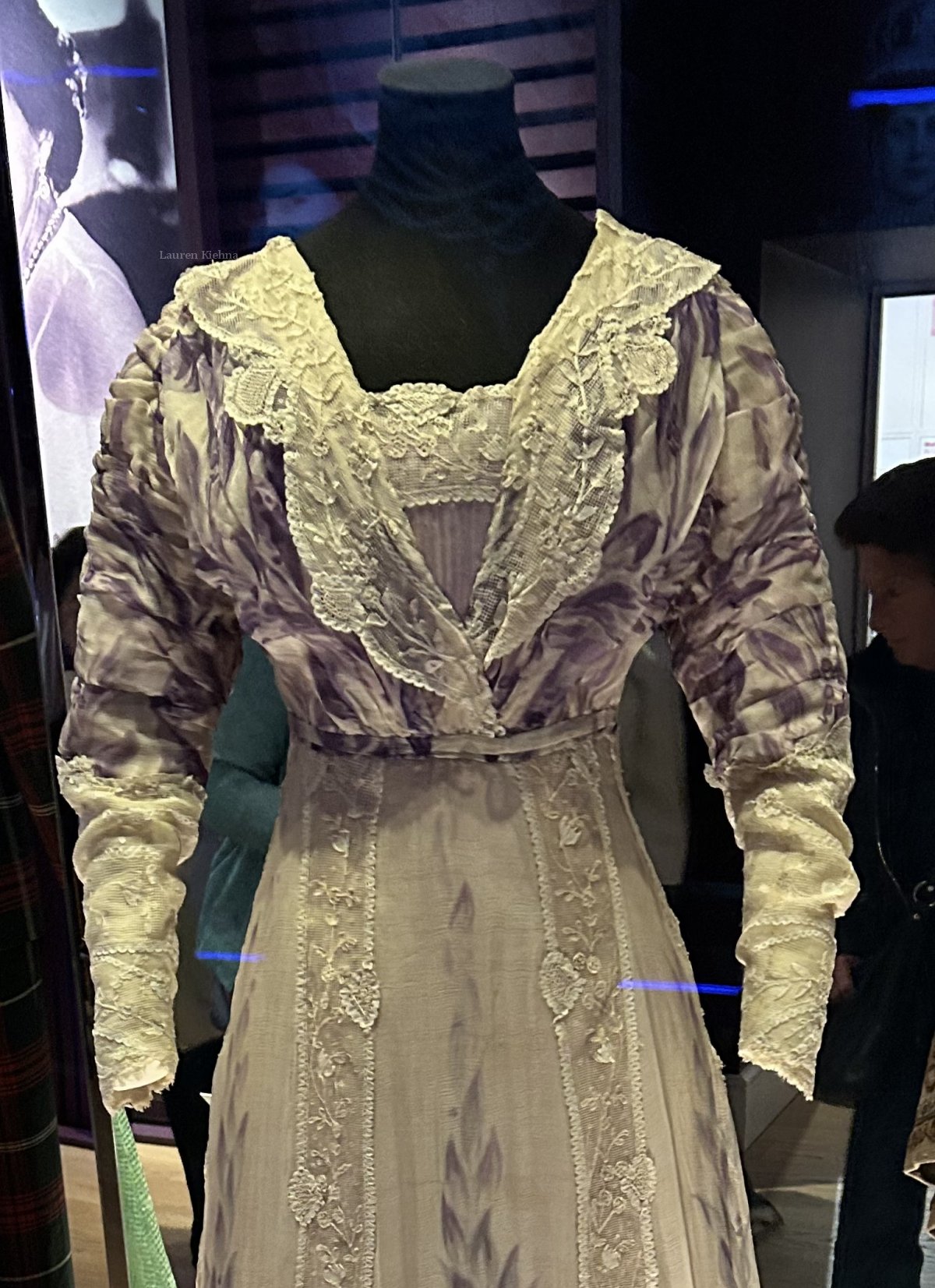
There are a couple of potential issues with the information provided from the get-go. The stated fact that Alexandra wore the dress at Royal Ascot, and the provided dates of 1911 and 1912, simply don’t match, because Queen Alexandra did not attend the races at Royal Ascot in 1911 or 1912. Alexandra had not retired from public life after she was widowed, in the way that her mother-in-law, Queen Victoria, largely did, but she did not join the family at Ascot in any capacity during those two years, nor during the year that followed.
Indeed, Alexandra’s closest Ascot appearances to that time frame took place in 1908, when she attended on June 16 and June 18, and in 1909, when she was at the races on June 15 and June 17. (At that point in time, the usual schedule had the royal ladies and gentlemen all attending on the first and third day of the meet, with the men going alone on days two and four.)
King Edward VII died in May 1910, and none of the family attended the famous “Black Ascot” held a few weeks later. While King George V and Queen Mary, and many of the rest of the family members, returned to Ascot in June 1911, Queen Alexandra didn’t make another appearance at Ascot until she surprised racegoers by attending in the Royal Box with her sister, Dowager Empress Marie Feodorovna of Russia, on June 18, 1914.
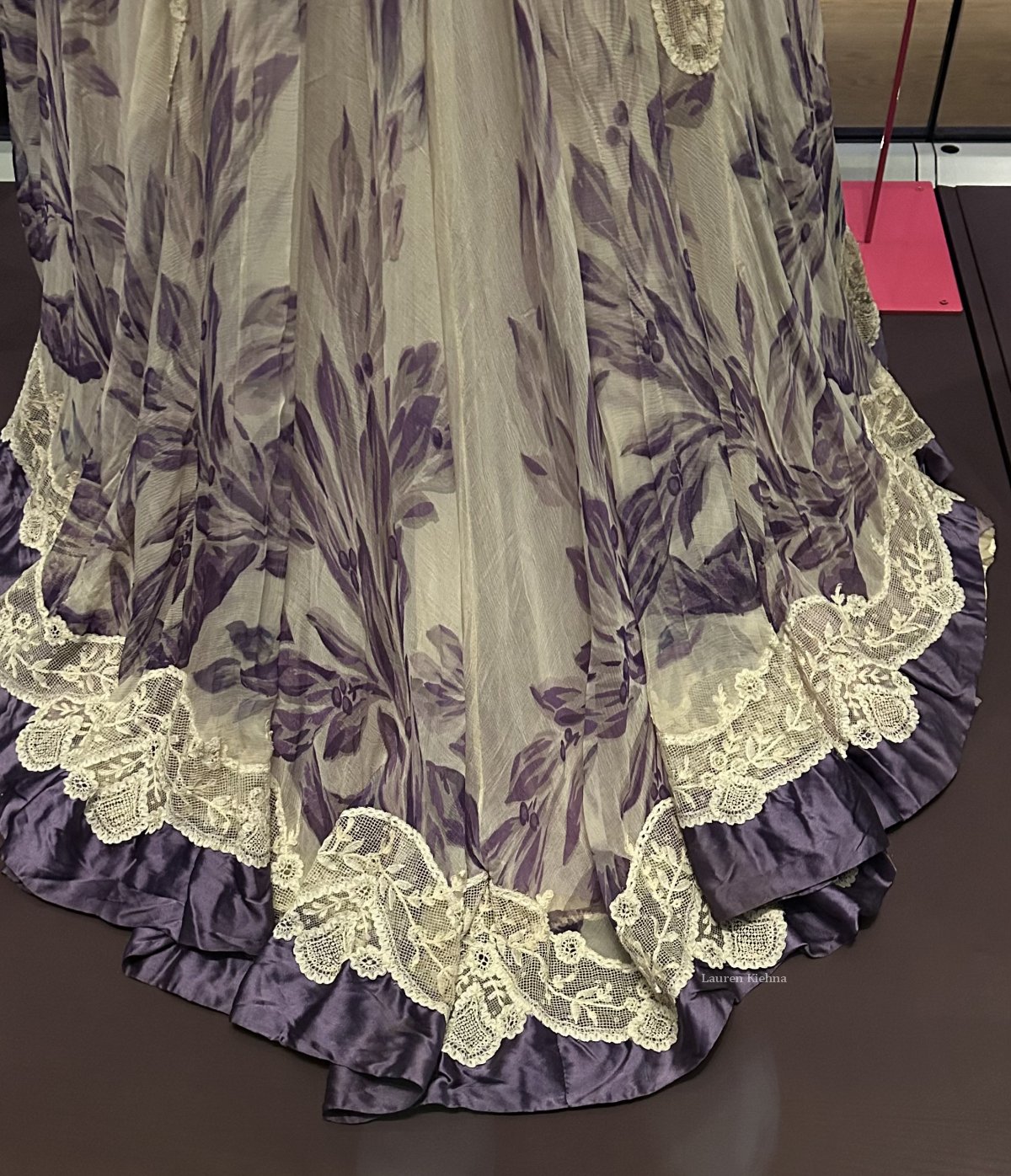
The dress certainly fits with the fashions worn at Royal Ascot during the 1908-09 period. A writer for the Daily Telegraph observed during Royal Ascot in June 1909, “A striking feature of most of the toilettes was the overdress of either silk gauze or chiffon, generally contrasting harmoniously with the underskirt of soft silk or satin, and very artistic combinations of colours were to be seen.” The short train of the dress on display matches that description, with the light floral layer, edged in lace, over a darker purple underskirt.
The colors were on trend, too. Also in June 1909, a Daily Mirror fashion columnist wrote, “It is said that the Ascot meeting will be a gold, blue, and heliotrope one. These are the fashionable colours of the moment,” adding, “Bright heliotrope is no longer the fashion. The right shade is that of quite a faded or dead tone.” The color of the dress on display at Kensington Palace is described as “mauve,” but that shade of purple was also commonly known as “heliotrope” during the Edwardian period.
Both shades were commonly found within royal wardrobes, as the court was regularly plunged into mourning or half-mourning by the deaths of relatives and foreign sovereigns. In 1908 and 1909 alone, the court observed various mourning periods spanning months or weeks for the King of Sweden, the King and the Crown Prince of Portugal, and the King of Belgium, as well as private mourning for Queen Alexandra’s sister-in-law, Princess Valdemar of Denmark. But while wearing these light shades of purple was appropriate for mourning occasions, the colors were also simply fashionable hues often chosen by ladies when no mourning requirements were in force.
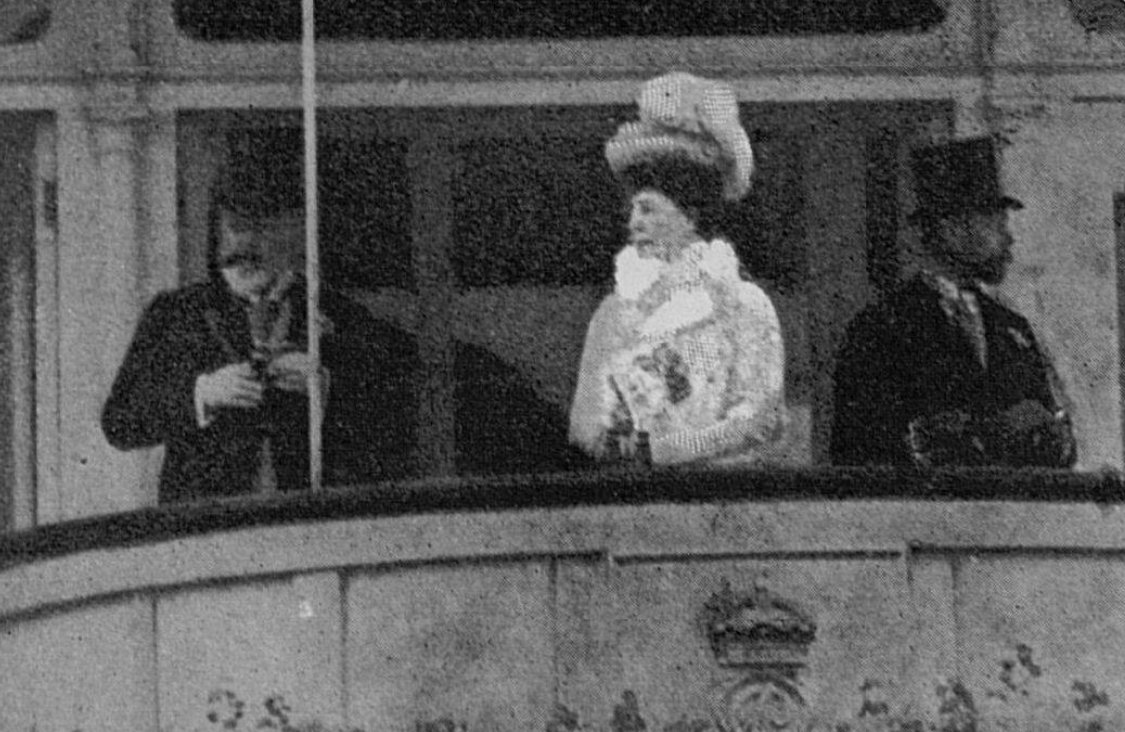
Thanks to the enterprising reporters who chronicled royal fashion for newspapers during the era, we have a pretty good idea of exactly what Queen Alexandra wore at Royal Ascot in June 1908, June 1909, and June 1914. Drizzling rain marred the first day of the meet on June 16, 1908. The carriages in the royal procession were closed, and it was difficult to see exactly what the royal ladies were wearing. The Birmingham Post wrote that the Queen “was in pale mauve, with toque to match.” (The Daily Mirror noted that mauve was Alexandra’s “favourite” color.) Better weather was in store for Gold Cup Day on June 18, when Alexandra arrived wearing “a pale blue-grey costume of crepe de chine, with a cream lace yoke and a small toque to match adorned with feathers,” per the Times.
In June 1909, Alexandra again attended the first and third days of the race meeting at Royal Ascot. The Times recorded that she arrived in the carriage procession on June 15, 1909 wearing “a costume of mauve crepe de chine, with a mauve feather ruffle and a straw hat adorned with mauve feathers.” (The Manchester Courier described the color of the feathers as “heliotrope.”) For her second appearance on June 17, 1909, Alexandra arrived wearing “a cloak of pale blue over a dress of light cinnamon-brown, the bodice being trimmed with creamy lace,” according to the Daily Telegraph. “When her Majesty entered the Royal pavilion the cloak was removed. With this effective costume her Majesty had a small black jetted toque with a white ostrich feather.”
The widowed Alexandra’s unexpected Ascot appearance in 1914 saw her wearing more traditional mourning attire, even though four years had elapsed since her husband’s death, and the latest court mourning edict, for her brother-in-law, the Duke of Argyll, had recently expired. A columnist for the Observer wrote, “Queen Alexandra provided a delightful sensation on Cup Day, when she and the Empress Marie arrived in the King’s Pavilion just before the state procession made its appearance on Thursday. Her Majesty had only made up her mind at the last moment, and it was on her return from the opera on the previous evening that she announced her intention. The royal sisters each wore pink flowers in the corsage of their black dresses, and each wore mantles embroidered in coloured jet and sequins. The presence of Queen Alexandra at Ascot for the first time since the death of King Edward was quite a surprise, and the warmth of the greeting which Her Majesty received was in proportion to the pleasure of the crowd.”
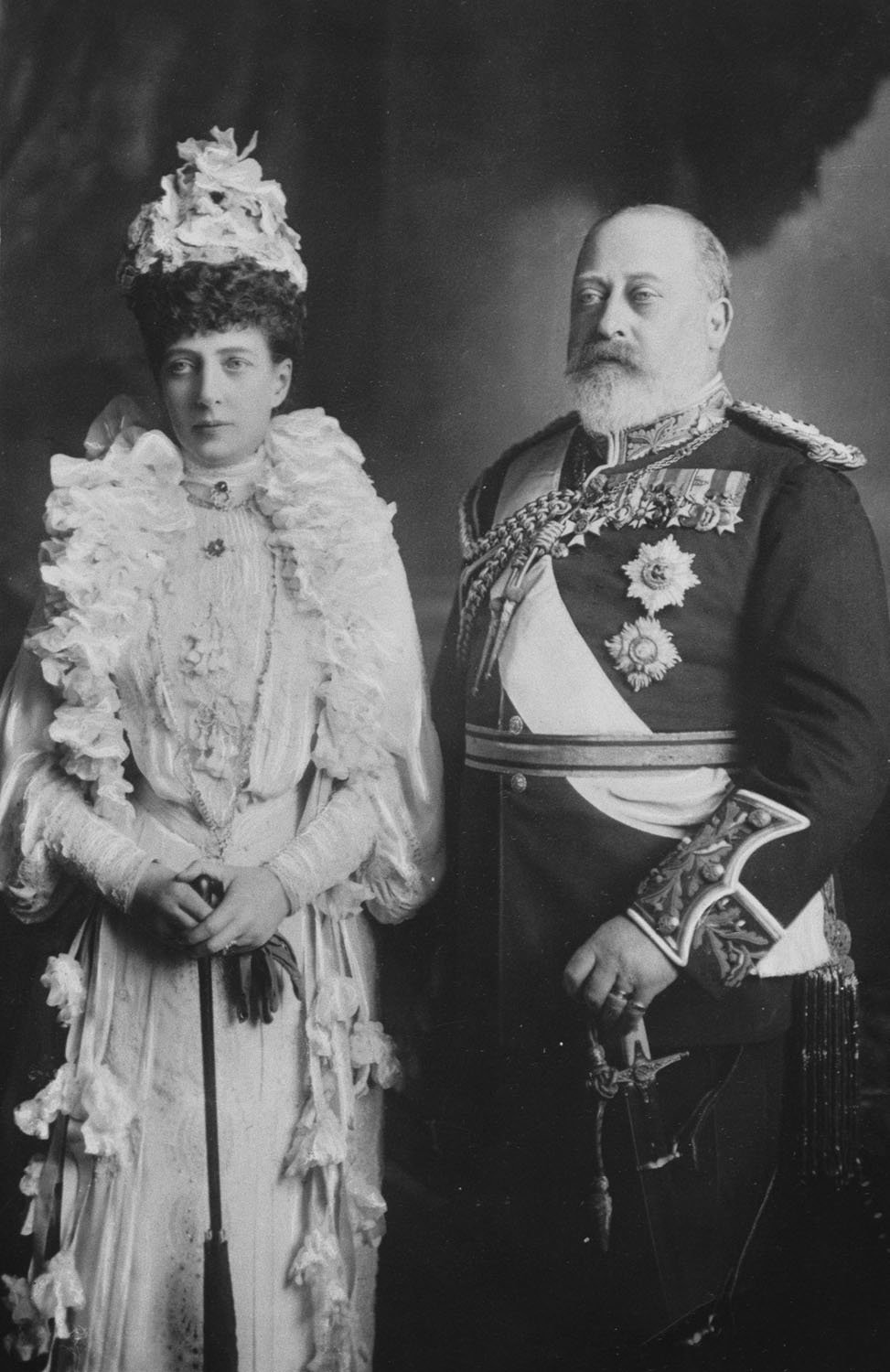
The newspaper descriptions from Alexandra’s Ascot appearances suggest that the dress on display at Kensington Palace might match one of the “mauve” ensembles worn in 1908 or 1909. Combing through various archives hasn’t turned up any clear photographs of Alexandra’s outfits from Royal Ascot in those years. The style, though, appears to be just about right. This portrait of King Edward VII and Queen Alexandra is dated to 1908 by the Royal Collection. The summer dress that she wears is similar in style to the Kensington Palace dress. Alexandra wears a floral boa over the dress in the photo—she liked to wear different wraps or jackets as an extra layer over her dresses.
So, when Alexandra clearly didn’t attend Royal Ascot in the stated years, why did the curators from the Royal Ceremonial Dress Collection and Historic Royal Palaces suggest that the dress was worn in 1911 or 1912? On their website, they explain that the “dress was given to the Royal Ceremonial Dress Collection by the granddaughter of a woman who had been a Lady in Waiting to Queen Alexandra. The dress is thought to have been worn at Ascot, and came with the story that it had been worn to the first Ascot attended by Queen Alexandra after the Edward VII’s death in 1910. However, this does not seem possible, as the June 1910 event is known as Black Ascot, as full black mourning dress was observed. As this dress is in half-mourning style, it was probably worn in a subsequent year.”
The curators seemed to be on the right track by questioning the 1910 date, but as you can see, some quick research proves that their “subsequent year” theory just doesn’t work. It’s also worth noting that, since the dress was only “thought to have been worn at Ascot,” and came with second-hand provenance information, it’s possible that much, much more digging needs to be done to confirm when (and whether) Queen Alexandra wore the dress at all. Was it worn at Royal Ascot in 1908 or 1909? Was it worn at Royal Ascot (or by Queen Alexandra) at all? Questions remain.
Leave a Reply
You must be logged in to post a comment.